

 Freedom Index
Listen to the article
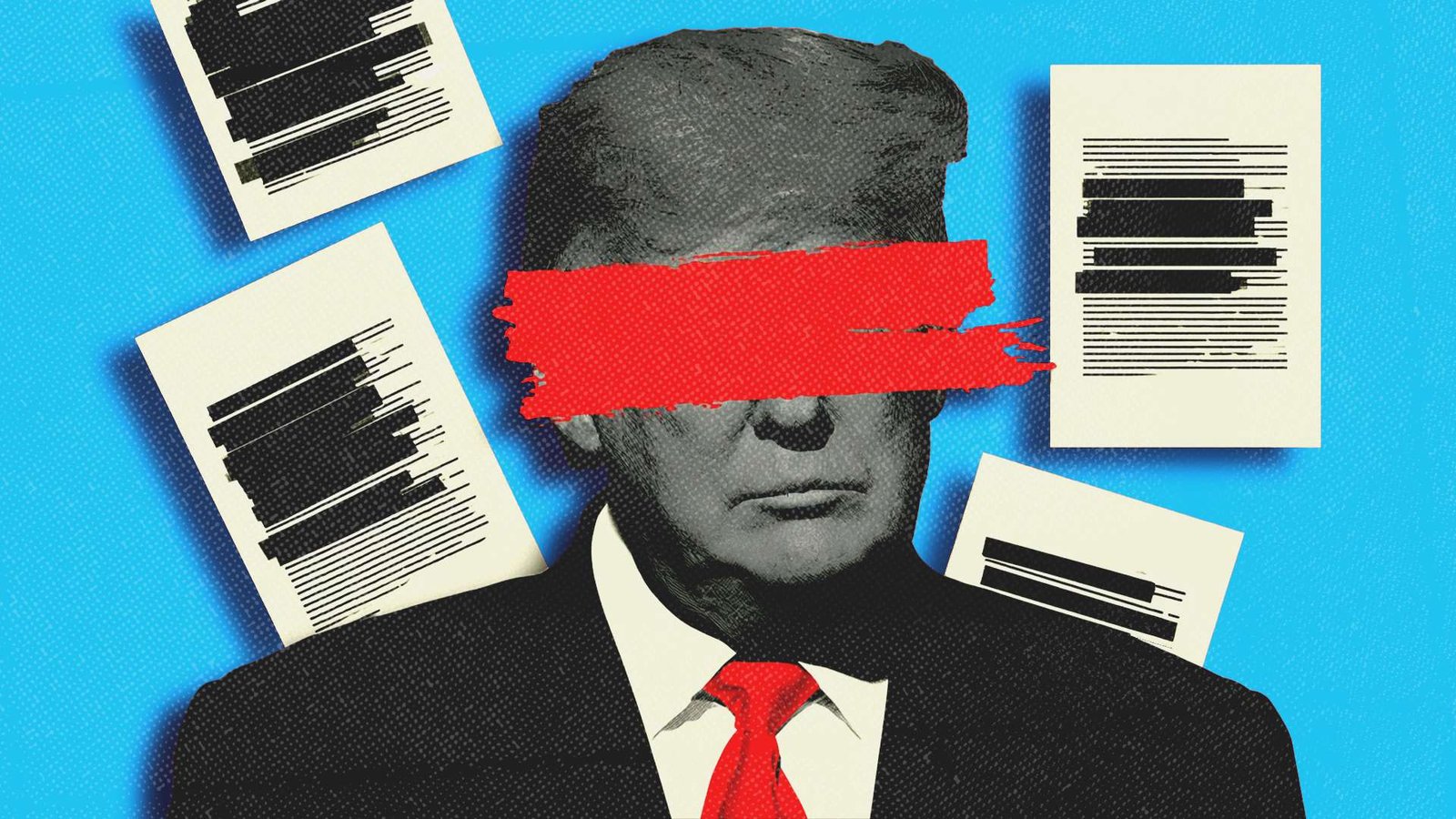
President Donald Trump claimed in 2019 that he was “the most transparent president in history.” Throughout his second term, Trump’s spokespeople have used that phrase over and over again. The administration has made a big show of opening the archives on old mysteries: the assassination of President John F. Kennedy, the existence of UFOs, and the case of well-connected sex predator Jeffrey Epstein. While the JFK files included some genuinely shocking revelations, the UFO files were thin on substance.
And the Epstein files turned into an infamous boondoggle. The administration handed a group of influencers binders labeled “Phase 1,” which turned out to hold heavily redacted copies of already-public documents, then never followed up. After it was leaked to the press that the actual FBI file on Epstein included a sexually suggestive letter from Trump himself, Congress dragged the files out of an embarrassed and defensive administration.
But the Trump administration has also fouled up the everyday mechanisms for Americans to see what their leaders are up to and how their tax dollars are being spent. Officials have tried to hide documents from the Freedom of Information Act (FOIA) or outright exempt government activities from FOIA. In fiscal year 2025, the federal government granted a little under 50 percent of FOIA requests, a record low since 2010, according to data compiled by The New York Times. The Department of Justice fought in court to overturn the Presidential Records Act, which requires the White House to preserve its files for posterity. In between his two terms, Trump infamously hid papers in his bathroom.
Trump had ironically ridden to power on the back of an earlier outrage about transparency. Much of the 2016 election focused on Democratic candidate Hillary Clinton’s emails. Back when she was secretary of state, Clinton had secretly moved her emails to a private, nongovernment server, both exposing them to hackers and concealing them from public FOIA requests. Trump said on the campaign trail that Clinton was trying to “cover up her crimes.” In the decade since then, the Trump administration has done a lot more to cover up its own activities.
Beyond the political irony, the Trump administration’s attack on transparency highlights how the struggle to keep politicians honest works. American journalists, lawyers, and crusading gadflies have won the right to inspect a wide variety of government records. The FOIA regime is a model for the rest of the free world—and the unsung source of a lot of politically relevant scoops, including at Reason. The political operators undermining transparency know what they’re doing.
“One of the contradictory things about the United States is that an incredible amount of the government is dedicated to doing things in secret,” geographer Trevor Paglen writes in Blank Spots on the Map: The Dark Geography of the Pentagon’s Secret World. “At the same time, it’s one of the world’s most open governments.”
That openness was a hard-won right. The Administrative Procedure Act of 1946 had left federal officials with wide discretion in what information to release to the public, and they became increasingly tightfisted with Cold War paranoia. The original FOIA was passed in 1966 as a “product of years of slow campaigning by a network of journalists, scientists, and politicians seeking to make the government more transparent,” according to State of Silence: The Espionage Act and the Rise of America’s Secrecy Regime by historian Sam Lebovic. The Watergate scandal a few years later turbocharged those demands for transparency.
In the 1970s, President Richard Nixon grew paranoid about internal leaks after the theft and publication of the Pentagon Papers, the U.S. military’s secret internal history of the (then-ongoing) Vietnam War. He fretted to National Security Adviser Henry Kissinger that his sabotage of Vietnamese peace talks or his undeclared war in Cambodia might be revealed. Nixon assembled the “Plumbers,” a team of intelligence operatives, to “destroy” Pentagon Papers leaker Daniel Ellsberg and hunt down other alleged traitors by “any means.”
When the Plumbers were caught burglarizing Democratic National Committee offices in the Watergate complex in 1972, the resulting scandal not only forced Nixon to resign, but also set off a congressional campaign to rein in the executive branch, especially the national security complex. Congress amended FOIA in 1974 and 1976. Most importantly, the new rules allowed courts to review classified documents and punish noncompliant officials in response to FOIA requesters’ lawsuits.
Congress also passed the Presidential Records Act of 1978 in response to Watergate. Nixon, ever the paranoiac, had secretly bugged the White House with tape recorders. When he attempted to destroy the tapes to avoid their being used as evidence against him, Congress clarified that White House records are the property of the nation, not the private property of the president himself. The act both preserved presidential papers and subjected them to FOIA from five years after the end of an administration.
The interpretation of the laws seesawed back and forth for some time. The Carter administration ordered officials not to withhold documents from FOIA requesters unless they could prove harm from releasing them. The Reagan administration flipped that rule around, stating that it would defend any official’s decision to withhold documents if there was a defensible legal basis. The Clinton administration flipped back to the Carter position, and the George W. Bush administration flipped back to the Reagan stance.
Soon after taking office, President Barack Obama declared that “all agencies should adopt a presumption of disclosure” in case of any doubt over FOIA requests. At the end of his administration, Congress passed the FOIA Improvement Act of 2016, which wrote that presumption into law. Trump didn’t issue any major FOIA memo in his first term, though the government quietly started denying FOIA requests at a higher rate. After considerable nagging from civil libertarians and journalists, the Biden administration issued a memo in 2022 pushing agencies to enforce the openness standard.
A few months later, in August 2022, during a tug-of-war between Trump’s lawyers and the National Archives and Records Administration, the FBI raided Trump’s home. The agents found that he was hoarding classified papers from his time in the White House, and took an infamous photo of classified boxes stored in the bathroom.
“I don’t want anybody looking. I don’t want anybody looking through my boxes. I really don’t. I don’t want you looking through my boxes,” Trump allegedly told his lawyers, according to the federal indictment for hoarding those documents. “Isn’t it better if there are no documents?”
Trump’s legal defense was, in some ways, a push for transparency. Rejecting the Espionage Act charges against Trump for mishandling classified information, his lawyer Timothy Parlatore argued that the government was guilty of “overclassification.” At the same time, however, Trump’s lawyers also argued that the “President determines whether a document constitutes a Presidential record or a personal record,” and that Trump designated those documents “personal” by the mere act of taking them out of the White House.
That logic, of course, would make the Presidential Records Act completely toothless. The whole point was to prevent an outgoing president from deciding what documents do and don’t enter the archives. Unsurprisingly, Judge Aileen Cannon rejected that argument, although she eventually threw out the case against Trump for unrelated reasons.
Back in office, Trump’s advisers began playing a series of shell games with government documents. Elon Musk had declared on Trump’s campaign trail that “there should be no need for FOIA requests. All government data should be default public for maximum transparency.” But Musk’s new Department of Government Efficiency (DOGE) exempted itself from FOIA on very different grounds: The White House argued that DOGE was subject to the Presidential Records Act, so it wouldn’t be subject to FOIA until after Trump left office. A lawsuit by the progressive Citizens for Responsibility and Ethics in Washington (CREW) to force FOIA compliance is still ongoing, as of press time.
Two years after using the Presidential Records Act against FOIA, the Trump administration tried to get rid of the Presidential Records Act altogether. In April 2026, the Department of Justice released a memo arguing that the law is “unconstitutional,” because it infringes on executive branch powers. The White House immediately issued new rules making it easier for staff to delete communications. CREW sued alongside the American Historical Association, and the following month, Judge John D. Bates issued an injunction canceling the new rules. As with the DOGE lawsuit, that lawsuit is still ongoing.
In short, the Trump administration argued that FOIA wouldn’t compel the White House because the Presidential Records Act took precedence, then argued that the Presidential Records Act couldn’t restrain the White House because it was an invalid law.
Trump pulled yet another trick from Nixon’s playbook in August 2026. During the tug-of-war over the White House tapes, Nixon had used the old but vague concept of “executive privilege” to argue that the President wasn’t subject to outside subpoenas. The Supreme Court ruled in 1974 that, while there was a “valid need for protection of communications between high Government officials,” it was not “absolute” and would have to yield to the needs of investigators. Citing that case in a 2026 memo, the Department of Justice argued that the president’s conversations with “advisers” outside the administration would be covered by executive privilege.
Neither public FOIA requesters nor official archivists nor even government investigators will have a right to follow the White House’s full paper trail, should the administration get its way.
And then there was the ultimate shell game: making the records themselves disappear. All these legal battles over the right to access a document would be moot if that document’s existence wasn’t known, or if a requester didn’t know which agency to ask for it, or if officials simply couldn’t access it, or if it was irretrievably destroyed. After all, that was the idea behind Nixon trying to shred his tapes and Hillary Clinton stashing her emails on a hidden server.
The CIA in particular has been a pioneer in these concealment tactics. In 1973, amid the post-Watergate congressional investigations into executive abuses, the CIA shredded almost all of its documents on MKUltra, a research program into drugs and psychological torture. Two years later, when journalist Harriet Ann Phillippi sent a FOIA request for records on the spy ship Glomar Explorer, the CIA said it could “neither confirm nor deny” the existence of those records. The “Glomar response” created an entirely new field of FOIA case law for denying requests. And in 2005, when news was starting to break about secret CIA torture prisons, an officer simply shredded the most damning torture tapes.
Modern technology provides a more subtle method of destroying paper trails. Encrypted messaging apps like Signal offer an extra layer of security by allowing users to automatically delete all messages after a certain amount of time. Signal advertises this feature as a way to return to the kind of “ephemeral” conversations “that once took place through the medium of coffee shops, bars, and parks.” Unlike manually deleting messages, setting conversations to auto-delete makes it impossible to prove that a user was trying to hide any particular message.
In 2017, the National Security Archive at George Washington University (alongside CREW) sued the Trump administration over the Presidential Records Act. They alleged that the White House was violating the law by deleting tweets, and more alarmingly, by using encrypted messaging apps with auto-delete. Although Judge David Tatel acknowledged that “Nixon could only have dreamed of the technology at issue,” he ruled that he had “no jurisdiction” to “micromanage” the White House’s recordkeeping system.
Tatel probably couldn’t have known that this issue, far from being a matter of nitpicking, would become a national controversy. On March 13, 2025, Jeffrey Goldberg, editor in chief of The Atlantic, was surprised to see an invitation on his phone from then–National Security Adviser Mike Waltz to join a Signal chat with auto-deleting messages called “Houthi PC small group.” (An internal investigation later found that Waltz had accidentally saved Goldberg’s number under the name of White House spokesman Brian Hughes, after being forwarded an email thread between them.) The group was debating a planned U.S. attack on the Houthi forces in Yemen, which began two days later.
The group chat incident raised many different concerns. Hawkish journalists, including Goldberg himself, fretted that the administration wasn’t being secretive enough about its plans to launch an undeclared war. Others saw “prima facie evidence of at least one war crime,” in the words of Dylan Williams, vice president for government affairs at the nonprofit Center for International Policy. While the U.S. military claimed to see “no indications of any civilian casualties” from the air raids, Waltz bragged in the group chat that they had killed a Houthi commander by collapsing his “girlfriend’s building” with no warning.
Recordkeeping junkies, on the other hand, saw an attempt to erase an important conversation from the archives. The nonprofit American Oversight, which specializes in FOIA cases, immediately sued the Trump administration, arguing that the group chat was a way of “barring American Oversight and other FOIA requesters from obtaining responsive records to which they are otherwise entitled.” Judge James Boasberg quickly ordered the administration to preserve the Houthi PC small group chat, but later concluded that there is no way “this Court can provide redress for already-deleted messages.”
In other words, the administration’s tactic worked, at least partially. Archivists don’t even know what part of the record about the war in Yemen they’re missing. There was another wrinkle to the story, as well. After Boasberg’s initial order, Waltz was seen using TeleMessage, an app that archives Signal messages. Soon after that, TeleMessage shut down operations because its database was hacked. Sen. Ron Wyden (D–Ore.) called it the “worst possible option,” making records opaque to the public and transparent to hackers, all while giving officials a false sense of security. In other words, it was exactly the error Clinton had made with her email server.
Of course, the best way to hide a fact is to simply never commit it to paper. In 2021, The New York Times published The Civilian Casualty Files. The Times obtained 1,300 civilian casualty reports through a FOIA lawsuit, revealing massive amounts of U.S. military negligence in the Middle East and failures to follow up on alarming reports. But the second Trump administration downsized and hamstrung the Pentagon’s civilian protection office. Adm. Brad Cooper could truthfully brag to Congress that he had only “one active civilian casualty investigation from the 13,629 munitions” fired at Iran—because other incidents simply weren’t getting investigated.
Another way the CIA has kept dirty information out of U.S. records post-Watergate is by simply outsourcing its operations to other countries, whose own archives are mostly out of the reach of American investigators. The most famous example was a secret alliance of intelligence agencies, run out of a safari club in Kenya and reportedly overseen by Kissinger himself.
“In 1976, after the Watergate matters took place here, your intelligence community was literally tied up by Congress. It could not do anything. It could not send spies, it could not write reports, and it could not pay money. In order to compensate for that, a group of countries got together in the hope of fighting communism and established what was called the Safari Club,” Saudi Prince Turki al-Faisal said in a 2002 speech at Georgetown University revealing the group’s existence.
The prince, of course, was exaggerating. What the CIA really chafed under was oversight, the possibility that officials would be called to testify about what they have been doing around the world and have that testimony checked against the record. (At the same time the Safari Club was being formed, former CIA Director Richard Helms was being prosecuted for perjury after deceiving Congress about CIA operations in Chile.) The absolute monarchies in the Safari Club, of course, didn’t have to worry about such niceties.
That monarchical attitude is at the heart of Trump’s own information policies. “My own mind. It’s the only thing that can stop me,” Trump told The New York Times in January 2026. “There are no limits,” he told Axios six months later. If only one mind decides for the whole country, then only one mind needs to know how the government works.
Read the full article here
Fact Checker
Verify the accuracy of this article using AI-powered analysis and real-time sources.