Close Menu
FSNN | Free Speech News NetworkFSNN | Free Speech News Network
  • Home
  • News
    • Politics
    • Legal & Courts
    • Tech & Big Tech
    • Campus & Education
    • Media & Culture
    • Global Free Speech
  • Opinions
    • Debates
  • Video/Live
  • Community
  • Freedom Index
  • About
    • Mission
    • Contact
    • Support
Trending

U.S.’ OFAC adds four Iran central bank crypto wallets to sanctions, Tether freezes $131 million of USDT

10 minutes ago

Senate Opposes Sam Bankman-Fried Clemency Bid

11 minutes ago

Hong Kong arrests two journalists in latest sedition case targeting independent bookstores

1 hour ago
Facebook X (Twitter) Instagram
Facebook X (Twitter) Discord Telegram
FSNN | Free Speech News NetworkFSNN | Free Speech News Network
Market Data Newsletter
Thursday, July 16
  • Home
  • News
    • Politics
    • Legal & Courts
    • Tech & Big Tech
    • Campus & Education
    • Media & Culture
    • Global Free Speech
  • Opinions
    • Debates
  • Video/Live
  • Community
  • Freedom Index
  • About
    • Mission
    • Contact
    • Support
FSNN | Free Speech News NetworkFSNN | Free Speech News Network
Home»News»Media & Culture»Trump Called the USMCA His ‘Best Deal.’ Now, He Wants Out of It.
Media & Culture

Trump Called the USMCA His ‘Best Deal.’ Now, He Wants Out of It.

News RoomBy News Room2 weeks agoNo Comments4 Mins Read1,083 Views
Share Facebook Twitter Pinterest Copy Link LinkedIn Tumblr Email VKontakte Telegram
Trump Called the USMCA His ‘Best Deal.’ Now, He Wants Out of It.
Share
Facebook Twitter Pinterest Email Copy Link

Listen to the article

0:00
0:00

Key Takeaways

Playback Speed

Select a Voice

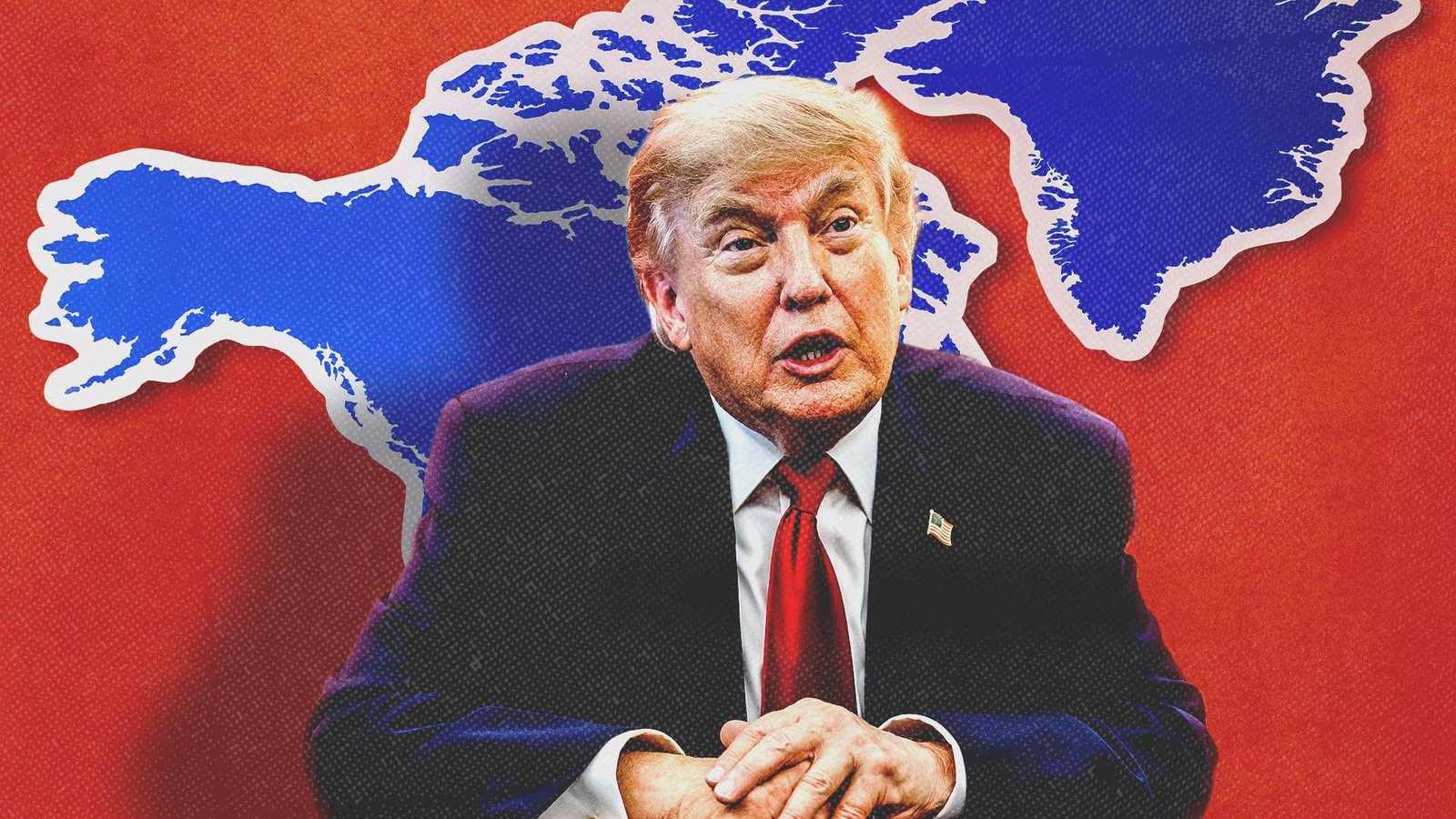
When President Donald Trump signed a new North American trade deal during his first term, he celebrated it as “the fairest, most balanced, and beneficial trade agreement we have ever signed into law. It’s the best agreement we’ve ever made.”

Six years later, he wants out.

The Trump administration announced Wednesday that it would not renew the United States-Mexico-Canada Agreement (USMCA). That decision seems to have been driven by an ongoing worry about trade deficits between the U.S. and the other two members of the deal.

“The United States will continue to engage with Mexico and Canada to address the Agreement’s shortcomings and our trade deficits with these countries,” said U.S. Trade Representative Jamieson Greer in a statement.

Wednesday’s announcement is significantly less dramatic than it might at first seem. The USMCA will remain in place while further negotiations take place. Compared to some of Trump’s more haphazard and destabilizing trade policy maneuvers, this seems relatively tame. It merely means a more fraught process will be required to keep the North American free trade zone together, while a smooth renewal would have meant the USMCA would remain in force for 16 more years.

But that doesn’t mean this was a wise or necessary move. Indeed, Trump’s decision to throw the USMCA’s future into doubt carries economic risk and further erodes the trust that is required to reach any trade deal.

“Given the Trump administration’s decision today, where do things stand right now on the future of the USMCA? ‘Totally up in the air’ is probably a good characterization,” writes Simon Lester in the International Economic Law and Policy Blog.

That uncertainty will have consequences for industries across the continent. Much of American manufacturing involves sprawling supply chains that have been built in the decades since NAFTA came into force. A single piston in a car engine might move through factories in all three countries before being installed, as The Wall Street Journal recently highlighted.

The move to renegotiate the USMCA also opens the door to more economic protectionism. Avocado farmers in California quickly responded to Wednesday’s news by demanding new barriers to imported avocados from Mexico, for example.

The Trump administration believes that greater uncertainty will give it leverage in new rounds of negotiations with Canada and Mexico, said Ryan Young, a senior economist at the Competitive Enterprise Institute. But the opposite might happen.

“In the meantime, Mexico and Canada both have an incentive to strengthen their ties with China and Europe as their alliance with America weakens,” Young said in a statement.

The USMCA was, in many ways, a step backward from the North American Free Trade Agreement (NAFTA), which it replaced. The newer deal had stricter requirements for the duty-free imports of cars and car parts, for example. But the best thing about the USMCA was the sense that, as Reason‘s Nick Gillespie wrote optimistically in 2018, “it ends the drama created by Trump in the first place.”

Clearly, that hasn’t panned out. The gap between that promise and the reality of American trade policy in 2026 is perhaps the most significant part of Wednesday’s announcement. The USMCA was a proper trade agreement, and one that was ratified by Congress. Trump’s second-term approach to trade policy has instead been notably more improvisational, more corrupt, and less successful in terms of actually securing freer trade for American citizens and businesses.

“The [USMCA] was passed through Congress with bipartisan support and created a stable economic partnership in North America, unlike the reckless, illegal tariffs the administration has pursued since retaking office,” said Rep. Suzan DelBene (D–Wash.) in a statement responding to Wednesday’s news.

But it is telling that congressional Republicans aren’t upset about Trump’s decision to cancel the USMCA’s renewal.

Rep. Adrian Smith (R–Neb.), chairman of the House Ways and Means Committee’s trade panel, told Semafor on Tuesday that “there’s a path” where Congress “wouldn’t even have to vote on” a replacement agreement that supplants the USMCA.

That sums it up pretty well. During Trump’s first term, we traded a long-standing, successful trade deal for a replacement that allowed the president to claim a meaningless victory. Now, we’re trading that deal for a new reality in which Congress is fully cut out of the process. The only certain result of Wednesday’s USMCA nonrenewal is that there will be more economic uncertainty across North America.

Read the full article here

Fact Checker

Verify the accuracy of this article using AI-powered analysis and real-time sources.

Get Your Fact Check Report

Enter your email to receive detailed fact-checking analysis

5 free reports remaining

Continue with Full Access

You've used your 5 free reports. Sign up for unlimited access!

Already have an account? Sign in here

#CivicEngagement #MediaBias #NewsAnalysis #PoliticalNews #PressFreedom
Share. Facebook Twitter Pinterest LinkedIn Tumblr Email Telegram Copy Link
News Room
  • Website
  • Facebook
  • X (Twitter)
  • Instagram
  • LinkedIn

The FSNN News Room is the voice of our in-house journalists, editors, and researchers. We deliver timely, unbiased reporting at the crossroads of finance, cryptocurrency, and global politics, providing clear, fact-driven analysis free from agendas.

Related Articles

Cryptocurrency & Free Speech Finance

US Senate Unanimously Opposes Sam Bankman-Fried Pardon

1 hour ago
Media & Culture

Brickbat: Well Housed

2 hours ago
Media & Culture

Lindsey Graham’s Death Marks the End of an Era of Interventionist Foreign Policy

3 hours ago
Media & Culture

Ban on “Personal, Impertinent or Slanderous Remarks” in City Council Public Comments Is Unconstitutional

4 hours ago
Media & Culture

A Texas Immigrant Detention Center Is a ‘Human Rights Disaster,’ Civil Rights Groups Say in Report

5 hours ago
Media & Culture

Utah’s New Rule Allowing Propensity Evidence in Sexual Assault Prosecutions

6 hours ago
Add A Comment
Leave A Reply Cancel Reply

Editors Picks

Senate Opposes Sam Bankman-Fried Clemency Bid

11 minutes ago

Hong Kong arrests two journalists in latest sedition case targeting independent bookstores

1 hour ago

Two groups of BTC investors sell on the rise as prices near $65,000.

1 hour ago

Tether invests $20M into Argentine neobank Ualá

1 hour ago
Latest Posts

US Senate Unanimously Opposes Sam Bankman-Fried Pardon

1 hour ago

Brickbat: Well Housed

2 hours ago

U.S. Senate unanimously opposes clemency for FTX founder Sam Bankman-Fried

2 hours ago

Subscribe to News

Get the latest news and updates directly to your inbox.

At FSNN – Free Speech News Network, we deliver unfiltered reporting and in-depth analysis on the stories that matter most. From breaking headlines to global perspectives, our mission is to keep you informed, empowered, and connected.

FSNN.net is owned and operated by GlobalBoost Media
, an independent media organization dedicated to advancing transparency, free expression, and factual journalism across the digital landscape.

Facebook X (Twitter) Discord Telegram
Latest News

U.S.’ OFAC adds four Iran central bank crypto wallets to sanctions, Tether freezes $131 million of USDT

10 minutes ago

Senate Opposes Sam Bankman-Fried Clemency Bid

11 minutes ago

Hong Kong arrests two journalists in latest sedition case targeting independent bookstores

1 hour ago

Subscribe to Updates

Get the latest news and updates directly to your inbox.

© 2026 GlobalBoost Media. All Rights Reserved.
  • Privacy Policy
  • Terms of Service
  • Our Authors
  • Contact

Type above and press Enter to search. Press Esc to cancel.

🍪

Cookies

We and our selected partners wish to use cookies to collect information about you for functional purposes and statistical marketing. You may not give us your consent for certain purposes by selecting an option and you can withdraw your consent at any time via the cookie icon.

Cookie Preferences

Manage Cookies

Cookies are small text that can be used by websites to make the user experience more efficient. The law states that we may store cookies on your device if they are strictly necessary for the operation of this site. For all other types of cookies, we need your permission. This site uses various types of cookies. Some cookies are placed by third party services that appear on our pages.

Your permission applies to the following domains:

  • https://fsnn.net
Necessary
Necessary cookies help make a website usable by enabling basic functions like page navigation and access to secure areas of the website. The website cannot function properly without these cookies.
Statistic
Statistic cookies help website owners to understand how visitors interact with websites by collecting and reporting information anonymously.
Preferences
Preference cookies enable a website to remember information that changes the way the website behaves or looks, like your preferred language or the region that you are in.
Marketing
Marketing cookies are used to track visitors across websites. The intention is to display ads that are relevant and engaging for the individual user and thereby more valuable for publishers and third party advertisers.