

 Freedom Index
Listen to the article
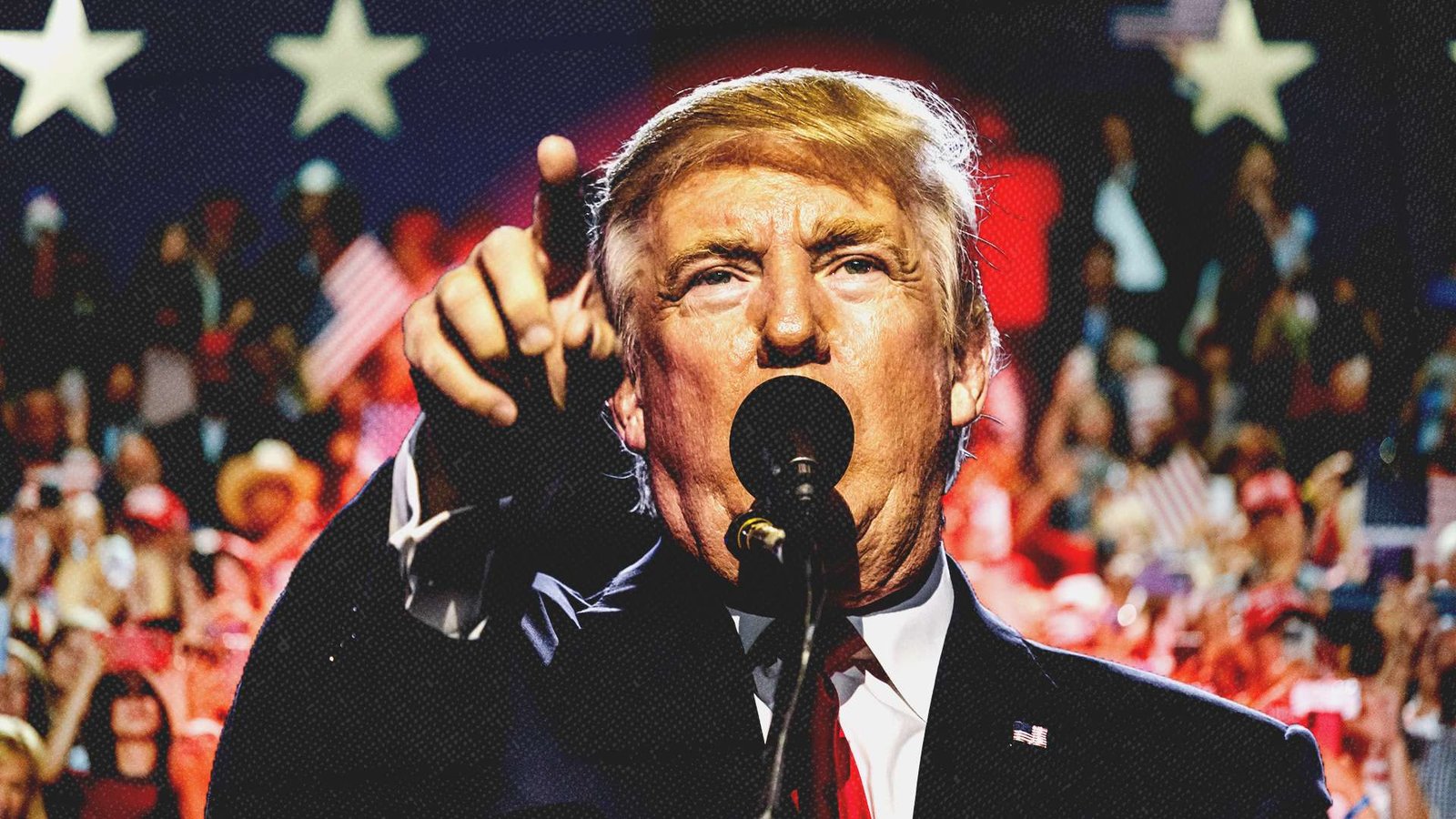
President Donald Trump rose to power by talking to desperate, distrustful, and angry Americans. In an interview with Reason, Anthony Scaramucci provides three critical mistakes that led to this atmosphere.
Trump currently holds some of the lowest approval ratings ever for a president prior to a midterm election, with 39.5 percent approval, according to RealClearPolitics. But it’s not entirely Trump’s fault. A Gallup poll in February 1999 reported that 71 percent of the country was satisfied with “the way things [were] going in the U.S.,” but that number has been declining for most of the last 25 years. Today it sits at just 21 percent.
Trump is unpopular, and American politics are unpopular. There is a deep sense in this nation that things aren’t working.
In an appearance on The Reason Interview With Nick Gillespie, financier and former White House Communications Director Anthony Scaramucci—who infamously served for just 11 days during Trump’s first term—proposes some answers for how we got here and where the country could go next.
1. The Hollowing Out of American Industry
The classic explanation for Trump’s 2016 victory is that he captured a traditionally Democratic base of rural and industrial workers. Scaramucci characterizes this base as “once aspirational white blue-collar workers, now feeling economically desperational. [Trump] was an avatar for their anger, and they showed up.”
Exit polls from the 2016 election showed a 9-point swing away from Democrats among non-college-educated voters. Scaramucci cites the Clinton administration’s decision in 2000 to reduce tariff barriers with China as a major cause of this swing. He thinks it was a critical mistake that accelerated the hollowing out of American manufacturing.
The data are a little more mixed. Employment in the manufacturing sector had been declining for decades before China’s globalization, peaking in 1979. Though increased competition with Chinese industry did further parts of this decline, it also radically reduced the cost of goods for American consumers.
Whether or not China’s globalization is to blame, the data are clear on one thing: Though median income and wealth in the U.S. have generally been growing since the ’70s, the benefits of this growth have not been evenly distributed. Non-college-educated workers have seen their incomes mostly stagnate, while college-educated workers have seen their wealth spike. Decades of financial stagnation are how a voter goes from aspirational to revanchist.
2. Misguided Wars in the Middle East
There was a brief window in the 1990s when it seemed like America had it all figured out. Satisfaction was at its zenith; 1998 closed out with the first federal budget surplus in 30 years. Then 9/11 happened, and the U.S. military marched out to begin decades of wars in the Middle East. As a financier, Scaramucci is quick to connect the budget with these campaigns abroad: “We cut taxes twice…in March ’01, and in March ’03.” The combination of rising military spending and falling tax revenues put the budget deficit in an unsustainable position. By the end of President George W. Bush’s tenure, the debt stood at $10.7 trillion—since then another $28 trillion has been added.
Scaramucci thinks America’s ability to absorb this debt is running thin: “If we keep the trajectory going, if we go to 200 percent debt to GDP [ratio]…that’s not going to be sustainable.” America’s debt obligation has become chronic; at almost 19 percent, interest payments as a percent of federal revenue are the highest they have ever been.
But America’s wars in the Middle East also came with a more subversive cost: trust in the government. After 9/11, there was a small spike in trust, but the Bush administration’s lies about the Iraq War and 7,000 dead soldiers rapidly eroded that trust. From the immediate aftermath of 9/11 to the end of the Bush administration, trust in government “to do the right thing” halved—from about 50 percent to 25 percent, according to Pew Research Center data. It has never exceeded 30 percent since.
3. The Financial Crisis
In 2008, America faced a crisis. As bank after bank was pushed to the edge of failure by their own irresponsible practices, the federal government authorized $700 billion to directly prop up the financial industry. This choice was controversial, but Scaramucci defends it as essential for economic stability.
He believes the third “wrong decision” was the inequity of 2008’s bailout settlement; money was given to the banks but not everyday people. Of the $475 billion distributed by the bailout, 85 percent of it went to the finance, insurance, and automotive industries. The crisis and ensuing recession hurt the net worth of most Americans, but less wealthy, non-college-educated people were hurt disproportionately more.
But beyond the material weight, it was the perception of the bailout as being elite-centric that energized populism and has haunted American politics since. “That would piss somebody off!” Scaramucci says.
In a poll taken just a month after Trump’s 2016 victory, 43 percent of Americans still opposed the 2008 bank bailout. Anger at the elites who mismanaged the crisis directly led to populist movements on the right in 2009 (the Tea Party) and the left in 2011 (Occupy Wall Street).
When the 2016 election came around, Trump was able to set his rhetorical sails and catch these prevailing winds of mistrust, dissatisfaction, and disdain. On the campaign trail, he explicitly railed against the Iraq War, blamed Wall Street for inequality, and showed up in the Rust Belt states. With voters feeling desperate from industrial decay, feeling lied to by the wars, feeling cheated by the banks, they were ready to vote for someone who would show up and see them.
But the voters’ anger and Trump’s rhetoric aren’t enough to reverse policy outcomes. Public debt continues to grow; optimism in the future continues to decline. And America is yet again rapt in war in the Middle East.
“This anger-based populism is not solving the problems,” Scaramucci says. When asked about solutions, he puts several forward, “You have to end gerrymandering or at least restrict it. You have to restore pay-as-you-go laws.” He also expresses support for means-testing Social Security.
It’s a wide-reaching slate of reforms. There are many others that could be added to the list. But the problem is not a lack of good ideas; it is a lack of engagement. Scaramucci describes how many apathetic voters have fallen into “this psychosis where nobody cares about the direction we are going in.”
Indeed, Trump had his biggest victory in 2024, and it was still with less than a third of eligible voters voting for him. You can win an election with anger, but you can’t fix a country with it.
Read the full article here
Fact Checker
Verify the accuracy of this article using AI-powered analysis and real-time sources.