Close Menu
FSNN | Free Speech News NetworkFSNN | Free Speech News Network
  • Home
  • News
    • Politics
    • Legal & Courts
    • Tech & Big Tech
    • Campus & Education
    • Media & Culture
    • Global Free Speech
  • Opinions
    • Debates
  • Video/Live
  • Community
  • Freedom Index
  • About
    • Mission
    • Contact
    • Support
Trending

Morning Minute: Saylor Sells Bitcoin for First Time Since 2022

13 seconds ago

Court Rejects Claim That Rwandan Speech Restrictions Will Prevent Rwandan Witnesses in U.S. Perjury Trial “from Speaking Freely About the Genocide”

31 minutes ago

Ripple’s RLUSD stablecoin expands to Turkey through three local platforms

52 minutes ago
Facebook X (Twitter) Instagram
Facebook X (Twitter) Discord Telegram
FSNN | Free Speech News NetworkFSNN | Free Speech News Network
Market Data Newsletter
Tuesday, June 2
  • Home
  • News
    • Politics
    • Legal & Courts
    • Tech & Big Tech
    • Campus & Education
    • Media & Culture
    • Global Free Speech
  • Opinions
    • Debates
  • Video/Live
  • Community
  • Freedom Index
  • About
    • Mission
    • Contact
    • Support
FSNN | Free Speech News NetworkFSNN | Free Speech News Network
Home»News»Media & Culture»Thomas and Alito Shortchange the Bill of Rights in Another Criminal Justice Case
Media & Culture

Thomas and Alito Shortchange the Bill of Rights in Another Criminal Justice Case

News RoomBy News Room2 hours agoNo Comments4 Mins Read1,520 Views
Share Facebook Twitter Pinterest Copy Link LinkedIn Tumblr Email VKontakte Telegram
Thomas and Alito Shortchange the Bill of Rights in Another Criminal Justice Case
Share
Facebook Twitter Pinterest Email Copy Link

Listen to the article

0:00
0:00

Key Takeaways

Playback Speed

Select a Voice

Greetings and welcome to the latest edition of the Injustice System newsletter. It’s now the first week of June, which means the U.S. Supreme Court has begun its annual mad dash to release all of its opinions in argued cases from its current term before the justices depart for their summer break. If past SCOTUS terms are any indication, we’ll get one or more big opinion drops each week for the next three or four weeks, usually on Thursdays, with everything wrapped up neat and tidy by the final days of June.

By my reckoning, there are still nearly a dozen huge cases left to be decided, dealing with issues ranging from executive power to immigration to digital privacy and the right to be free from unreasonable search and seizure.

You’re reading Injustice System from Damon Root and Reason. Get more of Damon’s commentary on constitutional law and American history.

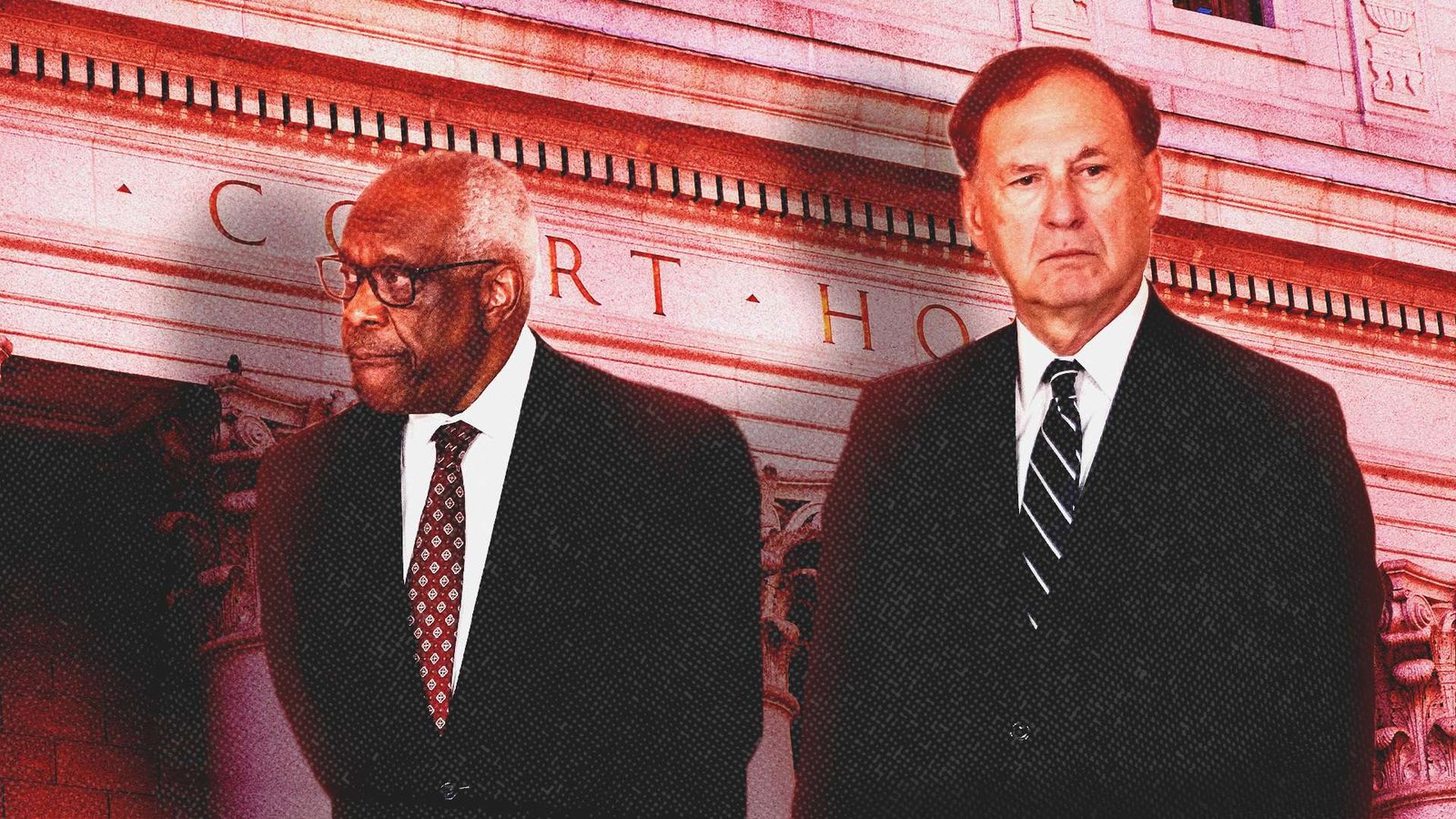
There have also been some notable occurrences in criminal justice cases happening just slightly to the side of the SCOTUS main stage. As I noted last week, Justices Clarence Thomas and Samuel Alito went out of their way to protest the Supreme Court’s refusal to review a lower court decision that denied qualified immunity to a police officer facing credible allegations of misconduct. Pointing to that case and others, I observed that “when viewed from a libertarian legal perspective, Thomas and Alito tend to stand out as the worst on criminal justice issues.”

Well, Thomas and Alito were at it again this week, once again protesting a Supreme Court action that cut against the interests of law enforcement. Yesterday, the Supreme Court issued an unsigned opinion in a case called Whitton v. Dixon. At issue was whether a lower court erred by weighing post-trial DNA evidence in its assessment of a state Supreme Court decision. In its per curiam opinion, the Court held that the lower court “should not have considered the post-trial DNA evidence in assessing whether the Florida Supreme Court reasonably determined that [a jailhouse informant’s] testimony was immaterial to the jury’s verdict. Because the post-trial DNA evidence was not presented to the jury (indeed, did not exist at the time of the trial), that evidence could not have influenced the jury’s verdict.”

Thomas dissented from this ruling, joined by Alito. “If the Eleventh Circuit erred at all in mentioning the DNA test results,” Thomas wrote, that error was “harmless” because the lower court also “thoroughly examined the overwhelming evidence against Whitton, which was more than sufficient to justify its decision.”

At its core, this case was about whether or not the failure to adhere to proper procedures in a criminal justice matter counted as a violation of the due process of law. The 7–2 majority held that because post-trial evidence was considered when such evidence should not have been considered, proper procedures had not been followed, and justice had not been done. SCOTUS therefore sent the case back to the judicial drawing board “for further proceedings consistent with this opinion.”

Thomas and Alito, by contrast, argued that the majority’s focus on procedural niceties was wholly misguided. According to Thomas’s dissent, the majority was overly focused “on ‘technicalit[ies]’ that do not ‘really affec[t]’ the outcome of a case.”

Complaining about criminal defendants skirting their comeuppance on account of legal “technicalities” is the hallmark of what is sometimes called “law and order conservatism.” One problem with this particular brand of conservative thought is the fact that the Constitution in general, and the Bill of Rights in particular, are devoted to the very sort of procedural safeguards that necessarily benefit criminal defendants from time to time precisely because that is what it takes to impose consistent and principled limits on government power.

When Thomas and Alito are complaining about pesky “technicalities” that aid criminal defendants, in other words, they are really complaining about the pesky Constitution.


Please forgive the shameless self-promotion, but my latest book was officially published this week, and I wanted to tell you just a little bit about it.

It’s called Emancipation War: The Fall of Slavery and the Coming of the Thirteenth Amendment. It’s my attempt to understand and explain the legal, political, and military factors that made an antislavery constitutional amendment possible. You can read a short excerpt from it here and acquire a copy of your own here. I hope you’ll check it out.

Read the full article here

Fact Checker

Verify the accuracy of this article using AI-powered analysis and real-time sources.

Get Your Fact Check Report

Enter your email to receive detailed fact-checking analysis

5 free reports remaining

Continue with Full Access

You've used your 5 free reports. Sign up for unlimited access!

Already have an account? Sign in here

#IndependentMedia #MediaBias #MediaEthics #NarrativeControl #PoliticalMedia
Share. Facebook Twitter Pinterest LinkedIn Tumblr Email Telegram Copy Link
News Room
  • Website
  • Facebook
  • X (Twitter)
  • Instagram
  • LinkedIn

The FSNN News Room is the voice of our in-house journalists, editors, and researchers. We deliver timely, unbiased reporting at the crossroads of finance, cryptocurrency, and global politics, providing clear, fact-driven analysis free from agendas.

Related Articles

Cryptocurrency & Free Speech Finance

Morning Minute: Saylor Sells Bitcoin for First Time Since 2022

13 seconds ago
Media & Culture

Court Rejects Claim That Rwandan Speech Restrictions Will Prevent Rwandan Witnesses in U.S. Perjury Trial “from Speaking Freely About the Genocide”

31 minutes ago
Media & Culture

1776 All-Stars: Benjamin Franklin Reminds Us To Just Do Things

3 hours ago
Media & Culture

Conviction for Antifa Conspiracy to Riot Upheld, Despite Claim of Mental Disorder

4 hours ago
Media & Culture

Brickbat: Pawned Off

5 hours ago
Media & Culture

The Federal Government Botched the Bicentennial Too

6 hours ago
Add A Comment
Leave A Reply Cancel Reply

Editors Picks

Court Rejects Claim That Rwandan Speech Restrictions Will Prevent Rwandan Witnesses in U.S. Perjury Trial “from Speaking Freely About the Genocide”

31 minutes ago

Ripple’s RLUSD stablecoin expands to Turkey through three local platforms

52 minutes ago

Strategy’s Bitcoin Sale Sparks Polymarket Dispute

58 minutes ago

Thomas and Alito Shortchange the Bill of Rights in Another Criminal Justice Case

2 hours ago
Latest Posts

Stefanelli has been banned from the West Bank over “one-sided” coverage. Photo montage: Alessandro Stefanelli/IDF Spokesperson’s Unit Police documents released in response to a court appeal by Italian freelance photojournalist Alessandro Stefanelli against being banned from entering Israel last year to continue his coverage of the West Bank show that Israel has established a police body that reviews and analyses work by foreign journalists and that these dossiers are used as the basis for denying entry into the country. Stefanelli’s coverage was found by police to be “one-sided” according to the documents and police linked to articles that purportedly proved this, even though in some cases Stefanelli, who contributes to Le Soir, La Stampa and many other publications, had only taken the pictures and not written the text. In one case police cited as evidence a tweet by someone else in response to one of his items He had been to Israel and the West Bank 13 times over two and a half years, always with Israeli government credentials, before being banned last June, he told Index. Some of his work focused on the rise in violence by state backed far right settlers against Palestinian civilians in the West Bank. Next to one link the police, from the Judea and Samaria (West Bank) district wrote that after the 7 October 2023 Hamas attack, Stefanelli “accuses Israel of creating apartheid in Judea and Samaria” an assessment that many journalists and academics, including Israeli rights groups, consider to be factual. The police document on Stefanelli specified that police had recommended to population control authorities that they ban other foreign journalists based on reviews of their work, but their names were not released. Reporters sans frontières (RSF) –  in a recent statement –  referenced an Israeli Ministry of Diaspora Affairs and Combating Antisemitism announcement that an entry ban had been imposed on Spanish freelancer Queralt Castillo. The reason for the ban was that entry to the country “will not be permitted for those who act against Israel, as part of its fight against antisemitism and the BDS (boycott,dDivestment and sanctions) movement.” It is a dramatic deterioration for a country that once prided itself on being a bastion of media freedom, but which critics say has been shifting into authoritarianism and narrowing freedom of expression since Benjamin Netanyahu returned to power in the 2022 election and formed the most right-wing coalition in Israeli history. Shamai Glick, head of the right wing B’tsalmo NGO, welcomed the revelations of police scrutiny of journalists, saying “whoever incites against Israel must pay the heaviest price possible and if it means a ban on entry to Israel, then I am proud of this.” By contrast, Stefanelli’s lawyer, Tamir Blank said Israel is now “one step away from having thought police.” Among Israel’s previous steps against foreign and Israeli media freedom has been the ban since the Hamas attacks on entry to Gaza of foreign journalists to cover the war unless they are escorted by the IDF; the closure of the  Qatari-owned Al-Jazeera outlet on grounds of incitement, and an attempt by the government to undermine the financial viability of  Haaretz, Israel’s leading opposition outlet. Most seriously, Israel stands accused of assassinating Gaza journalists, as previously reported by Index, and placing their West Bank counterparts in administrative detention without charges under grueling conditions. Israeli authorities say that Palestinians often use the cover of being media personnel to engage in terror-related activities. But being caught red handed banning foreign journalists based on analysing their writings is a new development.  Unless the court appeal by Stefanelli that was heard on 19 May succeeds in overturning the ban against him, such censorship is certain to widen given Israel’s interest in concealing the escalating abuses of its military regime and violent and illegal settlers in the West Bank. Their attacks – which drive Palestinians off their lands – have now reached record levels. Interior Ministry spokesperson Sabine Haddad told Index that the Government Press Office(GPO) “did not object” to Stefanelli’s ban from the country. This was despite Stefanelli telling Index that the GPO had fully accredited him during each of his near monthly reporting trips to the West Bank since November 2023. The GPO, part of the prime minister’s office, also issues credentials that enable employed foreign correspondents to receive year long visas and pass through IDF checkpoints in the West Bank. Contacted by Index, Stefanelli said of the ban: “They fear scrutiny, documentation and critical reporting. It’s a new wave of censorship that starts with freelance journalists and can spread.” Prominent Israeli human rights lawyer Michael Sfard said the banning of the journalists must be seen within the context of overall government efforts to limit the flow of information from the occupied territories. These have targeted humanitarian workers, aid groups and Israeli human rights organisations, he said. In order to register with Israeli authorities, humanitarian groups must now prove that they “don’t engage in delegitimisation of Israel” something that in practice means not criticising Israel, he said. “The goal is to make it very difficult for there to be credible reporting to furnish the international discussion over Israel-Palestine,” Sfard said. READ MORE

2 hours ago

BTC price hits April lows while AI tokens surge, exposing a split in the crypto market

2 hours ago

Mt. Gox Moves $739M in Bitcoin for First Time in Two Months

2 hours ago

Subscribe to News

Get the latest news and updates directly to your inbox.

At FSNN – Free Speech News Network, we deliver unfiltered reporting and in-depth analysis on the stories that matter most. From breaking headlines to global perspectives, our mission is to keep you informed, empowered, and connected.

FSNN.net is owned and operated by GlobalBoost Media
, an independent media organization dedicated to advancing transparency, free expression, and factual journalism across the digital landscape.

Facebook X (Twitter) Discord Telegram
Latest News

Morning Minute: Saylor Sells Bitcoin for First Time Since 2022

13 seconds ago

Court Rejects Claim That Rwandan Speech Restrictions Will Prevent Rwandan Witnesses in U.S. Perjury Trial “from Speaking Freely About the Genocide”

31 minutes ago

Ripple’s RLUSD stablecoin expands to Turkey through three local platforms

52 minutes ago

Subscribe to Updates

Get the latest news and updates directly to your inbox.

© 2026 GlobalBoost Media. All Rights Reserved.
  • Privacy Policy
  • Terms of Service
  • Our Authors
  • Contact

Type above and press Enter to search. Press Esc to cancel.

🍪

Cookies

We and our selected partners wish to use cookies to collect information about you for functional purposes and statistical marketing. You may not give us your consent for certain purposes by selecting an option and you can withdraw your consent at any time via the cookie icon.

Cookie Preferences

Manage Cookies

Cookies are small text that can be used by websites to make the user experience more efficient. The law states that we may store cookies on your device if they are strictly necessary for the operation of this site. For all other types of cookies, we need your permission. This site uses various types of cookies. Some cookies are placed by third party services that appear on our pages.

Your permission applies to the following domains:

  • https://fsnn.net
Necessary
Necessary cookies help make a website usable by enabling basic functions like page navigation and access to secure areas of the website. The website cannot function properly without these cookies.
Statistic
Statistic cookies help website owners to understand how visitors interact with websites by collecting and reporting information anonymously.
Preferences
Preference cookies enable a website to remember information that changes the way the website behaves or looks, like your preferred language or the region that you are in.
Marketing
Marketing cookies are used to track visitors across websites. The intention is to display ads that are relevant and engaging for the individual user and thereby more valuable for publishers and third party advertisers.