Close Menu
FSNN | Free Speech News NetworkFSNN | Free Speech News Network
  • Home
  • News
    • Politics
    • Legal & Courts
    • Tech & Big Tech
    • Campus & Education
    • Media & Culture
    • Global Free Speech
  • Opinions
    • Debates
  • Video/Live
  • Community
  • Freedom Index
  • About
    • Mission
    • Contact
    • Support
Trending

Kaiko extends Series B funding round to $110 million with S&P Global, BNP Paribas

5 minutes ago

Chief Justice Roberts Goes Postal on Trump’s USPS Rule

41 minutes ago

Don’t let perfect be the enemy of Clarity

1 hour ago
Facebook X (Twitter) Instagram
Facebook X (Twitter) Discord Telegram
FSNN | Free Speech News NetworkFSNN | Free Speech News Network
Market Data Newsletter
Tuesday, September 15
  • Home
  • News
    • Politics
    • Legal & Courts
    • Tech & Big Tech
    • Campus & Education
    • Media & Culture
    • Global Free Speech
  • Opinions
    • Debates
  • Video/Live
  • Community
  • Freedom Index
  • About
    • Mission
    • Contact
    • Support
FSNN | Free Speech News NetworkFSNN | Free Speech News Network
Home»News»Media & Culture»This Bipartisan Senate Bill Would Make Your Google Search Results Less Useful
Media & Culture

This Bipartisan Senate Bill Would Make Your Google Search Results Less Useful

News RoomBy News Room2 months agoNo Comments3 Mins Read8 Views
Share Facebook Twitter Pinterest Copy Link LinkedIn Tumblr Email VKontakte Telegram
This Bipartisan Senate Bill Would Make Your Google Search Results Less Useful
Share
Facebook Twitter Pinterest Email Copy Link

Listen to the article

0:00
0:00

Key Takeaways

Playback Speed

Select a Voice

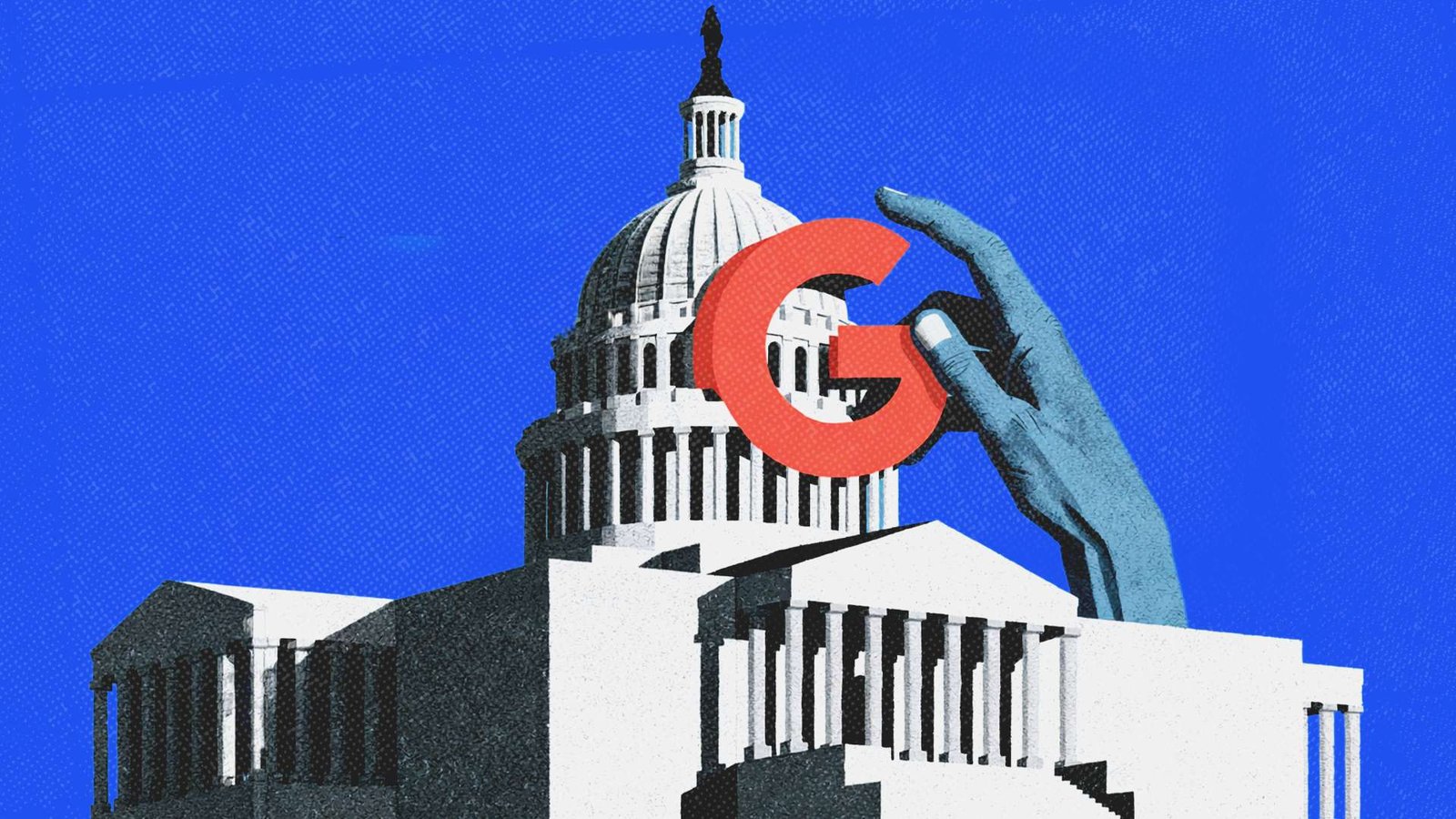
Over the past several years, a regulatory crusade spanning both the Biden and Trump administrations has hyperscrutinized Google’s search engine and business practices in an attempt to label the company a monopoly and justify unprecedented government intervention into Alphabet’s most widely used product. Now Congress is weighing in. A bipartisan group of senators has introduced the Securing Enforcement of Americans’ Right to Competition at Home (SEARCH) Act, which would prohibit dominant search engines from using certain default distribution agreements or favoring their own services over competitors in search results. 

Companies that fail to follow these directives will be subject to antitrust enforcement, possibly including civil penalties and court-ordered behavior changes. With the SEARCH Act, legislators will be following in the steps of Europe. On Thursday, the European Union fined Google $1 billion for “illegally undercutting competition through its dominance as a search engine,” per The New York Times.

The SEARCH Act was introduced by Sens. Amy Klobuchar (D–Minn.) and Eric Schmitt (R–Mo.) earlier this month. In a press release, Klobuchar said the bill would “put the guardrails in place that both the Biden and Trump Administrations have said are necessary to bring competition to online search,” and Schmitt said it would “protect one of the key tenets of modern American society: free speech online.” But their legislative approach would go beyond antitrust enforcement or defense of the First Amendment, instead using government power to redesign successful products that consumers voluntarily use billions of times every day.

It should surprise no one that Google integrates its other products into its own search engine. Consumers searching for directions, flights, restaurants, or shopping locations expect useful, integrated results—not a virtual experience designed by the Federal Trade Commission.

The same goes for default agreements—where tech comes preloaded with apps that consumers are likely to want. Technology companies have long competed for default placement because it offers consumers a seamless experience and reflects what users already prefer. Regulators are quick to point out that competition is only meaningful if consumers are free to choose. But that’s just the thing: They are. Anyone who wants to use Bing or DuckDuckGo can change their default in a matter of seconds. 

What’s more, with the advent of artificial intelligence, the search market is evolving faster than at any point in the past two decades. Millions of Americans now use ChatGPT, Claude, Grok, or other AI models in place of or alongside traditional search engines. Google itself has fundamentally changed its search engine by integrating in its AI Mode. Regulations on traditional search engines may not even be relevant. Instead of recognizing that innovation is reshaping how Americans find information online, lawmakers are attempting to lock outdated assumptions into federal law.

That’s why the judge in the initial antitrust case cautioned against breaking up Google, despite ruling it held a monopoly in the search business. “The emergence of GenAI changed the course of this case,” wrote Judge Amit P. Mehta of the United States District Court for the District of Columbia.

The SEARCH Act reflects a fundamental misunderstanding of competition. With new technology and more players, the market is evolving without the government prescribing how search engines should work. Congress should let innovation run its course. After all, the customer is always right. 

Read the full article here

Fact Checker

Verify the accuracy of this article using AI-powered analysis and real-time sources.

Get Your Fact Check Report

Enter your email to receive detailed fact-checking analysis

5 free reports remaining

Continue with Full Access

You've used your 5 free reports. Sign up for unlimited access!

Already have an account? Sign in here

#CivicEngagement #MediaAndPolitics #MediaBias #PoliticalMedia #PublicOpinion
Share. Facebook Twitter Pinterest LinkedIn Tumblr Email Telegram Copy Link
News Room
  • Website
  • Facebook
  • X (Twitter)
  • Instagram
  • LinkedIn

The FSNN News Room is the voice of our in-house journalists, editors, and researchers. We deliver timely, unbiased reporting at the crossroads of finance, cryptocurrency, and global politics, providing clear, fact-driven analysis free from agendas.

Related Articles

Media & Culture

Chief Justice Roberts Goes Postal on Trump’s USPS Rule

41 minutes ago
Cryptocurrency & Free Speech Finance

Morning Minute: Clarity Act Odds Soar as Trump Agrees to Ethics Provisions

1 hour ago
Media & Culture

Journal of Free Speech Law: “Forced Unanimity and the First Amendment,” by Frank LoMonte

2 hours ago
Cryptocurrency & Free Speech Finance

Strategy Buys Back $139 Million of STRC, Bitcoin Stack Frozen for Second Week

2 hours ago
Media & Culture

New Book on “Democracy’s Challenges: 100 Ideas”

3 hours ago
Cryptocurrency & Free Speech Finance

Bitcoin Climbs as AI Slowdown Calls Sink Nvidia, Intel and Other Chip Stocks

3 hours ago
Add A Comment

Comments are closed.

Editors Picks

Chief Justice Roberts Goes Postal on Trump’s USPS Rule

41 minutes ago

Don’t let perfect be the enemy of Clarity

1 hour ago

Democrats push back on GOP’s ‘final’ CLARITY offer with counterproposal: Politico

1 hour ago

Morning Minute: Clarity Act Odds Soar as Trump Agrees to Ethics Provisions

1 hour ago
Latest Posts

Journal of Free Speech Law: “Forced Unanimity and the First Amendment,” by Frank LoMonte

2 hours ago

Even if Clarity fails, Wall Street’s crypto push is unlikely to stop

2 hours ago

Strategy Buys Back $139 Million of STRC, Bitcoin Stack Frozen for Second Week

2 hours ago

Subscribe to News

Get the latest news and updates directly to your inbox.

At FSNN – Free Speech News Network, we deliver unfiltered reporting and in-depth analysis on the stories that matter most. From breaking headlines to global perspectives, our mission is to keep you informed, empowered, and connected.

FSNN.net is owned and operated by GlobalBoost Media
, an independent media organization dedicated to advancing transparency, free expression, and factual journalism across the digital landscape.

Facebook X (Twitter) Discord Telegram
Latest News

Kaiko extends Series B funding round to $110 million with S&P Global, BNP Paribas

5 minutes ago

Chief Justice Roberts Goes Postal on Trump’s USPS Rule

41 minutes ago

Don’t let perfect be the enemy of Clarity

1 hour ago

Subscribe to Updates

Get the latest news and updates directly to your inbox.

© 2026 GlobalBoost Media. All Rights Reserved.
  • Privacy Policy
  • Terms of Service
  • Our Authors
  • Contact

Type above and press Enter to search. Press Esc to cancel.

🍪

Cookies

We and our selected partners wish to use cookies to collect information about you for functional purposes and statistical marketing. You may not give us your consent for certain purposes by selecting an option and you can withdraw your consent at any time via the cookie icon.

Cookie Preferences

Manage Cookies

Cookies are small text that can be used by websites to make the user experience more efficient. The law states that we may store cookies on your device if they are strictly necessary for the operation of this site. For all other types of cookies, we need your permission. This site uses various types of cookies. Some cookies are placed by third party services that appear on our pages.

Your permission applies to the following domains:

  • https://fsnn.net
Necessary
Necessary cookies help make a website usable by enabling basic functions like page navigation and access to secure areas of the website. The website cannot function properly without these cookies.
Statistic
Statistic cookies help website owners to understand how visitors interact with websites by collecting and reporting information anonymously.
Preferences
Preference cookies enable a website to remember information that changes the way the website behaves or looks, like your preferred language or the region that you are in.
Marketing
Marketing cookies are used to track visitors across websites. The intention is to display ads that are relevant and engaging for the individual user and thereby more valuable for publishers and third party advertisers.