Close Menu
FSNN | Free Speech News NetworkFSNN | Free Speech News Network
  • Home
  • News
    • Politics
    • Legal & Courts
    • Tech & Big Tech
    • Campus & Education
    • Media & Culture
    • Global Free Speech
  • Opinions
    • Debates
  • Video/Live
  • Community
  • Freedom Index
  • About
    • Mission
    • Contact
    • Support
Trending

The UK’s Teen Social Media Ban Is Political Theater, Not Child Safety Policy

25 seconds ago

Robocalls Are Annoying. Eroding Privacy Is Not the Right Way To Stop Them.

2 minutes ago

U.S. senators urge Treasury not to leave states out of GENIUS Act stablecoin process

22 minutes ago
Facebook X (Twitter) Instagram
Facebook X (Twitter) Discord Telegram
FSNN | Free Speech News NetworkFSNN | Free Speech News Network
Market Data Newsletter
Tuesday, June 16
  • Home
  • News
    • Politics
    • Legal & Courts
    • Tech & Big Tech
    • Campus & Education
    • Media & Culture
    • Global Free Speech
  • Opinions
    • Debates
  • Video/Live
  • Community
  • Freedom Index
  • About
    • Mission
    • Contact
    • Support
FSNN | Free Speech News NetworkFSNN | Free Speech News Network
Home»News»Global Free Speech»‘They want to break her’: A Q&A with jailed Tunisian commentator Sonia Dahmani’s sister
Global Free Speech

‘They want to break her’: A Q&A with jailed Tunisian commentator Sonia Dahmani’s sister

News RoomBy News Room9 months agoNo Comments7 Mins Read1,952 Views
Share Facebook Twitter Pinterest Copy Link LinkedIn Tumblr Email VKontakte Telegram
‘They want to break her’: A Q&A with jailed Tunisian commentator Sonia Dahmani’s sister
Share
Facebook Twitter Pinterest Email Copy Link

Listen to the article

0:00
0:00

Key Takeaways

Playback Speed

Select a Voice

Tunisian lawyer and commentator Sonia Dahmani, known for her bold defense of human rights and civil liberties, has become a symbol of the country’s escalating crackdown on dissent. Arrested in May 2024, she has been subjected to five separate legal proceedings that could put her behind bars for decades under Decree 54 — a law that President Kais Saied’s government has turned into its main weapon against political commentary and independent journalism.

Dahmani, 59, was a public fixture on Tunisian TV and radio shows, including “Emission Impossible” on IFM Radio and “Denya Zida” on Carthage+, where she spoke out against racism toward sub-Saharan migrants and condemned the erosion of political freedoms in Tunisia. Some of those remarks now form the basis of the cases against her, all framed as “false news aimed at spreading chaos in Tunisian society”.

Her prosecution comes amid a broader assault on free expression in Tunisia. Since Saied’s 2021 power grab — when he dissolved parliament, took control of the judiciary, and gave himself powers to rule by decree — opposition leaders, journalists, and other government critics have increasingly faced arrest and harassment. At least four journalists, including Dahmani, Mourad Zghidi,  Borhen Bsaies, and Chadha Hadj Mbarek, are currently imprisoned, the second highest number CPJ has recorded in the country since 1992.

In prison, Dahmani has described enduring degrading conditions, harassment, and sexual assault, while her health has sharply deteriorated. CPJ emailed Tunisia’s Presidency requesting comment but did not receive a reply. 

CPJ spoke to her sister Ramla Dahmani about the charges against her, her treatment behind bars, and what the case reveals about Tunisia’s justice system today.

This interview has been translated from Arabic and edited for length and clarity.

What kinds of treatment has Sonia described experiencing while in prison?

They [authorities] want to break her. Sonia’s prison conditions are unbearable. Last August, in 2024, she was not allowed to shower for six full weeks. Can you imagine six weeks in the Tunisian summer heat, in a cell full of rats, cockroaches, and damp walls that drip water? The cell is around twenty square meters, shared with four other women convicted of crimes like murder, theft, drug dealing. There is no dignity, no privacy. In winter, the dripping water freezes; in summer, temperatures rise above fifty degrees [Celsius].

She has been denied basics: no pillow, no coat in winter, no gloves, no mirror, she’s not allowed to cut her hair or nails. For over a year, she has not even seen her own reflection. Food is another form of humiliation. The family brings her meals three times a week, but items are often refused for no reason. She is not allowed to heat her food, so she eats it cold — even frozen during winter.

Sonia Dahmani, a lawyer, writer, and prominent commentator in Tunisia, a law that has become the government main weapon against political commentary and independent journalism. (Photo: Courtesy of Ramla Dahmani)

All of this has affected her health terribly. She was healthy before, but now she has diabetes, thyroid problems, high blood pressure, and severe back and shoulder pain. Because she cannot move or exercise, her muscles have wasted away. A doctor prescribed physiotherapy, but when they take her to the hospital, it is with her hands cuffed behind her back, surrounded by masked guards carrying heavy weapons. She returns worse than when she left. 

Mentally, she is still strong and hasn’t given up. But the isolation has taken a toll. She is cut off from newspapers, from the radio, from the outside world. The only channel she can watch is state TV that praises the president. The lights are kept on 24 hours a day, which is a tool of psychological torture. She hasn’t known darkness or real rest for a year and a half. 

Can you explain the charges Sonia is facing, and how Tunisia’s laws are being applied in her case?

Sonia has five cases in total, all under Decree 54, about so-called ‘false news.’ What makes no sense is that three of these cases are for the exact same comment. She made the same comment once on radio and again on TV, and they opened two separate prosecutions on top of the first. Imagine being sentenced again and again for the same words, it is pure harassment through the courts.

She has already been sentenced in three of these cases and is serving nearly five years in prison. The fourth case is because she denounced the conditions inside prisons, the overcrowding, the filth, the lack of dignity, and the prison administration filed a complaint. Because officials are considered public servants, the possible sentence was doubled from five to ten years. The fifth case was opened after she said that “overcrowding prisons is not an ‘achievement’ of the justice minister”. That too carries up to ten years.

Now she faces five cases, with potential prison sentences exceeding 20 years, all because she dared to speak publicly. The law is not applied fairly; it is bent and twisted to silence her. This is no longer a justice system. It is a punishment system for dissent.

Can you tell us about the sexual assault Sonia experienced in detention, and how authorities responded?

On August 20, 2024, before a hearing, Sonia was subjected to what she described as rape. A female guard forced her to undress completely, touched her body, and assaulted her while saying, ‘I can do whatever I want.’ She told us later, ‘I was raped that day.’

As if that was not enough, they further tried to humiliate her by forcing her to wear a safsari to the hearing, which is a white full-body veil used for women in ‘morality’ cases. She refused, saying she had nothing to be ashamed of, and when she finally agreed, they still refused to take her to court. They proceeded with the trial in her absence. 

We filed a complaint against prison authorities on August 26, 2024, for sexual assault and torture. Nothing has happened since. More than a year later, no accountability, no justice. The UN even raised questions about the case, but the Tunisian government simply denied the assault ever occurred. 
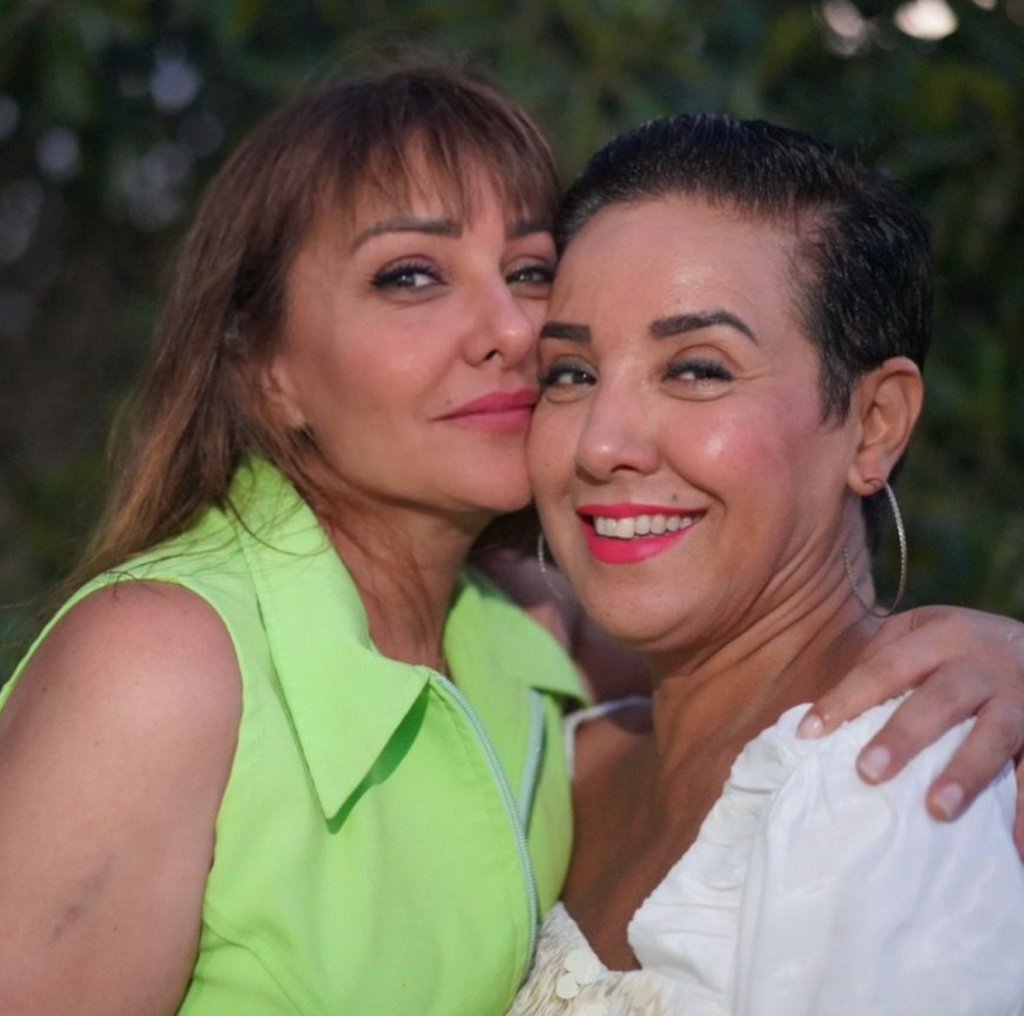
Ramla and Sonia Dahmani pose for a photo.
Ramla (left) and Sonia Dahmani (right) pose for a photo. (Photo: Courtesy of Ramla Dahmani)

How has this ordeal affected your family, and what does Sonia’s case reveal about Tunisia’s justice system?

The toll on our family is huge. We are only allowed fifteen minutes a week with Sonia, behind glass, under surveillance. If we say anything they don’t like, the visit is cut off  immediately. My parents, who are elderly, endure this exhausting trip every week just for those fifteen minutes, if the prison even allows them in. 

Lawyers also face impossible restrictions. Before, four or five lawyers could see her daily. Now only one or two lawyers are allowed per week, and all meetings are recorded on camera with a guard present. There is no confidentiality, no real legal defense. And when we as a family or her lawyers speak out, we are threatened or intimidated. I am sentenced in absentia to two years in prison for advocating for Sonia, and I am facing two other pending cases on terrorism charges for advocating for my sister.

To me, Sonia has become a symbol. Her case shows that Tunisia’s judiciary is no longer independent. When a single comment can generate three different prosecutions, when criticism of a minister becomes a ten-year charge, when prison abuse is punished not by reform but by more charges, this is not justice. Sonia’s case is not just about her. It is about the price anyone in Tunisia pays if they dare to speak out.

Read the full article here

Fact Checker

Verify the accuracy of this article using AI-powered analysis and real-time sources.

Get Your Fact Check Report

Enter your email to receive detailed fact-checking analysis

5 free reports remaining

Continue with Full Access

You've used your 5 free reports. Sign up for unlimited access!

Already have an account? Sign in here

Share. Facebook Twitter Pinterest LinkedIn Tumblr Email Telegram Copy Link
News Room
  • Website
  • Facebook
  • X (Twitter)
  • Instagram
  • LinkedIn

The FSNN News Room is the voice of our in-house journalists, editors, and researchers. We deliver timely, unbiased reporting at the crossroads of finance, cryptocurrency, and global politics, providing clear, fact-driven analysis free from agendas.

Related Articles

Global Free Speech

In Mali, 2 more journalists arrested under cybercrime law for criticizing authorities

3 hours ago
Global Free Speech

The UK plans to ban under 16s from accessing social media. Photo: Nick Fancher/Unsplash The UK government has announced a ban on social media for under-16s and then some kind of social media curfew at night for children between 17 and 18. I’m pretty sympathetic to the idea that we need to hold social media companies to account for children and young people’s unfettered access to the kind of content that would be pretty bad for me as an adult if I sought it out. I know of young teenagers who have been lured into sending nude pictures to a sexy “woman” online and then told the images will be sent to all their friends unless they hand over a lot of money. And anorexic girls who find others online to compare what food they have eaten and how to outwit the doctors and parents who are trying to help them. And 14-year-old boys who are pushed vile misogynistic content from the manosphere because the algorithm has identified them as being just that, a 14-year-old boy. Most young people will have seen hardcore violent porn – stuff that my generation couldn’t have even accessed in licensed porn shops – by the age of 11 or 12. At one time a few years ago, kids regularly shared videos of beheadings in the playground. When we carried out research for our Gen Z themed issue last year, many young people said they had seen the video footage of Charlie Kirk being shot. But ban children from most social media platforms altogether? What is their right to free expression? YouTube can push you manosphere videos, but many young people use YouTube to learn: from understanding maths to grasping complicated concepts. This is important in general and especially important for dyslexic kids who have problems reading, or for children from poorer households without books. Social media – often a gateway to the internet more broadly – can open up a world that as a teenager you might never experience at home: music, books and culture. Social media often gives people the words to describe how they feel and who they are. Instagram is just as much a place to share dance routines and comedy sketches as it is to learn about politics and news. Social media is a place of protest too, and yes, even for the under-18s. We didn’t object to the revelation that youth revolts against an elderly oligarchy in Nepal were organised via the gaming site Discord, and that a viral video of a schoolboy kicked them off. In 2026 digital rights are a central part of freedom of expression, not just an add-on, and freedom of expression is not just something you get as a grown-up. This is before we consider whether a social media ban is possible. It undoubtedly isn’t. Australia which introduced a ban (although not on YouTube, gaming sites or education sites) has shown us that young people and families can very well circumvent it. At least 60% of young people are still on social media, including on many much less regulated than sites like Snapchat. VPNs make it easier to bypass all national regulation. We use VPNs at Index as an extra layer of security and privacy and we acknowledge the crucial role they play in authoritarian states. Do we want the government to ban them too – or fine children’s parents if they let them use them? How the hell do you police a curfew for 17 to 18 year olds anyway? Will neighbours report young people hanging around the streets after 9pm on their phones? Governments who introduce policies they know won’t work just discredit themselves. The thing that shocked me most about Prime Minister Keir Starmer’s announcement was that there was no mention of the trade-offs between a social media ban and free expression as if it simply wasn’t an issue. No reassurance that the government wouldn’t decide at some stage that the ban on social media and gaming might extend to adults taking part in perfectly legitimate behaviour which the government might disapprove of. Or an admission that the government itself uses social media sites freely to push its own messages (including the latest announcement). In many ways, the government’s ban on social media for children feels like an evasion. The government doesn’t want to address the deep problems social media causes for all of us: that X is a platform run by a US-based trillionaire, Elon Musk, who wants to use it to influence our national politics. Or that Mark Zuckerberg talks a good free speech game but his company, Meta, is trying to suppress a book, Sarah Wynn Williams’ Careless People, about how the company operates. Or that extremist views and racist conspiracy theories – including from bad actors which ban social media in their own countries –  are being used to cause deep societal divisions and bring huge financial rewards for the social media companies themselves. That’s before we even talk about tax evasion and the way our data (and our children’s data) is being monetised.  How social media platforms operate is untransparent, complicated and changing all the time. How children are affected – or not – is doubly complicated. Platforms have vast computing resources – and could be regulated by government to be more transparent about the way they operate without affecting free expression. Then we might all be able to decide democratically what sort of a society we want online –  for us and our children. My kids, now in their 20s, grew up in the current atmosphere. Their generation distrust many things they read online, share tips on how to avoid scams and go on regular detoxes from social media so they don’t endlessly scroll. They have vast networks of real friends online but are increasingly trying to do more things IRL (in real life). They are incredibly lucky to be living in a liberal democracy, which mostly doesn’t restrict access to social media and where the internet has opened up their minds to untold possibilities and ideas. In China, social media is accessed through government-monitored websites centred round WeChat: every interaction can be seen by the censors if they choose to. VPNs regularly get blocked. Russia is tightening its grip on cyber space and people often find the internet has been taken down by the security services. It’s a similar story in Iran, which is just coming out of a months-long internet blockade. And in these countries and others, we regularly hear of people who comment or like a social media post from a person or organisation the government doesn’t like and end up in prison or worse. It would be hyperbolic at this stage to suggest the UK is moving in the direction of China, Russia and Iran. But nor should we downplay what a paternalistic move this is. It bypasses the benefits of the internet for children without actually tackling the risks. The internet, when it started, opened up a world of free expression. Today governments should be thinking about how to protect that right to free expression for everyone including young people, not issuing unenforceable bans that will ultimately punish teenagers and their parents –  and which ministers know won’t work. Perhaps the Prime Minister and his cabinet should be looking a little carefully at the older generation’s behaviour. Recent US research showed that it is the over 65s who are most likely to spread misinformation and fake news online. Or is this the next step? Remove the internet from the teens, next the boomers and then all of us.   READ MORE

5 hours ago
Global Free Speech

Photo: Fauzan Saari/Unsplash George Orwell didn’t mince his words when it came to international sporting events. In 1945, following Dynamo Moscow’s draw with Chelsea FC – a result that delighted Joseph Stalin – Orwell described such fixtures as “mimic warfare” and “orgies of hate”. Football fans will no doubt take issue with Orwell, arguing that the beautiful game is just as unifying as it is divisive and I’ll admit to a soft spot for a major tournament. But as with all things Orwell, the man has a point. Today the 2026 World Cup begins, hosted between the USA, Canada and Mexico. Players and referees have already been denied entry to the USA in a sign that the Trump administration’s immigration policy impacts everyone. This isn’t really a free speech issue, but it speaks to a broader chill around immigration, that has also targeted people on the basis of their speech. Organisations that campaign for media freedom are worried. The Press Freedom Tracker has expressed concerns about the role of ICE agents during the tournament and how journalists may be detained for less than favourable reporting. The Committee to Protect Journalists (CPJ) have issued guidance for foreign reporters in the country too. Seeing this, a friend of mine, a former Moscow correspondent, noted that the advice was strikingly reminiscent of guidance issued during the 2018 World Cup in Vladimir Putin’s Russia. Your average sports correspondent may not have a problem. Football is fairly safe to report on if you stick to what’s happening on the pitch. It does though become more dangerous once you probe beneath. Speak to journalists behind Football Leaks, a cross-border investigation that revealed “how agents, intermediaries and club officials are perverting sporting ethics and tax regulations to maximise their access to the riches generated from football, at the expense of the quality of the game, the development of talent and the wishes of the fans”. Getting the stories out as part of this investigation was riddled with risk. It makes sense. We know the rich and powerful abuse legal systems and professional football is a game of the rich and powerful. Of more immediate concern are the stories beyond the fixtures, the ones that curious journalists may understandably want to pursue once on the ground in the three countries. While media freedom in Canada remains high, it’s far more fragile in the USA and even more so in Mexico. I’ve heard reports of walls being erected and banners deployed to conceal poverty and urban decay in Mexico. As the nation tries to put its best foot forward, in every sense, will they want reporters snapping away at this? But it’s not all bad. Teachers in Mexico are protesting near the World Cup stadium in an attempt to use this sensitive moment to push through a pay rise. They may very well succeed and the president, Claudia Sheinbaum, has apparently ruled out a heavy-handed response, presumably in part concerned about the current global spotlight. This is far from the grotesque sportswashing exercise of Qatar 2022, a tournament “built on the corpses of migrant workers and the stolen wealth of the Qatari people”, and as a Qatari human rights activist wrote for us at the time. READ MORE

1 day ago
Global Free Speech

Mexican journalist Luis Ángel López is second killed in Veracruz

4 days ago
Global Free Speech

Ethiopia expels French journalist Augustine Passilly after reporting trip to Tigray

4 days ago
Global Free Speech

President Donald Trump and FIFA President Gianni Infantino at the White House for the World Cup 2025 draw. Photo: White House “We don’t live on the moon, we live on planet Earth. We have to respect that we are not kings of the world, who can rule over governments and police forces.” These were the words of FIFA president Gianni Infantino at a press conference ahead of the World Cup which has started this week. Infantino was responding to criticism of FIFA’s organisation of football’s greatest tournament, which is being held in the USA, Mexico and Canada. Historically, FIFA has sought to present football as neutral territory, distant from ideological and partisan disputes. The World Cup started out as a symbol of global unity, a celebration of diversity, dialogue between cultures, and football’s ability to bring people together in an increasingly polarised world. However, neutrality can also be interpreted as a way of silencing certain debates. Whenever the organisation decides to limit the free expression of athletes, fans, or host cities, accusations arise that it is privileging a specific view of what can or cannot be said within the sporting environment. The World Cup of today is a money-making juggernaut. The 2026 event is likely to see $11.5 billion pour into FIFA’s coffers and questions over the organisation’s propriety are never far away. As the tournament begins, a series of events has highlighted a debate that goes far beyond the pitch: to what extent is freedom of expression being respected at the world’s biggest sporting event and how much influence do the host countries have in who can do or say what? One of the highest profile incidents related to Somali referee Omar Artan. Selected to officiate at the World Cup, Artan would have become the first Somali referee to participate in the tournament. However, he was not allowed entry into the USA by immigration authorities, preventing his participation in the competition. Somalia is one of the many countries on a travel ban list issued by Trump’s government. The referee’s banning provoked an international reaction and was met with indignation in his country of origin, where the referee was treated as a hero upon his return. Addressing crowds in Mogadishu on his return, Artan said, “Somalia belongs to all of us. Whether times are good or difficult, I want to tell our youth not to lose hope in our country.” For many observers, the case symbolised the conflict between the sometimes harsh immigration policies of individual countries and the principles of universality that should guide a global event like the World Cup. While governments have the sovereign right to control their borders, critics argue that preventing the presence of professionals accredited by FIFA itself contradicts the spirit of inclusion that the organisation claims to uphold. The participation of Iran, at war with the USA, is also proving a tricky challenge for FIFA. The Iranian Football Federation reported problems involving fans who had bought tickets for World Cup matches but subsequently had their travel permits revoked or faced obstacles entering the host country. The federation said: “This incident raises serious questions about the influence of non-sporting and political considerations on the organisation of the world’s biggest football event.” In a tournament presented as a global celebration, the possibility that political and diplomatic factors could interfere with fan attendance has reignited concerns about indirect discrimination. The issue is not just about the right to watch a match. Modern football is also a space for cultural expression and collective identity. When certain groups face additional barriers to attend the event, it seems the voices of some fans are considered to be worth listening to more than others. The challenges of running a global event with participation from countries with vastly differing social attitudes is also a prickly problem for FIFA. Seattle is one of the host cities of the competition and six matches will be played at the city’s main stadium. As the tournament coincides with Pride month, one of the matches – between Egypt and Iran – has been designated a Pride match. Seattle’s mayor-elect Kate Wilson wrote on Instagram, “With matches on Juneteenth and Pride, we get to show the world that in Seattle, everyone is welcome…What an incredible honor!” Iran and Egypt are not quite so impressed. Homosexuality is banned in Iran with LGBTQ+ individuals sometimes facing the death penalty. It is not explicitly banned in Egypt but people are frequently detained and prosecuted under morality laws. The Egyptian football federation made an official complaint, saying it “categorically rejects the holding of any activities related to supporting homosexuality”. The Iranians chipped in, saying, “It is an unreasonable and illogical thing [for a match between the two teams] to support a specific group.” The episode laid bare another challenge faced by FIFA in the 21st century: how to reconcile profoundly different cultures, beliefs, and worldviews within the same event? In a globalised environment, what for some represents a legitimate expression of identity may be seen by others as an inappropriate political message. The line separating individual expression and political positioning becomes increasingly difficult to define. Infantino has tried to shrug off the criticism of these items as well as absurdly high ticket prices (despite which more than six million tickets have been sold). At the pre-tournament press conference Infantino called on fans to “chill and relax” in face of the problems faced by some. He also stated that he should be given credit for Iran being allowed to participate at all, given the USA is at war with the country. Infantino’s supporters believe that the leader seeks to prevent external issues from dominating the World Cup narrative, his critics argue that this stance ignores legitimate problems related to rights, inclusion, and transparency. Interestingly, these controversies contrast with the institutional message promoted by FIFA itself. On several occasions, Infantino has highlighted football’s role as a tool for peace and international dialogue. The organisation frequently emphasises that the sport has the unique ability to unite people regardless of nationality, religion, origin, or political stance. However, recent events demonstrate how complex this mission becomes when confronted with migration policies, diplomatic interests, and cultural disputes. Another important aspect of the debate involves the press. Major sporting events usually attract journalists from all over the world, responsible not only for covering the matches, but also for investigating social, economic, and political issues related to the tournament. Press freedom organisations warn that access to information and the possibility of reporting on sensitive topics without restrictions are fundamental elements for ensuring transparency. When certain issues generate discomfort for governments or organisers, the risk of indirect pressure on journalistic coverage arises. The 2026 World Cup demonstrates that discussions about censorship and freedom of expression are no longer limited to the explicit prohibition of speech. Today, they appear in more subtle issues: who is authorised to enter the country, what symbols are allowed in stadiums, what demonstrations are considered acceptable, and what topics can be discussed without generating reprisals. In a world marked by geopolitical tensions, debates about identity, and security concerns, the promise of a football capable of uniting all peoples is put to the test. The 2026 World Cup will be remembered for the goals, the misses and the champions. But it may also be remembered as a milestone in an increasingly relevant discussion: how to balance security, diversity, and freedom of expression in a truly global event. The answer to this question may be as important for the future of football as any result achieved on the field. READ MORE

4 days ago
Add A Comment

Comments are closed.

Editors Picks

Robocalls Are Annoying. Eroding Privacy Is Not the Right Way To Stop Them.

2 minutes ago

U.S. senators urge Treasury not to leave states out of GENIUS Act stablecoin process

22 minutes ago

BTC Sharpe Ratio Points To New Accumulation Phase: Will It Last?

24 minutes ago

Crypto Exchange Binance Will Be Rejected for EU Regulatory License: Reuters

26 minutes ago
Latest Posts

Sports Fans Don’t Complain Their Championship-Winning Team Employs Too Many Immigrants

1 hour ago

Coinbase introduces AI advisor, stock options and pre-IPO markets in finance push

1 hour ago

Coinbase Adds ACATS Stock Transfers in Push Beyond Crypto

1 hour ago

Subscribe to News

Get the latest news and updates directly to your inbox.

At FSNN – Free Speech News Network, we deliver unfiltered reporting and in-depth analysis on the stories that matter most. From breaking headlines to global perspectives, our mission is to keep you informed, empowered, and connected.

FSNN.net is owned and operated by GlobalBoost Media
, an independent media organization dedicated to advancing transparency, free expression, and factual journalism across the digital landscape.

Facebook X (Twitter) Discord Telegram
Latest News

The UK’s Teen Social Media Ban Is Political Theater, Not Child Safety Policy

25 seconds ago

Robocalls Are Annoying. Eroding Privacy Is Not the Right Way To Stop Them.

2 minutes ago

U.S. senators urge Treasury not to leave states out of GENIUS Act stablecoin process

22 minutes ago

Subscribe to Updates

Get the latest news and updates directly to your inbox.

© 2026 GlobalBoost Media. All Rights Reserved.
  • Privacy Policy
  • Terms of Service
  • Our Authors
  • Contact

Type above and press Enter to search. Press Esc to cancel.

🍪

Cookies

We and our selected partners wish to use cookies to collect information about you for functional purposes and statistical marketing. You may not give us your consent for certain purposes by selecting an option and you can withdraw your consent at any time via the cookie icon.

Cookie Preferences

Manage Cookies

Cookies are small text that can be used by websites to make the user experience more efficient. The law states that we may store cookies on your device if they are strictly necessary for the operation of this site. For all other types of cookies, we need your permission. This site uses various types of cookies. Some cookies are placed by third party services that appear on our pages.

Your permission applies to the following domains:

  • https://fsnn.net
Necessary
Necessary cookies help make a website usable by enabling basic functions like page navigation and access to secure areas of the website. The website cannot function properly without these cookies.
Statistic
Statistic cookies help website owners to understand how visitors interact with websites by collecting and reporting information anonymously.
Preferences
Preference cookies enable a website to remember information that changes the way the website behaves or looks, like your preferred language or the region that you are in.
Marketing
Marketing cookies are used to track visitors across websites. The intention is to display ads that are relevant and engaging for the individual user and thereby more valuable for publishers and third party advertisers.