

 Freedom Index
Listen to the article
Tunisian lawyer and commentator Sonia Dahmani, known for her bold defense of human rights and civil liberties, has become a symbol of the country’s escalating crackdown on dissent. Arrested in May 2024, she has been subjected to five separate legal proceedings that could put her behind bars for decades under Decree 54 — a law that President Kais Saied’s government has turned into its main weapon against political commentary and independent journalism.
Dahmani, 59, was a public fixture on Tunisian TV and radio shows, including “Emission Impossible” on IFM Radio and “Denya Zida” on Carthage+, where she spoke out against racism toward sub-Saharan migrants and condemned the erosion of political freedoms in Tunisia. Some of those remarks now form the basis of the cases against her, all framed as “false news aimed at spreading chaos in Tunisian society”.
Her prosecution comes amid a broader assault on free expression in Tunisia. Since Saied’s 2021 power grab — when he dissolved parliament, took control of the judiciary, and gave himself powers to rule by decree — opposition leaders, journalists, and other government critics have increasingly faced arrest and harassment. At least four journalists, including Dahmani, Mourad Zghidi, Borhen Bsaies, and Chadha Hadj Mbarek, are currently imprisoned, the second highest number CPJ has recorded in the country since 1992.
In prison, Dahmani has described enduring degrading conditions, harassment, and sexual assault, while her health has sharply deteriorated. CPJ emailed Tunisia’s Presidency requesting comment but did not receive a reply.
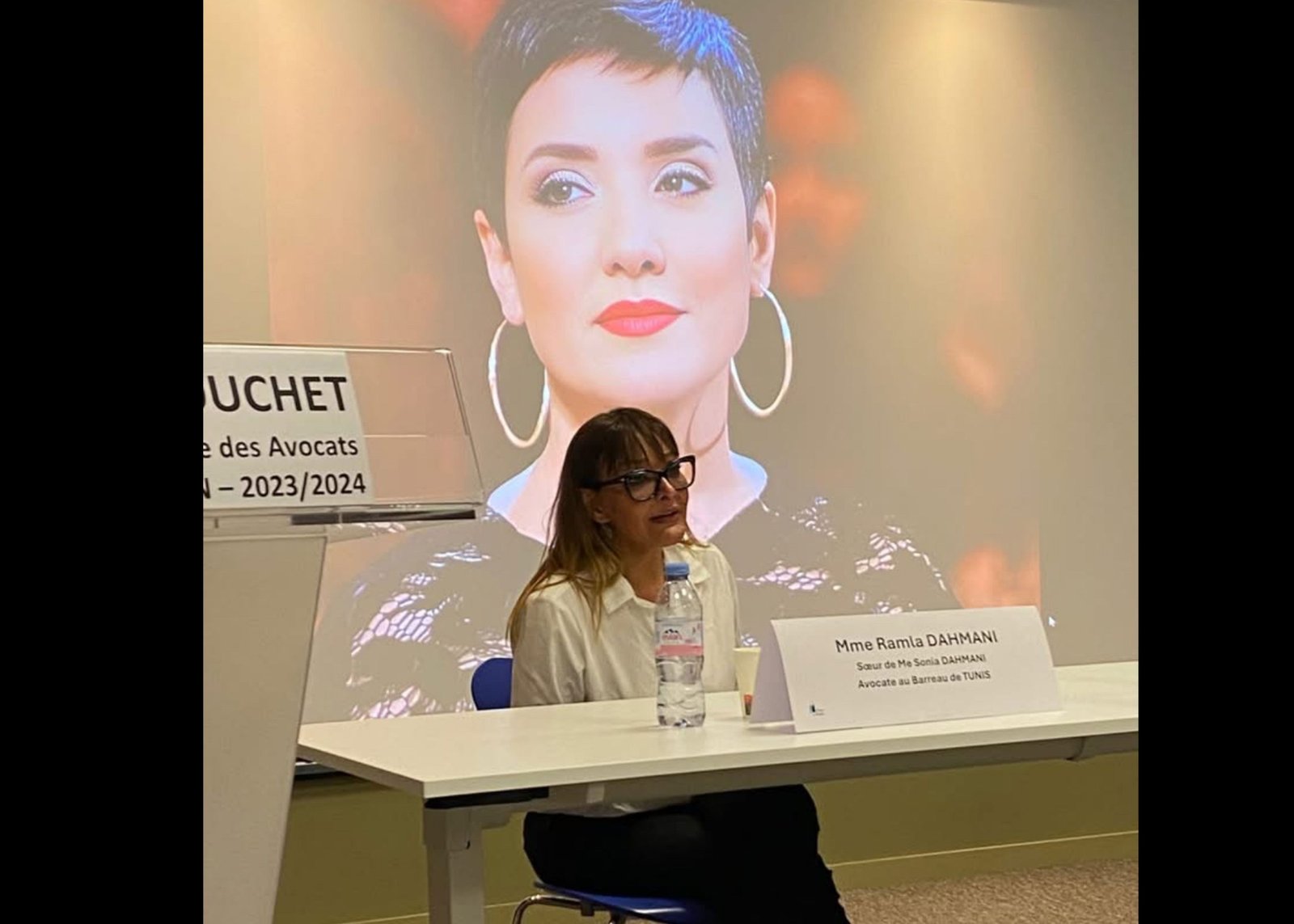
CPJ spoke to her sister Ramla Dahmani about the charges against her, her treatment behind bars, and what the case reveals about Tunisia’s justice system today.
This interview has been translated from Arabic and edited for length and clarity.
What kinds of treatment has Sonia described experiencing while in prison?
They [authorities] want to break her. Sonia’s prison conditions are unbearable. Last August, in 2024, she was not allowed to shower for six full weeks. Can you imagine six weeks in the Tunisian summer heat, in a cell full of rats, cockroaches, and damp walls that drip water? The cell is around twenty square meters, shared with four other women convicted of crimes like murder, theft, drug dealing. There is no dignity, no privacy. In winter, the dripping water freezes; in summer, temperatures rise above fifty degrees [Celsius].
She has been denied basics: no pillow, no coat in winter, no gloves, no mirror, she’s not allowed to cut her hair or nails. For over a year, she has not even seen her own reflection. Food is another form of humiliation. The family brings her meals three times a week, but items are often refused for no reason. She is not allowed to heat her food, so she eats it cold — even frozen during winter.
All of this has affected her health terribly. She was healthy before, but now she has diabetes, thyroid problems, high blood pressure, and severe back and shoulder pain. Because she cannot move or exercise, her muscles have wasted away. A doctor prescribed physiotherapy, but when they take her to the hospital, it is with her hands cuffed behind her back, surrounded by masked guards carrying heavy weapons. She returns worse than when she left.
Mentally, she is still strong and hasn’t given up. But the isolation has taken a toll. She is cut off from newspapers, from the radio, from the outside world. The only channel she can watch is state TV that praises the president. The lights are kept on 24 hours a day, which is a tool of psychological torture. She hasn’t known darkness or real rest for a year and a half.
Can you explain the charges Sonia is facing, and how Tunisia’s laws are being applied in her case?
Sonia has five cases in total, all under Decree 54, about so-called ‘false news.’ What makes no sense is that three of these cases are for the exact same comment. She made the same comment once on radio and again on TV, and they opened two separate prosecutions on top of the first. Imagine being sentenced again and again for the same words, it is pure harassment through the courts.
She has already been sentenced in three of these cases and is serving nearly five years in prison. The fourth case is because she denounced the conditions inside prisons, the overcrowding, the filth, the lack of dignity, and the prison administration filed a complaint. Because officials are considered public servants, the possible sentence was doubled from five to ten years. The fifth case was opened after she said that “overcrowding prisons is not an ‘achievement’ of the justice minister”. That too carries up to ten years.
Now she faces five cases, with potential prison sentences exceeding 20 years, all because she dared to speak publicly. The law is not applied fairly; it is bent and twisted to silence her. This is no longer a justice system. It is a punishment system for dissent.
Can you tell us about the sexual assault Sonia experienced in detention, and how authorities responded?
On August 20, 2024, before a hearing, Sonia was subjected to what she described as rape. A female guard forced her to undress completely, touched her body, and assaulted her while saying, ‘I can do whatever I want.’ She told us later, ‘I was raped that day.’
As if that was not enough, they further tried to humiliate her by forcing her to wear a safsari to the hearing, which is a white full-body veil used for women in ‘morality’ cases. She refused, saying she had nothing to be ashamed of, and when she finally agreed, they still refused to take her to court. They proceeded with the trial in her absence.
We filed a complaint against prison authorities on August 26, 2024, for sexual assault and torture. Nothing has happened since. More than a year later, no accountability, no justice. The UN even raised questions about the case, but the Tunisian government simply denied the assault ever occurred.
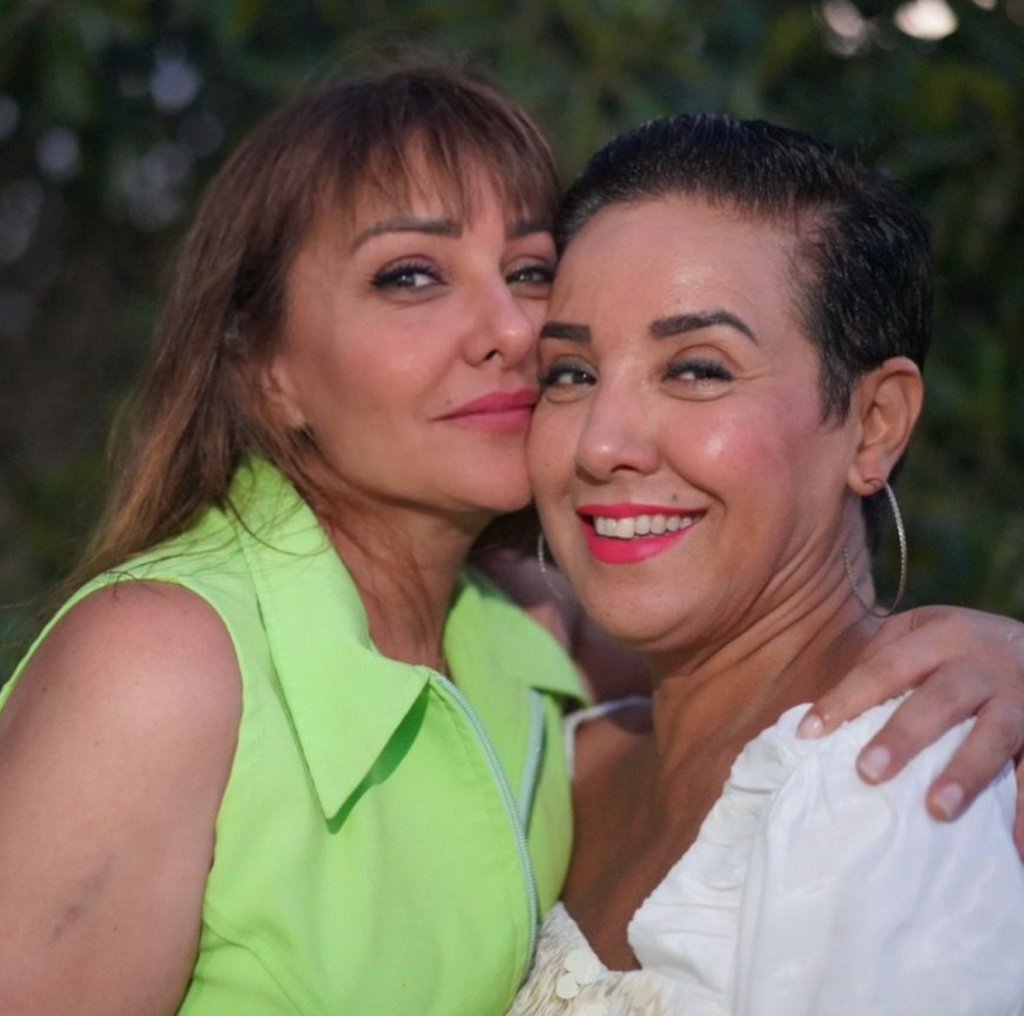
How has this ordeal affected your family, and what does Sonia’s case reveal about Tunisia’s justice system?
The toll on our family is huge. We are only allowed fifteen minutes a week with Sonia, behind glass, under surveillance. If we say anything they don’t like, the visit is cut off immediately. My parents, who are elderly, endure this exhausting trip every week just for those fifteen minutes, if the prison even allows them in.
Lawyers also face impossible restrictions. Before, four or five lawyers could see her daily. Now only one or two lawyers are allowed per week, and all meetings are recorded on camera with a guard present. There is no confidentiality, no real legal defense. And when we as a family or her lawyers speak out, we are threatened or intimidated. I am sentenced in absentia to two years in prison for advocating for Sonia, and I am facing two other pending cases on terrorism charges for advocating for my sister.
To me, Sonia has become a symbol. Her case shows that Tunisia’s judiciary is no longer independent. When a single comment can generate three different prosecutions, when criticism of a minister becomes a ten-year charge, when prison abuse is punished not by reform but by more charges, this is not justice. Sonia’s case is not just about her. It is about the price anyone in Tunisia pays if they dare to speak out.
Read the full article here
Fact Checker
Verify the accuracy of this article using AI-powered analysis and real-time sources.