Close Menu
FSNN | Free Speech News NetworkFSNN | Free Speech News Network
  • Home
  • News
    • Politics
    • Legal & Courts
    • Tech & Big Tech
    • Campus & Education
    • Media & Culture
    • Global Free Speech
  • Opinions
    • Debates
  • Video/Live
  • Community
  • Freedom Index
  • About
    • Mission
    • Contact
    • Support
Trending

Ctrl-Alt-Speech: The Ctrl-Alt-Speech Reading List (Teaser)

7 minutes ago

My Very Long Ride on the MAGA Ferris Wheel

12 minutes ago

Aave, Solana lead crypto price gains as bitcoin (BTC) steadies near $60,000

31 minutes ago
Facebook X (Twitter) Instagram
Facebook X (Twitter) Discord Telegram
FSNN | Free Speech News NetworkFSNN | Free Speech News Network
Market Data Newsletter
Friday, June 26
  • Home
  • News
    • Politics
    • Legal & Courts
    • Tech & Big Tech
    • Campus & Education
    • Media & Culture
    • Global Free Speech
  • Opinions
    • Debates
  • Video/Live
  • Community
  • Freedom Index
  • About
    • Mission
    • Contact
    • Support
FSNN | Free Speech News NetworkFSNN | Free Speech News Network
Home»News»Media & Culture»The Senate’s Failure To Rein in Trump on Iran Is Part of a Long History of Congress Abdicating Its War Powers
Media & Culture

The Senate’s Failure To Rein in Trump on Iran Is Part of a Long History of Congress Abdicating Its War Powers

News RoomBy News Room1 hour agoNo Comments6 Mins Read1,120 Views
Share Facebook Twitter Pinterest Copy Link LinkedIn Tumblr Email VKontakte Telegram
The Senate’s Failure To Rein in Trump on Iran Is Part of a Long History of Congress Abdicating Its War Powers
Share
Facebook Twitter Pinterest Email Copy Link

Listen to the article

0:00
0:00

Key Takeaways

Playback Speed

Select a Voice

On Tuesday, the Senate briefly asserted its constitutional prerogative over war and peace. In a 50–48 vote, with four Republicans joining the majority, it passed a resolution directing President Donald Trump to remove United States Armed Forces from hostilities against Iran.

Politico called it a “surprise blow to Trump.” The New York Times described it as “the most significant bipartisan rebuke yet of the conflict.” 

But the moment didn’t last. The next day, after Trump—”mad as a murder hornet”—berated the Republican defectors at lunch, he got a do-over. Late Wednesday night, Senate Republicans forced a vote on a parallel War Powers Resolution introduced by Sen. Tim Kaine (D–Va.). With Sen. Bill Cassidy (R–La.) switching sides and Sen. Rand Paul (R–Ky.) voting “present,” it failed 47–50–1.

The episode underscored Trump’s continued dominance over the GOP caucus. More importantly, it was a reminder of how little practical power Congress retains over the most important decision the Constitution entrusts to it. 

It’s been nearly four months since Trump launched Operation Epic Fury, demanding “UNCONDITIONAL SURRENDER” from Iran while denying that the United States was at war. Along the way, Trump has admitted he was “shocked“ Iran launched missiles at other Gulf states—”nobody expected that,” he said—and seemed caught off guard by how easily the Strait of Hormuz could be closed, though that scenario has long been a staple of Pentagon war games. 

Now the administration is trying to preserve a face-saving settlement that leaves things worse than they were before the first Tomahawk flew. Whatever the multidimensional chess theory was supposed to be, the record looks more like improvisation followed by damage control. 

Despite the precarious “deal” the administration is struggling to preserve, there is every chance Trump will lose patience and the U.S. will stumble back into open war. Or maybe the president will prefer to hold his next foreign adventure closer to home. It’s his choice, after all. 

In May, Trump’s CIA director visited Havana to warn Cuban intelligence officials that they should “take a lesson” from January’s regime-change strike in Venezuela. And in an interview last week, the president mused that Iran is “a very long trip,” while “Cuba is a hopscotch.” Plus, he noted, Cuba has “nice property” with a “nice shoreline.”

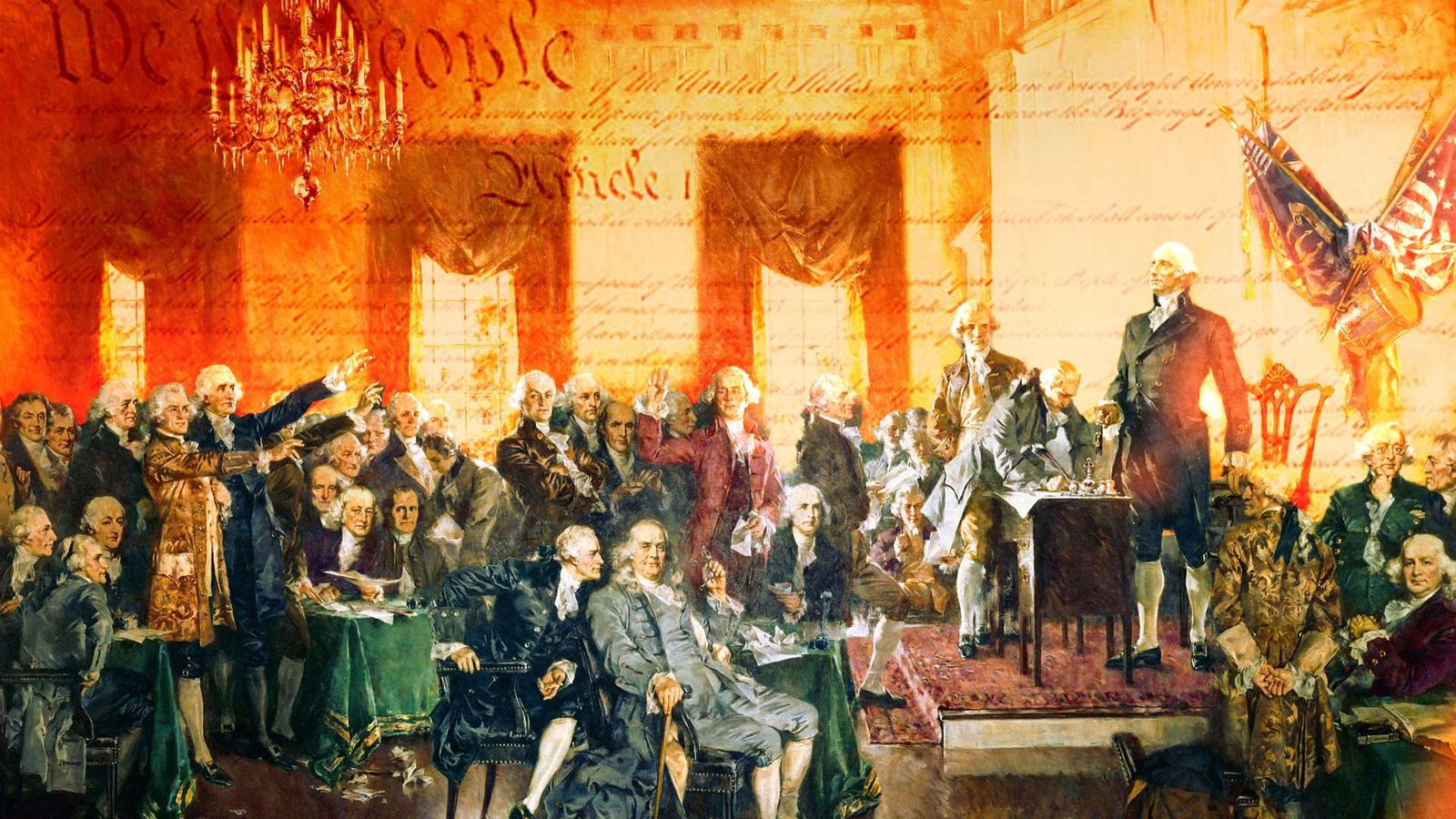
For the Framers, the point of lodging the war power in Congress was to avoid leaving the body politic vulnerable to one man’s supply of prudence and self-restraint. This was not part of the original plan. “This system will not hurry us into war,” James Wilson assured delegates at Pennsylvania’s ratifying convention in 1787. “It will not be in the power of a single man…to involve us in such distress.”

After decades of drifting away from the original design, Congress tried to reclaim some ground in 1973. In the aftermath of Vietnam, over President Richard Nixon’s veto, it passed the War Powers Resolution. The law’s stated purpose was to “fulfill the intent of the framers of the Constitution of the United States and insure that the collective judgment of both the Congress and the President will apply to the introduction of United States Armed Forces into hostilities.”

It was a noble effort, but it did not work. That has been evident almost from the start of the law’s five-decade history, but the War Powers Resolution’s failure has never been more obvious than it is right now. 

One of the law’s key provisions was designed to end unauthorized wars automatically, even if Congress could not bring itself to vote. Section 5(b) of the law orders the president to “terminate” military operations after 60 days absent congressional authorization or an attack on the United States that prevents Congress from convening. Over the decades, multiple presidents have treated that limit as a 60-day “free pass” for military adventures, but most tried to wrap things up before hitting the deadline. President Bill Clinton crossed the line during the 1999 Kosovo campaign. President Barack Obama blew past it during the 2011 Libya war, arguing that, technically, it was not “hostilities” if U.S. forces were bombing foreigners who could not hit back. On May 1 of this year, Trump also shrugged off that deadline without consequence. 

Another key provision assumed that a congressional majority should be enough to call a halt to unauthorized war making. Under Section 5(c), Congress could reassert its constitutional authority at any time: U.S. forces “shall be removed by the President if the Congress so directs by concurrent resolution.”

Then, a decade after the War Powers Resolution passed, the Supreme Court struck down the “legislative veto,” effectively neutering that check. A mere congressional majority is no longer enough; reversing presidential action now requires presenting a law to the president for his signature or veto. 

The war powers measure that passed on Tuesday was a concurrent resolution under Section 5(c). But concurrent resolutions, as the Senate’s own website notes, “do not have the force of law.” So Trump had a point when he called the vote “meaningless” in a Truth Social rant on Tuesday; it had roughly the same legal effect as Congress declaring “National Nurses’ Week.” 

Even if Congress passed its rebuke in a form that could stick, Trump would veto it, just as he vetoed war powers measures on Iran and Yemen during his first term.

That’s where we are now: with a legal regime for war making that turns the original design on its head. This system hurries us into war on one man’s whim, then puts every constitutional barrier intended to prevent reckless action in the path of undoing the damage.  

And yet, this is a problem we know how to fix. Reformers have learned a lot from the War Powers Resolution’s half-century of failure, and there’s no shortage of serious legislative proposals for giving the statute teeth. In theory, at least, the goal of ending unauthorized wars automatically, without a vote, is achievable by tying funding to authorization. 

In practice, however, no reform is achievable without at least one hard vote at the outset. The Senate’s inability to stick to its guns this week shows how far Congress still has to go.

Read the full article here

Fact Checker

Verify the accuracy of this article using AI-powered analysis and real-time sources.

Get Your Fact Check Report

Enter your email to receive detailed fact-checking analysis

5 free reports remaining

Continue with Full Access

You've used your 5 free reports. Sign up for unlimited access!

Already have an account? Sign in here

#MediaAccountability #MediaAndPolitics #MediaBias #PoliticalDebate #PublicDiscourse
Share. Facebook Twitter Pinterest LinkedIn Tumblr Email Telegram Copy Link
News Room
  • Website
  • Facebook
  • X (Twitter)
  • Instagram
  • LinkedIn

The FSNN News Room is the voice of our in-house journalists, editors, and researchers. We deliver timely, unbiased reporting at the crossroads of finance, cryptocurrency, and global politics, providing clear, fact-driven analysis free from agendas.

Related Articles

Media & Culture

Ctrl-Alt-Speech: The Ctrl-Alt-Speech Reading List (Teaser)

7 minutes ago
Media & Culture

My Very Long Ride on the MAGA Ferris Wheel

12 minutes ago
Cryptocurrency & Free Speech Finance

Linux Foundation, Tech Giants Launch Akrites to Defend Open Source Against AI-Powered Attacks

38 minutes ago
Cryptocurrency & Free Speech Finance

Senators Demand Answers From CFTC Over Alleged Polymarket Deceptive Advertising

2 hours ago
Media & Culture

The EU Wants To Grow Homegrown Tech. Its Courts Keep Making That Impossible.

2 hours ago
Media & Culture

Don’t Let Sanctions Strangle Cuba’s Transition To Markets

2 hours ago
Add A Comment
Leave A Reply Cancel Reply

Editors Picks

My Very Long Ride on the MAGA Ferris Wheel

12 minutes ago

Aave, Solana lead crypto price gains as bitcoin (BTC) steadies near $60,000

31 minutes ago

CryptoQuant Warns Strategy as CBOE Eyes Crypto Perpetual Futures

37 minutes ago

Linux Foundation, Tech Giants Launch Akrites to Defend Open Source Against AI-Powered Attacks

38 minutes ago
Latest Posts

EFF to Grindr: This Pride Month, Put Safety and Privacy Over Profits

1 hour ago

The Senate’s Failure To Rein in Trump on Iran Is Part of a Long History of Congress Abdicating Its War Powers

1 hour ago

Former Ethereum Foundation leader warns of funding gap as governance shifts

2 hours ago

Subscribe to News

Get the latest news and updates directly to your inbox.

At FSNN – Free Speech News Network, we deliver unfiltered reporting and in-depth analysis on the stories that matter most. From breaking headlines to global perspectives, our mission is to keep you informed, empowered, and connected.

FSNN.net is owned and operated by GlobalBoost Media
, an independent media organization dedicated to advancing transparency, free expression, and factual journalism across the digital landscape.

Facebook X (Twitter) Discord Telegram
Latest News

Ctrl-Alt-Speech: The Ctrl-Alt-Speech Reading List (Teaser)

7 minutes ago

My Very Long Ride on the MAGA Ferris Wheel

12 minutes ago

Aave, Solana lead crypto price gains as bitcoin (BTC) steadies near $60,000

31 minutes ago

Subscribe to Updates

Get the latest news and updates directly to your inbox.

© 2026 GlobalBoost Media. All Rights Reserved.
  • Privacy Policy
  • Terms of Service
  • Our Authors
  • Contact

Type above and press Enter to search. Press Esc to cancel.

🍪

Cookies

We and our selected partners wish to use cookies to collect information about you for functional purposes and statistical marketing. You may not give us your consent for certain purposes by selecting an option and you can withdraw your consent at any time via the cookie icon.

Cookie Preferences

Manage Cookies

Cookies are small text that can be used by websites to make the user experience more efficient. The law states that we may store cookies on your device if they are strictly necessary for the operation of this site. For all other types of cookies, we need your permission. This site uses various types of cookies. Some cookies are placed by third party services that appear on our pages.

Your permission applies to the following domains:

  • https://fsnn.net
Necessary
Necessary cookies help make a website usable by enabling basic functions like page navigation and access to secure areas of the website. The website cannot function properly without these cookies.
Statistic
Statistic cookies help website owners to understand how visitors interact with websites by collecting and reporting information anonymously.
Preferences
Preference cookies enable a website to remember information that changes the way the website behaves or looks, like your preferred language or the region that you are in.
Marketing
Marketing cookies are used to track visitors across websites. The intention is to display ads that are relevant and engaging for the individual user and thereby more valuable for publishers and third party advertisers.