Close Menu
FSNN | Free Speech News NetworkFSNN | Free Speech News Network
  • Home
  • News
    • Politics
    • Legal & Courts
    • Tech & Big Tech
    • Campus & Education
    • Media & Culture
    • Global Free Speech
  • Opinions
    • Debates
  • Video/Live
  • Community
  • Freedom Index
  • About
    • Mission
    • Contact
    • Support
Trending

“Jawboning as Collaborative Governance,” by Daniel Browning

22 minutes ago

Inside the Vanderbilt Report: A Sociologist Responds

38 minutes ago

Mastercard completes $1.8B BVNK acquisition in stablecoin push

43 minutes ago
Facebook X (Twitter) Instagram
Facebook X (Twitter) Discord Telegram
FSNN | Free Speech News NetworkFSNN | Free Speech News Network
Market Data Newsletter
Tuesday, August 4
  • Home
  • News
    • Politics
    • Legal & Courts
    • Tech & Big Tech
    • Campus & Education
    • Media & Culture
    • Global Free Speech
  • Opinions
    • Debates
  • Video/Live
  • Community
  • Freedom Index
  • About
    • Mission
    • Contact
    • Support
FSNN | Free Speech News NetworkFSNN | Free Speech News Network
Home»AI & Censorship»The Senate Should Reject KOSA’s Privacy Risks
AI & Censorship

The Senate Should Reject KOSA’s Privacy Risks

News RoomBy News Room4 hours agoNo Comments4 Mins Read1,929 Views
Share Facebook Twitter Pinterest Copy Link LinkedIn Tumblr Email VKontakte Telegram
The Senate Should Reject KOSA’s Privacy Risks
Share
Facebook Twitter Pinterest Email Copy Link

Listen to the article

0:00
0:00

Key Takeaways

Playback Speed

Select a Voice

The Senate Commerce Committee is once again considering legislation that would dramatically expand age verification, and undermine privacy for everyone. Alongside the SCREEN Act, the CHATBOT Act, and the Youth AI Privacy Act, the Kids Online Safety Act (KOSA) would push companies to collect more information about their users while creating new incentives to restrict lawful speech.

Take action

Tell Congress: KOSA endangers the privacy of all

KOSA Pushes Platforms Toward Age Verification

The Senate version of KOSA imposes a “duty of care” on online services, including social media, to avoid exposing young people to certain material the law deems harmful. But those obligations only work if online services know which users are minors. That means more platforms will be pressured to implement age verification or age estimation systems.

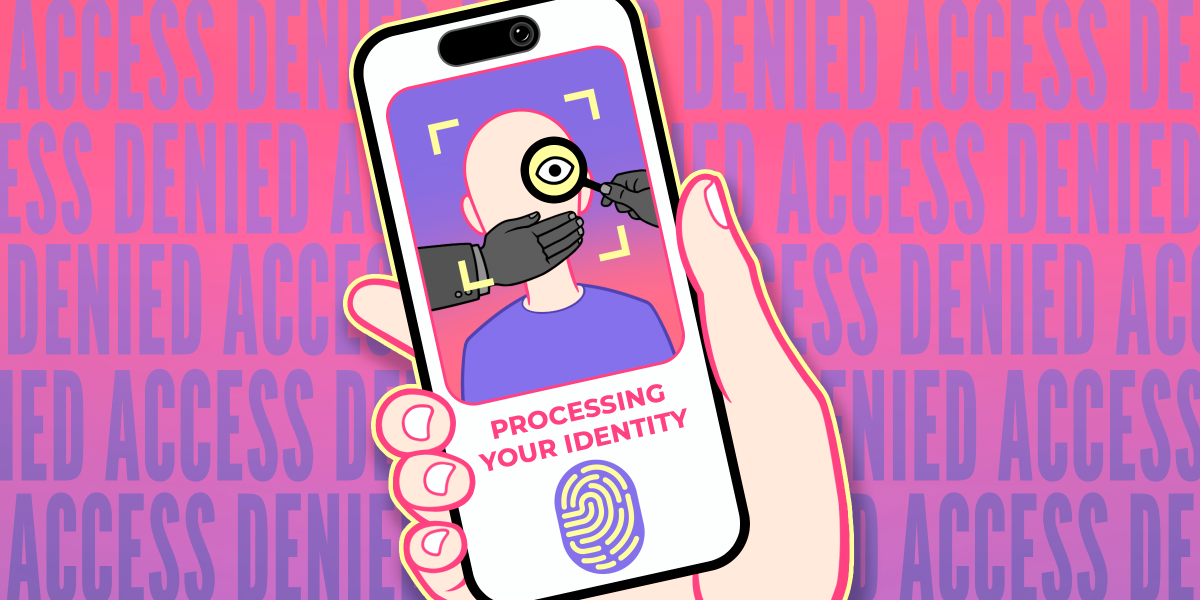
That’s not a bill that increases privacy—it’s one that creates new privacy problems. Whether companies verify ages by checking government IDs, performing facial analysis, checking your bank records, or collecting other personal information, all of these systems require the handing over of more sensitive data, simply to access lawful online speech and services. They also create new databases of personal information that can be breached, misused, or demanded by governments.

Everyone deserves privacy online. Congress could push for a bill that protects privacy for all users, but that’s not what they’re doing here. Instead, KOSA and the other bills coming up for a vote this week push online services to adopt systems that require people to identify themselves before they can speak, read, or participate online.

KOSA Still Creates Incentives to Censor Lawful Speech

Some online content isn’t appropriate for minors. Families, schools, and communities all have important roles to play in helping children navigate the internet. But KOSA takes those decisions away from families and the young people who have a First Amendment right to speak and access information online. It instead empowers government officials to enforce how online services handle lawful speech. 

And by empowering elected attorneys general in states across the country to enforce KOSA, the bill means those elected officials, rather than your family, deciding what’s appropriate online content for teens. Even more likely, it will lead to limits on what minors and adults are able to see at all, as companies shut down potentially controversial forums in order to avoid legal action from government bureaucrats. 

The latest version of KOSA once again includes a broad “duty of care” requiring platforms to mitigate a wide range of alleged harms to minors.

Whatever disclaimers and exceptions the bill includes, the practical effect is unchanged. When platforms face liability for content that someone later claims contributed to harms like anxiety, eating disorders, or substance use, the safest response is to remove lawful speech or shut down forums discussing those topics altogether. 

More worrisome, the potential liability KOSA creates may push online services to either remove speech well in advance of a young person seeing it, or block young people’s access so they never see it. That will likely include forums where people try to help each other, find community and recovery resources for the exact harms listed in the bill, like gambling and drug addiction. In trying to protect young people, KOSA may actually cut them off from valuable sources of support. 

We’ve explained these censorship risks in detail before, and they remain just as real in the latest version of the bill.

Congress Should Reject KOSA

Minors deserve meaningful privacy protections online—as do adults. But KOSA moves in the opposite direction by encouraging more age verification, as well as more legal pressure for platforms to monitor and restrict lawful speech.

The Senate Commerce Committee should reject KOSA, along with the other bills in this legislative package, and instead pursue comprehensive privacy legislation that protects everyone—not just minors—without undermining privacy, security, or free expression.

Take action

Congress shouldn’t set the rules for what we see online

Read the full article here

Fact Checker

Verify the accuracy of this article using AI-powered analysis and real-time sources.

Get Your Fact Check Report

Enter your email to receive detailed fact-checking analysis

5 free reports remaining

Continue with Full Access

You've used your 5 free reports. Sign up for unlimited access!

Already have an account? Sign in here

#ContentModeration #DecentralizedMedia #DigitalCensorship #OpenInternet #PlatformAccountability #ShadowBanning
Share. Facebook Twitter Pinterest LinkedIn Tumblr Email Telegram Copy Link
News Room
  • Website
  • Facebook
  • X (Twitter)
  • Instagram
  • LinkedIn

The FSNN News Room is the voice of our in-house journalists, editors, and researchers. We deliver timely, unbiased reporting at the crossroads of finance, cryptocurrency, and global politics, providing clear, fact-driven analysis free from agendas.

Related Articles

Media & Culture

Sony Gives Its Disc-Loving Customers A Giant Middle Finger

1 hour ago
AI & Censorship

EFF Joins 18 Civil Rights Organizations Calling on Governor Hochul to Reject the Stealth Crawler Prohibition Act

3 hours ago
AI & Censorship

EFF Joins Call for FTC to Drop Its Disastrous AI Policy Proposal

5 hours ago
Media & Culture

Judge To xAI: If This Law Is So Urgent, Why Did You Wait Three Months To Sue?

5 hours ago
AI & Censorship

The Youth AI Privacy Act’s Privacy Paradox

7 hours ago
Media & Culture

Daily Deal: Rosetta Stone Sapphire 1-Year Subscription

10 hours ago
Add A Comment
Leave A Reply Cancel Reply

Editors Picks

Inside the Vanderbilt Report: A Sociologist Responds

38 minutes ago

Mastercard completes $1.8B BVNK acquisition in stablecoin push

43 minutes ago

Sony Gives Its Disc-Loving Customers A Giant Middle Finger

1 hour ago

Todd Blanche’s Concessions Underline the Flagrant Phoniness of Trump’s IRS ‘Settlement’

1 hour ago
Latest Posts

Blockchain Week’s OnlyFans scandal, Lonely Heart Scammed for $3.3M: Asia Express

2 hours ago

“Positive Obligations, Hate Speech, and the Reconfiguration of Free Expression at the European Court of Human Rights,” by Natalie Alkiviadou

2 hours ago

Caleb & Brown Expands to UK, Betting on Untapped Crypto Demand

3 hours ago

Subscribe to News

Get the latest news and updates directly to your inbox.

At FSNN – Free Speech News Network, we deliver unfiltered reporting and in-depth analysis on the stories that matter most. From breaking headlines to global perspectives, our mission is to keep you informed, empowered, and connected.

FSNN.net is owned and operated by GlobalBoost Media
, an independent media organization dedicated to advancing transparency, free expression, and factual journalism across the digital landscape.

Facebook X (Twitter) Discord Telegram
Latest News

“Jawboning as Collaborative Governance,” by Daniel Browning

22 minutes ago

Inside the Vanderbilt Report: A Sociologist Responds

38 minutes ago

Mastercard completes $1.8B BVNK acquisition in stablecoin push

43 minutes ago

Subscribe to Updates

Get the latest news and updates directly to your inbox.

© 2026 GlobalBoost Media. All Rights Reserved.
  • Privacy Policy
  • Terms of Service
  • Our Authors
  • Contact

Type above and press Enter to search. Press Esc to cancel.

🍪

Cookies

We and our selected partners wish to use cookies to collect information about you for functional purposes and statistical marketing. You may not give us your consent for certain purposes by selecting an option and you can withdraw your consent at any time via the cookie icon.

Cookie Preferences

Manage Cookies

Cookies are small text that can be used by websites to make the user experience more efficient. The law states that we may store cookies on your device if they are strictly necessary for the operation of this site. For all other types of cookies, we need your permission. This site uses various types of cookies. Some cookies are placed by third party services that appear on our pages.

Your permission applies to the following domains:

  • https://fsnn.net
Necessary
Necessary cookies help make a website usable by enabling basic functions like page navigation and access to secure areas of the website. The website cannot function properly without these cookies.
Statistic
Statistic cookies help website owners to understand how visitors interact with websites by collecting and reporting information anonymously.
Preferences
Preference cookies enable a website to remember information that changes the way the website behaves or looks, like your preferred language or the region that you are in.
Marketing
Marketing cookies are used to track visitors across websites. The intention is to display ads that are relevant and engaging for the individual user and thereby more valuable for publishers and third party advertisers.