

 Freedom Index
Listen to the article
Michelle Liao studies psychology and political science at the University of Michigan.
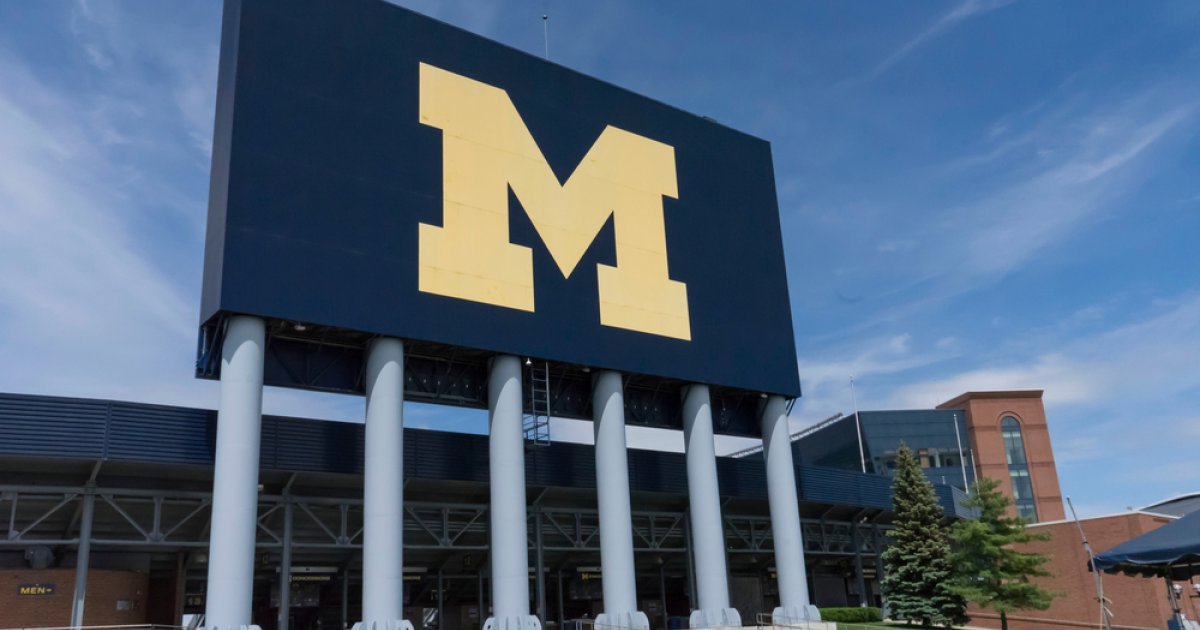
At the University of Michigan’s May 2 commencement, history professor and outgoing faculty senate chair Derek Peterson praised student activism before an audience of 60,000 graduates and guests, including many of my friends and classmates. Peterson thanked pro-Palestinian student activists who “opened our hearts to the injustice and inhumanity of Israel’s war in Gaza.”
Peterson’s speech deviated from the text he had submitted in advance. That version recognized students who had worked to “open our hearts to the injustices happening in Gaza.” University President Domenico Grasso publicly apologized later that day, calling Peterson’s remarks “hurtful and insensitive to many members of our community.” Grasso said commencement was neither the “time nor the place” for Peterson to express his personal political views.
It’s one thing for the president to explain this did not represent the official position of the university, as the university has committed to the principle of institutional neutrality, meaning it does not make statements on political issues unless those issues directly threaten the university’s mission. However, Grasso characterized the remarks as hurtful and insensitive, and it would be reasonable for students to interpret that characterization as applying to the viewpoints expressed in the remarks. Rather than merely observing some community members were hurt by the remarks, he said the remarks were indeed hurtful, suggesting a position on the issue and potentially violating that principle of neutrality.
The backlash was immediate and brutal. The ongoing Israeli-Palestinian conflict has deeply divided campuses nationwide, and responses to Peterson followed the same pattern. Michael Schostak, a candidate for the University’s Board of Regents, called for Peterson to be put on unpaid leave and stripped of administrative support. Michigan Hillel, a Jewish student organization, said commencement was not a place for “political statements that alienate the Jewish community.”
Hillel had every right to condemn Peterson’s remarks, explain why students found them alienating, and answer him with arguments of its own. That’s counterspeech, even if the underlying attitude may be considered censorial. But a demand that the school suspend or otherwise punish Peterson because of his viewpoint raises a more serious concern.
As a University of Michigan student myself, I felt the controversy firsthand. It was surreal to see my school’s name — a name I see countless times on my walk to class — splashed across national headlines. Even after classes ended, I heard many students debating Peterson’s speech.
Students and alumni spoke both for and against Peterson. Some defended Jewish students who felt ostracized. Others defended pro-Palestinian activists. The school’s student newspaper The Michigan Daily published letters from students, faculty, staff, and alumni that captured the divide. One alum worried the speech could “put Jewish students at increased risk.” Another writer called Grasso’s response a “textbook example of Progressive Except for Palestine.”
Those concerns deserved to be heard. Peterson’s words were subject to criticism just like anyone else’s. The problem began when some critics sought official retaliation rather than verbal rebuttal.
Even assuming the university could enforce neutral rules requiring speakers to follow submitted remarks, much of the public backlash did not focus on Peterson’s decision to modify his remarks on the fly. It focused on the political substance of what he said. Calls for him to lose administrative support, grants, or even his job because of his opinions threaten a culture of free speech on campus.
The problem began when some critics sought official retaliation rather than verbal rebuttal.
Some may agree with Grasso that commencement is not the right time for political expression. But that raises another question: What should commencement speakers be permitted to say?
Should we start policing what graduating seniors can and cannot hear? Politics plays a significant role in the college experience. So much of our life is inherently political. On a day meant to celebrate the culmination of the graduates’ experiences, it is not unreasonable to mention the pervasive influence of politics. What is unreasonable is facing calls to be fired for doing so.
I was disappointed by the community’s response. I pride myself on being part of an institution that encourages diversity of thought and open expression. University campuses should be places where students and faculty are free to express their views and challenge their thinking.
What’s more, Michigan’s controversy belongs to a broader series of commencement disputes. Last year, New York University withheld student speaker Logan Rozos’ diploma while pursuing disciplinary action after he departed from his submitted remarks and condemned the “atrocities currently happening in Palestine.” That same spring, former Northwestern University President Morton Schapiro withdrew as Georgetown University Law Center’s commencement speaker after students objected to opinion essays he had written about Israel, Palestinians, and campus protests. Georgetown said it had not withdrawn the invitation and that doing so would have conflicted with the university’s commitment to free and open inquiry.
Not every commencement dispute ends with a speaker’s removal or punishment. In 2014, University of California, Berkeley Chancellor Nicholas Dirks defended Bill Maher’s right to speak at commencement. Dirks made clear that allowing Maher to speak did not amount to endorsing him. Rather, it affirmed the university’s commitment to free expression. That’s a distinction universities too often lose.
Since 1998, FIRE has documented 2,064 attempts to deplatform speakers and expression at U.S. colleges and universities, many of which involve commencement.
Introducing FIRE’s Campus Deplatforming Database
Campus Disinvitation Database expanded to include attempts to cancel performances, art exhibits, and film screenings on college and university campuses from 1998 to the present.
Read More
What Michigan needed in May was not less disagreement. It needed better disagreement. Faced with controversial speech, we should have been questioning, not retaliating. Peterson’s remarks could have prompted serious dialogue among groups on campus. Students could have challenged his description of the war, argued that he ignored details, defended his praise of campus activists, or questioned whether commencement was an appropriate forum. The university could have demonstrated that Michigan educates people willing to engage critically with speech they support and speech they vehemently oppose.
Instead of calling Peterson’s speech “hurtful and insensitive,” Grasso could have reminded the community of the importance of protecting even speech we personally find abhorrent, and that protecting expression does not depend on universal approval.
Looking ahead, Michigan has an opportunity to do better. We should meet speech we oppose with speech of our own. We should be able to hear a commencement speaker without calling for institutional retaliation. The next controversial speaker will come soon enough. When that happens, Michigan should show that its answer to unsettling speech is more speech — not a campaign to make the speaker pay for it.
Read the full article here
Fact Checker
Verify the accuracy of this article using AI-powered analysis and real-time sources.