

 Freedom Index
Listen to the article
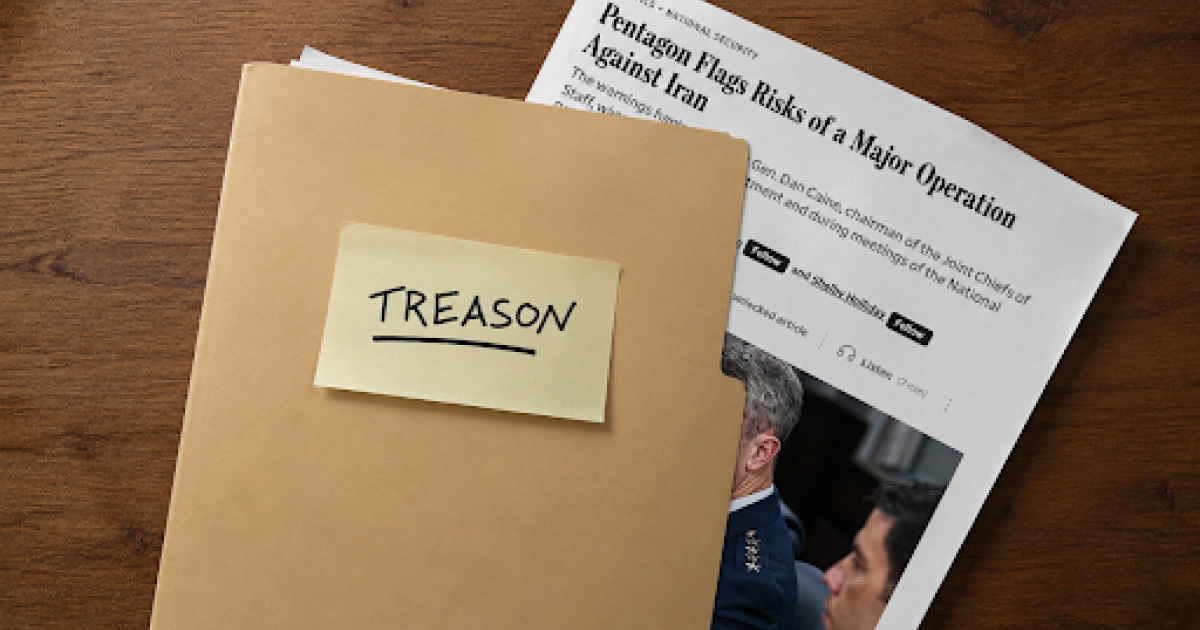
In a recent meeting, the Wall Street Journal reports, President Trump passed a stack of newspaper articles to acting Attorney General Todd Blanche. On top of the stack of the articles the president believed compromised national security sat a sticky note — it read “treason.” The message from President Trump was clear: Find the leak.
In response, Blache’s Department of Justice issued subpoenas to The Wall Street Journal for its coverage of the conflict in Iran in hopes of finding whoever internally was talking to reporters. The paper’s publisher said it would “vigorously oppose this effort to stifle and intimidate essential reporting.”
Unfortunately, the administration’s apparent willingness to sic federal law enforcement on journalists isn’t new. The WSJ subpoenas follow recent reports that the FBI is investigating another journalist for her unfavorable coverage of agency director Kash Patel, reinforcing concerns that the government is disregarding the federal law designed to limit its ability to investigate watchdogs. The FBI reportedly launched a criminal leak investigation into Atlantic journalist Sarah Fitzpatrick after she wrote about allegations in April, citing over two dozen anonymous sources, that Director Patel’s drinking has led to erratic behavior, missed meetings, and the director ghosting his own people.
The agency has reportedly opened an insider threat investigation into Fitzpatrick. Notably, the FBI’s insider threats unit is tasked with investigating federal employees who have access to sensitive information and might reveal it, not outside journalists like Fitzpatrick. The FBI denies the investigation is happening. But if this investigation is underway, it raises concerns among free press advocates that feel all too familiar after years of searches, investigations, and surveillance.
Again, these don’t appear to be isolated responses. Neither instance would be the first time this year that critical coverage of the government has led to an investigation. In January, FBI agents searched Washington Post reporter Hannah Natanson’s home, who had extensively covered the federal government using confidential sources. The government seized Natanson’s laptops, phone, a portable hard drive, recorder, and a Garmin watch. While agents conducted the raid pursuant to an expedited search warrant, that didn’t assuage the fears of press advocates.
Three times is a trend, as reporters say, making this a troubling pattern affecting independent freelancers, rural newsrooms, and watchdogs alike. Equally troubling is the fact the government is ignoring the law designed to prevent these searches from happening in the first place: the Privacy Protection Act.
A legislative response to a judicial decision
The federal law that shields newsrooms across the country has its origins in student media. Congress enacted the Privacy Protection Act in response to Zurcher v. Stanford Daily, a Supreme Court case that considered whether a search of a student newsroom was unconstitutional.
In Zurcher, state police obtained a warrant and then searched the Stanford Daily’s newsroom. The paper had published articles and photographs of a clash between demonstrators and police, and officers claimed they could only identify two of the assailants. Police rummaged through the student newsroom, examining reporters’ notebooks containing confidential work product and letters in an attempt to identify more assailants. After the search, the paper filed a suit claiming the police violated their First and Fourth Amendment since they executed the search pursuant to a warrant, not a subpoena.
A quick criminal procedure lesson: A search warrant is a written court order authorizing law enforcement to search or seize a private area for evidence of a crime. A judicial subpoena is likewise a written court order that makes a person or entity produce documents, papers, or other evidence. One allows the government to go to a private place in search of evidence and to seize it (a search warrant), and the other requires the subject of the subpoena to make that evidence available (a subpoena).
The Court did not side with The Daily’s argument that, by using a search warrant instead of a subpoena, the police had violated the newspaper’s First and Fourth Amendment rights. The Court held that police could conduct a search of an individual who wasn’t a suspect in a criminal investigation as long as law enforcement had a reasonable belief that the materials to be seized were at the location described in the search warrant — including newsrooms.
Justice Byron R. White, who authored the Court’s opinion, noted that although the Court was rejecting the argument that constitutional protections forbid newsroom searches, that “does not prevent or advise against” a legislative response.
Media groups and politicians from across the political spectrum were concerned by the Court’s ruling — and took Justice White up on his implied invitation. “Many Americans today justifiably feel that their rights have been threatened by the Stanford Daily decision,” Republican Sen. Robert Dole told a Senate subcommittee a month after the decision was handed down. “Congress must act quickly to insure that the doubts of these Americans — individuals, journalists and business — are resolved. The privacy rights of all citizens must be protected.”
And Congress did. The legislative response to Zurcher came in the form of the Privacy Protection Act of 1980, or the PPA for short.
What does the PPA cover?
The PPA limits the use of search warrants against those who intend to disseminate information to the public, which means it’s not specific to journalists in application. The PPA’s protections apply to any person intending to publish their “work product” or “documentary” materials (more on that later) in “a newspaper, book, broadcast or other similar form of public communication,” which covers journalists but isn’t limited to the press. These protections are valuable to communicators who are independent and who don’t operate within the mainstream media, such as citizen journalists or documentarians.
The PPA divides materials into two categories: “work product” or “documentary” materials. The law provides different protections and exceptions to each.
The first section of the PPA deals with “work product” materials. Under the PPA, “work product” includes materials that are “prepared, produced, authored, or created” for the purpose of communicating that information to the public. It also includes the “mental impressions, conclusions, opinions or theories” about these materials. Think of “work product” material as drafts of stories or a reporter’s notes about an interview.
The protections for “work product” materials against searches and seizures aren’t absolute. First, there’s the “probable cause” exception, which applies when there is probable cause to believe the reporter has committed or is in the process of committing a crime. However, the “work product” to be seized must relate to the crime in question.
An important note about the “probable cause” exception: If the only “crime” a person is charged with consists of the receipt, possession, or communication of the “work product” material, the government cannot use this exception to get around the PPA’s protective provisions. So if receiving information from a source is the only “crime” a reporter is alleged to have committed, the government can’t get a search warrant on those grounds.
The other exception for “work product” materials is more straightforward. When government officials have “reason to believe” that “work product” materials must be seized immediately to prevent someone’s death or a serious bodily injury, they may seize those materials without violating the PPA.
So that covers “work product” materials. What about the other category?
The second section of the PPA turns to “documentary” materials, which the statute broadly defines as “materials upon which information is recorded.” For example, photos, videos, or audio recordings.
For the most part, the PPA treats “documentary” materials similarly to “work product” materials with a few significant differences. Like “work product” materials, the PPA prevents government officials from searching or seizing “documentary” materials during a criminal investigation when the person subject to the search has the purpose of disseminating that information to the general public.
“Documentary” materials have four exceptions under the PPA. The first two are the same as those for materials that fall in the “work product” bucket: the “probable cause” exception and the death and serious bodily injury exception. The third exception applies when there is reason to believe that receiving notice of a subpoena for these documents will result in their destruction, alteration, or concealment. That means the government needs to present evidence that the person in possession of the material has indicated they would try to get rid of or change it, or that they’ve done so in the past.
The final exception applies when the group or person with the material has failed to produce it in accordance with a court order (typically in the form of a subpoena), or there is reason to believe further delay would “threaten the interests of justice.” Prior to this exception’s application, the PPA gives the person in possession of the materials an opportunity to contest the government’s claim.
What happens if the government violates the PPA?
The PPA gives those subject to an illegal search or seizure under the PPA the right to file a civil lawsuit. The minimum damages are $1,000, and those responsible for the unlawful search or seizure may be required to pay hefty attorneys’ fees and litigation costs.
Beyond those retrospective chances at relief, the PPA’s protections require the federal government to adhere to its limits. The Natanson case is a recent example of what happens when assistant United States attorneys fail to do just that. Government attorneys had submitted multiple versions of the search warrant for a magistrate judge to approve. The judge rejected two, held multiple in-person and telephone conferences with the government’s attorneys, and eventually approved a search warrant on Jan. 13.
But in none of those applications or conversations did government attorneys inform the judge about the applicability of the PPA. The magistrate judge later called “the government’s failure to identify and analyze the Privacy Protection Act of 1980” in its search warrant application “a matter of significant concern,” which a district judge later echoed when affirming the magistrate’s order to prevent the Department of Justice from reviewing Natanson’s materials.
Governments large and small have gone beyond the PPA’s limitations. In 2019, San Francisco police raided the home of freelance journalist Bryan Carmody, using a sledgehammer and pickax to enter. The raid was part of an investigation regarding a leaked police report on the death of a San Francisco public defender, and though police had obtained a search warrant, they also failed to tell judges about the Privacy Protection Act or Carmody’s independent reporting. The city eventually paid Carmody $369,000 in a settlement.
The Marion County Record found itself subject to a similar situation in Marion County, Kansas. In 2023, police raided the paper’s newsroom and the co-owners’ home. Again, the officials did not inform the judge who granted the warrant about the PPA. The day after the raids, co-owner Joan Meyer — who was otherwise in good health for her age — collapsed and died, reportedly from the stress caused by having her home ransacked. The county later paid $3 million to settle lawsuits brought after the search, but the damage was irreparable.
But these protections aren’t foolproof, and watchdogs have still received subpoenas as a result of their coverage. When the Obama administration monitored and investigated Fox News reporter James Rosen in 2013 because of his reporting on North Korea, the Justice Department filed an affidavit stating that there was probable cause Rosen had committed a crime to get around the PPA. In effect, it recharacterized his newsgathering as “unauthorized disclosure of national defense information” to skirt the law’s demands.
Now, The Wall Street Journal is facing subpoenas for records relating to its coverage of the conflict in Iran. While the DOJ revised its policies related to targeting the press in leak investigations in August, the existing policies still require the attorney general to consider whether the government has “made all reasonable attempts to obtain the information from alternative sources” and call “investigative techniques relating to newsgathering” an “extraordinary measure to be deployed as a last resort.”
If the alleged investigation into Fitzpatrick mirrors these cases, it’s likely the PPA will come up again if the government seeks to search and seize The Atlantic reporter’s materials.
What else does the PPA need?
The PPA’s protections only extend so far if government officials choose to ignore them, or keep judges in the dark about the law’s extra checks on government searches and seizures. The Privacy Protection Updates Act, a bill introduced in the Senate in March, would help fix this problem by strengthening the PPA.
The proposed bill would require the government to explicitly disclose and prove the law’s exceptions justify the use of a search warrant — a crucial step government attorneys in the Natanson, Carmody, and Marion County Record cases didn’t take. As the judge in the Natanson proceedings later noted, the government’s failure to flag the PPA “seriously undermined . . . confidence in [the government’s] disclosures in this proceeding.” The bill’s updates to the PPA would stop a repeat of that happening.
The bill would also implement an exclusionary rule that would prevent materials seized in violation of the law from being used in “any investigation, trial, hearing, or other proceeding.” Contrast that with the current PPA, which provides that such evidence won’t be excluded based on PPA violations. This new deterrent would give the law teeth.
Among these new proposed updates is a clarification regarding materials stored in the cloud. It deems the customer of the cloud service — not the server — is the owner of those materials, ensuring the government can’t bypass the law’s protections just because information is stored electronically.
It doesn’t seem like the federal government is stopping its attempts to investigate those sharing information with the public and subject them to potentially unlawful searches and seizures. The PPA remains vital as watchdogs find themselves being the ones watched.
Read the full article here
Fact Checker
Verify the accuracy of this article using AI-powered analysis and real-time sources.