

 Freedom Index
Listen to the article
Athena Rem is a rising junior at the University of California, Los Angeles.
Televangelist Jerry Falwell once confessed in an interview to drunken sex with his unconscious mother in an outhouse. Except it wasn’t a real interview. It was a fake Campari ad in a 1983 issue of adult magazine Hustler.
Falwell sued the magazine and its publisher Larry Flynt for emotional distress, libel, and invasion of privacy. Flynt defended the ad’s publication as protected by the First Amendment. What came next remains one of the most famous free speech cases in American jurisprudence.
Flynt won the case, Hustler Magazine v. Falwell (1988), because parody is not a statement of fact made with “actual malice” and because print media, shows, or any other publications can generally criticize public figures under the First Amendment.
Yet such critical speech is under fire today more than ever before. And these modern efforts to silence critics risk blunting Americans of the cultural institution of satire. Late-night shows like The Tonight Show Starring Jimmy Fallon and Saturday Night Live routinely mimic and mock public figures, and it’s important they be able to do so. Because humor isn’t merely entertaining — it’s also one of the most powerful forms of political commentary.
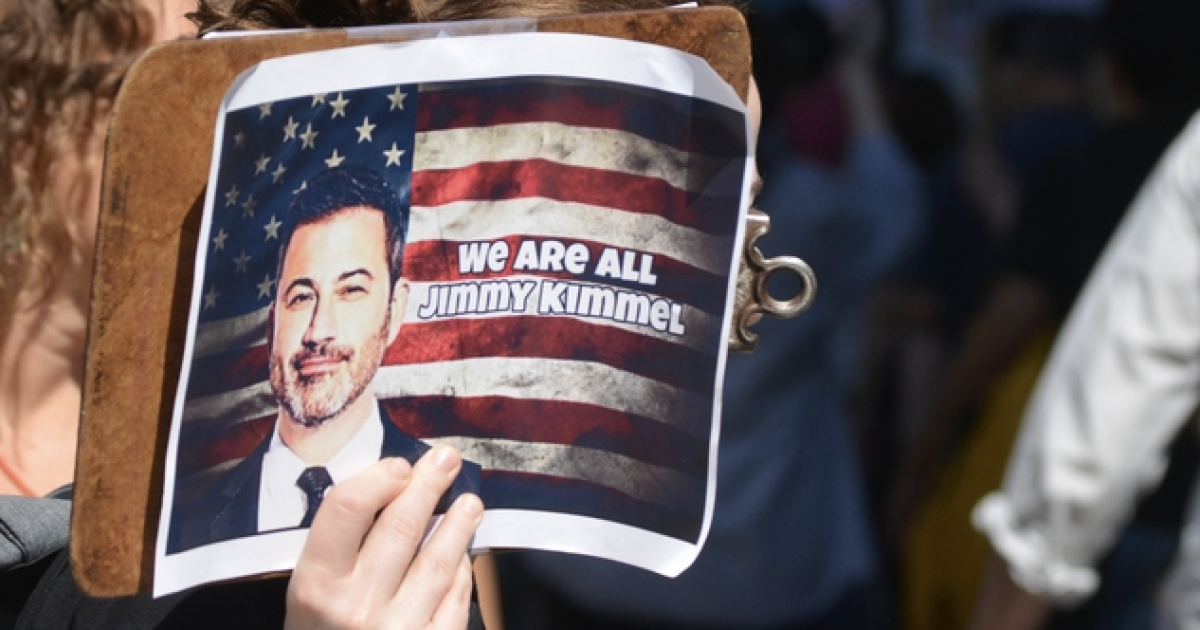
Late-night host Jimmy Kimmel speaks about political issues in his opening monologues. When his show airs, that is. A notable exception occurred when the FCC pressured ABC to suspend his show in September 2025 over anti-MAGA commentary about Charlie Kirk’s murder. Without resistance, this incident may not be the last of its kind. “Unless we resist each attempt at government-driven censorship,” says Garrett Gravley, FIRE’s program counsel, “the next suspension may not be so brief.”
Satire, parody, and the First Amendment
Parody and satire of political figures, movie stars, and professional athletes are a deep American tradition and are generally protected when they transform, comment, or clearly signal a joke.
Read More
Despite how significantly FCC jawboning can threaten the flow of information, the legal response to date has been scarce. The unique rise in First Amendment violations within the last year that specifically target this niche of entertainment make it even more necessary to find an effective corrective measure.
Looking back to the 1950s provides some insight. The House Un-American Activities Committee, following McCarthyism and the Second Red Scare, encouraged the denial of screenwriting and acting jobs to supposed communists through repeated investigations and contempt citations. Though the recommendation in and of itself was problematic, a primary reason the problem persisted and grew was that studio heads refused to ignore or deny unconstitutional calls for blacklisting by the government.
Indeed, cultural change occurred only when Universal Studios allowed a blacklisted producer to receive credit at the end of a movie in 1960. At the very least, cultural response, indignation, or desire to change is a prerequisite to stopping sanctions on entertainment.
Falwell lost because the Court understood an essential truth: a democracy confident enough to laugh at its leaders and other powerful figures is stronger, not weaker. If that principle no longer holds, satire won’t be the last casualty of censorship.
Read the full article here
Fact Checker
Verify the accuracy of this article using AI-powered analysis and real-time sources.