Close Menu
FSNN | Free Speech News NetworkFSNN | Free Speech News Network
  • Home
  • News
    • Politics
    • Legal & Courts
    • Tech & Big Tech
    • Campus & Education
    • Media & Culture
    • Global Free Speech
  • Opinions
    • Debates
  • Video/Live
  • Community
  • Freedom Index
  • About
    • Mission
    • Contact
    • Support
Trending

The Left’s Problem with the American Revolution

23 minutes ago

Tennis Equal Prize Money: Men Play 50% More Sets

1 hour ago

Ledger Attack Spreads to EU, AI Finds ’18 Trillion XRP’ Bug: Hodler’s Digest

2 hours ago
Facebook X (Twitter) Instagram
Facebook X (Twitter) Discord Telegram
FSNN | Free Speech News NetworkFSNN | Free Speech News Network
Market Data Newsletter
Monday, October 12
  • Home
  • News
    • Politics
    • Legal & Courts
    • Tech & Big Tech
    • Campus & Education
    • Media & Culture
    • Global Free Speech
  • Opinions
    • Debates
  • Video/Live
  • Community
  • Freedom Index
  • About
    • Mission
    • Contact
    • Support
FSNN | Free Speech News NetworkFSNN | Free Speech News Network
Home»Opinions»Debates»The Left’s Problem with the American Revolution
Debates

The Left’s Problem with the American Revolution

News RoomBy News Room23 minutes agoNo Comments5 Mins Read0 Views
Share Facebook Twitter Pinterest Copy Link LinkedIn Tumblr Email VKontakte Telegram
The Left’s Problem with the American Revolution
Share
Facebook Twitter Pinterest Email Copy Link

Listen to the article

0:00
0:00

Key Takeaways

Playback Speed

Select a Voice

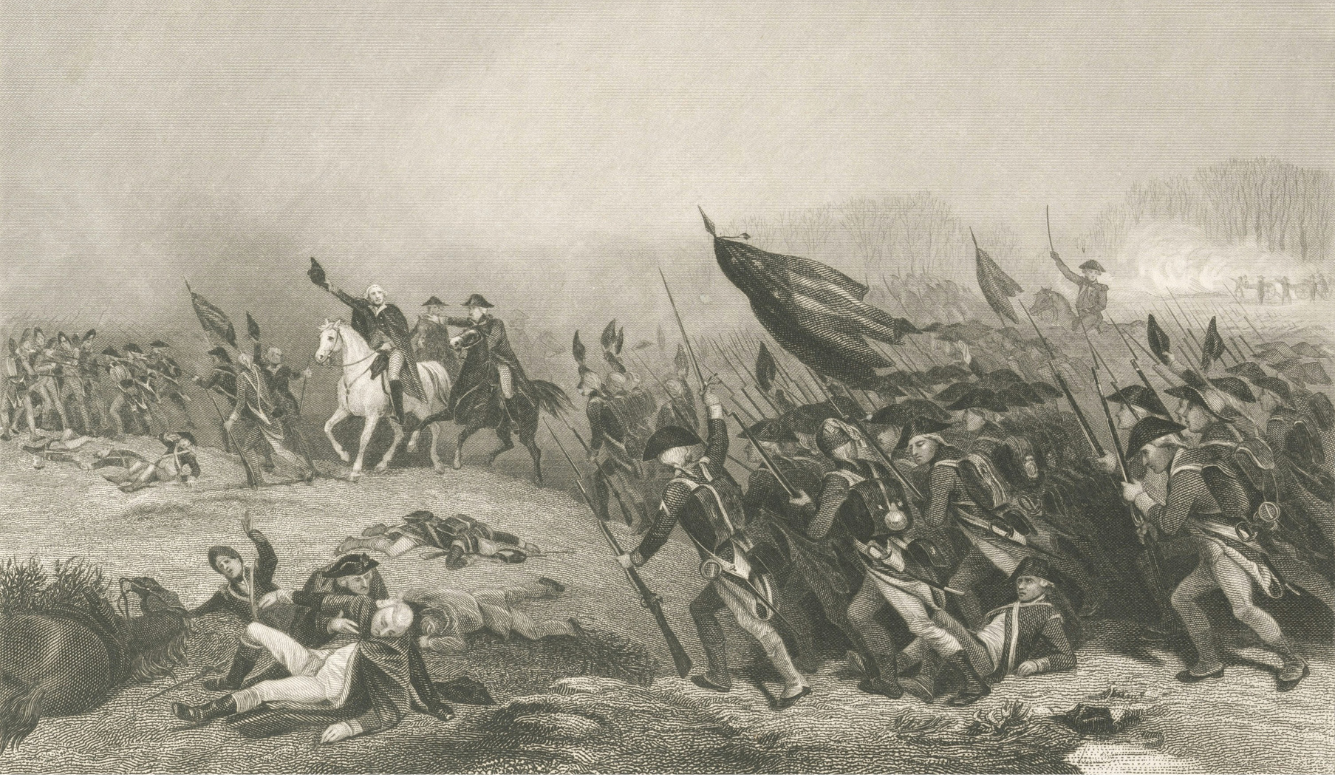
The 250th anniversary of the birth of the United States has come and gone. For the American Left, this milestone was not a cause for celebration. The problem was not just the Trump administration’s skewed and occasionally gross displays of patriotism (e.g. the UFC cage fights staged on the White House lawn on 14 June); it was also the commemoration of the American Revolution itself. Three leading left-liberal magazines—the New York Review of Books, the New Yorker, and the Atlantic—all treated the Revolution as a subject best avoided entirely, or at least cut down to size.

The NYRB’s coverage is the easiest to characterise. The magazine’s five issues from 28 May to 20 August contained not a single essay on the Revolution among its 88 articles. Only two came close. In a review of a book about the 1876 Centennial, Brenda Wineapple remarked, “then as now, not everyone believed that the US had come close to realizing its glorious ideals.” Reviewing two books on the broad subject of America’s national identity, David W. Blight struck an equally sceptical note by beginning his essay with American theologian Reinhold Niebuhr’s judgement that “so many dreams of our nation have been so cruelly refuted by history.” The founding era’s values of freedom and self-governance, with their enduring challenge to social deference, are scarcely mentioned, and in any case, appear to have been doomed by endemic political division and by “the national ruin that may lie ahead.”

The New Yorker ran two substantive book-review essays on the American Revolution. The punctuation at the end of the title of the first (in the print edition), by Daniel Immerwahr, alerted readers to what was to come: “The Shot Heard Round the World?” The article’s subtitle explained: “The American Revolution was just one front in a vast global war. Which went rather well for the Brits.” Online, Immerwahr’s essay was retitled “The American Revolution Wasn’t the Main Event,” and the subhead reads: “Americans have long imagined that they set off a global age of revolt. Seen within the era’s wider wars of empire, the story looks rather different.” The Revolution, in other words, held little global significance, and contrary to the common wisdom of most modern-day Americans, its outcome may have turned out better for the British than for those who formed the new nation. How does Immerwahr defend such a negative perspective?

The thirteen colonies, he argues, weren’t so badly treated, especially compared to other outposts of the 18th-century British Empire. In fact, they took umbrage at British tax increases precisely because they expected to maintain their privileged colonial position. Nor were the colonists any more deeply attached to liberty than the Empire’s other inhabitants, who also undertook occasional rebellions at that time. Indeed, the thirteen colonies weren’t all that important to British fortunes in the first place, which explains why the British more or less let them win by diverting much of their fleet and soldiers to threats to their holdings elsewhere. This version of events, however, ignores the tens of thousands of American men and women who endured hardship and loss—about 25,000 of whom died—over the course of the revolutionary war’s eight long years.

We shouldn’t imagine that the Revolution’s ideas carried much weight either, according to Immerwahr. He quotes Hannah Arendt approvingly, when she wrote “that France’s revolution ‘made world history,’ whereas America’s was ‘of little more than local importance.’” France’s revolution, Immerwahr acknowledges, descended into a populist nightmare, as the revolutionaries “sought to remake their society, executing tens of thousands of those who stood in their way.” Yet when an American leader like John Adams succinctly distinguished what the Americans had accomplished from those horrifying French results, Immerwahr can only observe contemptuously, “The difference between the American and French Revolutions, John Adams huffed, is ‘the difference between right and wrong.’”

“Had that even been a revolution?” Immerwahr asks sardonically of the American war for independence. Few blacks or Native Americans would have thought so, he suggests, neglecting to mention that the Revolution started the new northern states on the road to emancipation. How could that have been the case if personal liberty had really meant so little to the new nation’s citizens? The same goes for the great burst of market-driven economic growth that emerged just a few decades later, setting the United States on a course that would see it eventually outstrip Great Britain in wealth and power. Millions of newcomers were also drawn to the new nation by the very same promises of freedom and opportunity that had originally motivated the rebellious colonists. Immerwahr is too knowledgeable a historian to have overlooked these larger contexts to the Revolution’s significance. He is wilfully missing the forest for the trees. Today, he concludes, the Revolution looks “less transcendent, more scuffed by historical forces. Maybe that’s all right. … One could be forgiven, these days, for wishing that the United States were a little less central in world affairs. That its inhabitants were one people among many, just like everyone else.”


Read the full article here

Fact Checker

Verify the accuracy of this article using AI-powered analysis and real-time sources.

Get Your Fact Check Report

Enter your email to receive detailed fact-checking analysis

5 free reports remaining

Continue with Full Access

You've used your 5 free reports. Sign up for unlimited access!

Already have an account? Sign in here

Share. Facebook Twitter Pinterest LinkedIn Tumblr Email Telegram Copy Link
News Room
  • Website
  • Facebook
  • X (Twitter)
  • Instagram
  • LinkedIn

The FSNN News Room is the voice of our in-house journalists, editors, and researchers. We deliver timely, unbiased reporting at the crossroads of finance, cryptocurrency, and global politics, providing clear, fact-driven analysis free from agendas.

Related Articles

Debates

Tennis Equal Prize Money: Men Play 50% More Sets

1 hour ago
Media & Culture

Sixth Circuit Affirms Universal Injunction Against Tennessee “Abortion Trafficking” Law that Does Not Reach Plaintiffs’ Conduct

4 hours ago
Media & Culture

Fusionism in the Twenty-First Century

5 hours ago
Cryptocurrency & Free Speech Finance

Tokenized Stocks Show Real Demand But Remain Volatile and Illiquid, IMF Finds

8 hours ago
Cryptocurrency & Free Speech Finance

Bitcoin, Ethereum and Solana ETFs All in the Red for October

9 hours ago
Cryptocurrency & Free Speech Finance

How Zcash Plans to Hide Your Keys From AI and Quantum Attacks

12 hours ago
Add A Comment
Leave A Reply Cancel Reply

Editors Picks

Tennis Equal Prize Money: Men Play 50% More Sets

1 hour ago

Ledger Attack Spreads to EU, AI Finds ’18 Trillion XRP’ Bug: Hodler’s Digest

2 hours ago

Sixth Circuit Affirms Universal Injunction Against Tennessee “Abortion Trafficking” Law that Does Not Reach Plaintiffs’ Conduct

4 hours ago

Fusionism in the Twenty-First Century

5 hours ago
Latest Posts

Everyone wants SCOTUS to take up prediction markets: State of Crypto

7 hours ago

Saylor Again Teases Strategy Bitcoin Buying Ahead of Columbus Day

8 hours ago

Tokenized Stocks Show Real Demand But Remain Volatile and Illiquid, IMF Finds

8 hours ago

Subscribe to News

Get the latest news and updates directly to your inbox.

At FSNN – Free Speech News Network, we deliver unfiltered reporting and in-depth analysis on the stories that matter most. From breaking headlines to global perspectives, our mission is to keep you informed, empowered, and connected.

FSNN.net is owned and operated by GlobalBoost Media
, an independent media organization dedicated to advancing transparency, free expression, and factual journalism across the digital landscape.

Facebook X (Twitter) Discord Telegram
Latest News

The Left’s Problem with the American Revolution

23 minutes ago

Tennis Equal Prize Money: Men Play 50% More Sets

1 hour ago

Ledger Attack Spreads to EU, AI Finds ’18 Trillion XRP’ Bug: Hodler’s Digest

2 hours ago

Subscribe to Updates

Get the latest news and updates directly to your inbox.

© 2026 GlobalBoost Media. All Rights Reserved.
  • Privacy Policy
  • Terms of Service
  • Our Authors
  • Contact

Type above and press Enter to search. Press Esc to cancel.

🍪

Cookies

We and our selected partners wish to use cookies to collect information about you for functional purposes and statistical marketing. You may not give us your consent for certain purposes by selecting an option and you can withdraw your consent at any time via the cookie icon.

Cookie Preferences

Manage Cookies

Cookies are small text that can be used by websites to make the user experience more efficient. The law states that we may store cookies on your device if they are strictly necessary for the operation of this site. For all other types of cookies, we need your permission. This site uses various types of cookies. Some cookies are placed by third party services that appear on our pages.

Your permission applies to the following domains:

  • https://fsnn.net
Necessary
Necessary cookies help make a website usable by enabling basic functions like page navigation and access to secure areas of the website. The website cannot function properly without these cookies.
Statistic
Statistic cookies help website owners to understand how visitors interact with websites by collecting and reporting information anonymously.
Preferences
Preference cookies enable a website to remember information that changes the way the website behaves or looks, like your preferred language or the region that you are in.
Marketing
Marketing cookies are used to track visitors across websites. The intention is to display ads that are relevant and engaging for the individual user and thereby more valuable for publishers and third party advertisers.