

 Freedom Index
Listen to the article
Within the next week, Congress is preparing to vote on the KIDS Act, a sprawling package of legislation that seeks to control Americans’ web browsing and private messaging. The package includes a revised version of the Kids Online Safety Act, or KOSA, combined with a collection of other internet bills, study bills, reporting requirements, and new regulations. Instead of debating any of these proposals on their merits, lawmakers are attempting to move them all at once under an ultra-expedited process.
The package of cobbled-together bills is a mess, with different age-gating schemes for different services, using different standards. It’s a lot of complexity, and a lot of legal risk. Faced with that, many companies will conclude that the safest option is restrictive age-checking practices across their entire platforms.
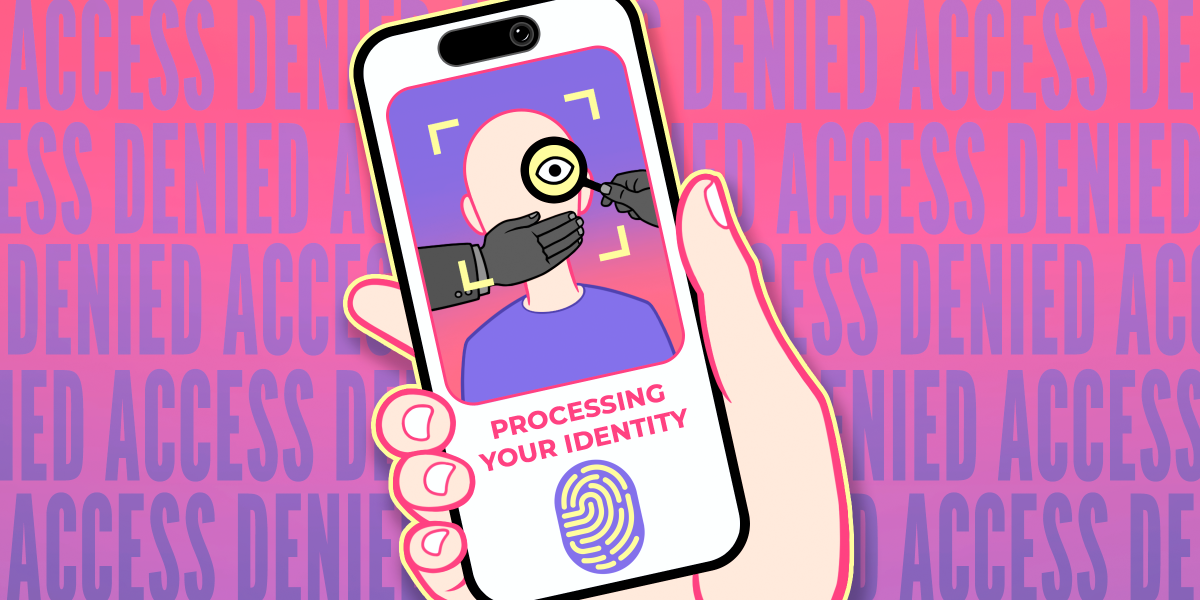
Buried inside the KIDS Act are provisions that will push online services to verify all users’ ages, require government-directed moderation policies for online speech, and even create new rules about private and encrypted communications. While supporters continue to claim this bill protects minors online, its requirements come at the expense of privacy, free expression, and the ability of people of all ages to use the internet without revealing sensitive data.
Take action
Tell Congress to reject this age-gating bill
The KIDS Act Pressures Platforms to Check Everyone’s Age
Supporters of KOSA have said the bill doesn’t require age verification. And technically, the KOSA section of the bill does say that KOSA shouldn’t be read to require age verification.
But if you read the rest of the bill, that disclaimer starts to look hollow.
Throughout the KOSA section of the legislation, special protections, controls, messaging settings, and parental tools are required whenever a website or app “knows or should have known” a user is a child (defined in the bill as anyone under 13) or a teen (defined as anyone between 13 and 16 years old).
The problem is a website operator doesn’t need actual knowledge that a user is a minor to get in legal trouble. It applies when a platform “knows or should have known” a user’s age—a low, negligence-style standard of knowledge. If an online service gets it wrong, it’s going to be up to courts and regulators to decide, after the fact, if an online service “should” have known a user was 16.
To try to avoid liability, services will have to determine which users are teenagers and which are not. Most won’t be able to simply trust their users. They’ll have to collect more information about age, before any lawsuit or government action arises. Some companies may respond by requesting driver’s licenses or passports. Others will rely on age-estimation systems that attempt to guess users’ ages by looking at existing activity or doing facial scans. Existing estimation systems make mistakes when estimating children’s ages correctly, which is a big problem when that is the population KOSA is trying to protect. And the systems fail more frequently for people of color, people with disabilities, and trans and nonbinary people.
The bill’s authors seem to know this is a problem. On the one hand, the new KOSA section says age verification is not required. On the other, it repeatedly imposes obligations that depend on knowing whether a user is under 17. But a disclaimer doesn’t magically eliminate legal risk, especially for smaller services and startups that can’t afford to defend lawsuits or fight regulators.
Take action
The “KIDS Act” Is an Age Surveillance Bill
KOSA is not the only part of this package that creates age-verification pressure. The SAFE BOTS Act, like KOSA, goes back to the standard that if a service “knows or should have known” that a user is a minor it can’t offer certain chatbot features.
The SCREEN Act requires services that host sexually explicit content to determine whether users are “more likely than not” under the relevant age limit, before allowing access to certain content.
The consequences of this liability will not be limited to minors. If websites and apps are expected to reliably identify teenagers, adults will be asked to prove they are adults. The result is a less private internet for everyone.
The KIDS Act Pressures Platforms To Police Lawful Speech
The new version of KOSA removes the bill’s infamous “duty of care” provision, a significant change. The revised KOSA requires covered platforms to “establish, implement, maintain, and enforce” policies and procedures addressing several categories of content and conduct.
Some categories, such as true threats and sexual exploitation, involve unlawful activity. Others are much broader. The bill specifically requires policies addressing the “sale or use” of narcotic drugs, tobacco products, cannabis products, gambling, and alcohol. It also restricts discussions around financial fraud.
Sounds straightforward enough. Then you remember how people actually talk—online and off. Can teens discuss addiction and recovery? Can a 15-year-old post that she’s worried she has a friend who is drinking too much? Can they seek advice about a parent’s gambling problem, or get help if they or a family member have been scammed? Can they participate in harm-reduction communities or discuss substance abuse treatment? All of these young people would be engaging in lawful speech when discussing topics covered by KOSA’s enumerated harms.
The bill does not directly ban those conversations. But it places platforms under huge pressure to create and enforce moderation policies around broad categories of lawful speech. Faced with legal risk, many services will inevitably choose to remove that speech or restrict those discussions to spaces where they know only adults can participate. We’ve seen this movie before. When legal risk goes up, platforms will take down more speech.
The KIDS Act Regulates Private Messages, Too
Several provisions of the bill create new rules around direct messages, disappearing or “ephemeral” messages, and AI chat services.
The bill includes language stating that certain KOSA requirements should not be construed to override strong encryption. But the protection is incomplete. The carve-out applies to certain features and messaging controls, but doesn’t apply to KOSA’s separate requirement that platforms “address” a list of harms to minors.
The KIDS Act never answers an obvious question: how exactly is a platform supposed to address those activities if they’re inside encrypted communications that it can’t read? That will create pressure for providers to weaken private communications or limit features on encrypted private services.
That approach is especially troubling when it comes to ephemeral messaging. Disappearing messages are not a “loophole” or a dangerous design trick. They are a useful privacy feature that allows online conversations to function more like ordinary real-world conversations, which are not preserved forever in a permanent database.
Like many other parts of the KIDS Act, these private messaging provisions also depend on websites and apps knowing who is a minor and who is not. The result is more age checks, more restrictions, and less privacy online.
Take action
Tell congress: no online age checkpoints
Read the full article here
Fact Checker
Verify the accuracy of this article using AI-powered analysis and real-time sources.