

 Freedom Index
Listen to the article
Happy Tuesday, and welcome to another edition of Rent Free. This week’s newsletter includes stories on:
- New York City’s plan to make housing more expensive by requiring that plumbers install your stove
- Los Angeles’ consideration of a proposal to tighten the city’s rent stabilization ordinance
- The housing policy implications of the looming federal shutdown
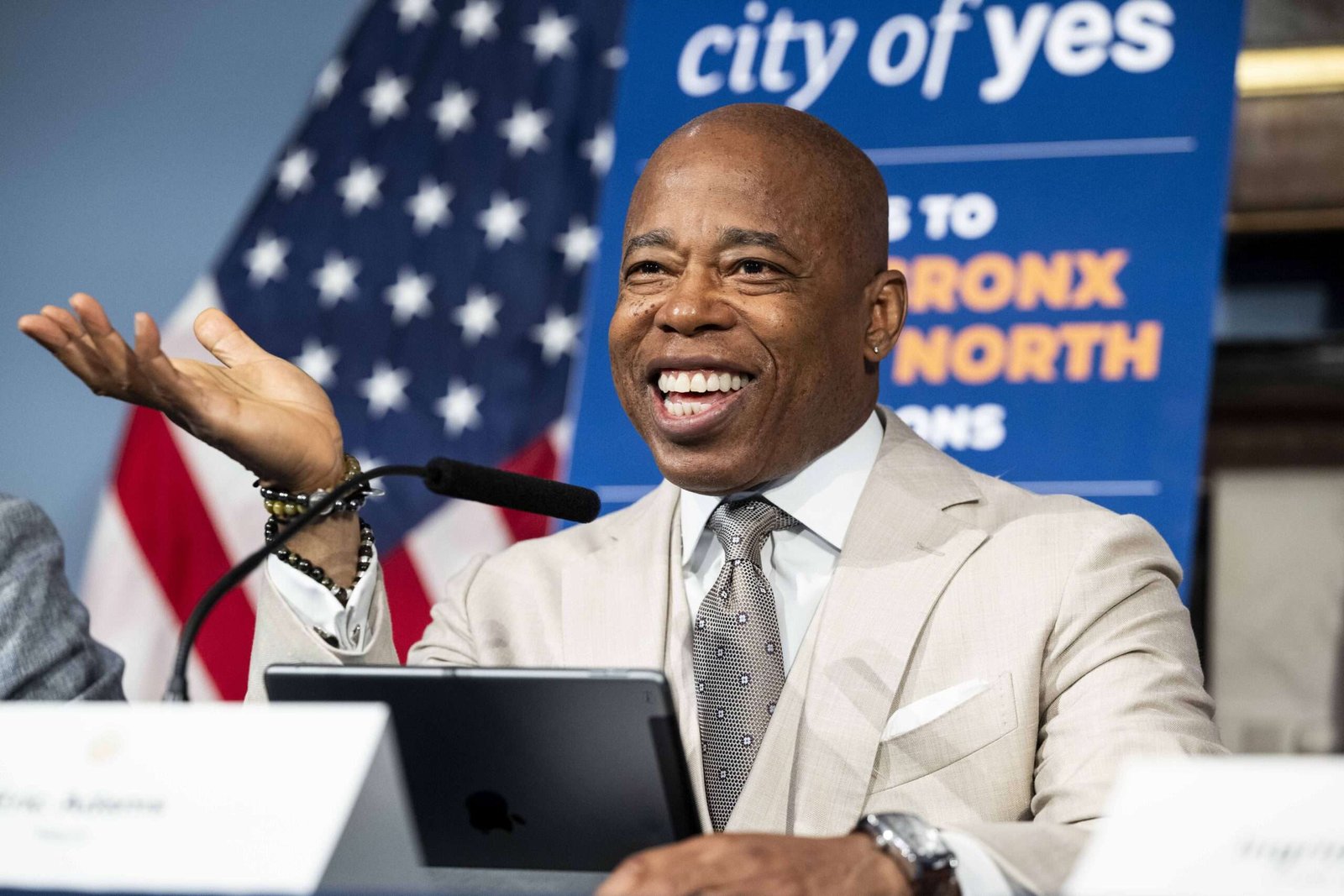
But first, our lead story evaluating the surprisingly pro-housing legacy of Mayor Eric Adams as he exits the political scene.
The Housing Hero Gotham Deserved
When New York Mayor Eric Adams announced that he was ending his bid for a second term on Sunday, few were shocked by the news.
Despite being the incumbent mayor of a city experiencing relative peace and prosperity post-pandemic, Adams was polling in a distant fourth place, behind a socialist, a disgraced ex-governor, and perhaps most embarrassingly of all in deep blue New York, a Republican.
Rent Free Newsletter by Christian Britschgi. Get more of Christian’s urban regulation, development, and zoning coverage.
With electoral prospects that dismal, it’s little surprise that Adams decided to drop out instead of going down with the ship.
It’s a remarkable fall from his mayoral win in 2021, when there was buzz that the former cop could offer an alternative model of big, Democratic city governance that avoided the party’s woke excesses.
More keen observers of New York politics than I will have more comprehensive explanations for why Adams will close out his term so unpopular. Constant personnel chaos and a damning federal corruption indictment involving the alleged exchange of favors for Turkish Airlines upgrades certainly didn’t help.
As he exits the mayor’s race, and therefore office, within a few months, it is worth highlighting one of the things that Adams got right: housing.
Throughout his term, Adams talked and acted like a mayor who believed that building more housing in New York City was a good idea, and that cutting government regulation was necessary if that idea was going to become a reality.
Early into his term, Adams set a “moonshot goal” of building 500,000 new homes over the next decade—a doubling of New York’s housing production.
This was followed by a series of policy initiatives, including his signature “City of Yes” plan and his “Get Stuff Built” initiative, that fleshed out more specific reform ideas for lifting density limits, eliminating minimum parking requirements, and streamlining approval processes.
Though the process was long and a number of compromising amendments were made to it, Adams’ City of Yes did eventually pass into law late last year.
There are criticisms one could make about the plan, primarily that it was, all things considered, a modest increase in zoned capacity that wouldn’t accomplish Adams’ “moonshot” goal.
Still, it was the most comprehensive rewrite of the city’s zoning code in over 60 years and one that unambiguously shifted the city’s housing regulations in a more pro-growth direction.
That’s an accomplishment by itself. It’s extra impressive that Adams was the one to get it done, given that he had to buck his base to do it.
In the 2021 Democratic primary, Adams performed the best in the outer borough neighborhoods of Brooklyn and Queens. These same areas were also the most opposed to City of Yes.
The community boards in the most pro-Adams neighborhoods of the city voted uniformly to oppose the mayor’s rezoning initiative.
One can easily imagine an alternate history where Adams chose not to ruffle the feathers of his largely anti-development supporters, and New York City did nothing of consequence on housing under his tenure.
Instead, he courted some heat from his supporters to make positive, if modest, progress on one of the most pressing issues facing ultra-expensive New York City.
It’s true that Adams didn’t pick other necessary housing fights.
He left untouched the city’s Mandatory Inclusionary Housing program that weighs down the financial feasibility of new construction with housing affordability mandates. He did not advocate for changes to New York’s rent stabilization system, which is slowly but steadily bankrupting a significant portion of the city’s housing stock.
Perhaps, if he hadn’t been embroiled in serious corruption scandals and had been a little more normal generally, he’d have had the political capital to push for reforms in those areas too. Perhaps that’s something he was never going to be interested in.
Regardless, as New York City gets closer to electing a socialist with many bad ideas (including more than a few on housing), I can’t help but be a little nostalgic for the sunsetting Adams years.
How Hot Can a Stovetop Be?
While New York City might have made progress on zoning reform in the Adams years, the city government continues to find other ways to make finding and maintaining a home more expensive.
On Thursday, the New York City Council voted 47–1 in favor of an ordinance that would expand the definition of “ordinary plumbing” work that a licensed plumber is required to perform to include the installation of gas appliances, such as stoves and dryers.
Council Member Pierina Sanchez, who sponsored the initiative, has defended it as a commonsense safety regulation.
Rental property owners counter that the bill won’t improve safety but will raise costs by requiring the use of licensed plumbers for work that homeowners, building superintendents, and contractors already perform.
In a New York Post op-ed, New York Apartment Association CEO Kenny Burgos argues that gas explosions are caused by illegal gas piping and gas main leaks, not home appliance installations.
He estimates that the city’s new mandate will add $500 to the cost of installing covered appliances and create weekslong wait times to get the job done, given the small number of licensed plumbers in the city.
Los Angeles Considers Tightening Rent Controls
Tomorrow, the Los Angeles City Council’s Housing and Homelessness Committee will consider a suite of proposals for tightening the city’s rent stabilization ordinance, which governs rent increases across some 650,000 units in the city.
The city’s current rules allow landlords to raise rents by at least 3 percent each, and as much as 8 percent depending on the rate of inflation as measured by the Consumer Price Index (CPI).
They can also raise rent an additional 2 percent if they cover gas and utilities. Los Angeles has vacancy decontrol, meaning landlords can raise rents to market rates once a current tenant moves out.
The proposal before the City Council would lower the minimum rent increase allowance to 2 percent, lower the maximum allowable increase to 5 percent, and eliminate the utility surcharge.
The proposal would also tip the scales in favor of lower allowable rent increases by excluding shelter costs from the CPI calculation.
Landlords have argued that allowable rent increases should be based on the actual costs of housing provision, not a general CPI measure of inflation. Excluding shelter entirely from the inflation calculation makes a rough measure even rougher.
A report prepared by Beacon Economics argues that lowering allowable year-over-year increases will merely result in larger rent increases between tenants.
Rent-stabilized owners have been squeezed by rising maintenance and insurance costs on the side and a four-year rent freeze imposed during and after the pandemic, the report notes.
With tighter rent controls, it’s reasonable to assume that people will invest less in rent-stabilized buildings, with the result being deferred maintenance and declining unit quality.
While Los Angeles’ rent stabilization ordinance does not generally apply to new construction, it does say that if rent-stabilized units are withdrawn from the market, any new housing built on the same site within the next five years must also be subject to rent stabilization.
If rent stabilization gets stricter, that could suppress builders’ willingness to undertake redevelopment projects that would require creating new rent-stabilized units, thus reducing supply.
Rent control has a terrible track record everywhere. Cities should be looking for ways to eliminate it, or at least reform its worst aspects, instead of making binding price controls even tighter.
The Housing Policy Implications of a Federal Shutdown
With Congress seemingly deadlocked on a spending deal that will keep the government funded past midnight tonight, a shutdown is looking increasingly likely.
The Trump administration has already told agencies to prepare lists of employees who could be laid off in the event of a shutdown—as opposed to just temporarily furloughed, as is more typical during government shutdowns. It’s also said that when funding resumes, agencies should look to bring back the minimum number of employees necessary.
As the National Low Income Housing Coalition’s Kim Johnson notes in a recent memo, this could mean a major reduction of staff at the U.S. Department of Housing and Urban Development (HUD).
The White House has shrunk staffing at the housing agency by nearly 25 percent, and proposed in the past to reduce agency staffing by half. HUD has also been one of the agencies where the Trump administration has been the most proactive in terms of freezing grant awards and reducing enforcement activities.
Should a shutdown happen, it’s possible we’ll be left with an even smaller federal housing agency.
Quick Links
- Tobias Peters at the American Enterprise Institute (AEI) offers a critical assessment of the bipartisan ROAD to Housing Act, which passed unanimously out of the Senate Banking Committee back in July. The bill proposes a long list of regulatory tweaks and some new spending, with the general goal of increasing housing production. Peters argues the bill mostly serves to expand the cost and invasiveness of federal grant programs that should instead be eliminated. You can read Rent Free‘s past coverage of the bill here.
- The Scottish Parliament is considering legislation that would allow local governments to impose rent caps of inflation plus 1 percent.
- Chicago passes a heavily compromised accessory dwelling unit (ADU) ordinance that allows “granny flats” and “coach houses” in most areas of the city, while still allowing individual aldermen to block their development in single-family districts. New ADUs will also have to be built with union labor.
- The zoning hurdles faced by data centers.
Read the full article here
Fact Checker
Verify the accuracy of this article using AI-powered analysis and real-time sources.