Close Menu
FSNN | Free Speech News NetworkFSNN | Free Speech News Network
  • Home
  • News
    • Politics
    • Legal & Courts
    • Tech & Big Tech
    • Campus & Education
    • Media & Culture
    • Global Free Speech
  • Opinions
    • Debates
  • Video/Live
  • Community
  • Freedom Index
  • About
    • Mission
    • Contact
    • Support
Trending

Live updates: Zcash jumps 17% as $345 million of liquidations hit crypto traders

8 minutes ago

Zcash Gains 20% as Paradigm Reveals ZEC Investment

15 minutes ago

House Committee Advances US Bitcoin Reserve Bill on Party-Line Split

18 minutes ago
Facebook X (Twitter) Instagram
Facebook X (Twitter) Discord Telegram
FSNN | Free Speech News NetworkFSNN | Free Speech News Network
Market Data Newsletter
Thursday, September 17
  • Home
  • News
    • Politics
    • Legal & Courts
    • Tech & Big Tech
    • Campus & Education
    • Media & Culture
    • Global Free Speech
  • Opinions
    • Debates
  • Video/Live
  • Community
  • Freedom Index
  • About
    • Mission
    • Contact
    • Support
FSNN | Free Speech News NetworkFSNN | Free Speech News Network
Home»News»Media & Culture»The Anti-Nazi Law
Media & Culture

The Anti-Nazi Law

News RoomBy News Room57 minutes agoNo Comments4 Mins Read1 Views
Share Facebook Twitter Pinterest Copy Link LinkedIn Tumblr Email VKontakte Telegram
The Anti-Nazi Law
Share
Facebook Twitter Pinterest Email Copy Link

Listen to the article

0:00
0:00

Key Takeaways

Playback Speed

Select a Voice

The Anti-Nazi Law

In the 1930s, there were Nazis in America. In the summer of 1934, residents of Griggstown, New Jersey watched with alarm as tents emblazoned with swastikas were erected on the banks of the Delaware and Raritan Canal. Two hundred boys ranging in age from eight to sixteen, dressed in khaki shirts, black rubber-soled shoes, and brown stockings rolled below the knees, conducted military-style drills before swastika flags that were four feet long. These exercises were part of a youth summer camp called Wille und Macht (Will and Might), sponsored by the Friends of the New Germany, the largest Nazi organization in America, with more than ten thousand members.

Camp Wille und Macht opened shortly after the Friends of the New Germany held a massive rally attended by twenty thousand people in New York’s Madison Square Garden. Nazi storm troopers stood at attention atop a red-draped platform. On each side of the stage were black columns decorated with the German eagle bearing the swastika. The Nazis wore swastika armbands and uniforms consisting of military trousers, Sam Browne belts, high boots, and white shirts. Seven hundred policemen patrolled the Garden, attempting to rein in rowdy counterprotesters including the Young Communists’ League and the “Anti-Nazi Minute Men.”

The presence of Nazis in the United States led to widespread calls for hate speech laws. It set off an intense dialogue around the question: Does the First Amendment provide freedom of speech to those who would, if in power, destroy freedom?

During the 1930s, more than eight hundred fascist groups gained a toehold in the United States during the national crisis of the Great Depression. With names like the Silver Shirts, the Citizens Protective League, and the Patriotic Sons of America, the fascist groups, with their promises of hope and prosperity, appealed to thousands of disaffected and impoverished Americans. Some of the groups were native in origin, while some of them, such as the Friends of the New Germany, were Nazi organizations funded by Berlin.

All the groups were relentless in their scapegoating of minorities, especially Jews. In the 1930s, antisemitism was more virulent than at any point in American history. More than three hundred publications in the United States spewed Hitler’s racial theories. Jews were routinely blamed for the nation’s financial woes. Some called the New Deal a “Jewish plot.” Father Charles Coughlin, known as the “Radio Priest,” commanded thirty million listeners at the height of his popularity in the mid-1930s. Coughlin also published a magazine called Social Justice, which was known to print copy verbatim from The Protocols of the Elders of Zion.

Although the fascists never posed a threat to the nation’s security, they had an ominous presence. In New York and New Jersey, Nazis affiliated with the Friends of the New Germany held rallies and marched in the streets chanting “Heil Hitler.” They distributed antisemitic literature and showed Nazi propaganda films from Germany. Everywhere they went, they were met with violence; they were pelted with eggs, and hecklers cut off their speeches. Several towns in New York and northern New Jersey prohibited the Nazis from assembling. By the end of 1934, the Friends of the New Germany had been banned in several municipalities in New Jersey.

Just days after Camp Wille und Macht was discovered, two members of the New Jersey Assembly introduced a bill that was intended to stop the violent breaches of the peace that took place wherever the Nazis gathered and distributed their propaganda. Under the “anti-Nazi” bill, any person who created, distributed, or circulated a “book, speech, article, statement, circular or pamphlet” which “in any way … incites, counsels, promotes, or advocates hatred, violence, or hostility against any group or groups of persons … by reason of race, color, religion, creed, or manner of worship” could be punished with a fine or a jail sentence ranging from ninety days to three years and a fine from $200 to $5,000. The bill did not mention Nazis specifically, but there is no question that it was aimed at the Nazis. The bill banned organizations that had bylaws advocating racial or religious hatred and made it a crime to print, possess, broadcast, or display a photograph or sign that could incite such hatred. It was forbidden under the law to make any statement “in the presence of two or more persons” inciting “race hatred.” Even true statements could be punished if they promoted hatred or hostility against any group of persons in the state by reason of race or religion. The bill was the most sweeping proposal for a hate speech law in American history to that time.

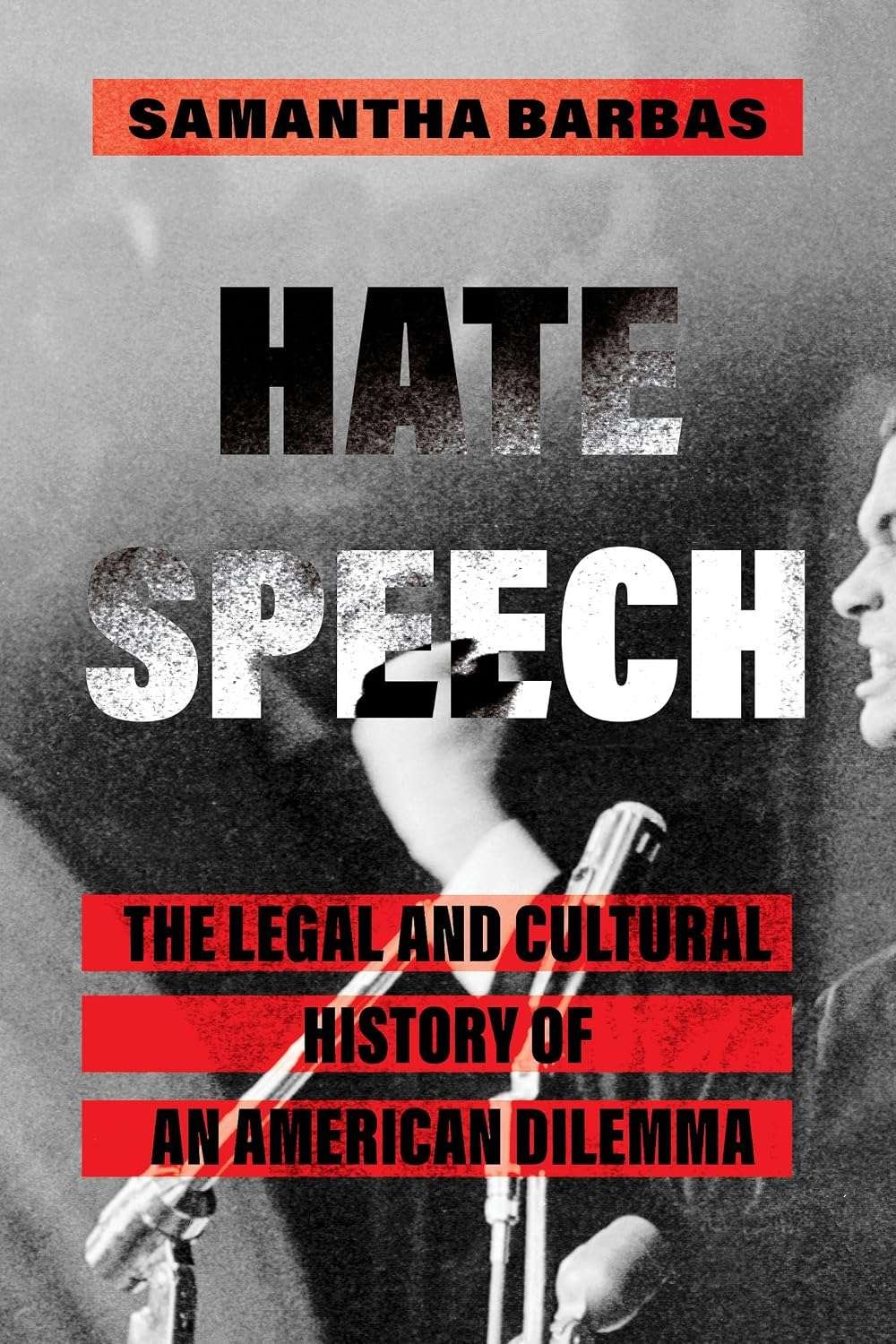
Excerpted from Hate Speech: The Legal and Cultural History of an American Dilemma by Samantha Barbas, courtesy of the University of California Press. Copyright © 2026.

Read the full article here

Fact Checker

Verify the accuracy of this article using AI-powered analysis and real-time sources.

Get Your Fact Check Report

Enter your email to receive detailed fact-checking analysis

5 free reports remaining

Continue with Full Access

You've used your 5 free reports. Sign up for unlimited access!

Already have an account? Sign in here

#MediaBias #NewsAnalysis #PoliticalCoverage #PublicDiscourse #PublicOpinion
Share. Facebook Twitter Pinterest LinkedIn Tumblr Email Telegram Copy Link
News Room
  • Website
  • Facebook
  • X (Twitter)
  • Instagram
  • LinkedIn

The FSNN News Room is the voice of our in-house journalists, editors, and researchers. We deliver timely, unbiased reporting at the crossroads of finance, cryptocurrency, and global politics, providing clear, fact-driven analysis free from agendas.

Related Articles

Cryptocurrency & Free Speech Finance

House Committee Advances US Bitcoin Reserve Bill on Party-Line Split

18 minutes ago
Media & Culture

AI Is Already Killing People—and Governments Are To Blame

2 hours ago
Media & Culture

Brickbat: Swing, Swing

3 hours ago
Media & Culture

Trump Backs Flock Cameras, Continuing His Long-Time Support for Unchecked Police Power

4 hours ago
Media & Culture

Doxing Suit over Post Criticizing Government Employee’s Kirk-Murder-Related Post …

5 hours ago
Media & Culture

Defamation via Songs and AI-Generated Video? U Tenn Coach’s Claim Can Go Forward

6 hours ago
Add A Comment
Leave A Reply Cancel Reply

Editors Picks

Zcash Gains 20% as Paradigm Reveals ZEC Investment

15 minutes ago

House Committee Advances US Bitcoin Reserve Bill on Party-Line Split

18 minutes ago

The Anti-Nazi Law

57 minutes ago

Record U.S. diesel prices complicate bitcoin and gold outlook

1 hour ago
Latest Posts

Revolut Faces Multiple Ransom Demands With No Direct Contact

1 hour ago

AI Is Already Killing People—and Governments Are To Blame

2 hours ago

Bitcoin’s 40% decline echoes 2022 as fed returns to rate hikes

2 hours ago

Subscribe to News

Get the latest news and updates directly to your inbox.

At FSNN – Free Speech News Network, we deliver unfiltered reporting and in-depth analysis on the stories that matter most. From breaking headlines to global perspectives, our mission is to keep you informed, empowered, and connected.

FSNN.net is owned and operated by GlobalBoost Media
, an independent media organization dedicated to advancing transparency, free expression, and factual journalism across the digital landscape.

Facebook X (Twitter) Discord Telegram
Latest News

Live updates: Zcash jumps 17% as $345 million of liquidations hit crypto traders

8 minutes ago

Zcash Gains 20% as Paradigm Reveals ZEC Investment

15 minutes ago

House Committee Advances US Bitcoin Reserve Bill on Party-Line Split

18 minutes ago

Subscribe to Updates

Get the latest news and updates directly to your inbox.

© 2026 GlobalBoost Media. All Rights Reserved.
  • Privacy Policy
  • Terms of Service
  • Our Authors
  • Contact

Type above and press Enter to search. Press Esc to cancel.

🍪

Cookies

We and our selected partners wish to use cookies to collect information about you for functional purposes and statistical marketing. You may not give us your consent for certain purposes by selecting an option and you can withdraw your consent at any time via the cookie icon.

Cookie Preferences

Manage Cookies

Cookies are small text that can be used by websites to make the user experience more efficient. The law states that we may store cookies on your device if they are strictly necessary for the operation of this site. For all other types of cookies, we need your permission. This site uses various types of cookies. Some cookies are placed by third party services that appear on our pages.

Your permission applies to the following domains:

  • https://fsnn.net
Necessary
Necessary cookies help make a website usable by enabling basic functions like page navigation and access to secure areas of the website. The website cannot function properly without these cookies.
Statistic
Statistic cookies help website owners to understand how visitors interact with websites by collecting and reporting information anonymously.
Preferences
Preference cookies enable a website to remember information that changes the way the website behaves or looks, like your preferred language or the region that you are in.
Marketing
Marketing cookies are used to track visitors across websites. The intention is to display ads that are relevant and engaging for the individual user and thereby more valuable for publishers and third party advertisers.