Close Menu
FSNN | Free Speech News NetworkFSNN | Free Speech News Network
  • Home
  • News
    • Politics
    • Legal & Courts
    • Tech & Big Tech
    • Campus & Education
    • Media & Culture
    • Global Free Speech
  • Opinions
    • Debates
  • Video/Live
  • Community
  • Freedom Index
  • About
    • Mission
    • Contact
    • Support
Trending

Strategy adds 535 bitcoin days after outlining potential sale scenarios

11 minutes ago

Circle Stock Rallies 15% as Wall Street Bets on Stablecoin Adoption

23 minutes ago

Circle Gives AI Agents USDC Stablecoin Powers Alongside $222M Arc Token Sale

24 minutes ago
Facebook X (Twitter) Instagram
Facebook X (Twitter) Discord Telegram
FSNN | Free Speech News NetworkFSNN | Free Speech News Network
Market Data Newsletter
Tuesday, May 12
  • Home
  • News
    • Politics
    • Legal & Courts
    • Tech & Big Tech
    • Campus & Education
    • Media & Culture
    • Global Free Speech
  • Opinions
    • Debates
  • Video/Live
  • Community
  • Freedom Index
  • About
    • Mission
    • Contact
    • Support
FSNN | Free Speech News NetworkFSNN | Free Speech News Network
Home»News»Global Free Speech»The Al Quds march in London in 2018. Photo: City Bloke/Alamy Earlier this week the UK government approved a request from the Metropolitan Police to ban the al-Quds Day march. The Met requested the ban due to safety concerns. They also said the march’s organisers were “supportive of the Iranian regime”. We have issue here, not with any of these suggestions, but rather with the idea that they are grounds enough for an outright ban, which can easily then be used against others later. Al-Quds Day – named after the Arabic word for Jerusalem – was first held in Iran shortly after the 1979 Revolution. It was created by the then leader Ayatollah Ruhollah Khomeini to show Iran’s solidarity with Palestinians and to emphasise Jerusalem’s importance to Muslims. Events for the day, which is now held worldwide, typically on the last Friday of Ramadan, are often accompanied by venomous anti-Zionist and anti-Israel sentiment. The London march – which has taken place for many years now – is organised by the UK al-Quds Committee, which comprises several organisations, with the Islamic Human Rights Commission (IHRC) playing a central role. The organisers insist the event is peaceful. In the past, however, the Met say there have been “arrests for supporting terrorist organisations and antisemitic hate crimes”. Whether the march would be more violent than other protests is impossible to say. What is certainly true, however, is the connection to Iran. Some of those involved do not hide their admiration for the Iranian regime. The IHRC recently described Ayatollah Ali Khamenei, the former leader of Iran killed in an Israeli/US airstrike two weeks ago, as a leader who “resisted oppression and stood on the right side of history”. This about someone who presided over the brutal massacre of tens of thousands of protesting Iranian citizens this year alone. Yet it is not illegal in this country to express support for the Iranian government. It may be deeply distasteful, but distasteful and illegal are not the same thing. Levels of violence are also difficult to predict and all protests inevitably carry risks. At the march organised by the far-right activist Tommy Robinson in September 2025, 26 police officers were injured while policing a demonstration that brought 150,000 people onto the streets of central London. Twenty-four people were arrested. It was likely clear in advance that there would be some violence, but the march still went ahead. Ultimately, we have laws in place to criminalise violence and to legislate against incitement and hate speech. These laws aren’t suspended during protests and they should be used and are used. This is the first time a march has been banned in London since 2012, and a static protest will take place instead. The Metropolitan Police have been keen to emphasise that the decision was not taken lightly: the Commissioner Mark Rowley says that he recognises the importance of the right to protest and freedom of speech. We can only hope this ban is as unique as he and the government say. Unfortunately, the broader atmosphere provides little reassurance. Successive laws in the UK have chipped away at the right to protest. And now we have more and more instances of the “heckler’s veto”, a situation in which any group can shut down an event simply by citing a threat of disorder. A film about the far right was cancelled at the Southbank Centre in 2024, for example, because of fears of violence from extremists; Maccabi football fans were banned from an Aston Villa game citing safety (it later transpired the evidence was manipulated). It’s a slippery slope here, where banning one event on safety grounds creates a precedent to ban more. It’s useful to look to history here for other examples. Perhaps no better is Skokie. In 1977, the National Socialist Party of America – a group of self-styled Nazis – planned a march through Skokie, a town near Chicago. Skokie was home to around 40,500 Jews, many of them Holocaust survivors. When the town denied the group a permit, the American Civil Liberties Union (ACLU) stepped in. One of their lawyers, a Jewish man named David Goldberger, chose to represent the Nazis on free speech grounds. The case eventually reached the United States Supreme Court, which ruled in ACLU’s favour. The march was permitted. In the end, it was a pathetic affair. The Nazis moved their demonstration from Skokie to Chicago. Around 20 members turned up for a rally that lasted barely 10 minutes. They were met by roughly 2,000 counter-protesters. With hindsight, most agree it was the right decision to allow the march. The Nazis were allowed to exercise their First Amendment rights, but they failed to persuade anyone of their message. Nor were they granted the underdog status they might have exploited to attract sympathy and support. At the time though, ACLU’s position was deeply unpopular. Many were outraged that the principle of free speech was being evoked in the name of Nazism. ACLU lost members. It was not an easy case to fight. Today we find ourselves in a similar predicament. Across the political spectrum and across the world, people are marching – some for causes that align closely with universal human rights and others that do not. In some instances, the causes being championed are in fact in direct opposition to freedom of expression. More worrying still, illiberal causes are increasingly being cloaked in the language of human rights and social justice. Some protest movements borrow the vocabulary of tolerance while aligning themselves with groups or regimes that have little regard for it. A report released this month even exposed several UK charities as having links to the Iranian regime. Some protests don’t even hide the language of hate and instead seek to justify it in the name of an otherwise worthy cause. We must be clear-eyed about the nature of certain protests. But we can still argue that they should be allowed to go ahead. As with Skokie, it is often better to allow people their moment in the open – where their views can be scrutinised and challenged, and policed when they do cross a legal threshold – than pre-emptively stopping them altogether. READ MORE
Global Free Speech

The Al Quds march in London in 2018. Photo: City Bloke/Alamy Earlier this week the UK government approved a request from the Metropolitan Police to ban the al-Quds Day march. The Met requested the ban due to safety concerns. They also said the march’s organisers were “supportive of the Iranian regime”. We have issue here, not with any of these suggestions, but rather with the idea that they are grounds enough for an outright ban, which can easily then be used against others later. Al-Quds Day – named after the Arabic word for Jerusalem – was first held in Iran shortly after the 1979 Revolution. It was created by the then leader Ayatollah Ruhollah Khomeini to show Iran’s solidarity with Palestinians and to emphasise Jerusalem’s importance to Muslims. Events for the day, which is now held worldwide, typically on the last Friday of Ramadan, are often accompanied by venomous anti-Zionist and anti-Israel sentiment. The London march – which has taken place for many years now – is organised by the UK al-Quds Committee, which comprises several organisations, with the Islamic Human Rights Commission (IHRC) playing a central role. The organisers insist the event is peaceful. In the past, however, the Met say there have been “arrests for supporting terrorist organisations and antisemitic hate crimes”. Whether the march would be more violent than other protests is impossible to say. What is certainly true, however, is the connection to Iran. Some of those involved do not hide their admiration for the Iranian regime. The IHRC recently described Ayatollah Ali Khamenei, the former leader of Iran killed in an Israeli/US airstrike two weeks ago, as a leader who “resisted oppression and stood on the right side of history”. This about someone who presided over the brutal massacre of tens of thousands of protesting Iranian citizens this year alone. Yet it is not illegal in this country to express support for the Iranian government. It may be deeply distasteful, but distasteful and illegal are not the same thing. Levels of violence are also difficult to predict and all protests inevitably carry risks. At the march organised by the far-right activist Tommy Robinson in September 2025, 26 police officers were injured while policing a demonstration that brought 150,000 people onto the streets of central London. Twenty-four people were arrested. It was likely clear in advance that there would be some violence, but the march still went ahead. Ultimately, we have laws in place to criminalise violence and to legislate against incitement and hate speech. These laws aren’t suspended during protests and they should be used and are used. This is the first time a march has been banned in London since 2012, and a static protest will take place instead. The Metropolitan Police have been keen to emphasise that the decision was not taken lightly: the Commissioner Mark Rowley says that he recognises the importance of the right to protest and freedom of speech. We can only hope this ban is as unique as he and the government say. Unfortunately, the broader atmosphere provides little reassurance. Successive laws in the UK have chipped away at the right to protest. And now we have more and more instances of the “heckler’s veto”, a situation in which any group can shut down an event simply by citing a threat of disorder. A film about the far right was cancelled at the Southbank Centre in 2024, for example, because of fears of violence from extremists; Maccabi football fans were banned from an Aston Villa game citing safety (it later transpired the evidence was manipulated). It’s a slippery slope here, where banning one event on safety grounds creates a precedent to ban more. It’s useful to look to history here for other examples. Perhaps no better is Skokie. In 1977, the National Socialist Party of America – a group of self-styled Nazis – planned a march through Skokie, a town near Chicago. Skokie was home to around 40,500 Jews, many of them Holocaust survivors. When the town denied the group a permit, the American Civil Liberties Union (ACLU) stepped in. One of their lawyers, a Jewish man named David Goldberger, chose to represent the Nazis on free speech grounds. The case eventually reached the United States Supreme Court, which ruled in ACLU’s favour. The march was permitted. In the end, it was a pathetic affair. The Nazis moved their demonstration from Skokie to Chicago. Around 20 members turned up for a rally that lasted barely 10 minutes. They were met by roughly 2,000 counter-protesters. With hindsight, most agree it was the right decision to allow the march. The Nazis were allowed to exercise their First Amendment rights, but they failed to persuade anyone of their message. Nor were they granted the underdog status they might have exploited to attract sympathy and support. At the time though, ACLU’s position was deeply unpopular. Many were outraged that the principle of free speech was being evoked in the name of Nazism. ACLU lost members. It was not an easy case to fight. Today we find ourselves in a similar predicament. Across the political spectrum and across the world, people are marching – some for causes that align closely with universal human rights and others that do not. In some instances, the causes being championed are in fact in direct opposition to freedom of expression. More worrying still, illiberal causes are increasingly being cloaked in the language of human rights and social justice. Some protest movements borrow the vocabulary of tolerance while aligning themselves with groups or regimes that have little regard for it. A report released this month even exposed several UK charities as having links to the Iranian regime. Some protests don’t even hide the language of hate and instead seek to justify it in the name of an otherwise worthy cause. We must be clear-eyed about the nature of certain protests. But we can still argue that they should be allowed to go ahead. As with Skokie, it is often better to allow people their moment in the open – where their views can be scrutinised and challenged, and policed when they do cross a legal threshold – than pre-emptively stopping them altogether. READ MORE

News RoomBy News Room2 months agoNo Comments6 Mins Read963 Views
Share Facebook Twitter Pinterest Copy Link LinkedIn Tumblr Email VKontakte Telegram
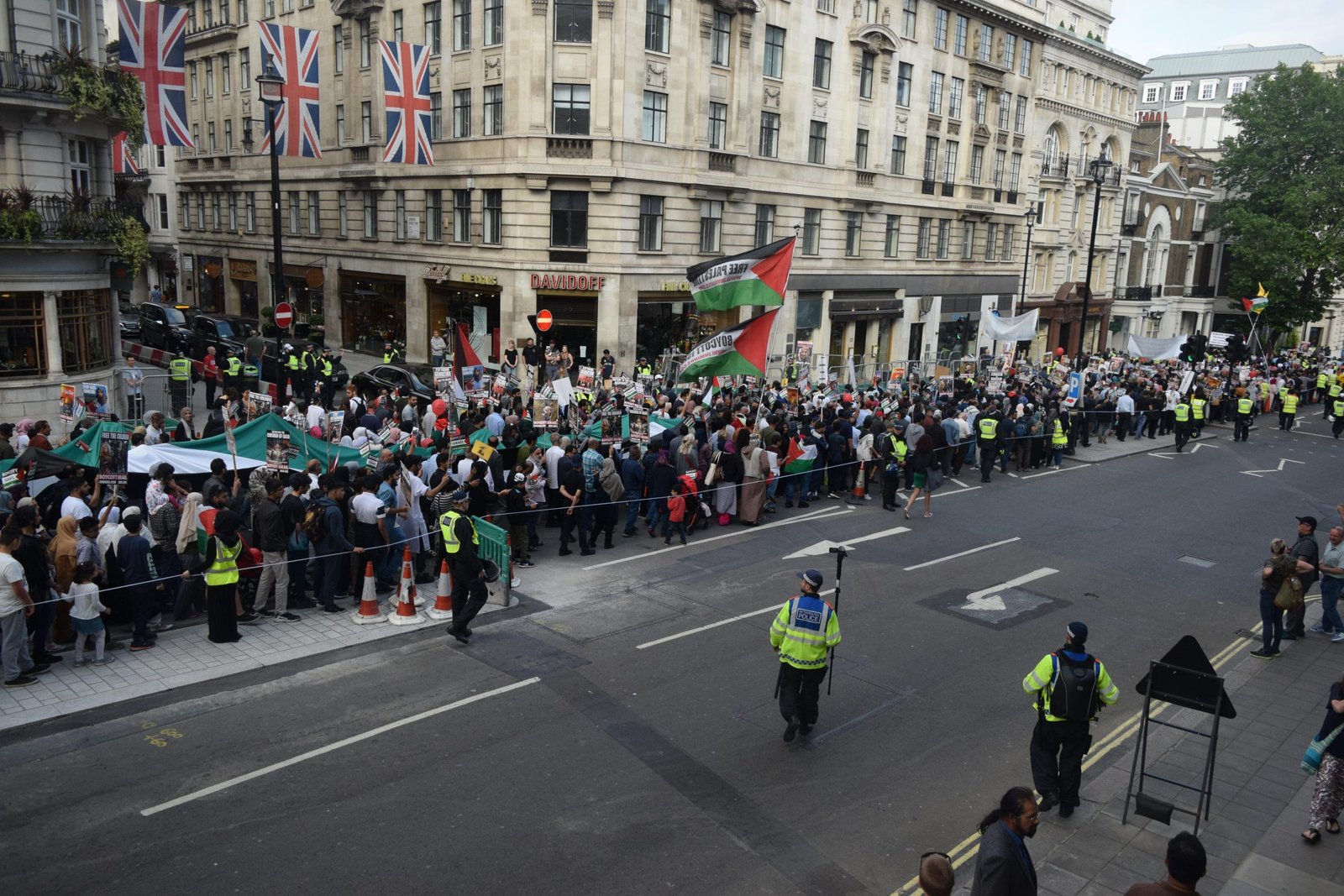
The Al Quds march in London in 2018. Photo: City Bloke/Alamy


				Earlier this week the UK government approved a request from the Metropolitan Police to ban the al-Quds Day march. The Met requested the ban due to safety concerns. They also said the march’s organisers were “supportive of the Iranian regime”. We have issue here, not with any of these suggestions, but rather with the idea that they are grounds enough for an outright ban, which can easily then be used against others later.
Al-Quds Day – named after the Arabic word for Jerusalem – was first held in Iran shortly after the 1979 Revolution. It was created by the then leader Ayatollah Ruhollah Khomeini to show Iran’s solidarity with Palestinians and to emphasise Jerusalem’s importance to Muslims. Events for the day, which is now held worldwide, typically on the last Friday of Ramadan, are often accompanied by venomous anti-Zionist and anti-Israel sentiment. The London march – which has taken place for many years now – is organised by the UK al-Quds Committee, which comprises several organisations, with the Islamic Human Rights Commission (IHRC) playing a central role.
The organisers insist the event is peaceful. In the past, however, the Met say there have been “arrests for supporting terrorist organisations and antisemitic hate crimes”.
Whether the march would be more violent than other protests is impossible to say. What is certainly true, however, is the connection to Iran. Some of those involved do not hide their admiration for the Iranian regime. The IHRC recently described Ayatollah Ali Khamenei, the former leader of Iran killed in an Israeli/US airstrike two weeks ago, as a leader who “resisted oppression and stood on the right side of history”. This about someone who presided over the brutal massacre of tens of thousands of protesting Iranian citizens this year alone.
Yet it is not illegal in this country to express support for the Iranian government. It may be deeply distasteful, but distasteful and illegal are not the same thing.
Levels of violence are also difficult to predict and all protests inevitably carry risks. At the march organised by the far-right activist Tommy Robinson in September 2025, 26 police officers were injured while policing a demonstration that brought 150,000 people onto the streets of central London. Twenty-four people were arrested. It was likely clear in advance that there would be some violence, but the march still went ahead. Ultimately, we have laws in place to criminalise violence and to legislate against incitement and hate speech. These laws aren’t suspended during protests and they should be used and are used.
This is the first time a march has been banned in London since 2012, and a static protest will take place instead. The Metropolitan Police have been keen to emphasise that the decision was not taken lightly: the Commissioner Mark Rowley says that he recognises the importance of the right to protest and freedom of speech. We can only hope this ban is as unique as he and the government say.
Unfortunately, the broader atmosphere provides little reassurance. Successive laws in the UK have chipped away at the right to protest. And now we have more and more instances of the “heckler’s veto”, a situation in which any group can shut down an event simply by citing a threat of disorder. A film about the far right was cancelled at the Southbank Centre in 2024, for example, because of fears of violence from extremists; Maccabi football fans were banned from an Aston Villa game citing safety (it later transpired the evidence was manipulated). It’s a slippery slope here, where banning one event on safety grounds creates a precedent to ban more.
It’s useful to look to history here for other examples. Perhaps no better is Skokie. In 1977, the National Socialist Party of America – a group of self-styled Nazis – planned a march through Skokie, a town near Chicago. Skokie was home to around 40,500 Jews, many of them Holocaust survivors. When the town denied the group a permit, the American Civil Liberties Union (ACLU) stepped in. One of their lawyers, a Jewish man named David Goldberger, chose to represent the Nazis on free speech grounds. The case eventually reached the United States Supreme Court, which ruled in ACLU’s favour. The march was permitted.
In the end, it was a pathetic affair. The Nazis moved their demonstration from Skokie to Chicago. Around 20 members turned up for a rally that lasted barely 10 minutes. They were met by roughly 2,000 counter-protesters. With hindsight, most agree it was the right decision to allow the march. The Nazis were allowed to exercise their First Amendment rights, but they failed to persuade anyone of their message. Nor were they granted the underdog status they might have exploited to attract sympathy and support. At the time though, ACLU’s position was deeply unpopular. Many were outraged that the principle of free speech was being evoked in the name of Nazism. ACLU lost members. It was not an easy case to fight.
Today we find ourselves in a similar predicament. Across the political spectrum and across the world, people are marching – some for causes that align closely with universal human rights and others that do not. In some instances, the causes being championed are in fact in direct opposition to freedom of expression.
More worrying still, illiberal causes are increasingly being cloaked in the language of human rights and social justice. Some protest movements borrow the vocabulary of tolerance while aligning themselves with groups or regimes that have little regard for it. A report released this month even exposed several UK charities as having links to the Iranian regime. Some protests don’t even hide the language of hate and instead seek to justify it in the name of an otherwise worthy cause.
We must be clear-eyed about the nature of certain protests. But we can still argue that they should be allowed to go ahead. As with Skokie, it is often better to allow people their moment in the open – where their views can be scrutinised and challenged, and policed when they do cross a legal threshold – than pre-emptively stopping them altogether.


				READ MORE
Share
Facebook Twitter Pinterest Email Copy Link

Listen to the article

0:00
0:00

Key Takeaways

Playback Speed

Select a Voice

Earlier this week the UK government approved a request from the Metropolitan Police to ban the al-Quds Day march. The Met requested the ban due to safety concerns. They also said the march’s organisers were “supportive of the Iranian regime”. We have issue here, not with any of these suggestions, but rather with the idea that they are grounds enough for an outright ban, which can easily then be used against others later.

Al-Quds Day – named after the Arabic word for Jerusalem – was first held in Iran shortly after the 1979 Revolution. It was created by the then leader Ayatollah Ruhollah Khomeini to show Iran’s solidarity with Palestinians and to emphasise Jerusalem’s importance to Muslims. Events for the day, which is now held worldwide, typically on the last Friday of Ramadan, are often accompanied by venomous anti-Zionist and anti-Israel sentiment. The London march – which has taken place for many years now – is organised by the UK al-Quds Committee, which comprises several organisations, with the Islamic Human Rights Commission (IHRC) playing a central role.

The organisers insist the event is peaceful. In the past, however, the Met say there have been “arrests for supporting terrorist organisations and antisemitic hate crimes”.

Whether the march would be more violent than other protests is impossible to say. What is certainly true, however, is the connection to Iran. Some of those involved do not hide their admiration for the Iranian regime. The IHRC recently described Ayatollah Ali Khamenei, the former leader of Iran killed in an Israeli/US airstrike two weeks ago, as a leader who “resisted oppression and stood on the right side of history”. This about someone who presided over the brutal massacre of tens of thousands of protesting Iranian citizens this year alone.

Yet it is not illegal in this country to express support for the Iranian government. It may be deeply distasteful, but distasteful and illegal are not the same thing.

Levels of violence are also difficult to predict and all protests inevitably carry risks. At the march organised by the far-right activist Tommy Robinson in September 2025, 26 police officers were injured while policing a demonstration that brought 150,000 people onto the streets of central London. Twenty-four people were arrested. It was likely clear in advance that there would be some violence, but the march still went ahead. Ultimately, we have laws in place to criminalise violence and to legislate against incitement and hate speech. These laws aren’t suspended during protests and they should be used and are used.

This is the first time a march has been banned in London since 2012, and a static protest will take place instead. The Metropolitan Police have been keen to emphasise that the decision was not taken lightly: the Commissioner Mark Rowley says that he recognises the importance of the right to protest and freedom of speech. We can only hope this ban is as unique as he and the government say.

Unfortunately, the broader atmosphere provides little reassurance. Successive laws in the UK have chipped away at the right to protest. And now we have more and more instances of the “heckler’s veto”, a situation in which any group can shut down an event simply by citing a threat of disorder. A film about the far right was cancelled at the Southbank Centre in 2024, for example, because of fears of violence from extremists; Maccabi football fans were banned from an Aston Villa game citing safety (it later transpired the evidence was manipulated). It’s a slippery slope here, where banning one event on safety grounds creates a precedent to ban more.

It’s useful to look to history here for other examples. Perhaps no better is Skokie. In 1977, the National Socialist Party of America – a group of self-styled Nazis – planned a march through Skokie, a town near Chicago. Skokie was home to around 40,500 Jews, many of them Holocaust survivors. When the town denied the group a permit, the American Civil Liberties Union (ACLU) stepped in. One of their lawyers, a Jewish man named David Goldberger, chose to represent the Nazis on free speech grounds. The case eventually reached the United States Supreme Court, which ruled in ACLU’s favour. The march was permitted.

In the end, it was a pathetic affair. The Nazis moved their demonstration from Skokie to Chicago. Around 20 members turned up for a rally that lasted barely 10 minutes. They were met by roughly 2,000 counter-protesters. With hindsight, most agree it was the right decision to allow the march. The Nazis were allowed to exercise their First Amendment rights, but they failed to persuade anyone of their message. Nor were they granted the underdog status they might have exploited to attract sympathy and support. At the time though, ACLU’s position was deeply unpopular. Many were outraged that the principle of free speech was being evoked in the name of Nazism. ACLU lost members. It was not an easy case to fight.

Today we find ourselves in a similar predicament. Across the political spectrum and across the world, people are marching – some for causes that align closely with universal human rights and others that do not. In some instances, the causes being championed are in fact in direct opposition to freedom of expression.

More worrying still, illiberal causes are increasingly being cloaked in the language of human rights and social justice. Some protest movements borrow the vocabulary of tolerance while aligning themselves with groups or regimes that have little regard for it. A report released this month even exposed several UK charities as having links to the Iranian regime. Some protests don’t even hide the language of hate and instead seek to justify it in the name of an otherwise worthy cause.

We must be clear-eyed about the nature of certain protests. But we can still argue that they should be allowed to go ahead. As with Skokie, it is often better to allow people their moment in the open – where their views can be scrutinised and challenged, and policed when they do cross a legal threshold – than pre-emptively stopping them altogether.

Read the full article here

Fact Checker

Verify the accuracy of this article using AI-powered analysis and real-time sources.

Get Your Fact Check Report

Enter your email to receive detailed fact-checking analysis

5 free reports remaining

Continue with Full Access

You've used your 5 free reports. Sign up for unlimited access!

Already have an account? Sign in here

Share. Facebook Twitter Pinterest LinkedIn Tumblr Email Telegram Copy Link
News Room
  • Website
  • Facebook
  • X (Twitter)
  • Instagram
  • LinkedIn

The FSNN News Room is the voice of our in-house journalists, editors, and researchers. We deliver timely, unbiased reporting at the crossroads of finance, cryptocurrency, and global politics, providing clear, fact-driven analysis free from agendas.

Related Articles

Global Free Speech

Bukele administration freezes Salvadoran news outlet’s assets in latest act of retaliation

3 days ago
Global Free Speech

Colombian journalist reported missing following capture by rebels

3 days ago
Global Free Speech

Daughter of murdered Serbian journalist Slavko Ćuruvija on her 27-year fight for justice

3 days ago
Global Free Speech

Tunisia court sentences journalist Zied el-Heni to 1 year in prison

3 days ago
Global Free Speech

Rwandan YouTuber dies of alleged overdose on day of release from prison

4 days ago
Global Free Speech

Narges Mohammadi, Iranian human rights defender and 2023 Nobel Peace Prize winner I pray that when you read this Narges Mohammadi is still alive. The Nobel Peace Prize winner is currently in an Iranian hospital in a critical condition. Her brother, who lives in Oslo, is anticipating terrible news. Mohammadi, 54, is in ill-health and is suspected of having suffered a heart attack in jail. Her move to a hospital is purely tokenistic – she is not in the right place for her condition. If she dies under these conditions, it’s a fate Mohammadi has warned about herself. In 2023 we shared a video made by Iranian filmmaker Vahid Zarezadeh of Mohammadi raising the alarm. When she gave the interview, she had just left hospital because of previous heart complications, following time in an appalling prison renowned for its punishing regime. In the video she said the “system sets up the conditions for the prisoner’s death,” and told people to not be surprised if, in the event she died in jail, the authorities blamed her death on an undiagnosed health problem. Heart attacks are common, they’d claim, downplaying their own role. Today it is even easier for them to downplay their role. The country is still in digital darkness. This Thursday marks day 69. That is 1632 hours of no connection to the global internet. There are some workarounds but they’re hard and risky. The cover of war has also seen an escalation in the execution of political prisoners, including those who took part in January’s protests. To be a dissident in Iran takes guts. To be as dedicated as Mohammadi is frankly awe-inspiring. What has made her so? Mohammadi was born in 1972 into a middle-class family with political persuasions. Following the Islamic revolution, her uncle and two cousins were arrested for activism. She studied nuclear physics at university, and it was there that she met her husband, Taghi Rahmani, who had himself spent 17 years in prison. After university, she worked for newspapers that were part of the reformist movement. In 2003 she joined the Defenders of Human Rights Center, founded by that year’s Nobel Peace Prize laureate, Shirin Ebadi. By this stage she had already been arrested and spent a year in jail. This became a pattern. According to her foundation, she’s been arrested 13 times and sentenced to a total of 31 years in prison and 154 lashes. A mother of twins — Kiana and Ali – Mohammadi has called the long years of separation from them an indescribable suffering. She has spoken about the fear and anxiety of solitary confinement and once said: “The price of the struggle is not only torture and prison, it is a heart that breaks with every regret and a pain that strikes to the marrow of your bones.” Still, she has continued to campaign for justice. Upon winning the Nobel Peace Prize in October 2023 “for her fight against the oppression of women in Iran and her fight to promote human rights and freedom for all”, she said: “I will never stop striving for the realisation of democracy, freedom and equality.” One month later she was on hunger strike to protest the delayed and neglectful medical care for sick prisoners. I’m fascinated by the anatomy of courage, though I’m unsure I’ll ever get to the bottom of it. What I do know is that Narges Mohammadi deserves every accolade and if she dies in the coming days the Iranian authorities are the culprits and not a dodgy heart. READ MORE

4 days ago
Add A Comment

Comments are closed.

Editors Picks

Circle Stock Rallies 15% as Wall Street Bets on Stablecoin Adoption

23 minutes ago

Circle Gives AI Agents USDC Stablecoin Powers Alongside $222M Arc Token Sale

24 minutes ago

A Modest Uptick in Supreme Court Popularity

47 minutes ago

CoinDesk 20 performance update: SUI surges 25% over weekend

1 hour ago
Latest Posts

Solana ETF Inflows Hit February High: Is $120 Next?

1 hour ago

OpenAI Launches Daybreak as AI Firms Expand Into Cybersecurity

1 hour ago

In The Vacuum Of AI Legislation, Libraries Have The Playbook

2 hours ago

Subscribe to News

Get the latest news and updates directly to your inbox.

At FSNN – Free Speech News Network, we deliver unfiltered reporting and in-depth analysis on the stories that matter most. From breaking headlines to global perspectives, our mission is to keep you informed, empowered, and connected.

FSNN.net is owned and operated by GlobalBoost Media
, an independent media organization dedicated to advancing transparency, free expression, and factual journalism across the digital landscape.

Facebook X (Twitter) Discord Telegram
Latest News

Strategy adds 535 bitcoin days after outlining potential sale scenarios

11 minutes ago

Circle Stock Rallies 15% as Wall Street Bets on Stablecoin Adoption

23 minutes ago

Circle Gives AI Agents USDC Stablecoin Powers Alongside $222M Arc Token Sale

24 minutes ago

Subscribe to Updates

Get the latest news and updates directly to your inbox.

© 2026 GlobalBoost Media. All Rights Reserved.
  • Privacy Policy
  • Terms of Service
  • Our Authors
  • Contact

Type above and press Enter to search. Press Esc to cancel.

🍪

Cookies

We and our selected partners wish to use cookies to collect information about you for functional purposes and statistical marketing. You may not give us your consent for certain purposes by selecting an option and you can withdraw your consent at any time via the cookie icon.

Cookie Preferences

Manage Cookies

Cookies are small text that can be used by websites to make the user experience more efficient. The law states that we may store cookies on your device if they are strictly necessary for the operation of this site. For all other types of cookies, we need your permission. This site uses various types of cookies. Some cookies are placed by third party services that appear on our pages.

Your permission applies to the following domains:

  • https://fsnn.net
Necessary
Necessary cookies help make a website usable by enabling basic functions like page navigation and access to secure areas of the website. The website cannot function properly without these cookies.
Statistic
Statistic cookies help website owners to understand how visitors interact with websites by collecting and reporting information anonymously.
Preferences
Preference cookies enable a website to remember information that changes the way the website behaves or looks, like your preferred language or the region that you are in.
Marketing
Marketing cookies are used to track visitors across websites. The intention is to display ads that are relevant and engaging for the individual user and thereby more valuable for publishers and third party advertisers.