

 Freedom Index
Listen to the article
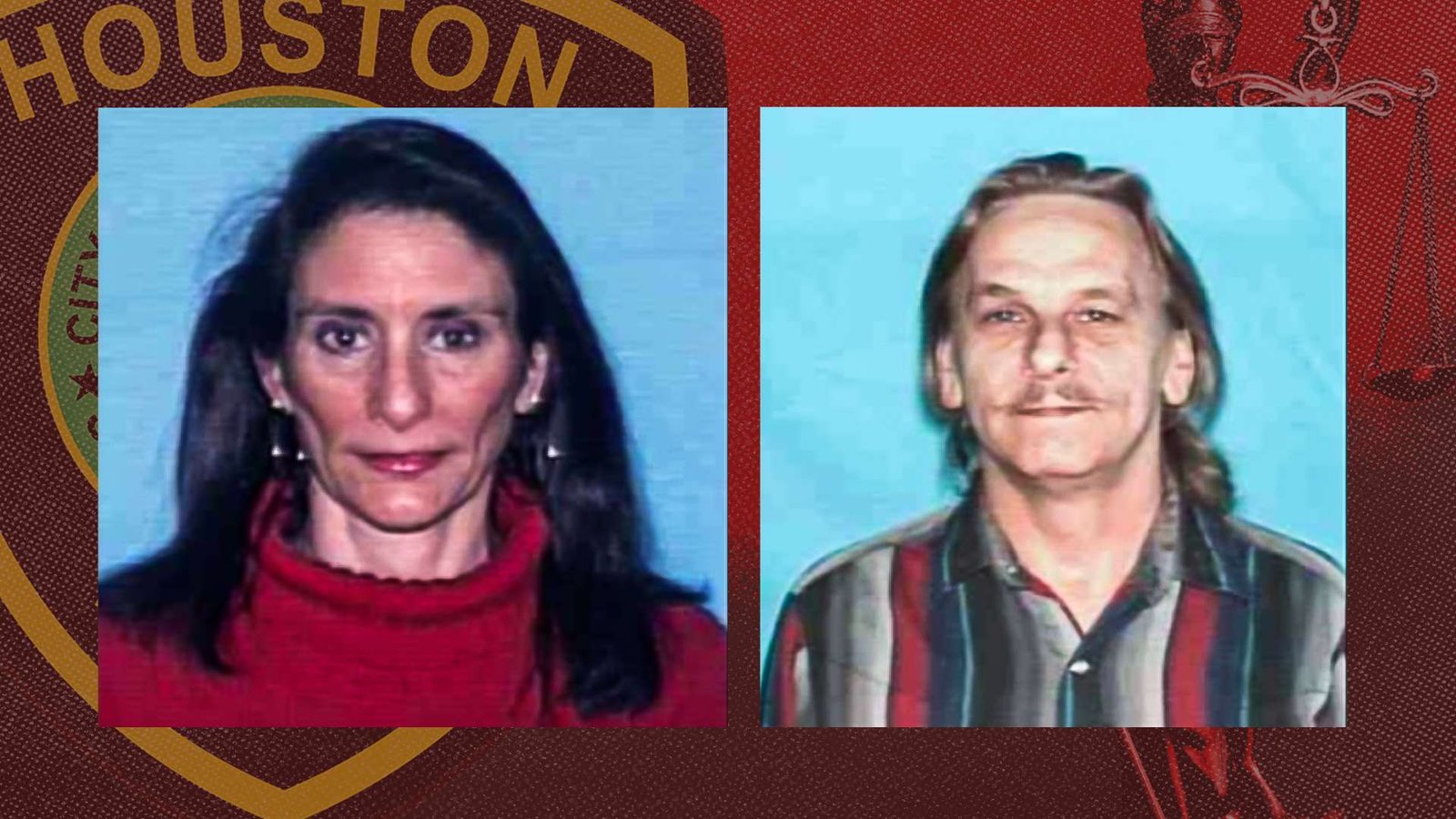
Former Houston narcotics officer Gerald Goines is serving a 60-year sentence for his role in a 2019 drug raid that killed a middle-aged couple, Dennis Tuttle and Rhogena Nicholas, whom he falsely accused of selling heroin. But the officer who actually killed Tuttle and Nicholas was Felipe Gallegos, whose justification for the shots he fired at them was inconsistent with the forensic evidence.
This week, the U.S. Court of Appeals for the 5th Circuit nevertheless concluded that Gallegos “acted like an objectively reasonable officer during a tense, uncertain, and rapidly evolving gunfight.” Because the decision focuses on one officer’s culpability, it glides over a seemingly pertinent fact: The cops started that gunfight. The chaos they created then became an excuse for killing Tuttle and Nicholas.
The 5th Circuit overruled U.S. District Court Judge Alfred Bennett, who last year allowed relatives of Tuttle and Nicholas to proceed with their civil rights claims against Gallegos. Bennett thought those claims, which alleged excessive use of force in violation of the Fourth Amendment, hinged on factual disputes that would have to be resolved at trial.
Not so, the 5th Circuit said in Tuttle v. Gallegos. Given the chaotic situation that Gallegos faced, Judge Edith Brown Clement says in an opinion joined by the two other members of the panel, the courts should not “second-guess” his “split-second decisions,” even if his account of what happened that day is not true and even if neither Tuttle nor Nicholas actually posed a threat when he killed them.
It is “undisputed,” Clement concedes, that Gallegos and the eight other officers who invaded the couple’s home should not have been there at all. “This case’s genesis began on January 8, 2019, when Patricia Garcia, Tuttle and Nicholas’s neighbor, repeatedly called 911 and falsely claimed that her daughter was doing drugs inside Tuttle and Nicholas’s house,” she notes, adding that “the falsehoods did not end with Garcia.”
Goines, who was assigned to follow up on Garcia’s malicious and mendacious tip, obtained a no-knock search warrant by describing a heroin sale that never happened. Officer Steven Bryant, who would later plead guilty to falsifying records and obstructing the federal investigation of the raid, backed up that phony story.
Goines and Bryant were part of the “entry team” that executed the search warrant. The other officers, including Gallegos, presumably did not know the warrant was based on a fraudulent affidavit. Even so, their reckless conduct created the conditions that resulted in the deaths of two innocent people.
The cops broke into the house without warning and immediately shot the couple’s dog. In other words, they fired first. Tuttle “reacted as anybody would, any normal person, hearing guns ring out in their house, their doors blown in, his wife on the couch, the dog is dead in the living room,” Harris County Assistant District Attorney Keaton Forcht told the jury during Goines’ murder trial. “He grabs his [revolver] and comes storming out.”
After the raid, police said Tuttle fired four rounds, hitting one cop in the shoulder, two in the face, and one in the neck—an impressive feat for a disabled 59-year-old Navy veteran surprised by a sudden home invasion. That story was not true either.
The first officer through the door, Clement notes, was Frank Medina, who “was shot in the shoulder and fell back against a couch.” She adds that “bullet fragments consistent with a .223-caliber gun were later found” in Medina’s wound. Tuttle did not have “a .223-caliber gun.” He had a “.357-caliber revolver.” The cops, by contrast, were carrying .223-caliber M6 rifles. In other words, Medina was shot by a fellow officer, which gives you an idea of what a shit show this was from the beginning.
Cedell Lovings, the second officer through the door, “fired his M6 .223-caliber rifle at the dog ‘several’ times,” Clement says. “He then saw another muzzle flash from the dining room area, where he saw Tuttle standing with a gun. Tuttle and Lovings exchanged fire. Tuttle shot Lovings in the neck with a .357-caliber revolver gun, leaving Lovings paralyzed from the neck down.”
In addition to Medina and Lovings, Goines and Sgt. Clemente Reyna suffered gunshot wounds during the raid. But according to the plaintiffs, Clement notes, “the evidence suggests that only Lovings was shot by Tuttle.” The injuries to Medina, Goines, and Reyna, by contrast, “were consistent with .223-caliber weapons, which only the officers carried.”
During Goines’ trial, Texas Ranger Jeff Wolf testified that the cops fired at least 40 rounds during the 80 seconds after they breached the door. Autopsies indicated that nine of those bullets struck Tuttle, while Nicholas was hit twice. Where did the rest of the bullets go? It seems clear that several of them struck other police officers.
Even if three out of four injured officers were shot by their own colleagues, Clement says, Gallegos had no way of knowing that. Fair enough. But why did Gallegos shoot Nicholas, who was unarmed?
Gallegos said he saw Nicholas “standing over Officer Medina” as he lay, wounded and unconscious, on the couch. As the plaintiffs note in their 5th Circuit brief, Gallegos initially claimed Nicholas was “tugging at his shotgun that is slung to his vest saying, ‘Motherfucker, motherfucker.'” She supposedly was “grabbing with both hands” and “tugging at the shotgun.” Gallegos later contradicted that account, testifying that Nicholas did not “actually lay her hands on the weapon.”
Both versions of that story are inconsistent with the physical evidence. Mike Maloney, the plaintiffs’ forensic expert, noted that Gallegos shot Nicholas on her right side. But if Nicholas had been standing over Medina, only her left side would have been exposed to Gallegos. Maloney concluded that Nicholas was at least eight feet away from Medina when she was shot “as she began to stand up from her seated position on the couch.”
Even if that’s true, Clement says, Gallegos still might have reasonably perceived Nicholas as a threat. “An objectively reasonable officer would have been justified in making a split-second use of deadly force against Nicholas given her actions under these tense, uncertain, and rapidly evolving circumstances,” she writes. “Even if Nicholas was not standing over Medina and reaching for his gun, she was at least eight feet away from him on the same couch and was starting to stand up from her seated position.”
Clement elaborates: “A reasonable officer under these dangerous circumstances would have been uncertain about Nicholas’s role in the gunfire: Was she the shooter who injured Medina or Lovings, did she assist the person who did, or was she an innocent bystander? A reasonable officer would have perceived that Nicholas’s proximity to Medina, who was lying injured on the couch, heightened the threat of harm because of her proximity to Medina’s weapon.”
Unlike Nicholas, Tuttle was initially armed. But by the time Gallegos killed him, according to the plaintiffs, he was so grievously wounded that he was incapable of holding a weapon. “Tuttle sustained seven bullet wounds prior to the final two shots,” their brief says. “He received shots to both his shoulder and a grazing wound to his right forearm. Following that, Mr. Tuttle ‘received shots to both arms and hands.'”
One of those bullets “ripped apart bones, tendons, ligaments, and muscle in [Tuttle’s]
dominant, right wrist,” the brief notes. “Combined with that, Tuttle’s left arm and hand sustained gruesome, catastrophic injuries. It is simply inconceivable that anyone with
injuries like Tuttle’s could grasp, hold, lift, raise, aim, and/or fire a [handgun] at anyone.”
In light of those facts, Gallegos’ account of the moments before he killed Tuttle beggars belief. Here is how Clement summarizes that account: “Tuttle was in a seated position on the floor with a gun in his right hand, resting on his thigh. Tuttle yelled at Gallegos, asking what he wanted and stating there were ‘no drugs.’ When Gallegos told Tuttle to stop moving, Tuttle ‘looked directly at Gallegos’ and ‘began to raise the weapon.’ Gallegos raised his own weapon, and Tuttle ‘flinched.’ So, Gallegos shot Tuttle one more time, fatally striking him in his upper back and neck area.”
Tuttle’s incapacity at that point is not the only problem with that story. As the plaintiffs’ brief notes, “the bullet trajectory shows Tuttle was struck in the back of the head—not facing Gallegos.”
Clement is unfazed by the blatant contradiction between Gallegos’ story and the medical evidence. “Even if Tuttle’s hands and arms were incapacitated such that he could not use a gun, there is no evidence that Gallegos would have known that fact,” she says. “An objectively reasonable officer in Gallegos’s position would not have known that Tuttle lacked the capacity to use a gun because Tuttle was not facing him, so a reasonable officer could not have reasonably perceived that Tuttle was no longer dangerous to the officers.”
Note that Clement’s excuse for Gallegos depends on rejecting his own account of what happened. If Tuttle “was not facing” Gallegos, how could it possibly be true that, just prior to the final, fatal shot, Tuttle “looked directly” at him or that Gallegos saw him raise his gun?
Gallegos’ avowed reasons for killing Nicholas and Tuttle, in short, were contradicted by the physical evidence. But as Clement sees it, that does not matter.
“The events underlying the 7815 Harding Street raid are harrowing,” Clement writes.
“Lies were told. People were shot. Lives were taken. Yet while these events are tragic, they do not establish liability under the Constitution. Gallegos acted like an objectively reasonable officer during a tense, uncertain, and rapidly evolving gunfight on January 28, 2019. We do not second-guess his training and judgment, which required split-second decisions during this shootout.”
Mike Doyle, an attorney who represents the Nicholas family, said he plans to appeal the 5th Circuit’s decision. “Felipe Gallegos deliberately killed an unarmed woman on her own couch and then kept changing his story to justify something that’s never justifiable,” Doyle told the Houston Chronicle. “We believe Judge Bennett was dead right when he confirmed a jury needed to make the decision about his honesty and the real facts.”
Rusty Hardin, Gallegos’ lawyer, welcomed the ruling. “What Officer Gallegos did was reasonable and totally legal,” he said. “We have always maintained that he was an awesome hero in this case.”
Read the full article here
Fact Checker
Verify the accuracy of this article using AI-powered analysis and real-time sources.