In brief
- Taylor Swift files three trademark applications tied to her voice and likeness.
- The move could help her challenge AI-generated fakes and unauthorized impersonations.
- Matthew McConaughey previously used a similar legal strategy.
Taylor Swift is moving to protect her voice and image from misuse by artificial intelligence through a new legal strategy, according to a report from Variety.
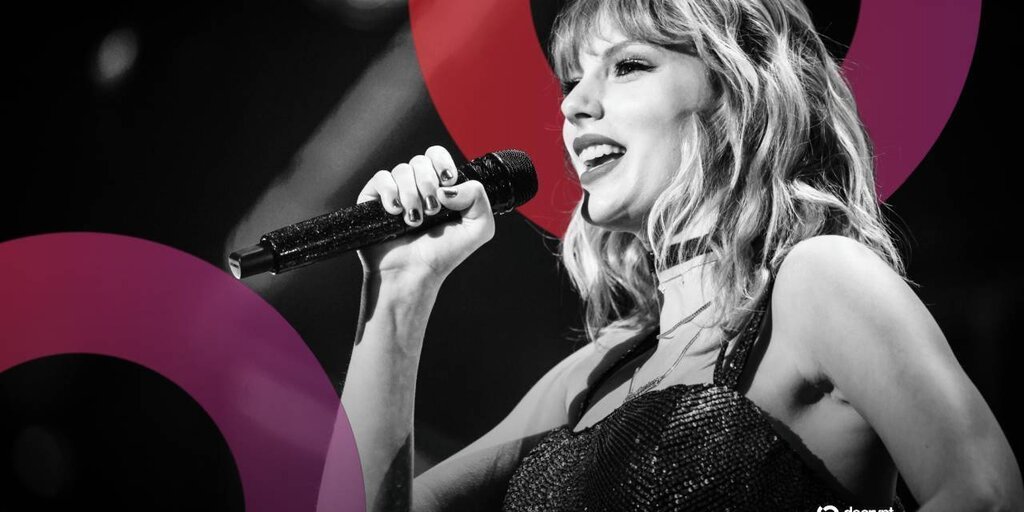
On Friday, Swift’s company, TAS Rights Management, filed three trademark applications with the U.S. Patent and Trademark Office. Two are sound trademarks covering the phrases “Hey, it’s Taylor Swift” and “Hey, it’s Taylor.” The third is a visual trademark covering a specific image of Swift performing on stage.
The filings come after AI-generated fakes have repeatedly targeted Swift.
“Very broadly, trademarks can be used to protect distinctive sounds and visuals and the name, image, and likeness of an individual insofar as it’s used in conjunction with goods or services, meaning that Taylor Swift’s use of trademark law here is fairly normal,” Kirk Sigmon, founding partner at IP and Technology law firm KellDann Law, told Decrypt.
“The unique thing here is the use to protect against AI misuse. Pragmatically, these efforts might be useful to protect herself against misuse from other identifiable actors, such as companies using AI to falsely suggest she endorses a product or service,” he said.
In 2024, then-candidate Donald Trump shared fabricated images on Truth Social suggesting Swift and her fans supported his presidential campaign. The incident led to Swift publicly endorsing Kamala Harris for president. In 2025, Elon Musk’s xAI faced backlash after Grok generated nude images of Swift despite the company’s rules banning pornographic depictions of real people.
Still, Sigmon said, enforcing those rights online may prove more difficult in practice.
“It might be surprisingly difficult for her to enforce her rights against AI misuse on the internet writ large, because those creating salacious content with her image are likely doing so anonymously, making them harder to track down,” Sigmon said.
Swift’s move follows a similar action by actor Matthew McConaughey, who secured trademarks from the U.S. Patent and Trademark Office in January, including protections for his signature phrase “alright, alright, alright” from the movie “Dazed and Confused.”
While trademark law has so far not been used to protect a person’s general likeness, voice, or persona in court, legal experts say the filings reflect growing concern in the entertainment industry over AI tools capable of replicating artists without consent. However, Swift’s level of celebrity may prove to be her greatest asset in getting the trademark approved.
“Taylor Swift is very recognizable in many ways, including but not limited to her voice and overall image,” Sigmon said. “One might quibble about the amount of distinctiveness she could argue, but that isn’t likely to outright prevent her from a trademark. It’s also likely she’ll have an easy time showing that her [name, image, and likeness] is associated with a good or service—for instance, her music, fan goods, etc.”
Daily Debrief Newsletter
Start every day with the top news stories right now, plus original features, a podcast, videos and more.


 Freedom Index