

 Freedom Index
Listen to the article
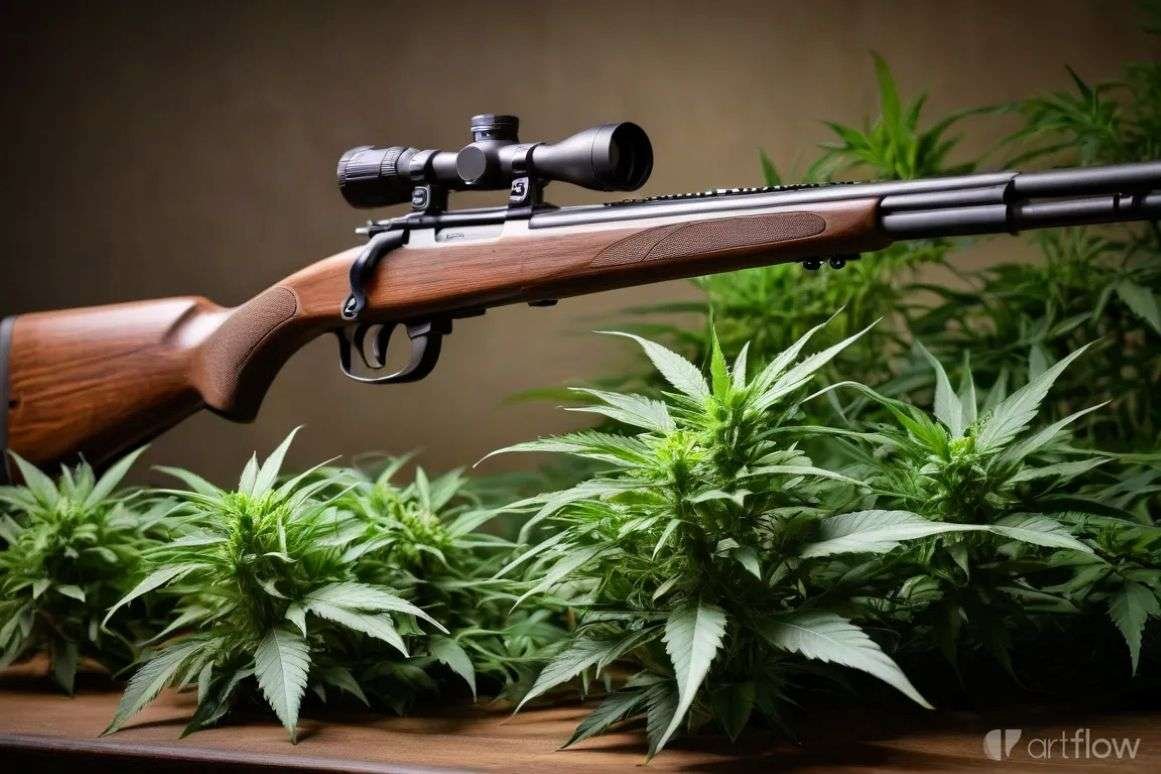
Today, in United States v. Hemani, the Supreme Court ruled that the Second Amendment prevents the federal government from banning gun ownership by marijuana users. Unusually for a Second Amendment case, the ruling is unanimous. It’s a significant application and extension of the Court’s 2022 ruling in the 2022 Bruen case, which sought to put more meat on the bones of Second Amendment rights by establishing a “history and tradition” test for reviewing gun regulations. It’s a great moment for those of us who both support strong Second Amendment rights and hate the War on Drugs (elsewhere, I have argued that most of the federal War on Drugs is itself unconstitutional). The ruling also features a joint concurring opinion by Justice Alito joined by Justice Kagan – a rarely seen combination.
Justice Neil Gorsuch wrote the opinion for the Court, joined by seven justices in all. Here’s an excerpt:
To determine when the government infringes the Second Amendment, we begin by asking whether the Amendment’s terms cover the conduct in question. Bruen, 597 U. S., at 24. If so, the Constitution “presumptively” protects it. Ibid. To overcome that presumption, the government then bears the burden of showing its regulatory efforts are “consistent with the Nation’s historical tradition of firearm regulation.” Ibid….
§922(g)(3)’s unlawful user provision burdens conduct presumptively protected by the Second Amendment. After all, that statute bans a class of people including Mr. Hemani
from possessing essentially any firearm for any purpose. As a result, the government acknowledges, it has a burden to carry….To meet its burden of showing a law like that is consistent with the Nation’s tradition of firearm regulation, the government relies on an analogy to what it calls “habitual drunkard” laws. These laws, the government submits, enjoy deep roots in the country’s history and are “relevantly similar” to the regulation it wishes to enforce against Mr.
Hemani….We disagree. We appreciate that drugs and guns can sometimes make for a dangerous mix. We appreciate, too, that the government’s effort to analogize a modern statute
addressing drug use to historical laws must be approached with a sensitivity to the fact that many drugs well known today were unknown in early America. As we have put it,
the Second Amendment “can, and must, apply to circumstances beyond those the Founders specifically anticipated.” Bruen, 597 U. S., at 28. But, even taking all that
into account, the government cannot carry the burden it has set for itself. We decide cases “based on the historical record” and arguments “compiled by the parties” before us. Id., at 26, n. 6. And the habitual drunkard laws on which the government relies here differ dramatically from §922(g)(3)’s unlawful user provision on every single metric the government invites us to consider: They targeted different kinds of people, did so for different purposes, and operated in different ways. Whether any one of these problems taken in isolation would prove fatal to the government’s cause, we need not decide. Taken cumulatively, we hold, they certainly do. And, apart from pointing to habitual drunkard laws, the government has not even attempted to prove that any other specific historical principle might justify its prosecution in this case….
Gorsuch goes on to point out that habitual drunkards are fundamentally different from people who merely drink alcohol – or use marijuana – on a regular basis:
Had habitual drunkard laws applied to those who simply drank regularly, many notable early Americans could have faced trouble. John Adams took “a tankard of hard cider”
with his “daily breakfast….”. Some say James Madison “consumed a pint of whiskey daily.” D. Okrent, Last Call: The Rise and Fall of Prohibition 8 (2010)…. George Washington often drank three glasses of madeira in the evening—”not enough to be considered a heavy drinker in his day.” Id., at 5. Thomas Jefferson enjoyed “3 or 4 glasses [of wine] at dinner….”There was, in short, a “culture of copious drinking” in early America. D. Korostyshevsky, Incapable of Managing His Estate: Habitual Drunkards and the Expansion of Guardianship in the Nineteenth-Century United States, 43 Law & Hist. Rev. 795, 800 (2025)….
Given all this, it seems the government’s historical laws targeted habitual drunkards not merely because they regularly used intoxicants, or even sometimes used them to excess. Instead, those laws focused on habitual drunkards because their drinking rendered them practically incapacitated and incapable of managing their affairs….
The law [at issue in this case], the government insists, does not require it to show that a particular individual is regularly incapacitated, much less incapable of conducting his
affairs or a threat to himself or others. Put simply, on the government’s telling, §922(g)(3) sweeps in large numbers of people without regard to whether their substance use has the kind of incapacitating effect on them that historical habitual drunkard laws normally required. This case illustrates the disconnect. The government considers Mr. Hemani an unlawful user of a controlled substance because he admits to using marijuana about every other day. But how much marijuana does Mr. Hemani use, in what potency, and to what effect? Is he routinely unable to manage his affairs, a risk to himself or his family?….. We do not know and, the government says, it doesn’t matter…
Importantly, the Court’s reasoning isn’t limited to disarming marijuana users alone. Justice Gorsuch emphasizes that one problem with the government’s position is that it would allow denying gun rights to anyone who uses a drug in a way restricted by federal law, regardless of whether the user becomes dangerously incapacitated or not:
Nor does the government’s theory stop at Mr. Hemani. It extends equally to a husband who regularly takes his wife’s prescription Ambien to sleep and a college student who routinely uses a friend’s Adderall to cram for exams. Id., at 56–58. The drug involved makes no difference. Nor, again, does it matter how much an individual uses or the effects it has on him. That someone regularly uses any substance found on any of the CSA’s five schedules for anything other than its “prescribed purpose” is enough…. Without more, the government asks us to analogize all such persons to habitual drunkards. To state the analogy is to expose its deficiency….
[W]e do not question that sometimes an individual’s unlawful use of marijuana (or any other controlled substance) may render him a danger to others. But, again, the government disclaims the need to show anything like that in this case. Instead, it asks us to conclude that anyone who regularly uses marijuana is categorically violent and dangerous without any further showing. All based on little more than its current say-so, one at odds with its own regulatory actions. And affording the government that
kind of “broad power to designate any group as dangerous and thereby disqualify its members from having a gun” would risk allowing it to “quickly swallow” the Second
Amendment. Kanter v. Barr, 919 F. 3d 437, 465 (CA7 2019)(Barrett, J., dissenting).
This suggests that mandated disarmament of other types of users of illegal or restricted drugs is also unconstitutional, except in cases where the users are incapacitated or dangerous in ways similar to “habitual drunkards.”
Gorsuch does stress that the ruling is in many respects…a narrow one.” It does not definitively resolve the issue of how to address alls laws disarming users of various illegal or restricted drugs. Nor does it deal with situations where the law bans possession of a gun while the user is actually intoxicated or high. But the Court’s reasoning nonetheless clearly sweeps beyond the specific circumstance of marijuana use.
In his concurring opinion, Justice Alito, joined by Kagan, applies slightly different reasoning:
Although I agree with the Court on [various key] points, I would affirm on a different ground from those on which the majority relies. As the opinion of the Court explains, the habitual-drunkard laws that the Government cites did not allowofficials to disarm all those who “regularly used intoxicants,” or even just those who “sometimes used them to excess….” These laws instead threatened disarmament only for those whose use of an intoxicant “rendered them practically incapacitated and incapable of managing
their affairs….”The mismatch between the Government’s historical analogues and the theory on which the Government defends the constitutionality of §922(g)(3) as applied to respondent is
clear. All that we know about respondent’s marijuana use is that he used the drug about every other day. We do not know how much he used, the strength of the marijuana he used, how many times he used it on the days in question, the time of day when he used it, where he used it, or the degree to which this use affected his ability to exercise judgment and perform daily tasks responsibly….Marijuana consumption is increasingly common in this country. Many States have legalized its use and sale, and although possession of the drug remains a federal crime,
very few persons are convicted of that offense each year. The Government has largely tolerated the production and sale of marijuana when done in accord with state law, and it has allowed a multi-billion-dollar marijuana business to develop….In these circumstances, marijuana use today is like alcohol use at the founding. It is widespread and increasingly considered socially acceptable in many quarters. And from
a practical standpoint, law enforcement widely tolerates the use of marijuana.
These similarities underscore the deficiency of the Government’s analogues. To succeed, the Government would need to identify a regulatory principle that justified disarmament of persons who are relevantly similar to the occasional marijuana user. But whereas the Government’s analogues allowed disarmament only of those whose extreme use of an intoxicant (alcohol) incapacitated them habitually, §922(g)(3) as applied to respondent allows disarmament of those who do no more than “regularly us[e]” a similar intoxicant (marijuana) unlawfully….
I agree with both the majority and with Alito’s uncharacteristically civil-libertarian concurrence.
In a concurring opinion joined by Justice Sotomayor, Justice Ketanji Brown Jackson agrees that the Court rightly applied the Bruen “history and tradition” framework, but argues that that framework is itself badly flawed, relying on dubious and difficult-to-apply historical analogies. She argues, instead, for applying “means-ends scrutiny.” I think she’s largely right about that. But the solution is not to weaken judicial protection for Second Amendment rights to but use a different approach to enforcing them. On that point, I agree with much of Randy Barnett and Nelson Lund’s critique of Bruen, published soon after the ruling:
[H]istorical analogies will frequently provide insufficient guidance, particularly for novel gun control laws that address modern problems. Looking at whether individuals could have knives and guns on eighteenth-century ships, for instance, does not provide a persuasive reason either to uphold or invalidate a modern regulation prohibiting
weapons on commercial aircraft. That law is designed to prevent aircraft hijackings, a danger quite unlike the threat of mutinies in previous centuries.What’s the alternative? Rather than relying on specious historical traditions, courts could evaluate gun laws against the purpose of protecting the right to keep and bear arms: facilitating the exercise of the fundamental right of personal and collective self-defense. In particular, judges could require the government to prove that a challenged restriction of the right to keep or bear arms does not vitiate the ability of Americans to use firearms to defend themselves against violent threats that the government cannot or will not prevent. In this way, judges can distinguish regulations that reasonably regulate this fundamental right from those that unreasonably obstruct it.
Better to start with the text and purpose of the Amendment and apply that to the facts of particular gun regulations, than the reverse! And the Barnett-Lund approach strikes me as compatible with Jackson’s advocacy of “means-ends scrutiny,” though I’m not sure either they or she would agree. Courts should consider whether the purpose and operation of the law in question is incompatible with the rights protected by the Second Amendment, and – if the purpose is permissible – whether the means used nonetheless unduly “obstruct” the right to bear arms.
Finally, Justice Clarence Thomas has a concurring opinion arguing that the law in question not only runs afoul of the Second Amendment, but also goes beyond Congress’s authority under its power to regulate interstate commerce. The Commerce Clause does not authorize Congress to criminalize intrastate possession of guns “solely on the ground
that they crossed state lines at some point in the past.” I agree! Congress may only restrict the interstate sale and transportation of goods, not their mere intrastate use and possession. And this point, as Thomas has recognized in past opinions, applies to the War on Drugs, as well.
In sum, not only is this an excellent decision, but it’s a rare case where we have four different opinions by various justices, all of which are largely right. I wish there were more rulings like this one!
Read the full article here
Fact Checker
Verify the accuracy of this article using AI-powered analysis and real-time sources.