Close Menu
FSNN | Free Speech News NetworkFSNN | Free Speech News Network
  • Home
  • News
    • Politics
    • Legal & Courts
    • Tech & Big Tech
    • Campus & Education
    • Media & Culture
    • Global Free Speech
  • Opinions
    • Debates
  • Video/Live
  • Community
  • Freedom Index
  • About
    • Mission
    • Contact
    • Support
Trending

Bitcoin above $71,000, ETH, SOL, ADA zoom higher as cryptos shrugs off stock weakness

5 minutes ago

Alibaba Backs MetaComp to Expand Stablecoin Payment Network

10 minutes ago

Senate Overwhelmingly Passes CBDC Ban Attached to Bipartisan Housing Bill

12 minutes ago
Facebook X (Twitter) Instagram
Facebook X (Twitter) Discord Telegram
FSNN | Free Speech News NetworkFSNN | Free Speech News Network
Market Data Newsletter
Friday, March 13
  • Home
  • News
    • Politics
    • Legal & Courts
    • Tech & Big Tech
    • Campus & Education
    • Media & Culture
    • Global Free Speech
  • Opinions
    • Debates
  • Video/Live
  • Community
  • Freedom Index
  • About
    • Mission
    • Contact
    • Support
FSNN | Free Speech News NetworkFSNN | Free Speech News Network
Home»Cryptocurrency & Free Speech Finance»Saudi Arabia’s First Quantum Computer: Can It Break Bitcoin?
Cryptocurrency & Free Speech Finance

Saudi Arabia’s First Quantum Computer: Can It Break Bitcoin?

News RoomBy News Room4 months agoNo Comments4 Mins Read1,595 Views
Share Facebook Twitter Pinterest Copy Link LinkedIn Tumblr Email VKontakte Telegram
Saudi Arabia’s First Quantum Computer: Can It Break Bitcoin?
Share
Facebook Twitter Pinterest Email Copy Link

Listen to the article

0:00
0:00

Key Takeaways

Playback Speed

Select a Voice

In brief

  • Saudi Aramco installed the Kingdom’s first quantum computer, built by France-based Pasqal.
  • The 200-qubit system marked Saudi Arabia’s entry into the global quantum race.
  • Experts said current machines cannot yet break Bitcoin’s cryptography, but progress is accelerating.

Saudi Arabia has entered the global quantum computing race.

Saudi Aramco, the government-controlled energy and chemicals company, said Monday it has installed the Kingdom’s first quantum computer, in a move that adds to mounting security concerns for Bitcoin and other blockchain networks.

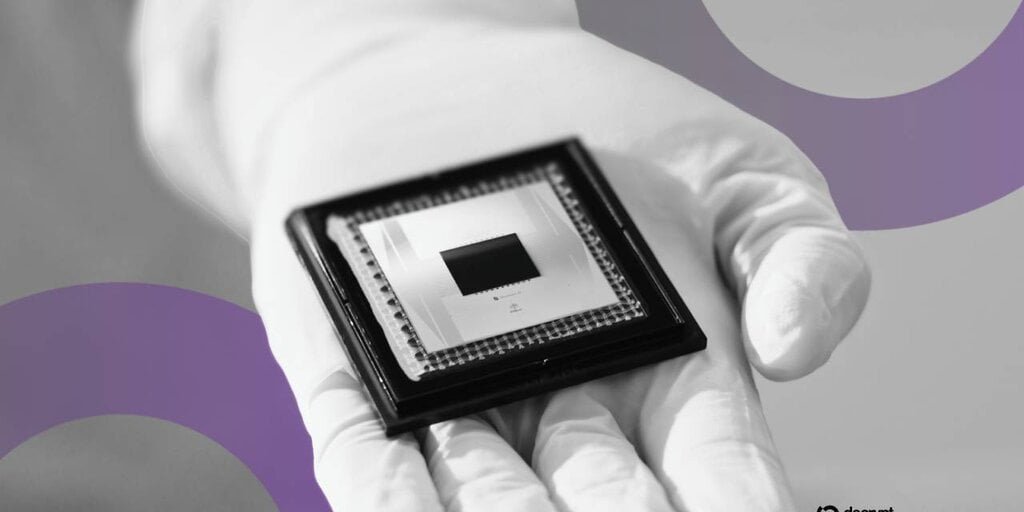
Aramco said the 200-qubit machine, built by Pasqal, a France-based neutral-atom quantum computing company, and installed at its Dhahran data center, has been designed for industrial applications such as energy modeling and materials research.

Pasqal said it is the most powerful system the company has delivered to date. A qubit, or quantum bit, is the basic unit of a quantum computer.

“The deployment of our most powerful quantum computer yet is a piece of history and a landmark for the Middle East’s quantum future,” Pasqal CEO Loïc Henriet said in a statement. “Pasqal continues its expansion, delivering practical quantum power to industry.”

Saudi Arabia’s move places it alongside governments in the U.S., China, the EU, the UK, Japan, India, and Canada that have funded national quantum programs intended to expand research infrastructure and train the workforce needed for future fault-tolerant systems.

Experts warn that if quantum machines ever become powerful enough, they could reveal private keys or forge signatures, allowing attackers to steal funds or crack privacy mechanisms. But just how real is that threat today?

A serious threat or a shot in the dark?

Yoon Auh, founder of Bolts Technologies, said rapid progress in quantum computing has forced security communities to take the threat seriously, amid “repeated jumps” in the technology.

“With so much effort and money going into this, breakthroughs are inevitable,” he told Decrypt. “Nobody knows when, but the threat is no longer theoretical. It still can’t break ECC or RSA today, but progress is steady.”

Auh said the motivation for nation-state investment extends beyond cryptanalysis.

“Quantum computing is the first technology that could become a global digital weapon not controlled by any political system,” he said.

Still, the research is some ways off from cracking systems like the one Bitcoin is built on.

According to research scientist Ian MacCormack, a 200-qubit system is small in practical terms, since current machines are limited by noise and short coherence times that restrict how many operations they can run.

“200 qubits is enough to do some interesting experiments and demonstrations, assuming the qubits are high quality, which is hard to do with even that few of them, but nowhere near enough to do error corrected computing of the sort you would need to run Shor’s Algorithm,” he said, referring to the a quantum algorithm for finding the prime factors of an integer.

Progress ahead

In September, researchers at Caltech unveiled a neutral-atom system with 6,000 qubits.

However, even machines of that scale are still used for research, simulations, and algorithm development rather than for attacking cryptography.

“What you need is a very long coherence time compared to the duration of your operations,” Caltech graduate student Elie Bataille told Decrypt. “If your operations are one microsecond and you have a second of coherence time, that means you can do about a million operations.”

Researchers say threatening modern cryptography would require thousands of error-corrected logical qubits, which translates to millions of physical qubits.

Although the Pasqal system did not change current blockchain security, it renewed attention on a long-term risk known as Q-Day, the moment a quantum computer becomes powerful enough to derive a private key from a public key and forge digital signatures.

The concern is that such a capability would not only undermine the cryptography used by Bitcoin but also the many security systems that underpin the global economy.

“What a quantum computer could do, and this is what’s relevant to Bitcoin, is forge the digital signatures Bitcoin uses today,” Justin Thaler, research partner at Andreessen Horowitz and associate professor at Georgetown University, told Decrypt. “Someone with a quantum computer could authorize a transaction, taking all the Bitcoin out of your accounts when you did not authorize it. That’s the worry.”

Today’s early-stage processors, including the 200-qubit Pasqal machine and Google’s 105-qubit Willow chip, remain well below the threshold needed for such attacks.

“Quantum computation has a reasonable probability, more than 5%, of being a major, even existential, long-term risk to Bitcoin and other cryptocurrencies,” Christopher Peikert, professor of computer science and engineering at the University of Michigan, told Decrypt. “But it’s not a real risk in the next few years; quantum-computing technology still has too far to go before it can threaten modern cryptography.”

Generally Intelligent Newsletter

A weekly AI journey narrated by Gen, a generative AI model.

Read the full article here

Fact Checker

Verify the accuracy of this article using AI-powered analysis and real-time sources.

Get Your Fact Check Report

Enter your email to receive detailed fact-checking analysis

5 free reports remaining

Continue with Full Access

You've used your 5 free reports. Sign up for unlimited access!

Already have an account? Sign in here

Share. Facebook Twitter Pinterest LinkedIn Tumblr Email Telegram Copy Link
News Room
  • Website
  • Facebook
  • X (Twitter)
  • Instagram
  • LinkedIn

The FSNN News Room is the voice of our in-house journalists, editors, and researchers. We deliver timely, unbiased reporting at the crossroads of finance, cryptocurrency, and global politics, providing clear, fact-driven analysis free from agendas.

Related Articles

Cryptocurrency & Free Speech Finance

Bitcoin above $71,000, ETH, SOL, ADA zoom higher as cryptos shrugs off stock weakness

5 minutes ago
Cryptocurrency & Free Speech Finance

Alibaba Backs MetaComp to Expand Stablecoin Payment Network

10 minutes ago
Cryptocurrency & Free Speech Finance

Senate Overwhelmingly Passes CBDC Ban Attached to Bipartisan Housing Bill

12 minutes ago
Media & Culture

Brickbat: Blocked and Reported

46 minutes ago
Cryptocurrency & Free Speech Finance

Bitcoin’s early crash to $60,000 now looks like a warning for stocks

1 hour ago
Cryptocurrency & Free Speech Finance

Democrats Promise to Oversee Reported DOJ Probe Into Binance

1 hour ago
Add A Comment

Comments are closed.

Editors Picks

Alibaba Backs MetaComp to Expand Stablecoin Payment Network

10 minutes ago

Senate Overwhelmingly Passes CBDC Ban Attached to Bipartisan Housing Bill

12 minutes ago

Brickbat: Blocked and Reported

46 minutes ago

Bitcoin’s early crash to $60,000 now looks like a warning for stocks

1 hour ago
Latest Posts

Democrats Promise to Oversee Reported DOJ Probe Into Binance

1 hour ago

How Alkimi is Fixing the ‘Opaque’ Online Advertising Model With AdFi

1 hour ago

Vietnam arrests journalist Le Anh Hung on ‘propaganda’ charge

2 hours ago

Subscribe to News

Get the latest news and updates directly to your inbox.

At FSNN – Free Speech News Network, we deliver unfiltered reporting and in-depth analysis on the stories that matter most. From breaking headlines to global perspectives, our mission is to keep you informed, empowered, and connected.

FSNN.net is owned and operated by GlobalBoost Media
, an independent media organization dedicated to advancing transparency, free expression, and factual journalism across the digital landscape.

Facebook X (Twitter) Discord Telegram
Latest News

Bitcoin above $71,000, ETH, SOL, ADA zoom higher as cryptos shrugs off stock weakness

5 minutes ago

Alibaba Backs MetaComp to Expand Stablecoin Payment Network

10 minutes ago

Senate Overwhelmingly Passes CBDC Ban Attached to Bipartisan Housing Bill

12 minutes ago

Subscribe to Updates

Get the latest news and updates directly to your inbox.

© 2026 GlobalBoost Media. All Rights Reserved.
  • Privacy Policy
  • Terms of Service
  • Our Authors
  • Contact

Type above and press Enter to search. Press Esc to cancel.

🍪

Cookies

We and our selected partners wish to use cookies to collect information about you for functional purposes and statistical marketing. You may not give us your consent for certain purposes by selecting an option and you can withdraw your consent at any time via the cookie icon.

Cookie Preferences

Manage Cookies

Cookies are small text that can be used by websites to make the user experience more efficient. The law states that we may store cookies on your device if they are strictly necessary for the operation of this site. For all other types of cookies, we need your permission. This site uses various types of cookies. Some cookies are placed by third party services that appear on our pages.

Your permission applies to the following domains:

  • https://fsnn.net
Necessary
Necessary cookies help make a website usable by enabling basic functions like page navigation and access to secure areas of the website. The website cannot function properly without these cookies.
Statistic
Statistic cookies help website owners to understand how visitors interact with websites by collecting and reporting information anonymously.
Preferences
Preference cookies enable a website to remember information that changes the way the website behaves or looks, like your preferred language or the region that you are in.
Marketing
Marketing cookies are used to track visitors across websites. The intention is to display ads that are relevant and engaging for the individual user and thereby more valuable for publishers and third party advertisers.