Close Menu
FSNN | Free Speech News NetworkFSNN | Free Speech News Network
  • Home
  • News
    • Politics
    • Legal & Courts
    • Tech & Big Tech
    • Campus & Education
    • Media & Culture
    • Global Free Speech
  • Opinions
    • Debates
  • Video/Live
  • Community
  • Freedom Index
  • About
    • Mission
    • Contact
    • Support
Trending

Maryland Court Rules Against Unconstitutional Stop-and-Frisk in Victory for State’s Gun Owners

11 minutes ago

Ethiopia expels French journalist Augustine Passilly after reporting trip to Tigray

17 minutes ago

SpaceX opens at $162 in blockbuster Nasdaq debut

24 minutes ago
Facebook X (Twitter) Instagram
Facebook X (Twitter) Discord Telegram
FSNN | Free Speech News NetworkFSNN | Free Speech News Network
Market Data Newsletter
Friday, June 12
  • Home
  • News
    • Politics
    • Legal & Courts
    • Tech & Big Tech
    • Campus & Education
    • Media & Culture
    • Global Free Speech
  • Opinions
    • Debates
  • Video/Live
  • Community
  • Freedom Index
  • About
    • Mission
    • Contact
    • Support
FSNN | Free Speech News NetworkFSNN | Free Speech News Network
Home»Cryptocurrency & Free Speech Finance»Sam Bankman-Fried Loses Appeal as Federal Court Upholds ‘Robust’ Fraud Conviction
Cryptocurrency & Free Speech Finance

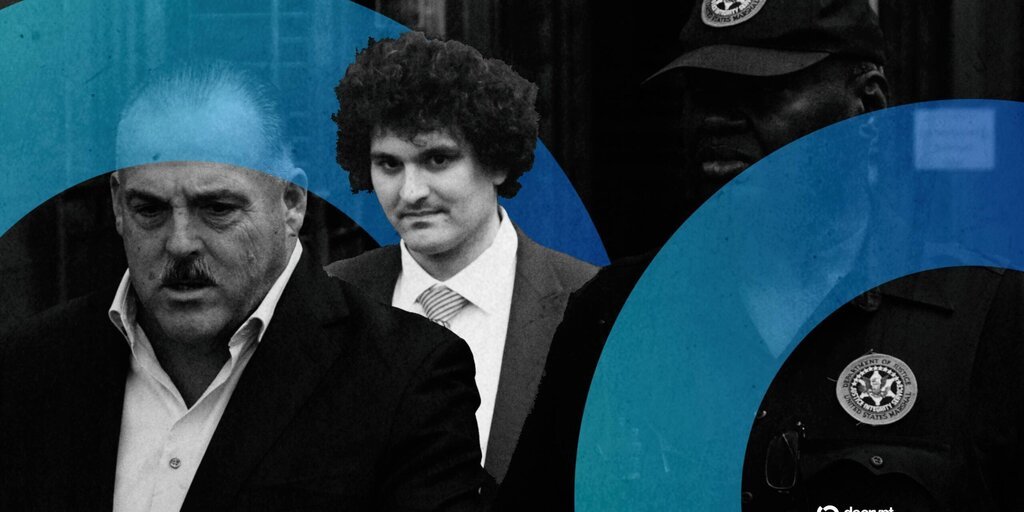
Sam Bankman-Fried Loses Appeal as Federal Court Upholds ‘Robust’ Fraud Conviction

News RoomBy News Room1 hour agoNo Comments3 Mins Read1,205 Views
Share Facebook Twitter Pinterest Copy Link LinkedIn Tumblr Email VKontakte Telegram
Sam Bankman-Fried Loses Appeal as Federal Court Upholds ‘Robust’ Fraud Conviction
Share
Facebook Twitter Pinterest Email Copy Link

Listen to the article

0:00
0:00

Key Takeaways

Playback Speed

Select a Voice

In brief

  • A federal appeals court unanimously upheld Sam Bankman-Fried’s fraud conviction and 25-year prison sentence.
  • Judges rejected his argument that FTX could have repaid customers, finding his misrepresentations alone constituted fraud.
  • With his appeal denied, a presidential pardon appears to be his only remaining path out of prison.

FTX co-founder and former CEO Sam Bankman-Fried lost a bid to overturn his 25-year prison sentence and fraud conviction Friday, with a panel of federal appeals judges unanimously upholding the verdict.

The Manhattan-based judges, of the Second Circuit Court of Appeals, picked apart Bankman-Fried’s arguments for overturning the judgment, finding each of them uncompelling.

“Bankman-Fried makes these arguments in the face of a trial at which the government’s evidence against him was, conservatively stated, robust,” the decision reads.

In 2023, the FTX founder and one-time crypto billionaire was found guilty by a Manhattan jury on seven counts of fraud and conspiracy. He was later sentenced to 25 years in prison, a term he is currently serving out at a federal prison in California.

Much of Bankman-Fried’s appeal had hinged on claims that, even if he had misappropriated funds from FTX to cover the losses of the exchange’s sister hedge fund, Alameda Research—and to make political contributions and purchase real estate, among other personal expenditures—the company was still solvent and would have been able to repay those debts.

Today’s decision flat-out rejected that argument, citing a 2025 Supreme Court case that held a defendant commits fraud whenever they use “a material misstatement” to trick victims into handing over money, even if the fraudster does not seek to cause the victim net losses. Bankman-Fried falsified business records to conceal the ways in which he spent FTX customer funds in ways those investors had not authorized.

The appeals judges underscored how the existence of those transactions—and associated, falsified records—were never refuted by Bankman-Fried.

“Bankman-Fried does not meaningfully contest the substantial evidence the government marshalled at trial,” they said.

For years now, the fallen crypto mogul has sought any way out of his quarter-century prison sentence. He has more recently begun attempting to curry favor with President Donald Trump by incessantly flattering him on social media. While Trump has pardoned several crypto founders since his return to office, he has signaled he doesn’t intend to grant clemency to Bankman-Fried. The crypto industry and its allies in Washington have pushed back forcefully against the notion.

That hasn’t stopped the FTX founder from pushing forward with hopes for a pardon, which after today’s ruling now appears to be his last resort. Bankman-Fried formally applied for a pardon earlier this week, and the campaign hasn’t been wholly unsuccessful—the rapper Drake called for his release from prison in a recent, critically panned album.

Daily Debrief Newsletter

Start every day with the top news stories right now, plus original features, a podcast, videos and more.


Read the full article here

Fact Checker

Verify the accuracy of this article using AI-powered analysis and real-time sources.

Get Your Fact Check Report

Enter your email to receive detailed fact-checking analysis

5 free reports remaining

Continue with Full Access

You've used your 5 free reports. Sign up for unlimited access!

Already have an account? Sign in here

Share. Facebook Twitter Pinterest LinkedIn Tumblr Email Telegram Copy Link
News Room
  • Website
  • Facebook
  • X (Twitter)
  • Instagram
  • LinkedIn

The FSNN News Room is the voice of our in-house journalists, editors, and researchers. We deliver timely, unbiased reporting at the crossroads of finance, cryptocurrency, and global politics, providing clear, fact-driven analysis free from agendas.

Related Articles

Media & Culture

Maryland Court Rules Against Unconstitutional Stop-and-Frisk in Victory for State’s Gun Owners

11 minutes ago
Cryptocurrency & Free Speech Finance

SpaceX opens at $162 in blockbuster Nasdaq debut

24 minutes ago
Cryptocurrency & Free Speech Finance

Sam Bankman-Fried Loses Appeal as Trump Pardon Bid Continues

25 minutes ago
Cryptocurrency & Free Speech Finance

Tennessee Man Indicted for Alleged Crypto Ponzi Scheme That Stole Millions From Investors

26 minutes ago
Media & Culture

Bill Introduced That Would Codify The Right To Record Federal Law Enforcement Officers

1 hour ago
Media & Culture

Steven Spielberg’s Disclosure Day Has Some Strange Assumptions About the Media

1 hour ago
Add A Comment
Leave A Reply Cancel Reply

Editors Picks

Ethiopia expels French journalist Augustine Passilly after reporting trip to Tigray

17 minutes ago

SpaceX opens at $162 in blockbuster Nasdaq debut

24 minutes ago

Sam Bankman-Fried Loses Appeal as Trump Pardon Bid Continues

25 minutes ago

Tennessee Man Indicted for Alleged Crypto Ponzi Scheme That Stole Millions From Investors

26 minutes ago
Latest Posts

Bill Introduced That Would Codify The Right To Record Federal Law Enforcement Officers

1 hour ago

Steven Spielberg’s Disclosure Day Has Some Strange Assumptions About the Media

1 hour ago

President Donald Trump and FIFA President Gianni Infantino at the White House for the World Cup 2025 draw. Photo: White House “We don’t live on the moon, we live on planet Earth. We have to respect that we are not kings of the world, who can rule over governments and police forces.” These were the words of FIFA president Gianni Infantino at a press conference ahead of the World Cup which has started this week. Infantino was responding to criticism of FIFA’s organisation of football’s greatest tournament, which is being held in the USA, Mexico and Canada. Historically, FIFA has sought to present football as neutral territory, distant from ideological and partisan disputes. The World Cup started out as a symbol of global unity, a celebration of diversity, dialogue between cultures, and football’s ability to bring people together in an increasingly polarised world. However, neutrality can also be interpreted as a way of silencing certain debates. Whenever the organisation decides to limit the free expression of athletes, fans, or host cities, accusations arise that it is privileging a specific view of what can or cannot be said within the sporting environment. The World Cup of today is a money-making juggernaut. The 2026 event is likely to see $11.5 billion pour into FIFA’s coffers and questions over the organisation’s propriety are never far away. As the tournament begins, a series of events has highlighted a debate that goes far beyond the pitch: to what extent is freedom of expression being respected at the world’s biggest sporting event and how much influence do the host countries have in who can do or say what? One of the highest profile incidents related to Somali referee Omar Artan. Selected to officiate at the World Cup, Artan would have become the first Somali referee to participate in the tournament. However, he was not allowed entry into the USA by immigration authorities, preventing his participation in the competition. Somalia is one of the many countries on a travel ban list issued by Trump’s government. The referee’s banning provoked an international reaction and was met with indignation in his country of origin, where the referee was treated as a hero upon his return. Addressing crowds in Mogadishu on his return, Artan said, “Somalia belongs to all of us. Whether times are good or difficult, I want to tell our youth not to lose hope in our country.” For many observers, the case symbolised the conflict between the sometimes harsh immigration policies of individual countries and the principles of universality that should guide a global event like the World Cup. While governments have the sovereign right to control their borders, critics argue that preventing the presence of professionals accredited by FIFA itself contradicts the spirit of inclusion that the organisation claims to uphold. The participation of Iran, at war with the USA, is also proving a tricky challenge for FIFA. The Iranian Football Federation reported problems involving fans who had bought tickets for World Cup matches but subsequently had their travel permits revoked or faced obstacles entering the host country. The federation said: “This incident raises serious questions about the influence of non-sporting and political considerations on the organisation of the world’s biggest football event.” In a tournament presented as a global celebration, the possibility that political and diplomatic factors could interfere with fan attendance has reignited concerns about indirect discrimination. The issue is not just about the right to watch a match. Modern football is also a space for cultural expression and collective identity. When certain groups face additional barriers to attend the event, it seems the voices of some fans are considered to be worth listening to more than others. The challenges of running a global event with participation from countries with vastly differing social attitudes is also a prickly problem for FIFA. Seattle is one of the host cities of the competition and six matches will be played at the city’s main stadium. As the tournament coincides with Pride month, one of the matches – between Egypt and Iran – has been designated a Pride match. Seattle’s mayor-elect Kate Wilson wrote on Instagram, “With matches on Juneteenth and Pride, we get to show the world that in Seattle, everyone is welcome…What an incredible honor!” Iran and Egypt are not quite so impressed. Homosexuality is banned in Iran with LGBTQ+ individuals sometimes facing the death penalty. It is not explicitly banned in Egypt but people are frequently detained and prosecuted under morality laws. The Egyptian football federation made an official complaint, saying it “categorically rejects the holding of any activities related to supporting homosexuality”. The Iranians chipped in, saying, “It is an unreasonable and illogical thing [for a match between the two teams] to support a specific group.” The episode laid bare another challenge faced by FIFA in the 21st century: how to reconcile profoundly different cultures, beliefs, and worldviews within the same event? In a globalised environment, what for some represents a legitimate expression of identity may be seen by others as an inappropriate political message. The line separating individual expression and political positioning becomes increasingly difficult to define. Infantino has tried to shrug off the criticism of these items as well as absurdly high ticket prices (despite which more than six million tickets have been sold). At the pre-tournament press conference Infantino called on fans to “chill and relax” in face of the problems faced by some. He also stated that he should be given credit for Iran being allowed to participate at all, given the USA is at war with the country. Infantino’s supporters believe that the leader seeks to prevent external issues from dominating the World Cup narrative, his critics argue that this stance ignores legitimate problems related to rights, inclusion, and transparency. Interestingly, these controversies contrast with the institutional message promoted by FIFA itself. On several occasions, Infantino has highlighted football’s role as a tool for peace and international dialogue. The organisation frequently emphasises that the sport has the unique ability to unite people regardless of nationality, religion, origin, or political stance. However, recent events demonstrate how complex this mission becomes when confronted with migration policies, diplomatic interests, and cultural disputes. Another important aspect of the debate involves the press. Major sporting events usually attract journalists from all over the world, responsible not only for covering the matches, but also for investigating social, economic, and political issues related to the tournament. Press freedom organisations warn that access to information and the possibility of reporting on sensitive topics without restrictions are fundamental elements for ensuring transparency. When certain issues generate discomfort for governments or organisers, the risk of indirect pressure on journalistic coverage arises. The 2026 World Cup demonstrates that discussions about censorship and freedom of expression are no longer limited to the explicit prohibition of speech. Today, they appear in more subtle issues: who is authorised to enter the country, what symbols are allowed in stadiums, what demonstrations are considered acceptable, and what topics can be discussed without generating reprisals. In a world marked by geopolitical tensions, debates about identity, and security concerns, the promise of a football capable of uniting all peoples is put to the test. The 2026 World Cup will be remembered for the goals, the misses and the champions. But it may also be remembered as a milestone in an increasingly relevant discussion: how to balance security, diversity, and freedom of expression in a truly global event. The answer to this question may be as important for the future of football as any result achieved on the field. READ MORE

1 hour ago

Subscribe to News

Get the latest news and updates directly to your inbox.

At FSNN – Free Speech News Network, we deliver unfiltered reporting and in-depth analysis on the stories that matter most. From breaking headlines to global perspectives, our mission is to keep you informed, empowered, and connected.

FSNN.net is owned and operated by GlobalBoost Media
, an independent media organization dedicated to advancing transparency, free expression, and factual journalism across the digital landscape.

Facebook X (Twitter) Discord Telegram
Latest News

Maryland Court Rules Against Unconstitutional Stop-and-Frisk in Victory for State’s Gun Owners

11 minutes ago

Ethiopia expels French journalist Augustine Passilly after reporting trip to Tigray

17 minutes ago

SpaceX opens at $162 in blockbuster Nasdaq debut

24 minutes ago

Subscribe to Updates

Get the latest news and updates directly to your inbox.

© 2026 GlobalBoost Media. All Rights Reserved.
  • Privacy Policy
  • Terms of Service
  • Our Authors
  • Contact

Type above and press Enter to search. Press Esc to cancel.

🍪

Cookies

We and our selected partners wish to use cookies to collect information about you for functional purposes and statistical marketing. You may not give us your consent for certain purposes by selecting an option and you can withdraw your consent at any time via the cookie icon.

Cookie Preferences

Manage Cookies

Cookies are small text that can be used by websites to make the user experience more efficient. The law states that we may store cookies on your device if they are strictly necessary for the operation of this site. For all other types of cookies, we need your permission. This site uses various types of cookies. Some cookies are placed by third party services that appear on our pages.

Your permission applies to the following domains:

  • https://fsnn.net
Necessary
Necessary cookies help make a website usable by enabling basic functions like page navigation and access to secure areas of the website. The website cannot function properly without these cookies.
Statistic
Statistic cookies help website owners to understand how visitors interact with websites by collecting and reporting information anonymously.
Preferences
Preference cookies enable a website to remember information that changes the way the website behaves or looks, like your preferred language or the region that you are in.
Marketing
Marketing cookies are used to track visitors across websites. The intention is to display ads that are relevant and engaging for the individual user and thereby more valuable for publishers and third party advertisers.