Close Menu
FSNN | Free Speech News NetworkFSNN | Free Speech News Network
  • Home
  • News
    • Politics
    • Legal & Courts
    • Tech & Big Tech
    • Campus & Education
    • Media & Culture
    • Global Free Speech
  • Opinions
    • Debates
  • Video/Live
  • Community
  • Freedom Index
  • About
    • Mission
    • Contact
    • Support
Trending

Tariffs Work Great, Says Alabama Senator Who Quietly Asked Trump To Exempt Alabama’s Fireworks, Aluminum, And Airplanes

19 minutes ago

Seven Federal Judges From Minnesota Talk To The N.Y. Times About Trump Administration

21 minutes ago

DRC journalist detained, prosecuted for sharing X post on WhatsApp

24 minutes ago
Facebook X (Twitter) Instagram
Facebook X (Twitter) Discord Telegram
FSNN | Free Speech News NetworkFSNN | Free Speech News Network
Market Data Newsletter
Thursday, September 17
  • Home
  • News
    • Politics
    • Legal & Courts
    • Tech & Big Tech
    • Campus & Education
    • Media & Culture
    • Global Free Speech
  • Opinions
    • Debates
  • Video/Live
  • Community
  • Freedom Index
  • About
    • Mission
    • Contact
    • Support
FSNN | Free Speech News NetworkFSNN | Free Speech News Network
Home»News»Media & Culture»Ring’s Lost Dog Finder Is a Potential Civil Liberties Nightmare
Media & Culture

Ring’s Lost Dog Finder Is a Potential Civil Liberties Nightmare

News RoomBy News Room7 months agoNo Comments4 Mins Read2 Views
Share Facebook Twitter Pinterest Copy Link LinkedIn Tumblr Email VKontakte Telegram
Ring’s Lost Dog Finder Is a Potential Civil Liberties Nightmare
Share
Facebook Twitter Pinterest Email Copy Link

Listen to the article

0:00
0:00

Key Takeaways

Playback Speed

Select a Voice

This year, companies paid $8 million or more for each 30-second commercial that aired during the Super Bowl broadcast.

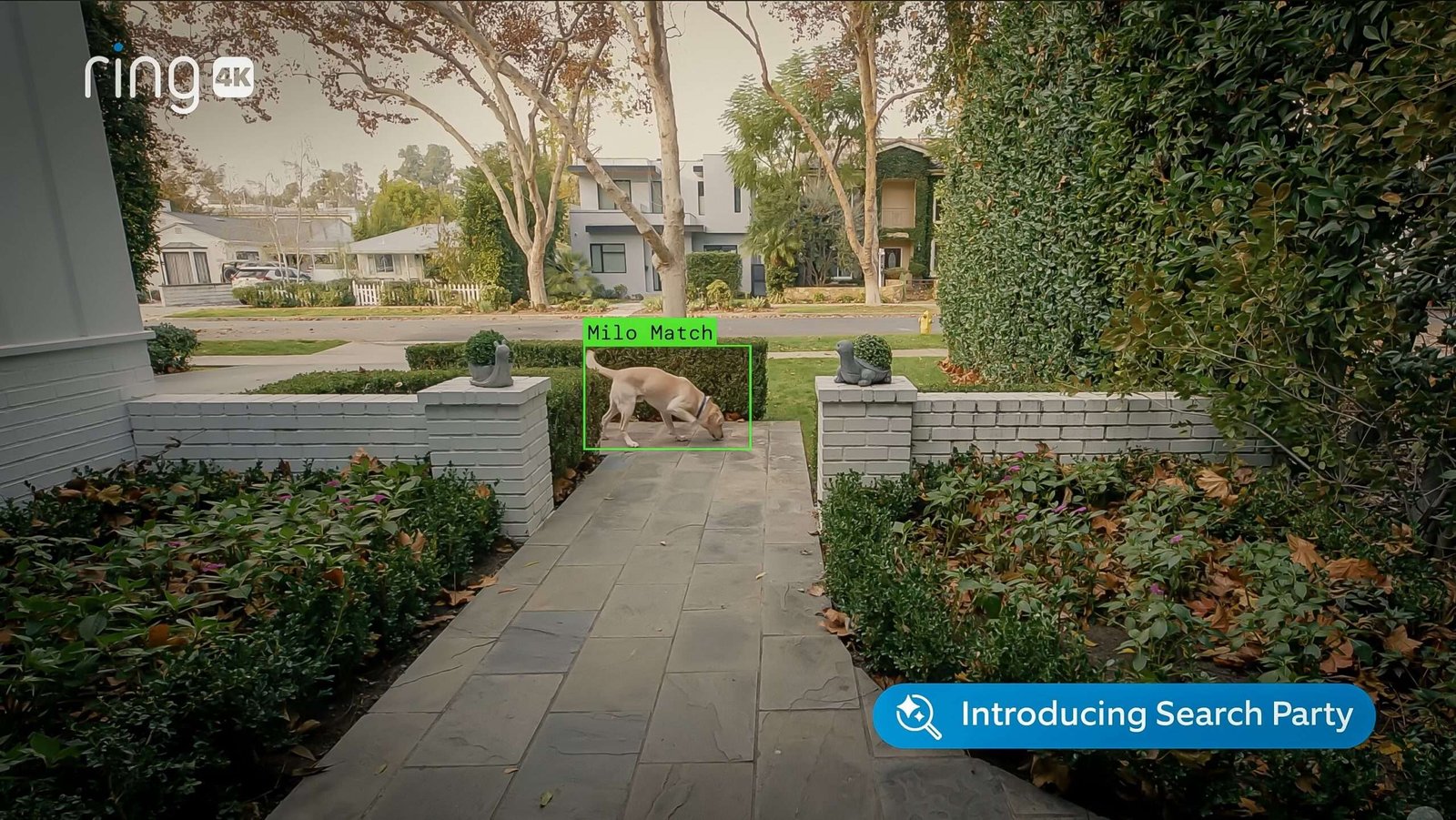
In one ad, Ring—the Amazon-owned maker of video doorbells and security lights—touted a new family-friendly feature that some viewers worry could be used by police or even immigration enforcement.

“Pets are family,” Ring founder Jamie Siminoff says in the commercial. “But every year, 10 million go missing, and the way we look for them hasn’t changed in years—until now.”

The ad introduces Search Party, a feature in which users can upload a picture of their lost dog, and Ring cameras will use AI to search for the animal—like doggy facial recognition. “Since launch, more than a dog a day has been reunited with their family,” Siminoff bragged.

Not everybody was thrilled with this new functionality; some viewers worried about its potential use by law enforcement.

In a viral X post, one user characterized the ad’s message as, “10 million dogs go missing every year, help us find 365 of them by soft launching the total surveillance state.” Scott Lincicome of the Cato Institute quipped that Ring should instead have called its dog surveillance network “the Pawnopticon.”

But snark aside, there actually is reason to fear that this technology could be weaponized against unsuspecting civilians.

In 2022, it emerged that police departments could access Ring footage without the camera owners’ permission or even a warrant, through a dedicated portal on the service’s website. Ring later announced it would end this feature, but the renewed dedication to user privacy was short-lived. In October 2025, the company inked partnerships with both Flock Safety—which makes law enforcement devices like security cameras and automated license plate readers—and its competitor Axon Enterprises, whose product line includes Tasers and body cameras. The deals would allow Ring users to share footage with police departments across the country that use either Flock or Axon software.

“This is a bad, bad step for Ring and the broader public,” Matthew Guariglia of the Electronic Frontier Foundation (EFF) wrote at the time. “Ring is rolling back many of the reforms it’s made in the last few years by easing police access to footage from millions of homes in the United States. This is a grave threat to civil liberties in the United States. After all, police have used Ring footage to spy on protestors, and obtained footage without a warrant or consent of the user.”

Last month, amid escalating violence committed by U.S. Immigration and Customs Enforcement (ICE) agents, social media users called on customers to dump Ring’s products, as the company’s partnership with Flock posed the possibility that ICE could access its footage. For its part, Flock says it “does not work with” or “partner with ICE,” and police departments can only access footage by requesting it from the camera’s owners.

But as 404 Media reported last year, local police departments routinely searched Flock’s camera network on ICE’s behalf, “giving federal law enforcement side-door access to a tool that it currently does not have a formal contract for.”

Illinois Secretary of State Alexi Giannoulias announced in August that Flock had granted U.S. Customs and Border Protection (CBP) access to its license plate readers in Illinois—a violation of state law. In response, the city of Evanston deactivated its Flock license plate readers, terminated its contract with the company, and ordered all the cameras taken down. Flock removed 15 of its 18 stationary cameras in Evanston only to immediately reinstall them near their original locations.

Just last week, Mountain View, California, shut down its system of Flock license plate readers after a local media investigation revealed that hundreds of law enforcement agencies had accessed and searched the network without the city’s authorization.

Per the Ring commercial, Search Party uses AI to detect pets based on uploaded photos, akin to facial recognition. ICE is already using facial recognition software in places like Minnesota, not only against suspected undocumented migrants but also against protesters. Last month, ICE officers in Maine photographed a legal observer and told her, “We have a nice little database, and now you’re considered a domestic terrorist.” (At the time, Department of Homeland Security spokesperson Tricia McLaughlin denied to Reason‘s C.J. Ciaramella that such a database exists.)

Ring claims on its website, “Search Party does not use AI to identify pet owners or people.” But the company’s history includes many broken promises, with law enforcement agencies accessing footage they’re not entitled to without users’ permission. A high-tech feature for finding lost dogs is obviously useful and appealing, but it’s worth considering the potential ramifications for civil liberties.

Read the full article here

Fact Checker

Verify the accuracy of this article using AI-powered analysis and real-time sources.

Get Your Fact Check Report

Enter your email to receive detailed fact-checking analysis

5 free reports remaining

Continue with Full Access

You've used your 5 free reports. Sign up for unlimited access!

Already have an account? Sign in here

#FreePress #PoliticalCoverage #PoliticalNews #PressFreedom #PublicOpinion
Share. Facebook Twitter Pinterest LinkedIn Tumblr Email Telegram Copy Link
News Room
  • Website
  • Facebook
  • X (Twitter)
  • Instagram
  • LinkedIn

The FSNN News Room is the voice of our in-house journalists, editors, and researchers. We deliver timely, unbiased reporting at the crossroads of finance, cryptocurrency, and global politics, providing clear, fact-driven analysis free from agendas.

Related Articles

Media & Culture

Tariffs Work Great, Says Alabama Senator Who Quietly Asked Trump To Exempt Alabama’s Fireworks, Aluminum, And Airplanes

19 minutes ago
Media & Culture

Seven Federal Judges From Minnesota Talk To The N.Y. Times About Trump Administration

21 minutes ago
Cryptocurrency & Free Speech Finance

FCA Targets Three More London Sites Over Unregistered P2P Crypto Trading

45 minutes ago
Media & Culture

Disability Accommodations “That Fundamentally Change Court Proceedings, Could Alter the Court’s Substantive Decisions,” …

1 hour ago
Cryptocurrency & Free Speech Finance

SEC Clears a Path for Tokenized Stocks After Clarity Act Stumbles

2 hours ago
Media & Culture

Best Credit in the World

2 hours ago
Add A Comment

Comments are closed.

Editors Picks

Seven Federal Judges From Minnesota Talk To The N.Y. Times About Trump Administration

21 minutes ago

DRC journalist detained, prosecuted for sharing X post on WhatsApp

24 minutes ago

Many in Hong Kong continue to fight against censorship (Diliff/WikiCommons) The website of The Committee for Freedom in Hong Kong Foundation (CFHK) has apparently been blocked in Hong Kong, the latest of a series of blockages in the city following the enactment of the draconian National Security Law (NSL) in 2020. Some using Hong Kong internet service providers including SmarTone, China Mobile Hong Kong, PCCW and CSL have found themselves unable to access the CFHK website. However, it appeared not to be a full blockage. The technical reason behind this remains to be investigated. Chloe Cheung, a former public affairs and advocacy manager at CFHK, was put on a Hong Kong police wanted list in December 2024 for “incitement to secession” and “collusion with a foreign country or with external elements to endanger national security”, with a HK$1,000,000 (£94,400) bounty. In response to enquiries from Index on Censorship, a spokesman for Hong Kong’s Security Bureau replied: “Please approach the relevant internet service provider regarding the matter in question,” without confirming or denying the blockage. SmarTone, China Mobile Hong Kong, PCCW – CSL’s parent company – did not respond to emailed enquiries. The Security Bureau’s response was the same as the one given to Voice of America, when the news outlet reported in October 2024 that online magazine Flow HK, founded by exiled pro-democracy activists, was blocked. A month before the incident, the Hong Kong police had written to the American company Automattic Inc. – which is behind WordPress – demanding it take down Flow HK. Their request was declined and the website was subsequently blocked. Since last week, some using Hong Kong internet service providers including SmarTone, China Mobile Hong Kong, PCCW and CSL have found themselves unable to access the CFHK website The CFHK website home page (CFHK) The implementation rules for the Article 43 of NSL grants power to the Hong Kong police to require internet service providers to take down websites that are “likely to constitute an offence endangering national security or is likely to cause the occurrence of an offence endangering national security”. At least 10 websites have been blocked in Hong Kong since the enactment of the NSL, from the personal substack of American lawyer Samuel Bickett who writes about Hong Kong’s decline in human rights and sanction evasions, to UK-based advocacy group Hong Kong Watch and Washington-based Hong Kong Democracy Council. At least 10 websites have been blocked in Hong Kong since the enactment of the NSL Hong Kong has also blocked the online 8964 Museum, which commemorates the 4 June 1989 Tiananmen Square massacre in China. Several Taiwanese websites have also been blocked, including the websites of the Transitional Justice Commission, the Presbyterian Church in Taiwan and the ruling Democratic Progressive Party. Responding to its website being blocked in Hong Kong, David Green, the head of UK communications for CFHK told Index on Censorship: “Requiring ISPs to participate in monitoring and censoring websites, deemed undesirable by the Chinese Communist Party, is reminiscent of how the mainland’s Great Firewall took shape. “If left uncontested, it’s only a matter of time before such blockages – of which there are already more than a few – multiply. Can we seriously expect the CCP to allow Hong Kongers continued access to the truth, now that they’ve criminalised remembrance of 4 June?” READ MORE

29 minutes ago

U.S. SEC begins prepping for around-the-clock trading that crypto treats as the norm

38 minutes ago
Latest Posts

Zcash miner Fortitude appoints Jaime Leverton as CEO

42 minutes ago

FCA Targets Three More London Sites Over Unregistered P2P Crypto Trading

45 minutes ago

Disability Accommodations “That Fundamentally Change Court Proceedings, Could Alter the Court’s Substantive Decisions,” …

1 hour ago

Subscribe to News

Get the latest news and updates directly to your inbox.

At FSNN – Free Speech News Network, we deliver unfiltered reporting and in-depth analysis on the stories that matter most. From breaking headlines to global perspectives, our mission is to keep you informed, empowered, and connected.

FSNN.net is owned and operated by GlobalBoost Media
, an independent media organization dedicated to advancing transparency, free expression, and factual journalism across the digital landscape.

Facebook X (Twitter) Discord Telegram
Latest News

Tariffs Work Great, Says Alabama Senator Who Quietly Asked Trump To Exempt Alabama’s Fireworks, Aluminum, And Airplanes

19 minutes ago

Seven Federal Judges From Minnesota Talk To The N.Y. Times About Trump Administration

21 minutes ago

DRC journalist detained, prosecuted for sharing X post on WhatsApp

24 minutes ago

Subscribe to Updates

Get the latest news and updates directly to your inbox.

© 2026 GlobalBoost Media. All Rights Reserved.
  • Privacy Policy
  • Terms of Service
  • Our Authors
  • Contact

Type above and press Enter to search. Press Esc to cancel.

🍪

Cookies

We and our selected partners wish to use cookies to collect information about you for functional purposes and statistical marketing. You may not give us your consent for certain purposes by selecting an option and you can withdraw your consent at any time via the cookie icon.

Cookie Preferences

Manage Cookies

Cookies are small text that can be used by websites to make the user experience more efficient. The law states that we may store cookies on your device if they are strictly necessary for the operation of this site. For all other types of cookies, we need your permission. This site uses various types of cookies. Some cookies are placed by third party services that appear on our pages.

Your permission applies to the following domains:

  • https://fsnn.net
Necessary
Necessary cookies help make a website usable by enabling basic functions like page navigation and access to secure areas of the website. The website cannot function properly without these cookies.
Statistic
Statistic cookies help website owners to understand how visitors interact with websites by collecting and reporting information anonymously.
Preferences
Preference cookies enable a website to remember information that changes the way the website behaves or looks, like your preferred language or the region that you are in.
Marketing
Marketing cookies are used to track visitors across websites. The intention is to display ads that are relevant and engaging for the individual user and thereby more valuable for publishers and third party advertisers.