

 Freedom Index
Listen to the article
From Judge Mary Kay Costello (E.D. Pa.) Friday in McCausland v. Penn. State Univ.:
Plaintiff Jonathan McCausland is a former graduate student and teaching assistant (“TA”) at Penn State University …. In 2024, Jeanine Staples-Dixon, a tenured professor at Penn State, published a book that disclosed Plaintiff’s childhood sexual abuse….
The facts, as alleged by plaintiff:
In 2018, Plaintiff began working as a TA for Professor Staples-Dixon’s Philadelphia Urban Seminar at Penn State. This yearly seminar was held in the summer for a small number of students. As part of the course, Staples-Dixon instructed her TAs to share their “gender stories.” She explained that extreme vulnerability “was an essential part of the pedagogical value of the seminar,” and she wanted her TAs to model that vulnerability for her students.
To facilitate open and honest communication among seminar participants, every student was required to complete several intake forms pertaining to confidentiality. The forms stated that all information shared in class would be confidential, would not be shared outside the classroom without permission, and would be anonymized in the event of publication. Neither Staples-Dixon nor the TAs signed the confidentiality forms.
During the summer 2018 seminar, Plaintiff shared a gender story relating to how competition and athletics shaped his ideas of masculinity. However, Plaintiff felt that this story was “insufficiently vulnerable when compared to the highly personal gender stories share by other” TAs. During a planning session for the 2019 seminar, Plaintiff shared with Staples-Dixon that he had been sexually abused as a child by older boys who lived in his neighborhood. Staples-Dixon encouraged Plaintiff to share his story with seminar participants because it revealed the exact kind of extreme vulnerability that she wanted to discuss in the course.
Trusting the norms of confidentiality in the seminar and the agreements signed by every student, Plaintiff agreed. With Staples-Dixon’s encouragement, Plaintiff continued to share his sexual abuse with seminar participants during the 2020, 2021, and 2022 sessions. Plaintiff graduated from Penn State in 2022.
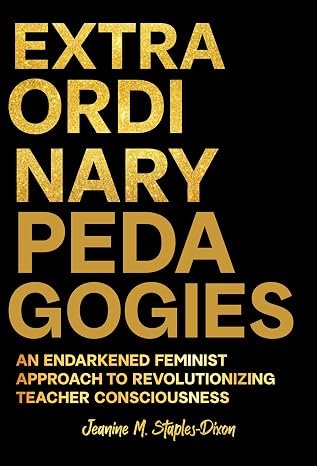
In December 2024, Staples-Dixon published “Extraordinary Pedagogies: An Endarkened Feminist Approach to Revolutionizing Teacher Consciousness” through Teachers College Press. She based the book on the research she conducted during the seminar. The book included the following passage recounting Plaintiff’s sexual abuse:
Dr. JD McCausland talked about the sexual molestation he endured with his childhood best friend, perpetuated by a group of older, bigger teenage boys. He talked about the confusion, anger fear, and stress he endured via the abuse and how he felt tortured in his gender identity and sexual orientation until he generated the strength to claim his identify for himself as a straight, cis man. Telling these stories means locating your power. This is a feat, especially when one’s gender identity, expression, and sexual orientation are crippled and corrupted by sexism, misogyny, and misogynoir….
When Plaintiff learned of the book in late February 2025, he felt betrayed. Staples-Dixon never sought Plaintiff’s consent to publish his story, and he was particularly shocked by the fact that Staples-Dixon referenced him by name and professional title.
The court allowed plaintiff’s disclosure of private facts claim to go forward (the Pennsylvania term for the tort is “publicity given to private life”):
“To state a claim for publicity given to private life, a plaintiff must allege that the matter publicized is ‘(1) publicity, given to (2) private facts, (3) which would be highly offensive to a reasonable person, and (4) is not of legitimate concern to the public.'” …
“A private fact is one that has not already been made public.” A fact is made public “by communicating it to the public at large, or to so many persons that the matter must be regarded as substantially certain to become one of public knowledge.” However, “disclosures to a small number of persons do not” make a fact public….
Here, Plaintiff’s disclosures to seminar participants were not substantially certain to make his experiences public knowledge. Plaintiff shared his sexual abuse with students during the seminar from 2019 to 2022. Each student completed an intake form stating that information shared in the course was confidential and would not be shared outside the classroom without permission.
Although Staples-Dixon emphasizes that neither she nor the other TAs signed that form, Plaintiff is entitled to an inference that the form and sensitive subject matter discussed in the seminar created an expectation of confidentiality. Indeed, even if Staples-Dixon and the other TAs could have discussed that information outside of the seminar, Plaintiff’s disclosure to them did not make it substantially certain that his past abuse would become public knowledge. Given this context, Plaintiff has plausibly alleged that his sexual abuse was a private fact despite his disclosures to seminar participants….
The court also allowed plaintiff’s intentional infliction of emotional distress claim to go forward:
“‘Liability on an intentional infliction of emotional distress claim has been found only where the conduct has been so outrageous in character, and so extreme in degree, as to go beyond all possible bounds of decency, and to be regarded as atrocious, and utterly intolerable in a civilized community.'” …
Here, a reasonable fact finder could determine that Staples-Dixon’s publication of Plaintiff’s sexual abuse was extreme and outrageous. She published one of “the most private and personal aspects of Plaintiff’s life.” And Plaintiff shared with Staples-Dixon and other seminar participants that “this abuse had caused him lifelong struggles related to trust, relationships, intimacy, and identity.” In fact, Plaintiff alleged that Staples-Dixon encouraged him to share his story precisely for that reason—”to model the extreme vulnerability called for by the Seminar’s pedagogy.” Therefore, like the dissemination of the sensitive records and intimate photographs in Hernandez, Staples-Dixon disclosure could reasonably be considered extreme and outrageous….
Plaintiff [also] alleged sufficient facts to support an inference that Staples-Dixon knew Plaintiff was particularly sensitive about his childhood abuse, yet she published that information anyway. Plaintiff alleged that he told Staples-Dixon that his abuse “caused him lifelong struggles related to trust, relationships, intimacy, and identity.” Indeed, Staples-Dixon encouraged Plaintiff to share his “highly personal gender stor[y]” for that reason. When Plaintiff shared his story of abuse, Staples-Dixon stated that his story exemplified “the extreme vulnerability called for by the Seminar’s pedagogy.”
Despite this knowledge, Staples-Dixon proceeded to publish Plaintiff’s abuse story and identify him by name. Given her knowledge of Plaintiff’s emotional sensitivity, Staples-Dixon was, or reasonably should have been, substantially certain that her publication would cause Plaintiff severe emotional distress….
For related reasons, the court also allowed plaintiff to seek punitive damages against Staples-Dixon.
But the court held that Penn State wasn’t directly liable for disclosure of private facts based on its own behavior:
Penn State publicized Staples-Dixon’s book with a forum event in February 2025. Its online invitation encouraged students to join “a conversation about Professor of Education Jeanine Staples-Dixon’s latest book.” Penn State’s website also noted in Staples-Dixon’s faculty biography that she was “currently writing two books,” including the book at issue….
Penn State’s conduct was not substantially certain to make Plaintiff’s abuse public knowledge. First, Penn State did not publish Staples-Dixon’s book. Teachers College Press did. Plaintiff did not make any allegations to the contrary. Plaintiff speculates that Penn State may have approved the book for publication, but that is not enough to defeat a motion to dismiss…. “Factual allegations must be enough to raise a right to relief above the speculative level.” …
Second, Penn State’s promotion of Staples-Dixon’s book did not communicate the content of the book….The [online] invitation states only that the event will include “a conversation about … Staples-Dixon’s latest book.” Nothing in this communication made it substantially certain that Plaintiff’s sexual abuse would become public knowledge. The invitation includes no content from the book or any reference to Plaintiff. The same analysis applies with respect to Plaintiff’s argument that Staples-Dixon’s faculty biography constitutes publication because that biography merely states that she is “currently writing two books.” Furthermore, even if Penn State’s promotion had publicized Plaintiff’s abuse, Staples-Dixon’s book had already disclosed that information to the public.
For similar reasons, the court held that Penn State wasn’t liable for intentional infliction of emotional distress. And the court held that Penn State couldn’t be liable for either tort on an employer liability (respondeat superior) theory:
“[U]nder Pennsylvania law, an employer generally cannot be held liable for the intentional torts of its employees.” To hold an employer vicariously liable for an employee’s intentional tort, the employee’s act must have occurred within the course and scope of employment. “[C]onduct is within the scope of employment if, but only if: (a) it is the kind [the employee] is employed to perform; (b) it occurs substantially within the authorized time and space limits[; and] (c) it is actuated, at least in part, by a purpose to serve the master.”
Here, Plaintiff alleged no facts showing that Staples-Dixon’s publication of the book was within the scope of her employment. The only allegation related to the nature of the relationship between Defendants is that Staples-Dixon is a tenured professor at Penn State where she taught the summer seminar…. In any event, even if publication of research was part of Staples-Dixon’s job in general, Plaintiff failed to plausibly allege that the publication of this book in particular was within the scope of her employment.
Moreover, Plaintiff alleged that Staples-Dixon motivation in publishing the book was personal. The only motivation attributed to Staples-Dixon was that she published the book “for commercial gain.” Tortious conduct committed for personal reasons is not within the scope of employment. Staples-Dixon’s “commercial gain” from publishing the book is a personal pecuniary interest. Beyond these allegations, Plaintiff alleged no facts to show that Staples-Dixon’s writing and publishing of the book was “actuated, at least in part, by a purpose to serve” Penn State. Therefore, the Court will grant Penn State’s motion to dismiss Plaintiff’s vicarious liability claims without prejudice.
Lane R. Jubb Jr. and Andrew Warshawer (The Beasley Firm) represent plaintiff. Thanks to the Media Law Resource Center (MLRC) MediaLawDaily for the pointer.
Read the full article here
Fact Checker
Verify the accuracy of this article using AI-powered analysis and real-time sources.