Close Menu
FSNN | Free Speech News NetworkFSNN | Free Speech News Network
  • Home
  • News
    • Politics
    • Legal & Courts
    • Tech & Big Tech
    • Campus & Education
    • Media & Culture
    • Global Free Speech
  • Opinions
    • Debates
  • Video/Live
  • Community
  • Freedom Index
  • About
    • Mission
    • Contact
    • Support
Trending

Polo Officials Ban Genetically Enhanced Ponies To Save ‘the Magic of Breeding’

32 minutes ago

WLFI races toward 62 billion token unlock with near-unanimous vote

55 minutes ago

Bitcoin Juggles $120 Oil and Fed’s ‘Most Hawkish’ Interest-Rate Pause

57 minutes ago
Facebook X (Twitter) Instagram
Facebook X (Twitter) Discord Telegram
FSNN | Free Speech News NetworkFSNN | Free Speech News Network
Market Data Newsletter
Thursday, April 30
  • Home
  • News
    • Politics
    • Legal & Courts
    • Tech & Big Tech
    • Campus & Education
    • Media & Culture
    • Global Free Speech
  • Opinions
    • Debates
  • Video/Live
  • Community
  • Freedom Index
  • About
    • Mission
    • Contact
    • Support
FSNN | Free Speech News NetworkFSNN | Free Speech News Network
Home»News»Global Free Speech»Philippine journalist RJ Nichole Ledesma killed in army operation
Global Free Speech

Philippine journalist RJ Nichole Ledesma killed in army operation

News RoomBy News Room2 hours agoNo Comments2 Mins Read1,282 Views
Share Facebook Twitter Pinterest Copy Link LinkedIn Tumblr Email VKontakte Telegram
Philippine journalist RJ Nichole Ledesma killed in army operation
Share
Facebook Twitter Pinterest Email Copy Link

Listen to the article

0:00
0:00

Key Takeaways

Playback Speed

Select a Voice

Bangkok, April 30, 2026—The Philippines government must immediately conduct an independent investigation into the killing of community journalist RJ Nichole Ledesma and hold any military members responsible for his death accountable, the Committee to Protect Journalists said Thursday.

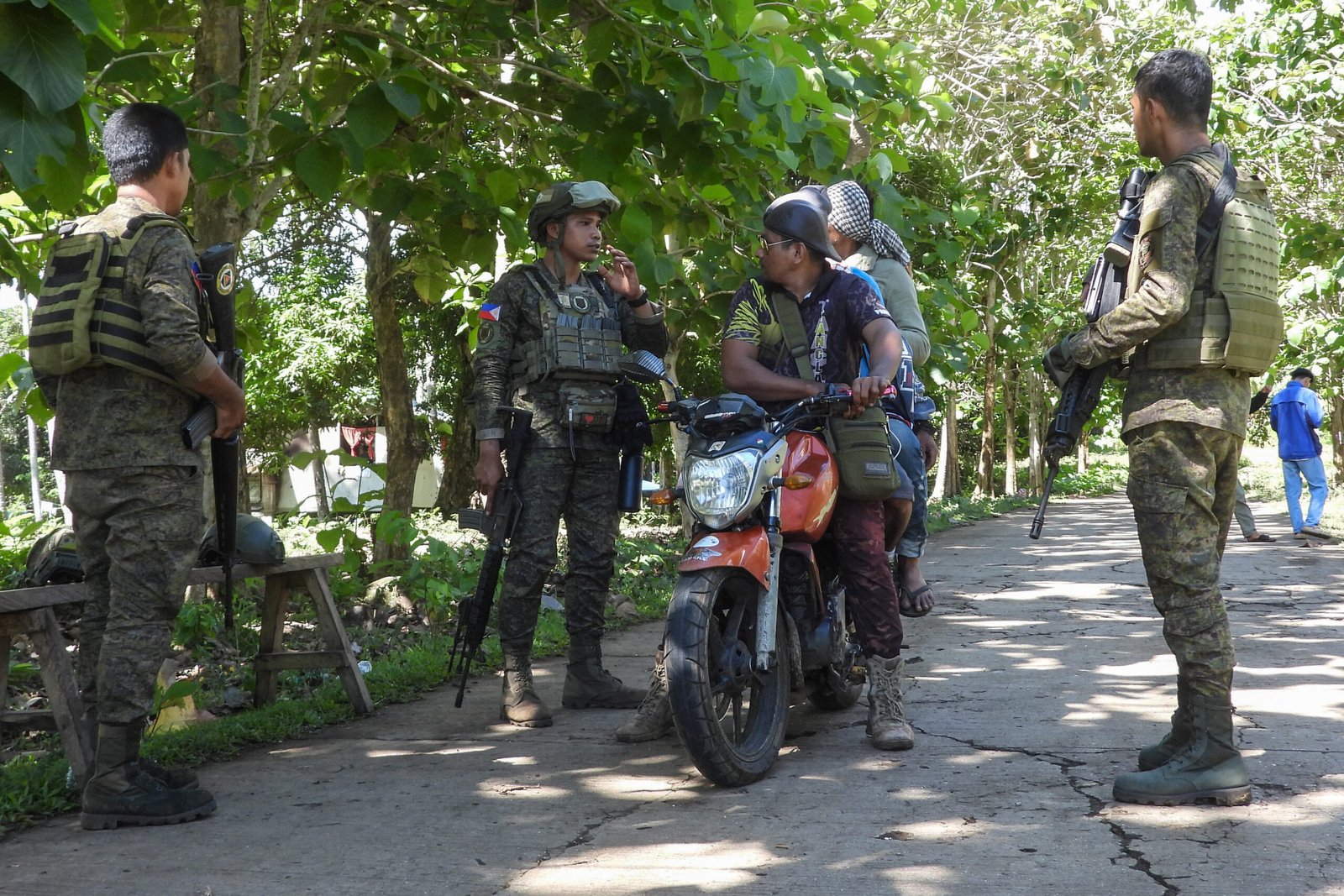
On April 19, Ledesma, a writer and editor at the local Padhimutad Negros and former editor-in-chief of the student newspaper Spectrum, was killed during a Philippine Army anti-insurgency operation in Negros Occidental province, in which the military said it killed 19 suspected communist rebels from the New People’s Army in Toboso town, according to multiple news reports.

Ledesma, however, was not present at the initial clash site and was killed in a separate community in nearby Sitio Plariding while reporting on the impact of renewable energy projects, according to a statement from the Altermidya Network, cited in the reports.

Ledesma served as a regional coordinator for the Altermidya Network, a group of local news outlets that report on community issues in marginalized rural areas impacted by the long-running conflict between government forces and the rebels, according to news reports.

“Philippine authorities must conduct a thorough and independent investigation into the killing of journalist RJ Nichole Ledesma and ensure that anyone in the armed forces responsible faces full justice,” said Shawn Crispin, CPJ’s senior Southeast Asia representative. “Ledesma’s killing must not be another case that perpetuates the cycle of impunity in journalist murders.”

Military spokesperson Colonel Louie Dema-ala defended the operation, saying claims that some of those killed were merely civilians “deserve closer scrutiny rather than outright acceptance.” Dema-ala alleged those at the clash site were “armed” and “exchanging fire with soldiers.”

The Armed Forces of the Philippines did not immediately respond to CPJ’s emailed request for comment. CPJ research shows that the Philippines is consistently among the top nations worldwide where media murders go unresolved.

Read the full article here

Fact Checker

Verify the accuracy of this article using AI-powered analysis and real-time sources.

Get Your Fact Check Report

Enter your email to receive detailed fact-checking analysis

5 free reports remaining

Continue with Full Access

You've used your 5 free reports. Sign up for unlimited access!

Already have an account? Sign in here

Share. Facebook Twitter Pinterest LinkedIn Tumblr Email Telegram Copy Link
News Room
  • Website
  • Facebook
  • X (Twitter)
  • Instagram
  • LinkedIn

The FSNN News Room is the voice of our in-house journalists, editors, and researchers. We deliver timely, unbiased reporting at the crossroads of finance, cryptocurrency, and global politics, providing clear, fact-driven analysis free from agendas.

Related Articles

Global Free Speech

Tadjadit and others face the death sentence for their part in encouraging social media users to express discontent with the government through using the #ManichRadhi (I am not satisfied) hashtag This article first appeared in the Spring 2026 issue of Index on Censorship, The monster unleashed: How Hungary’s illliberal vision is seducing the Western world published on 2 April 2026.  Algerian poet Mohamed Tadjadit, winner of the Index 2025 Freedom of Expression Award in Arts, was recently jailed following trumped-up charges. He is also facing separate charges that mean he could face the death penalty. [His trial is due to take place on 30 April 2026 and the UN has called for the charges to be quashed.] Tadjadit writes raw poetry rooted in social reality and his poems have quickly become a popular expression of the anger, hope and dignity of a people striving for freedom against an authoritarian government. He writes about the challenges facing Algerian youth: unemployment, marginalisation, lack of opportunities, bureaucracy, the state of the economy and social exclusion. He was jailed by the authorities for his part in the Hirak movement – a series of peaceful protests which started in 2019 after then president Abdelaziz Bouteflika announced his intention to stand for a fifth term. After the protests erupted, Bouteflika resigned but his place was taken by former prime minister and ally Abdelmadjid Tebboune. Under Tebboune, there has been escalating repression and the systematic criminalisation of all dissenting voices. Algeria faces one of the darkest periods in terms of freedoms and human rights since its independence. Zaki Hannache, a member of the Anti-Repression Network, became involved with Tadjadit the year he was first arrested. “I had been documenting arbitrary arrests linked to popular mobilisations since July 2019, which led me to follow his case closely from the start,” Hannache said. “I was present when Mohamed was apprehended following a peaceful sit-in in solidarity with prisoners of conscience in front of the Sidi M’hamed court.” Hannache, who now acts as Tadjadit’s representative and manages his Facebook page, has been legally pursued and imprisoned for his work documenting human rights violations, particularly regarding prisoners of conscience. Tadjadit was arrested immediately after the sit-in and has since become known as “the poet of the Hirak”. Hannache told Index: “Mohamed’s poetry resonated widely because it is accessible, sincere and deeply rooted in social reality. Mohamed writes in Algerian darija, a simple, popular and easily understandable language. He addresses current events, the everyday experiences of citizens, their frustrations and aspirations. His poems speak truths without filter, delivered through a courageous activist voice, while also incorporating historical references that strengthen their impact. “Mohamed belongs to a generation that grew up just after the ‘black decade’, a dark period marked by violence and terrorism. He also lived under Abdelaziz Bouteflika’s 20-year governance, characterised by widespread corruption and chaotic administration. The sense of lacking real freedom despite the sacrifices of independence martyrs, the experience of oppression (hogra) and the political use of fear during the ‘black decade’ to suppress legitimate popular demands all profoundly shaped his poetic imagination.” Over the past six years, Tadjadit has been in and out of court facing arbitrary legal proceedings. In early November, he was sentenced to five years in prison following trumped-up charges of “glorifying terrorism” and “using communication technologies to support terrorist organisations”. The sentence was reduced to one year on appeal. In a separate case that month, he and 12 other activists were charged with “conspiring to incite citizens against the authority of the state and to undermine national unity” – a crime which carries the death sentence. That case has now been postponed to the next court session between March and June 2026. Hannache said Tadjadit was deeply attached to Algeria’s history, particularly to the memory of the country’s national liberation war. “He has always been close to people who lived through colonisation and the independence struggle, listening to their stories and sacrifices after 132 years of [French] colonial domination,” he said. “This strong connection to collective memory and national identity largely explains his attraction to poetry, which he sees as a means of transmission, resistance and fidelity to the spirit of independence.” Here we publish three of Tadjadit’s poems, translated into English for the first time. Tadjadit recited the first poem in the early weeks of the Hirak movement. “At that time, there was an open space in the streets of the capital dedicated to political debate and public exchange. Citizens, activists and artists gathered to speak freely, discuss the future of the country and express dissent,” said Hannache. “Videos of the recitation circulated extensively and [had] thousands of views.” Untitled 1 By Mohamed Tadjadit He who once presented himself as a leader has become someone who hides. Abroad, he surrounded himself with walls, forgetting that the people are the true elite and that the fate of every decision belongs to them. He who rode the wave did not do so out of love; we know well the marks of the traitor. This country is not a game, it is the land of free men. In our downfall, you were the cause; there is no longer any dialogue with you. My homeland is a land of men, a land of desert and mountains, a land of Revolution, a land of wealth, a land of struggle. The garment of my country is tailored from the fabric of freedom. Its roots are Amazigh, and its Arab identity is illuminated by Islam. I will speak a little about its condition, about this country shaped by time, where free men were sold, where the ignorant became rulers, where everyone now sees it as their private property. They imprisoned the people, they deepened the injustice against them, and freed only those who obeyed. O my homeland, one can no longer even think clearly about you; these are the children of your enemy, and they are hungry. Even our rights have become illusions. O my mother, your children are lost. They locked us into a corridor of madness; I speak to you with my soul, O my homeland. By God, there is not a trace of manhood among them. What kind of election is this, when the people are not satisfied? When the sun rose, it burned through their sieve, and their past was exposed to the light. In any case, the fourth-mandate-and-a-half will not pass as something ordinary. My homeland is full of men: sons of the sea, sons of the desert, sons of the mountains. The people made the Revolution; they plundered it – today, struggle is necessary. Is it not true that Algeria is strong through its people? Or has the national spirit itself begun to fade? In summary, we have broken the chains of slavery. The second poem is part of a campaign which encouraged social media users to express discontent with the government through using the #ManichRadhi (I am not satisfied) hashtag. Tadjadit’s involvement is being used as evidence by prosecutors in the case for which he faces the death sentence. Untitled 2 By Mohamed Tadjadit Welcome to the new Algeria. We have taken your concerns fully into account. We will tell you about our achievements in a poem. We have carried out great projects for you. The country’s renaissance is not far away. We have made our decision: we will rebuild the Blida roundabout for you, and you will experience innovation with us. We only want what is useful for you. You haven’t heard it on the news, and you haven’t read it in the newspaper. Soon the sea will dry up, and we will fill it with Saïda [a well-known brand of mineral water in Algeria]. And we will amaze you with our ideas. And anyone who criticises us will face severe punishment. Really “fighters”, really “revolutionaries”? They have no shame and carry a stubborn pen. They want us to build hospitals. They lack faith and conviction. Everyone knows we will die one day. We have already outlined the main lines. We will regulate prices. The potato crisis? We have solved it. And we have created for you the University of Hot Peppers. We will export orange peels and use them for investment. You went out into the streets for the Hirak, but it is we who took control. You wanted an independent judiciary, and we have not forgotten that demand. But after we first create the space taxis, it is neither our concern nor in our hands. We hold the seat of power, and we are loyal to it. Tadjadit continues to write from his cell in El Harrach prison, including the final poem printed here. Hannache said: “Several have been released and widely circulated on social media, becoming symbols of resistance and dignity in the face of repression.” Untitled 3 By Mohamed Tadjadit The Hirak of the people draws, each colour receives its words. It draws minds on its land that work, where every person has value and dignity. And the country advances through knowledge, these are not empty words. It draws birds that do not suffer and that achieve their dreams. Children read and learn, holding a raised flag in their hands, with a smiling star and crescent, living in peace. It draws a strong and organised army, where light overcomes darkness. It draws the law that governs, and justice that guides the decisions. The executioner does not control; under its wing, everyone serves, fighting ignorance and injustice. It draws them as twin brothers, resisting for humanity. It establishes order and draws a generation that does not compromise, with a vision for the future, moving forward in the world’s politics, impossible to be destructive. It draws with art and the generosity of the pen, always peaceful in its drawing. It draws the street that speaks, and freedom that resonates in its sounds. It draws a spirit that does not surrender, and which, with every step forward, grows stronger. They tried to stop it from continuing to draw, wanted to break its pencils, to prevent it from dreaming, and criminalise its thinking. All poems translated by Zaki Hannache READ MORE

2 hours ago
Global Free Speech

Myanmar junta revokes licenses of 3 media outlets in martial law clampdown

3 hours ago
Global Free Speech

Ahmed Shihab-Eldin, subjected to ‘grave violations’ of fundamental rights, has Kuwaiti citizenship revoked

19 hours ago
Global Free Speech

Bahrain sentences photographer Sayed Baqer Al-Kamel to 10 years in prison

22 hours ago
Global Free Speech

“I have been expelled from my country. Stripped of my home, my ability to return, to see loved ones, to visit my mother’s grave. I have nothing but what I carry” – Shchyrakova on her release in 2025 “I am staying in Belarus. I will not run. I am ready to spend time in prison for the chance to live in my homeland.” That was the firm—though now I’m no longer sure it was the right—decision I made after the 2020 presidential election in Belarus, as the machinery of repression began accelerating against journalists, civil society, and, more broadly, anyone unwilling to accept dictatorship, violence, and systemic human rights abuses. For the next two years, I lived in a constant, suffocating anticipation of arrest. Fear became a permanent companion: that at any moment, they would come for me. I listened to every sound outside, watched every movement, wondering if this was it. At home, I kept a “go bag” packed with essentials for prison. Paradoxically, this anticipation sharpened my sense of life. Every day of freedom felt like a gift. Conversations with my son, meetings with friends, walks with my dog—all carried the weight of possible finality. It was a kind of anxious happiness. At the beginning of 2022, for safety reasons, I left journalism and began pursuing long-postponed ambitions: studying psychology and working on ethnographic photography projects. These gave meaning to my days and dulled the fear—but never fully. So when they finally came, on a grey, freezing December morning, I felt something unexpected: relief. The waiting was over. I was charged with “discrediting the Republic of Belarus”—for expressing critical views about Alyaksandr Lukashenka, the government, and security forces during an interview. Later, another equally absurd criminal charge was added. During the investigation, I was held in a pre-trial detention center in my hometown of Homel. Cells held six to eight women—cramped spaces with barred windows offering only a sliver of sky. We were allowed outside for one hour a day, into a small concrete yard enclosed by bars overhead. Books became a lifeline. From the prison library and bookshop, I managed to access literature that helped me endure. One book in particular—Viktor Frankl’s Man’s Search for Meaning—became essential. A survivor of Nazi concentration camps, Frankl argued that survival depends on finding meaning even in suffering. I found mine in self-education: psychology, foreign languages, the prison system, and the social realities revealed in conversations with fellow inmates. Seven months later, my trial began. But calling it a trial is misleading—it was a performance of justice, not justice itself. The outcome was predetermined. There was no point in proving innocence or invoking constitutional rights to free expression. The sentence: three and a half years in prison. I chose not to appeal. I had no faith in the system and no desire to prolong my imprisonment. Life in the penal colony Penal colony no. 4 in Homel where Larysya was detained The first week in the colony felt almost euphoric. I could walk without escort, hands at my sides, see the open sky without bars, notice trees, flowers, grass. Then reality set in. Daily life became monotonous and harsh: strict regime, discrimination against political prisoners, constant uncertainty, forced labour six days a week in a sewing factory for negligible pay, and toxic interpersonal dynamics. One of the hardest aspects was the lack of personal space—living among 90 other women under constant psychological strain. There were mandatory screenings of propaganda films, including graphic World War II footage—violence, suffering, mass death—that was mentally overwhelming. The rules were often arbitrary and absurd. I resisted where I could. Sharing food or belongings with others was forbidden—I did it anyway, risking punishment. Studying foreign languages or psychology was effectively banned—the relevant books removed from the library—but I found ways to continue learning. Communication between political prisoners from different units was prohibited—I maintained contact, exchanged information, even smuggled notes hidden in clothing. I never stopped being a journalist. I spoke with inmates and staff—essentially conducting interviews—gathering and analysing stories, discussing them with others. The only thing I lacked was the ability to publish. Behind each prisoner’s story were broader social issues: addiction, domestic violence, lack of parental care, poor communication skills, low stress resilience. I observed firsthand how the penitentiary system functioned—archaic, punitive, and ineffective in rehabilitation. One of the few opportunities for expression came through cultural events, especially group discussions of films. War films became an opportunity to indirectly criticise Russia’s war against Ukraine. I spoke openly: war is not heroic—it is violence, suffering, death. These were, unmistakably, pacifist statements about the present. During a discussion about Alexander Pushkin, I recited poetry about freedom, dignity, and resistance to tyranny—words that resonated deeply with fellow political prisoners. Not all such moments went unnoticed. During a discussion titled “healthy family,” I spoke out against discrimination toward LGBTQ+ people, arguing for equality and the right to marriage. I was stopped mid-speech—but the consequences followed: a month of cleaning toilets and corridors, and transfer to another unit. Political prisoners were forced to work six days a week in a sewing factory for negligible pay Pardon and exile My release through a presidential pardon was not entirely unexpected. Even before my arrest, I believed I would not serve the full term. The regime has a history of using political prisoners as bargaining chips. In summer 2025 there were negotiations involving US envoy John Coale and Alyaksandr Lukashenka. As a result, in exchange for sanctions relief 14 people were pardoned. On 10 September 2025, I was summoned and asked to write a pardon request. That evening, I was told to pack my belongings. The next morning, masked KGB officers transported us (four women from the colony) in a minibus. No explanations, no consent. Like cargo. Five hours later, we reached the Lithuanian border. John Coale welcomed us (52 political prisoners from different colonies), expressing sympathy and acknowledging our suffering. For the first time in nearly three years, we were treated with dignity. In Vilnius, a crowd gathered—activists, journalists, strangers who cared. I stood there in prison clothes, exhausted, disoriented, thinking: “I have been expelled from my country. Stripped of my home, my ability to return, to see loved ones, to visit my mother’s grave. I have nothing but what I carry.” And yet— I will return. I will return to a free Belarus. Until then, I live in Poland. I plan to return to journalism and continue my work in ethnographic photography. Life goes on. And the suffering—mine and that of many others—was not in vain. Freedom never comes without a price. READ MORE

1 day ago
Global Free Speech

Indian police invoke anti-terror law to unmask anonymous news handle TeluguScribe

1 day ago
Add A Comment
Leave A Reply Cancel Reply

Editors Picks

WLFI races toward 62 billion token unlock with near-unanimous vote

55 minutes ago

Bitcoin Juggles $120 Oil and Fed’s ‘Most Hawkish’ Interest-Rate Pause

57 minutes ago

Philippine journalist RJ Nichole Ledesma killed in army operation

2 hours ago

Tadjadit and others face the death sentence for their part in encouraging social media users to express discontent with the government through using the #ManichRadhi (I am not satisfied) hashtag This article first appeared in the Spring 2026 issue of Index on Censorship, The monster unleashed: How Hungary’s illliberal vision is seducing the Western world published on 2 April 2026.  Algerian poet Mohamed Tadjadit, winner of the Index 2025 Freedom of Expression Award in Arts, was recently jailed following trumped-up charges. He is also facing separate charges that mean he could face the death penalty. [His trial is due to take place on 30 April 2026 and the UN has called for the charges to be quashed.] Tadjadit writes raw poetry rooted in social reality and his poems have quickly become a popular expression of the anger, hope and dignity of a people striving for freedom against an authoritarian government. He writes about the challenges facing Algerian youth: unemployment, marginalisation, lack of opportunities, bureaucracy, the state of the economy and social exclusion. He was jailed by the authorities for his part in the Hirak movement – a series of peaceful protests which started in 2019 after then president Abdelaziz Bouteflika announced his intention to stand for a fifth term. After the protests erupted, Bouteflika resigned but his place was taken by former prime minister and ally Abdelmadjid Tebboune. Under Tebboune, there has been escalating repression and the systematic criminalisation of all dissenting voices. Algeria faces one of the darkest periods in terms of freedoms and human rights since its independence. Zaki Hannache, a member of the Anti-Repression Network, became involved with Tadjadit the year he was first arrested. “I had been documenting arbitrary arrests linked to popular mobilisations since July 2019, which led me to follow his case closely from the start,” Hannache said. “I was present when Mohamed was apprehended following a peaceful sit-in in solidarity with prisoners of conscience in front of the Sidi M’hamed court.” Hannache, who now acts as Tadjadit’s representative and manages his Facebook page, has been legally pursued and imprisoned for his work documenting human rights violations, particularly regarding prisoners of conscience. Tadjadit was arrested immediately after the sit-in and has since become known as “the poet of the Hirak”. Hannache told Index: “Mohamed’s poetry resonated widely because it is accessible, sincere and deeply rooted in social reality. Mohamed writes in Algerian darija, a simple, popular and easily understandable language. He addresses current events, the everyday experiences of citizens, their frustrations and aspirations. His poems speak truths without filter, delivered through a courageous activist voice, while also incorporating historical references that strengthen their impact. “Mohamed belongs to a generation that grew up just after the ‘black decade’, a dark period marked by violence and terrorism. He also lived under Abdelaziz Bouteflika’s 20-year governance, characterised by widespread corruption and chaotic administration. The sense of lacking real freedom despite the sacrifices of independence martyrs, the experience of oppression (hogra) and the political use of fear during the ‘black decade’ to suppress legitimate popular demands all profoundly shaped his poetic imagination.” Over the past six years, Tadjadit has been in and out of court facing arbitrary legal proceedings. In early November, he was sentenced to five years in prison following trumped-up charges of “glorifying terrorism” and “using communication technologies to support terrorist organisations”. The sentence was reduced to one year on appeal. In a separate case that month, he and 12 other activists were charged with “conspiring to incite citizens against the authority of the state and to undermine national unity” – a crime which carries the death sentence. That case has now been postponed to the next court session between March and June 2026. Hannache said Tadjadit was deeply attached to Algeria’s history, particularly to the memory of the country’s national liberation war. “He has always been close to people who lived through colonisation and the independence struggle, listening to their stories and sacrifices after 132 years of [French] colonial domination,” he said. “This strong connection to collective memory and national identity largely explains his attraction to poetry, which he sees as a means of transmission, resistance and fidelity to the spirit of independence.” Here we publish three of Tadjadit’s poems, translated into English for the first time. Tadjadit recited the first poem in the early weeks of the Hirak movement. “At that time, there was an open space in the streets of the capital dedicated to political debate and public exchange. Citizens, activists and artists gathered to speak freely, discuss the future of the country and express dissent,” said Hannache. “Videos of the recitation circulated extensively and [had] thousands of views.” Untitled 1 By Mohamed Tadjadit He who once presented himself as a leader has become someone who hides. Abroad, he surrounded himself with walls, forgetting that the people are the true elite and that the fate of every decision belongs to them. He who rode the wave did not do so out of love; we know well the marks of the traitor. This country is not a game, it is the land of free men. In our downfall, you were the cause; there is no longer any dialogue with you. My homeland is a land of men, a land of desert and mountains, a land of Revolution, a land of wealth, a land of struggle. The garment of my country is tailored from the fabric of freedom. Its roots are Amazigh, and its Arab identity is illuminated by Islam. I will speak a little about its condition, about this country shaped by time, where free men were sold, where the ignorant became rulers, where everyone now sees it as their private property. They imprisoned the people, they deepened the injustice against them, and freed only those who obeyed. O my homeland, one can no longer even think clearly about you; these are the children of your enemy, and they are hungry. Even our rights have become illusions. O my mother, your children are lost. They locked us into a corridor of madness; I speak to you with my soul, O my homeland. By God, there is not a trace of manhood among them. What kind of election is this, when the people are not satisfied? When the sun rose, it burned through their sieve, and their past was exposed to the light. In any case, the fourth-mandate-and-a-half will not pass as something ordinary. My homeland is full of men: sons of the sea, sons of the desert, sons of the mountains. The people made the Revolution; they plundered it – today, struggle is necessary. Is it not true that Algeria is strong through its people? Or has the national spirit itself begun to fade? In summary, we have broken the chains of slavery. The second poem is part of a campaign which encouraged social media users to express discontent with the government through using the #ManichRadhi (I am not satisfied) hashtag. Tadjadit’s involvement is being used as evidence by prosecutors in the case for which he faces the death sentence. Untitled 2 By Mohamed Tadjadit Welcome to the new Algeria. We have taken your concerns fully into account. We will tell you about our achievements in a poem. We have carried out great projects for you. The country’s renaissance is not far away. We have made our decision: we will rebuild the Blida roundabout for you, and you will experience innovation with us. We only want what is useful for you. You haven’t heard it on the news, and you haven’t read it in the newspaper. Soon the sea will dry up, and we will fill it with Saïda [a well-known brand of mineral water in Algeria]. And we will amaze you with our ideas. And anyone who criticises us will face severe punishment. Really “fighters”, really “revolutionaries”? They have no shame and carry a stubborn pen. They want us to build hospitals. They lack faith and conviction. Everyone knows we will die one day. We have already outlined the main lines. We will regulate prices. The potato crisis? We have solved it. And we have created for you the University of Hot Peppers. We will export orange peels and use them for investment. You went out into the streets for the Hirak, but it is we who took control. You wanted an independent judiciary, and we have not forgotten that demand. But after we first create the space taxis, it is neither our concern nor in our hands. We hold the seat of power, and we are loyal to it. Tadjadit continues to write from his cell in El Harrach prison, including the final poem printed here. Hannache said: “Several have been released and widely circulated on social media, becoming symbols of resistance and dignity in the face of repression.” Untitled 3 By Mohamed Tadjadit The Hirak of the people draws, each colour receives its words. It draws minds on its land that work, where every person has value and dignity. And the country advances through knowledge, these are not empty words. It draws birds that do not suffer and that achieve their dreams. Children read and learn, holding a raised flag in their hands, with a smiling star and crescent, living in peace. It draws a strong and organised army, where light overcomes darkness. It draws the law that governs, and justice that guides the decisions. The executioner does not control; under its wing, everyone serves, fighting ignorance and injustice. It draws them as twin brothers, resisting for humanity. It establishes order and draws a generation that does not compromise, with a vision for the future, moving forward in the world’s politics, impossible to be destructive. It draws with art and the generosity of the pen, always peaceful in its drawing. It draws the street that speaks, and freedom that resonates in its sounds. It draws a spirit that does not surrender, and which, with every step forward, grows stronger. They tried to stop it from continuing to draw, wanted to break its pencils, to prevent it from dreaming, and criminalise its thinking. All poems translated by Zaki Hannache READ MORE

2 hours ago
Latest Posts

XO Market bets on user-generated prediction markets to rival Polymarket and Kalshi

2 hours ago

Tillis to Push Senate Banking Markup on Crypto Bill

2 hours ago

Brickbat: Do You Know Who You’re Talking To?

3 hours ago

Subscribe to News

Get the latest news and updates directly to your inbox.

At FSNN – Free Speech News Network, we deliver unfiltered reporting and in-depth analysis on the stories that matter most. From breaking headlines to global perspectives, our mission is to keep you informed, empowered, and connected.

FSNN.net is owned and operated by GlobalBoost Media
, an independent media organization dedicated to advancing transparency, free expression, and factual journalism across the digital landscape.

Facebook X (Twitter) Discord Telegram
Latest News

Polo Officials Ban Genetically Enhanced Ponies To Save ‘the Magic of Breeding’

32 minutes ago

WLFI races toward 62 billion token unlock with near-unanimous vote

55 minutes ago

Bitcoin Juggles $120 Oil and Fed’s ‘Most Hawkish’ Interest-Rate Pause

57 minutes ago

Subscribe to Updates

Get the latest news and updates directly to your inbox.

© 2026 GlobalBoost Media. All Rights Reserved.
  • Privacy Policy
  • Terms of Service
  • Our Authors
  • Contact

Type above and press Enter to search. Press Esc to cancel.

🍪

Cookies

We and our selected partners wish to use cookies to collect information about you for functional purposes and statistical marketing. You may not give us your consent for certain purposes by selecting an option and you can withdraw your consent at any time via the cookie icon.

Cookie Preferences

Manage Cookies

Cookies are small text that can be used by websites to make the user experience more efficient. The law states that we may store cookies on your device if they are strictly necessary for the operation of this site. For all other types of cookies, we need your permission. This site uses various types of cookies. Some cookies are placed by third party services that appear on our pages.

Your permission applies to the following domains:

  • https://fsnn.net
Necessary
Necessary cookies help make a website usable by enabling basic functions like page navigation and access to secure areas of the website. The website cannot function properly without these cookies.
Statistic
Statistic cookies help website owners to understand how visitors interact with websites by collecting and reporting information anonymously.
Preferences
Preference cookies enable a website to remember information that changes the way the website behaves or looks, like your preferred language or the region that you are in.
Marketing
Marketing cookies are used to track visitors across websites. The intention is to display ads that are relevant and engaging for the individual user and thereby more valuable for publishers and third party advertisers.