

 Freedom Index

Listen to the article
A petition to scrap a 22% tax on crypto investment gains in South Korea reached the 50,000-signature threshold required for the country’s Finance and Economic Planning Committee to review objections to the new tax regime.
The 22% tax, set to take effect in January 2027, imposes financial and reporting “burdens” on investors, while also limiting upward mobility for younger individuals, who are locked out of housing markets due to skyrocketing real estate prices, according to the petition.
The petition now has more than 52,000 signatures. Source: South Korea Assembly
The petition also said that taxing crypto gains at 22%, while giving other asset classes preferential tax treatment, undermines South Korea’s share of the crypto market. In a translated statement, the authors of the petition wrote:
“If taxation is enforced in order to secure short-term tax revenues, it is likely to lead to greater losses in the long term, namely, a contraction of industry and an outflow of capital and talent abroad.”
South Korea is a key crypto hub in the Asia-Pacific region, and in March 2025, about 32% of the country’s population owned cryptocurrencies, according to local news agency Yonhap. However, ownership has declined so far this year as crypto prices remain under pressure.
Related: South Korea plans July rules for tokenized securities
South Korea’s crypto market contracts as tighter controls are proposed
The total value of crypto held by South Koreans declined from about 121.8 trillion won ($83.3 billion) in January 2025 to about 60.6 trillion won ($41.4 billion) in February 2026, according to industry data.
Daily trading volumes on the five largest crypto exchanges in the country, which include Upbit, Bithumb, Coinone, Korbit and Gopax, also fell from $11.6 billion in December 2024 to just $3 billion in February.
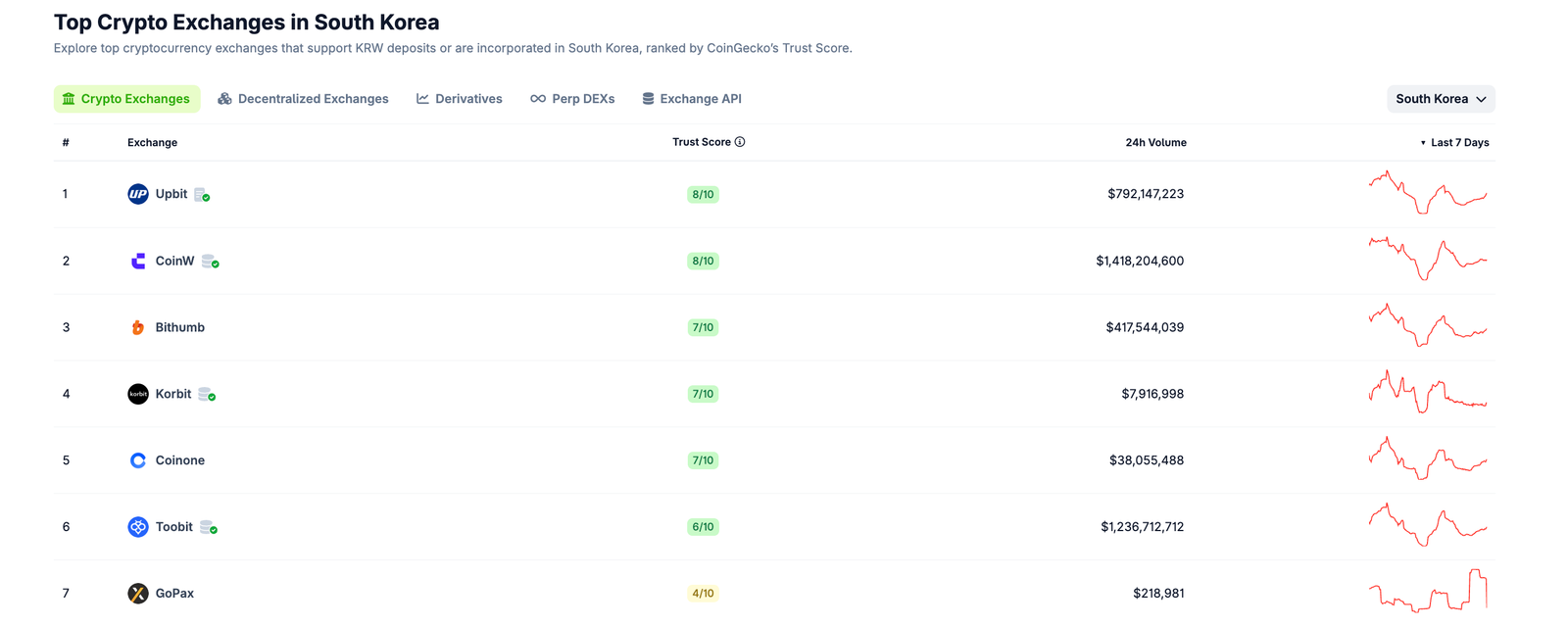
Daily trading volume for South Korea’s largest crypto exchanges. Source: CoinGecko
Tighter Anti-Money Laundering (AML) regulations and Know Your Customer controls in South Korea are also driving investors away from the sector, critics of the policies say.
In March, South Korea’s Financial Services Commission (FSC) and the Financial Intelligence Unit (FIU) proposed that all crypto transactions above 10 million won ($6,630) sent to or from foreign crypto wallets should be automatically flagged as suspicious.
Crypto industry advocacy organizations in the country have pushed back against the new rules, arguing that the reporting requirements would create an operational burden for exchanges.
Magazine: South Korea gets rich from crypto… North Korea gets weapons
Read the full article here
Fact Checker
Verify the accuracy of this article using AI-powered analysis and real-time sources.