

 Freedom Index
Listen to the article
South Carolina is one of 20 states that authorize indefinite civil commitment of sex offenders after they have completed their prison sentences. Under state law, such continued detention is allowed only when a jury concludes beyond a reasonable doubt that a respondent qualifies as a “sexually violent predator” (SVP), meaning he “suffers from a mental abnormality or personality disorder that makes [him] likely to engage in acts of sexual violence if not confined in a secure facility for long-term control, care, and treatment.”
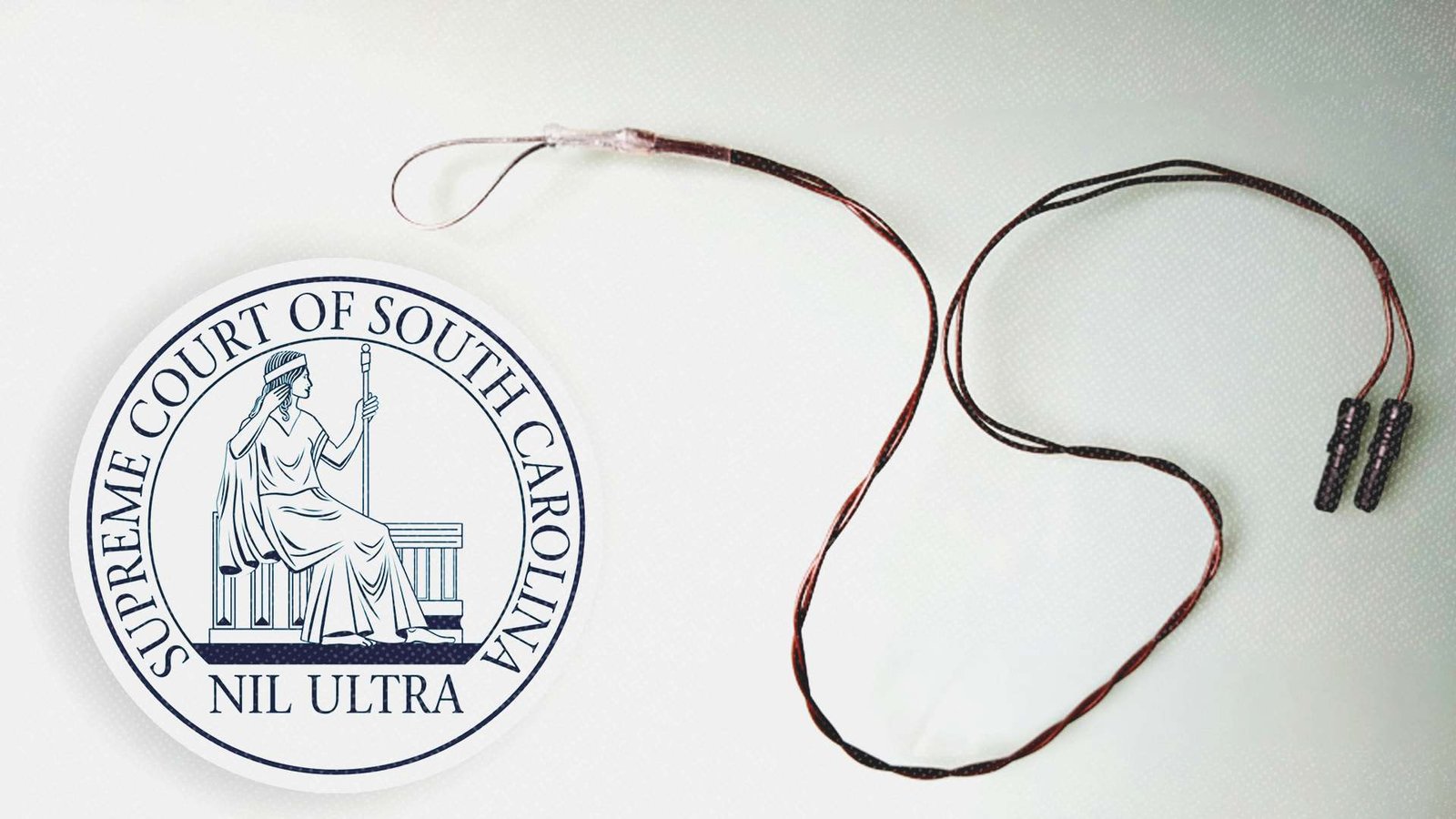
Although the South Carolina Office of Mental Health (OMH) concluded that Andy Hyman was not an SVP, a jury disagreed, swayed by a second opinion based largely on penile plethysmography (PPG), a scientifically dubious technique that aims to measure sexual response to images, audio narratives, or textual descriptions by gauging tiny changes in the circumference of the subject’s penis. That test, the South Carolina Supreme Court unanimously ruled last month in response to Hyman’s appeal, is “generally inadmissible in judicial proceedings” because it suffers from a “glaring lack of standardization,” which casts doubt on its validity as a predictor of recidivism.
With that decision, the South Carolina Supreme Court joins a long list of state and federal courts that have deemed PPG results unreliable and inadmissible. The technique is so controversial that the OMH, which is charged with conducting pre-commitment evaluations under South Carolina’s SVP law, eschews PPG as a matter of policy. But the state is allowed to solicit a second evaluation if it does not like the OMH’s opinion, which is what happened in Hyman’s case.
Hyman, who pleaded guilty to criminal sexual conduct with a minor in 1997, served “a short term in prison” and “completed several years of supervised release in 2003,” the South Carolina Supreme Court noted. Thirteen years later, Hyman pleaded guilty to the same crime, this time in the third degree, which resulted in a 10-year prison sentence. Before he completed that sentence, the state sought to continue detaining him as an SVP.
Marie Gehle, the OMH’s chief psychologist, conducted “a series of standardized tests” and diagnosed Hyman with “pedophilic disorder.” But she concluded that he did not fit the statutory criteria for civil commitment because he was not especially likely to reoffend. Unsatisfied with that assessment, the state asked Emily Gottfried, director of the Sexual Behavior Clinic and Lab at the Medical University of South Carolina (MUSC), for a second opinion.
Gottfried agreed that standardized tests placed Hyman “squarely within the average rate of recidivism” for sex offenders. But unlike Gehle, she also conducted a PPG test, which seemed to play an important role in her conclusion that Hyman posed “a heightened risk of reoffending.”
During the trial, Gottfried described PPG as “an objective physiological measure of male sexual arousal,” “the gold standard” for assessing that response, and a “strong predictor or risk factor for future sexual offending.” The PPG results, the state’s lawyer told the jury, “clearly indicate[d]” that Hyman had a “current sexual interest in children.” That was enough, “in and of itself,” to justify his civil commitment, the state argued.
The jury deliberated for just 22 minutes before agreeing with Gottfried. It rejected the contrary assessment offered by Gehle, who testified that most of the tests Gottfried had used were not designed to measure the likelihood of recidivism. In particular, Gehle said, PPG is not reliable, since retests produce inconsistent results, or valid as a predictor of future offending, which she said is why the OMH does not use it for pre-commitment evaluations.
Gehle emphasized that different labs use different PPG procedures, making comparisons impossible. She also noted that Gottfried had used two sets of stimuli, prolonging the test and making a positive result more likely.
The South Carolina Supreme Court elaborated on those problems in its opinion, which was written by Chief Justice John Kittredge and joined by the court’s four other members. Although PPG has been used for decades, Kittredge noted, there remains a “significant schism in the scientific community” regarding whether it works as advertised.
“Some experts have focused on the high rate…of false positives and false negatives associated with men’s ability to willfully suppress or display arousal,” Kittredge wrote. “Other experts have noted there can be significant differences between the results of an offender’s initial PPG and a subsequent retest administered several months later. The disparities may be explained, at least in part, by the PPG’s inability to account for a host of variables that affect erectile responses.” Those variables include “the recency of an offender’s last orgasm,” “his level of intoxication or fatigue,” “his cardiovascular health,” “his current medications,” his age, his intelligence, the gender of the person administering the test, and the time of year when the test is conducted.
“The scientific community appears polarized as to whether to recognize the PPG as a diagnostic tool for assessing sexual deviancy,” Kittredge wrote. “While some experts have found the PPG inherently unreliable—based, in part, on the lack of standardization and high error rate (upwards of twenty percent)—others have concluded the opposite and found the PPG to be an accurate and reliable diagnostic tool.” But “even the experts who believe the PPG to be a valuable tool in pre-commitment evaluations acknowledge the test is not standardized.”
That is a fatal flaw, Kittredge said, since “following uniform procedures ensures reliability and enables subsequent researchers to reproduce experiments and compare results, thereby validating research findings and improving the accuracy of the data.” With PPG, he noted, “there are at least seventeen aspects—some minor, and some major—in which tests can vary from laboratory to laboratory,” which underlines “PPG’s complete absence of reliability.”
The sets of stimuli used in PPG tests, for example, vary widely across labs and are often not specified in the scientific literature. That “makes it difficult to compare results across studies or to replicate a particular study’s results in a subsequent study,” Kittredge noted.
The cutoff for a positive result also varies. Gottfried testified that researchers typically count a 2.5-millimeter increase in penile circumference as adequate, while she prefers a five-millimeter threshold to reduce the chance of a false positive. But “MUSC’s selected cut score is arbitrary,” Kittredge noted, because “no studies that we know of indicate a 5-millimeter cut score leads to fewer false positives than a 2.5-millimeter cut score.”
Gottfried “did not explain why MUSC had chosen a 5-millimeter threshold instead of, say, 4 millimeters, 7 millimeters, or 10 millimeters,” Kittredge wrote. “Additionally, because the cut scores for PPGs are not nationally or internationally standardized, nothing stops MUSC or any other laboratory from arbitrarily increasing or decreasing its cut score to a different, equally random threshold in the future.”
The lack of standardization “gives rise to the possibility (or, more likely, probability) that an examinee could be sent to two different laboratories and get two different results based purely on the laboratories’ variable and unregulated use of different protocols or stimuli sets,” Kittredge noted. “This is wholly inconsistent with recognized scientific practices, preventing any possible finding that the PPG is reliable scientific evidence.”
This decision constrains the sort of evidence that can be used to indefinitely extend the incarceration of sex offenders. But it does not question the validity of that policy, a form of preventive detention that the Supreme Court has approved based on legal logic that is hard to follow.
When someone is convicted of a crime, the assumption is that he deserves to be punished because he had the ability to control his behavior. But after he completes his sentence, he can be detained as an SVP based on the contradictory premise that he “suffer[s] from a volitional impairment rendering [him] dangerous beyond [his] control,” as the Supreme Court put it in the 1997 case Kansas v. Hendricks.
That’s OK, the justices said, because that man is no longer a criminal paying his debt to society. Rather, he is a “patient” receiving “treatment,” even if he is unlikely ever to be released based on the government’s determination that he has been “cured.” That legal distinction seems at least as dubious as the scientific evidence in favor of PPG.
Read the full article here
Fact Checker
Verify the accuracy of this article using AI-powered analysis and real-time sources.