Close Menu
FSNN | Free Speech News NetworkFSNN | Free Speech News Network
  • Home
  • News
    • Politics
    • Legal & Courts
    • Tech & Big Tech
    • Campus & Education
    • Media & Culture
    • Global Free Speech
  • Opinions
    • Debates
  • Video/Live
  • Community
  • Freedom Index
  • About
    • Mission
    • Contact
    • Support
Trending

NYC Law Could Force Uber and Lyft to Keep Dangerous Drivers on the Road

9 minutes ago

Poland Upholds Crypto Bill Veto as Zondacrypto Probe Widens

43 minutes ago

The Iraq War Cheerleaders Were Wrong. They’re Wrong About Iran Too.

1 hour ago
Facebook X (Twitter) Instagram
Facebook X (Twitter) Discord Telegram
FSNN | Free Speech News NetworkFSNN | Free Speech News Network
Market Data Newsletter
Saturday, September 5
  • Home
  • News
    • Politics
    • Legal & Courts
    • Tech & Big Tech
    • Campus & Education
    • Media & Culture
    • Global Free Speech
  • Opinions
    • Debates
  • Video/Live
  • Community
  • Freedom Index
  • About
    • Mission
    • Contact
    • Support
FSNN | Free Speech News NetworkFSNN | Free Speech News Network
Home»News»Media & Culture»NYC Law Could Force Uber and Lyft to Keep Dangerous Drivers on the Road
Media & Culture

NYC Law Could Force Uber and Lyft to Keep Dangerous Drivers on the Road

News RoomBy News Room9 minutes agoNo Comments4 Mins Read0 Views
Share Facebook Twitter Pinterest Copy Link LinkedIn Tumblr Email VKontakte Telegram
NYC Law Could Force Uber and Lyft to Keep Dangerous Drivers on the Road
Share
Facebook Twitter Pinterest Email Copy Link

Listen to the article

0:00
0:00

Key Takeaways

Playback Speed

Select a Voice

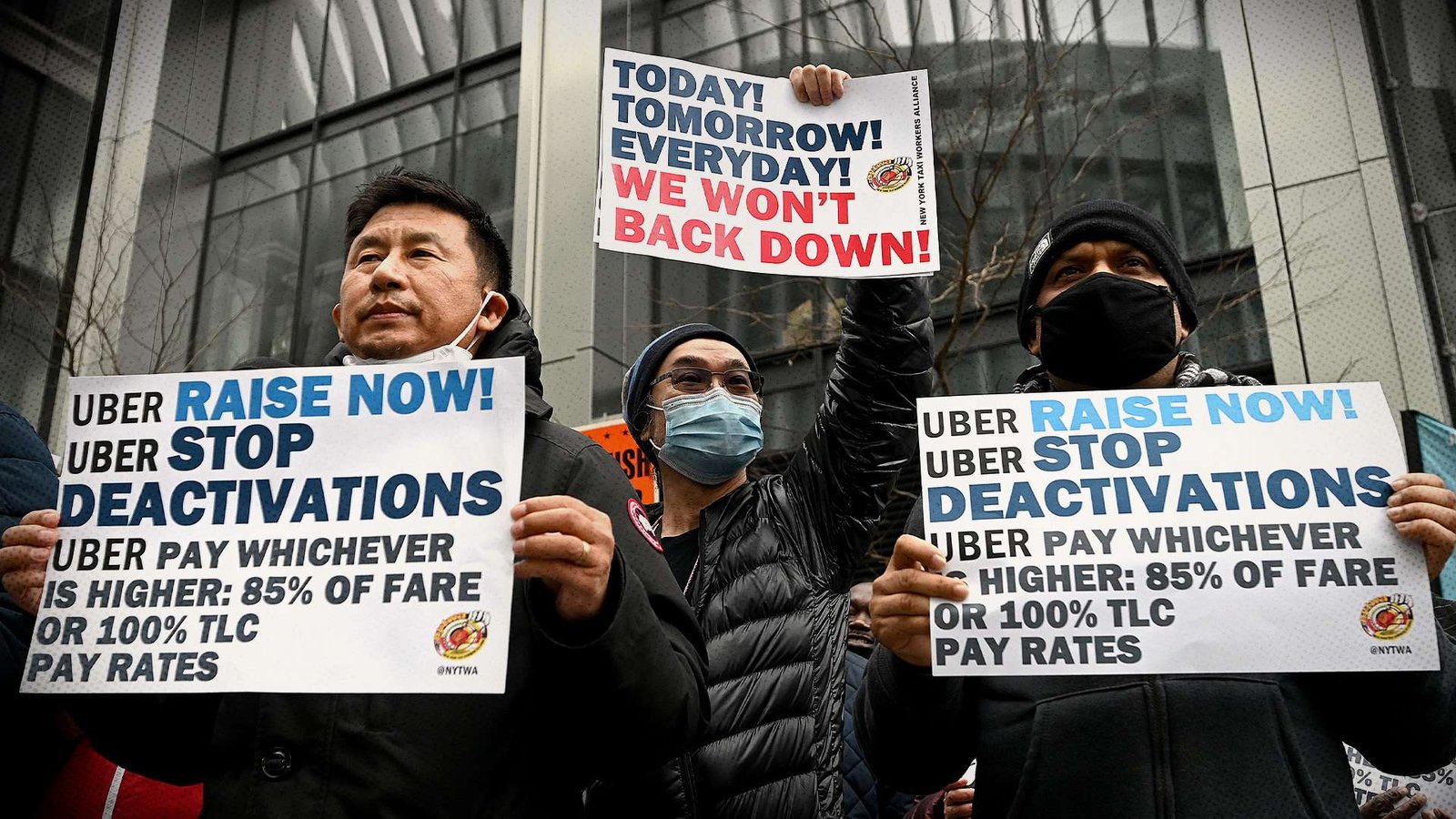
A federal judge last month blocked a New York City law eliminating the ability of rideshare companies to kick drivers off of their platforms unless they demonstrate “just cause.” That injunction is temporary. But NYC should cut its losses anyway.

Under NYC’s “just cause” law, Uber and Lyft would have been barred from deactivating any drivers on their platform without providing 14 days’ notice and establishing “just cause” or “bona fide economic reasons.” What did “bona fide economic reasons” actually entail? The statute left that frustratingly ambiguous, since it was merely defined as a “proportionate reduction in volume of sales or profit” from the prior quarter, without any indication as to what, exactly, that meant.

Deactivated drivers were also given the ability to appeal through the city’s Department of Consumer and Worker Protection (DCWP) or in court. The law even featured a seven-year lookback period, meaning that it applied to deactivations dating back to 2019. Under the law’s terms, it only applied to a “high-volume for-hire vehicle service,” a definition that was meant to only apply to Uber and Lyft.

In response to the law’s passage, Uber sued, arguing that it was a violation of the Contracts Clause of the U.S. Constitution, among other things. The Contracts Clause forbids state and local governments from passing laws that impair the “obligation of contractions.” While it has been watered down over the years by the Supreme Court, any legislative abridgment of contracts must still advance a legitimate and broad public purpose.

The U.S. District Court for the Southern District of New York said that NYC had failed to clear this bar. In a decision issued by Judge Gregory Woods—appointed to the bench by President Barack Obama—the court found that the law was mostly designed to assist a small subset of drivers and was targeted at just the two large rideshare companies.

Uber deactivated only around 1 percent of its drivers, Woods noted. If Lyft deactivated its drivers at a similar rate, this would work out to just under 900 individuals, which amounts to around .01 percent of the population of NYC. Given that at least some of these drivers were likely dismissed for particularly egregious conduct, such as assaulting a passenger, the number of potential drivers who could have been wrongly deactivated would be a vanishingly small pool.

As Uber pointed out in its complaint, the law’s 14-day notice requirement also meant that potentially dangerous drivers would have to be kept on the road for two weeks before the platform could deactivate them and start the “just cause” proceedings. While the law includes an exception to the notice requirement for situations where drivers display “egregious conduct,” it only defines this as “imminent danger to other persons.” (The New York City Council rejected a proposal to change the language to “conduct that endangers others” on the grounds that it would be over-inclusive).

Judge Woods’ ruling enjoined the law six days before it was set to go into effect, while also halting the city’s plan to stand up a $73.4 million compliance office at DCWP, which would have housed hundreds of staffers and attorneys tasked with enforcing the law.

The gig economy has long operated under an at-will employment arrangement, in which both workers and platforms can end the relationship at any time and for any reason. But in recent years, the progressive left has attempted to reclassify gig workers from being independent contractors to being full-scale employees.

While this effort has largely failed, applying “just cause” protections to these workers is the sort of workplace protection that usually attaches to more traditional employees. In other words, what progressives have not been able to achieve outright they’re attempting to do in piecemeal fashion.

One of the hallmarks of the gig economy is flexibility. Drivers work when they please and often use multiple platforms, while the labor supply is ideally meant to fluctuate dynamically based on demand. Attaching more rules to driver deactivation inevitably raises labor costs as platforms are less able to weed out bad apples. In the end, the flexibility that drivers themselves most prize when it comes to gig work will be eroded, as companies respond to the regulations by potentially limiting the number of drivers they allow on the platform.

For their part, gig companies are hardly being recalcitrant when it comes to protecting improperly deactivated drivers. A companion “just cause” bill for food delivery drivers also recently passed in New York and was not opposed by gig platforms like Uber, likely because it lacked the onerous 14-day notice provision of the rideshare version.

It’s unclear whether NYC will appeal the recent decision or instead accept that the law needs to be rewritten. A better idea would be to scrap the misguided idea entirely.

Read the full article here

Fact Checker

Verify the accuracy of this article using AI-powered analysis and real-time sources.

Get Your Fact Check Report

Enter your email to receive detailed fact-checking analysis

5 free reports remaining

Continue with Full Access

You've used your 5 free reports. Sign up for unlimited access!

Already have an account? Sign in here

#FreePress #Journalism #MediaBias #NarrativeControl #OpenDebate
Share. Facebook Twitter Pinterest LinkedIn Tumblr Email Telegram Copy Link
News Room
  • Website
  • Facebook
  • X (Twitter)
  • Instagram
  • LinkedIn

The FSNN News Room is the voice of our in-house journalists, editors, and researchers. We deliver timely, unbiased reporting at the crossroads of finance, cryptocurrency, and global politics, providing clear, fact-driven analysis free from agendas.

Related Articles

Media & Culture

The Iraq War Cheerleaders Were Wrong. They’re Wrong About Iran Too.

1 hour ago
Media & Culture

“Incredulity” That “Competent Law Firm Representing One of the Largest Financial Institution[s] in the World” Filed Brief with AI Hallucinations

7 hours ago
Media & Culture

Lawyers’ Responsibility for Hallucinations in Briefs That They Sign

8 hours ago
Media & Culture

Data Centers Are Not the Problem

9 hours ago
Media & Culture

Eleventh Circuit Holds Qui Tam Relators Are Not “Officers of the United States.” What Happens Next?

10 hours ago
Cryptocurrency & Free Speech Finance

BitMEX Co-Founder Ben Delo Gives Farage’s Reform UK Another £4 Million

11 hours ago
Add A Comment
Leave A Reply Cancel Reply

Editors Picks

Poland Upholds Crypto Bill Veto as Zondacrypto Probe Widens

43 minutes ago

The Iraq War Cheerleaders Were Wrong. They’re Wrong About Iran Too.

1 hour ago

Bitcoin ETF Demand Grows While Ether and XRP Cool

3 hours ago

Southeast Asia’s crypto funding rebounds to $680 million as investors focus on mature firms

5 hours ago
Latest Posts

XRP Ledger has fewer active accounts than last year, but bigger trades and more value

6 hours ago

“Incredulity” That “Competent Law Firm Representing One of the Largest Financial Institution[s] in the World” Filed Brief with AI Hallucinations

7 hours ago

Lawyers’ Responsibility for Hallucinations in Briefs That They Sign

8 hours ago

Subscribe to News

Get the latest news and updates directly to your inbox.

At FSNN – Free Speech News Network, we deliver unfiltered reporting and in-depth analysis on the stories that matter most. From breaking headlines to global perspectives, our mission is to keep you informed, empowered, and connected.

FSNN.net is owned and operated by GlobalBoost Media
, an independent media organization dedicated to advancing transparency, free expression, and factual journalism across the digital landscape.

Facebook X (Twitter) Discord Telegram
Latest News

NYC Law Could Force Uber and Lyft to Keep Dangerous Drivers on the Road

9 minutes ago

Poland Upholds Crypto Bill Veto as Zondacrypto Probe Widens

43 minutes ago

The Iraq War Cheerleaders Were Wrong. They’re Wrong About Iran Too.

1 hour ago

Subscribe to Updates

Get the latest news and updates directly to your inbox.

© 2026 GlobalBoost Media. All Rights Reserved.
  • Privacy Policy
  • Terms of Service
  • Our Authors
  • Contact

Type above and press Enter to search. Press Esc to cancel.

🍪

Cookies

We and our selected partners wish to use cookies to collect information about you for functional purposes and statistical marketing. You may not give us your consent for certain purposes by selecting an option and you can withdraw your consent at any time via the cookie icon.

Cookie Preferences

Manage Cookies

Cookies are small text that can be used by websites to make the user experience more efficient. The law states that we may store cookies on your device if they are strictly necessary for the operation of this site. For all other types of cookies, we need your permission. This site uses various types of cookies. Some cookies are placed by third party services that appear on our pages.

Your permission applies to the following domains:

  • https://fsnn.net
Necessary
Necessary cookies help make a website usable by enabling basic functions like page navigation and access to secure areas of the website. The website cannot function properly without these cookies.
Statistic
Statistic cookies help website owners to understand how visitors interact with websites by collecting and reporting information anonymously.
Preferences
Preference cookies enable a website to remember information that changes the way the website behaves or looks, like your preferred language or the region that you are in.
Marketing
Marketing cookies are used to track visitors across websites. The intention is to display ads that are relevant and engaging for the individual user and thereby more valuable for publishers and third party advertisers.