Close Menu
FSNN | Free Speech News NetworkFSNN | Free Speech News Network
  • Home
  • News
    • Politics
    • Legal & Courts
    • Tech & Big Tech
    • Campus & Education
    • Media & Culture
    • Global Free Speech
  • Opinions
    • Debates
  • Video/Live
  • Community
  • Freedom Index
  • About
    • Mission
    • Contact
    • Support
Trending

New York’s Controversial Anti-Swastika Law Turns Prosecutors Into Speech Police

13 minutes ago

Ledger confirms unauthorized hardware implant

37 minutes ago

CFTC aims to differentiate swaps from gambling

2 hours ago
Facebook X (Twitter) Instagram
Facebook X (Twitter) Discord Telegram
FSNN | Free Speech News NetworkFSNN | Free Speech News Network
Market Data Newsletter
Sunday, October 11
  • Home
  • News
    • Politics
    • Legal & Courts
    • Tech & Big Tech
    • Campus & Education
    • Media & Culture
    • Global Free Speech
  • Opinions
    • Debates
  • Video/Live
  • Community
  • Freedom Index
  • About
    • Mission
    • Contact
    • Support
FSNN | Free Speech News NetworkFSNN | Free Speech News Network
Home»News»Media & Culture»New York’s Controversial Anti-Swastika Law Turns Prosecutors Into Speech Police
Media & Culture

New York’s Controversial Anti-Swastika Law Turns Prosecutors Into Speech Police

News RoomBy News Room13 minutes agoNo Comments3 Mins Read0 Views
Share Facebook Twitter Pinterest Copy Link LinkedIn Tumblr Email VKontakte Telegram
New York’s Controversial Anti-Swastika Law Turns Prosecutors Into Speech Police
Share
Facebook Twitter Pinterest Email Copy Link

Listen to the article

0:00
0:00

Key Takeaways

Playback Speed

Select a Voice

The term hate crime may evoke an image of an antisemite punching a Jewish person or a racist pushing an Asian woman onto the subway tracks. But in New York, hate crimes can include more than illegal acts committed against individuals. They can also include crimes committed against property.

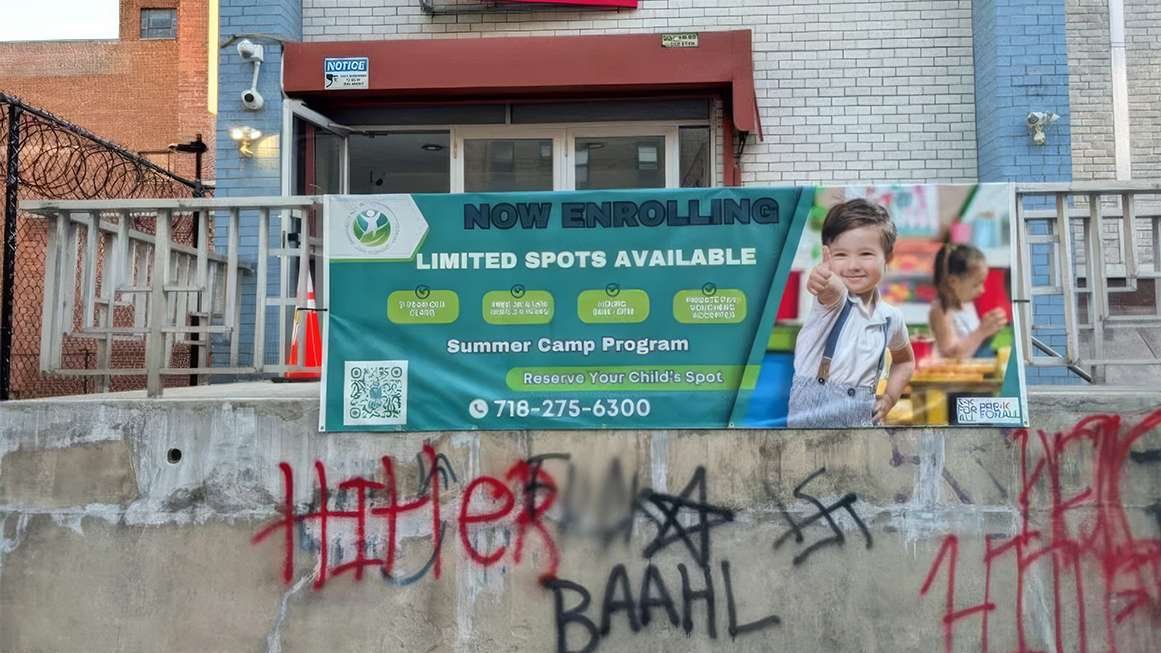
In New York, certain forms of graffiti can count as aggravated harassment in the first degree under a controversial law that raises free speech concerns.

“A person is guilty of aggravated harassment in the first degree” when he or she commits a variety of offenses “with intent to harass, annoy, threaten or alarm another person” based on that individual’s identity, including “race, color, national origin, ancestry, gender,” or religion. The law applies to anyone who “etches, draws, paints,” or otherwise places a swastika on public or private property.

The aggravated harassment provision requires law enforcement to make subjective determinations. The state must decide whether an act, such as drawing a swastika, is intended to harass a specific religious group. Last year, when anti–Elon Musk protesters in Brooklyn and Manhattan vandalized Teslas with swastikas, The New York Times reported that it was “clear that the vandals…were using the swastikas to attack” Musk, Tesla’s CEO and a top Trump administration adviser—”not to broadcast their own support of Nazism.” Yet the cases were investigated as hate crimes.

In June, a student who raised a flag with two swastikas and a Star of David above a New York University building was charged with aggravated harassment and other hate crimes. The student admitted to the conduct but pleaded not guilty to the hate crime and aggravated harassment charges. According to the New York Post, he raised the flag because “he was upset with how NYU handled political issues around Israel.” Is it a crime to criticize your school’s handling of political issues regarding Israel? In New York, law enforcement makes that call.

First Amendment advocates have previously scrutinized the provision. In 2018, a SUNY Purchase student was charged with aggravated harassment after he put up posters around a campus building featuring Adolf Hitler, a swastika, and a quote from Mel Brooks’ movie The Producers. Hoover Institution fellow Eugene Volokh called the prosecution “unconstitutional,” noting thatthe government”can’t target for special criminal punishment racist signs.”

Under R.A.V. v. City of St. Paul (1992), he noted, “a ban on racist ‘fighting words’ is unconstitutional even if a ban on ‘fighting words’ generally is constitutional, so a ban on unauthorized signs that display a swastika is unconstitutional even if a ban on unauthorized signs generally is not.” In other words, the government cannot forbid a specific expression of speech. While New York residents and leaders may rightfully condemn swastikas, the state should prosecute criminals for illegal actions, not motivating ideologies.

This article originally appeared in print under the headline “New York Tries To Legislate Away ‘Hate’.”

Read the full article here

Fact Checker

Verify the accuracy of this article using AI-powered analysis and real-time sources.

Get Your Fact Check Report

Enter your email to receive detailed fact-checking analysis

5 free reports remaining

Continue with Full Access

You've used your 5 free reports. Sign up for unlimited access!

Already have an account? Sign in here

#Democracy #InformationWar #Journalism #PoliticalMedia #PoliticalNews
Share. Facebook Twitter Pinterest LinkedIn Tumblr Email Telegram Copy Link
News Room
  • Website
  • Facebook
  • X (Twitter)
  • Instagram
  • LinkedIn

The FSNN News Room is the voice of our in-house journalists, editors, and researchers. We deliver timely, unbiased reporting at the crossroads of finance, cryptocurrency, and global politics, providing clear, fact-driven analysis free from agendas.

Related Articles

Legal & Courts

Reporters Committee statement on reported DOJ investigation of White House press pool

9 hours ago
Cryptocurrency & Free Speech Finance

CFTC Draws the Line Between Prediction Markets and Gambling in New Rules

17 hours ago
Cryptocurrency & Free Speech Finance

This Sam Altman-Backed Life Insurer Runs Entirely on Bitcoin, and Just Raised $37.5 Million

18 hours ago
Cryptocurrency & Free Speech Finance

Here’s a Way to Predict When AI Chatbots Will Turn Bad

19 hours ago
Cryptocurrency & Free Speech Finance

French Committee Backs Stablecoin Swap Tax and Crypto Exit Tax, Then Rejects the Budget

21 hours ago
Media & Culture

SpaceX Found a Way Around the FCC

22 hours ago
Add A Comment
Leave A Reply Cancel Reply

Editors Picks

Ledger confirms unauthorized hardware implant

37 minutes ago

CFTC aims to differentiate swaps from gambling

2 hours ago

Reporters Committee statement on reported DOJ investigation of White House press pool

9 hours ago

CFTC Draws the Line Between Prediction Markets and Gambling in New Rules

17 hours ago
Latest Posts

This Sam Altman-Backed Life Insurer Runs Entirely on Bitcoin, and Just Raised $37.5 Million

18 hours ago

Here’s a Way to Predict When AI Chatbots Will Turn Bad

19 hours ago

Bitcoin (BTC) and ether (ETH) liquidity rebounds a year after $19 billion crypto flash crash

21 hours ago

Subscribe to News

Get the latest news and updates directly to your inbox.

At FSNN – Free Speech News Network, we deliver unfiltered reporting and in-depth analysis on the stories that matter most. From breaking headlines to global perspectives, our mission is to keep you informed, empowered, and connected.

FSNN.net is owned and operated by GlobalBoost Media
, an independent media organization dedicated to advancing transparency, free expression, and factual journalism across the digital landscape.

Facebook X (Twitter) Discord Telegram
Latest News

New York’s Controversial Anti-Swastika Law Turns Prosecutors Into Speech Police

13 minutes ago

Ledger confirms unauthorized hardware implant

37 minutes ago

CFTC aims to differentiate swaps from gambling

2 hours ago

Subscribe to Updates

Get the latest news and updates directly to your inbox.

© 2026 GlobalBoost Media. All Rights Reserved.
  • Privacy Policy
  • Terms of Service
  • Our Authors
  • Contact

Type above and press Enter to search. Press Esc to cancel.

🍪

Cookies

We and our selected partners wish to use cookies to collect information about you for functional purposes and statistical marketing. You may not give us your consent for certain purposes by selecting an option and you can withdraw your consent at any time via the cookie icon.

Cookie Preferences

Manage Cookies

Cookies are small text that can be used by websites to make the user experience more efficient. The law states that we may store cookies on your device if they are strictly necessary for the operation of this site. For all other types of cookies, we need your permission. This site uses various types of cookies. Some cookies are placed by third party services that appear on our pages.

Your permission applies to the following domains:

  • https://fsnn.net
Necessary
Necessary cookies help make a website usable by enabling basic functions like page navigation and access to secure areas of the website. The website cannot function properly without these cookies.
Statistic
Statistic cookies help website owners to understand how visitors interact with websites by collecting and reporting information anonymously.
Preferences
Preference cookies enable a website to remember information that changes the way the website behaves or looks, like your preferred language or the region that you are in.
Marketing
Marketing cookies are used to track visitors across websites. The intention is to display ads that are relevant and engaging for the individual user and thereby more valuable for publishers and third party advertisers.