Close Menu
FSNN | Free Speech News NetworkFSNN | Free Speech News Network
  • Home
  • News
    • Politics
    • Legal & Courts
    • Tech & Big Tech
    • Campus & Education
    • Media & Culture
    • Global Free Speech
  • Opinions
    • Debates
  • Video/Live
  • Community
  • Freedom Index
  • About
    • Mission
    • Contact
    • Support
Trending

Democrats send counteroffer to Republicans over Clarity Act provisions

40 minutes ago

DOJ Seeks $61M USDT Forfeiture Tied to Iranian Oil Sales

41 minutes ago

Brickbat: E.U. Blues

1 hour ago
Facebook X (Twitter) Instagram
Facebook X (Twitter) Discord Telegram
FSNN | Free Speech News NetworkFSNN | Free Speech News Network
Market Data Newsletter
Tuesday, September 15
  • Home
  • News
    • Politics
    • Legal & Courts
    • Tech & Big Tech
    • Campus & Education
    • Media & Culture
    • Global Free Speech
  • Opinions
    • Debates
  • Video/Live
  • Community
  • Freedom Index
  • About
    • Mission
    • Contact
    • Support
FSNN | Free Speech News NetworkFSNN | Free Speech News Network
Home»News»Global Free Speech»Moscow police raid Novaya Gazeta, detain journalist Oleg Roldugin 
Global Free Speech

Moscow police raid Novaya Gazeta, detain journalist Oleg Roldugin 

News RoomBy News Room5 months agoNo Comments3 Mins Read2 Views
Share Facebook Twitter Pinterest Copy Link LinkedIn Tumblr Email VKontakte Telegram
Moscow police raid Novaya Gazeta, detain journalist Oleg Roldugin 
Share
Facebook Twitter Pinterest Email Copy Link

Listen to the article

0:00
0:00

Key Takeaways

Playback Speed

Select a Voice

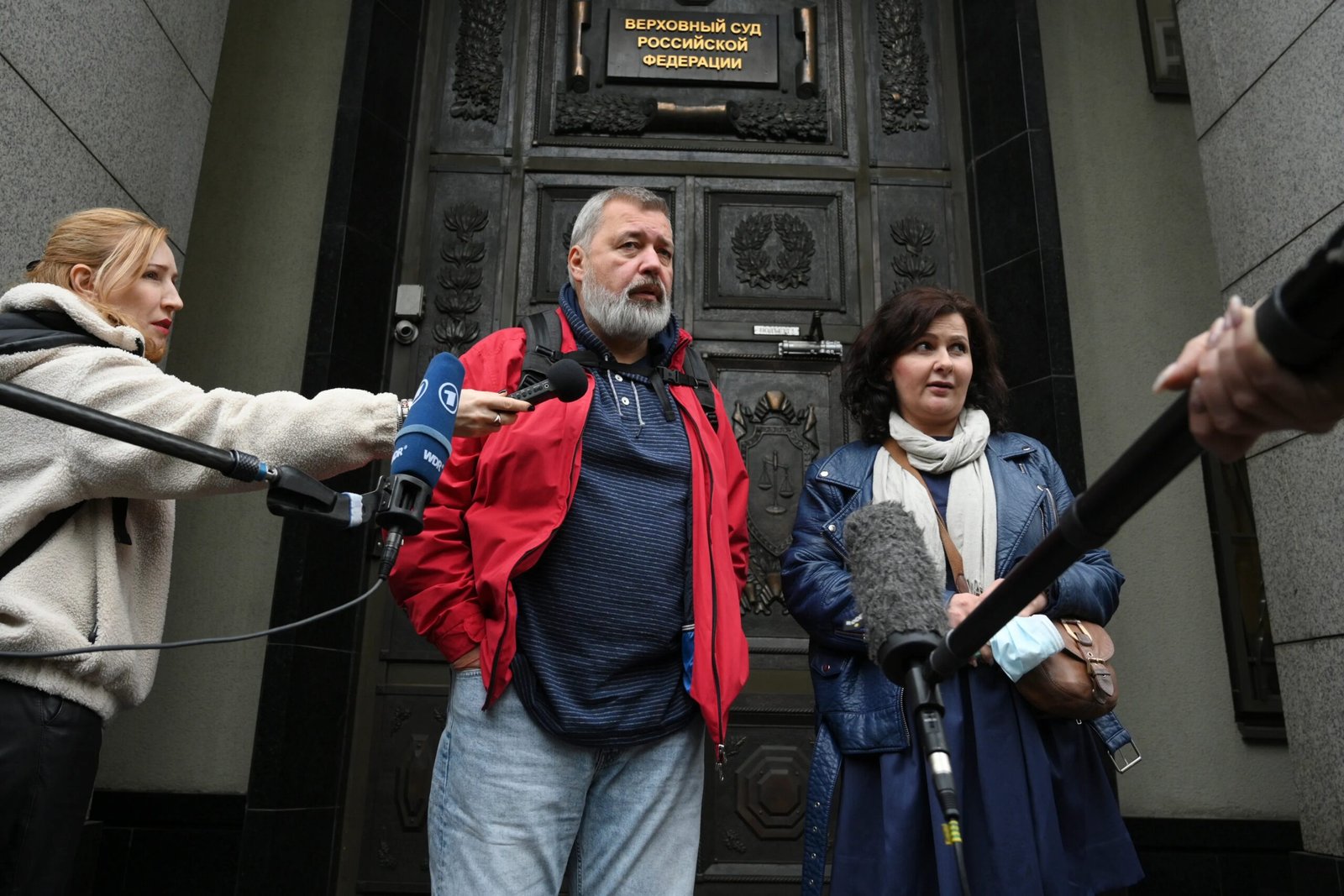
Berlin, April 9, 2026—Russian authorities must immediately release journalist Oleg Roldugin and stop the targeted persecution of the independent newspaper Novaya Gazeta, whose office was searched on Thursday in Moscow, the Committee to Protect Journalists said.

On April 9, law enforcement officers searched Novaya Gazeta’s office as part of a criminal case opened on March 10 under Article 272.1 of  Russia’s Criminal Code for alleged “illegal use, transfer or storage of information containing personal data.” On the same day, police in Moscow detained Roldugin, a columnist for the outlet, after searching his home, and took him for questioning in connection with the criminal case. 

“The search of Novaya Gazeta’s office in Moscow and the detention of journalist Oleg Roldugin mark the latest escalation in years of pressure exerted by Russian authorities on the media outlet,” said CPJ Chief Programs Officer Carlos Martínez de la Serna. “Officials must immediately release journalist Oleg Roldugin and allow Novaya Gazeta’s staff to work without fear of retaliation.”

Seven hours after the start of the search, the newspaper reported that its lawyers were still not allowed to enter the building. The search continued for at least 12 hours. During that time, more than 10 employees with the media outlet had to remain inside the building and were unable to be contacted.

Roldugin will be detained for at least 48 hours on suspicion of “illegal use and transfer of personal data committed for personal gain by a group of individuals or causing significant damage,” which is punishable by up to six years in prison under Part 3, Article 272.1 of the Criminal Code. 

Russia’s Ministry of Internal Affairs said a “group of individuals” had used personal data to “prepare news articles and negative content about Russian citizens.” The ministry did not initially name the outlet but later confirmed to Russian news agency Interfax that it was referring to Novaya Gazeta.

Russian state news agency TASS reported that officers were also checking the outlet for ties to Latvia-based Novaya Gazeta Europe, launched in April 2022 by journalists who had previously worked at the independent Russian newspaper Novaya Gazeta, many of whom fled following Russia’s full-scale invasion of Ukraine. Russian authorities banned Novaya Gazeta Europe as “undesirable” in June 2023. 

In September 2022, Russian authorities stripped Novaya Gazeta of its print and online licenses. The newspaper has continued to publish articles and videos online.

Roldugin, a cofounder of the now-shuttered independent newspaper Sobesednik, has authored investigations into corruption in the presidential administration. 

Since Novaya Gazeta was founded in 1993, at least six of its journalists and contributors have been killed in connection to their work, according to CPJ research. In 2007, CPJ honored Dmitry Muratov, Novaya Gazeta’s editor-in-chief, with its International Press Freedom Award, and in 2021 he was awarded a Nobel Peace Prize for his work.

CPJ emailed a request for comment to the press service of the Ministry of Internal Affairs but did not immediately receive a response. 

Read the full article here

Fact Checker

Verify the accuracy of this article using AI-powered analysis and real-time sources.

Get Your Fact Check Report

Enter your email to receive detailed fact-checking analysis

5 free reports remaining

Continue with Full Access

You've used your 5 free reports. Sign up for unlimited access!

Already have an account? Sign in here

Share. Facebook Twitter Pinterest LinkedIn Tumblr Email Telegram Copy Link
News Room
  • Website
  • Facebook
  • X (Twitter)
  • Instagram
  • LinkedIn

The FSNN News Room is the voice of our in-house journalists, editors, and researchers. We deliver timely, unbiased reporting at the crossroads of finance, cryptocurrency, and global politics, providing clear, fact-driven analysis free from agendas.

Related Articles

Global Free Speech

Offices of Peruvian news site, La Noticia Clave, sprayed with bullets

12 hours ago
Global Free Speech

Bangladeshi journalists face 10-year jail terms for ‘unverified’ reporting under draft cybercrime law

23 hours ago
Global Free Speech

Veteran Haitian journalist Wesly Renaud Jean abducted, ransom requested

3 days ago
Global Free Speech

Georgi Markov was a victim of transnational repression (AP via Alamy) More than four decades after Bulgarian dissident and writer Georgi Markov was assassinated in London, governments and their proxies continue to reach across borders to silence dissenting voices. Markov’s assassination on 11 September 1978, when he was attacked with a poisoned ricin pellet fired from an umbrella on Waterloo Bridge, remains one of the most notorious examples of a state extending its repression beyond its own territory. His death is a stark reminder that exile does not necessarily mean safety. Transnational repression (TNR) describes the ways in which governments and their proxies seek to intimidate, surveil, harass, threaten and harm people beyond their borders. Those targeted include human rights defenders, journalists, academics and members of diaspora communities. In recent years, the threat has taken new and increasingly sophisticated forms. Tactics can range from digital surveillance and intimidation to the misuse of international policing mechanisms, physical violence and targeted killings.  A new project supported by the Swedish Postcode Lottery Foundation, and delivered by Index on Censorship, the Foreign Policy Centre and International Partnership for Human Rights, aims to help strengthen the evidence base on transnational repression, connect organisations and communities working on the issue, and translate research and lived experience into stronger protections and more coordinated policy responses across Europe. The anniversary of Markov’s assassination provides a timely reminder of why this work matters. While the technologies and tactics used to target people abroad have changed dramatically since 1978, the underlying objective remains familiar: to silence those who challenge repression and defend fundamental rights. Andreas Eriksson, Secretary General of the Swedish Postcode Lottery Foundation, said: “No one should have to face threats and harassment for defending human rights. By strengthening support for at-risk human rights defenders and increasing awareness among decision-makers, this project helps promote stronger democracy and freedom of expression in Europe. We are proud to make this important work possible.” Jessica Ní Mhainín, Head of Policy and Campaigns at Index on Censorship, said: “Transnational repression thrives when it remains hidden and when those targeted have nowhere to turn. This project aims to help bring the issue into the light and, in so doing, to support those affected and to push for a stronger response to the issue across Europe. Index on Censorship is delighted to be working with the Foreign Policy Centre and International Partnership for Human Rights, with the support of the Swedish Postcode Lottery Foundation, to tackle transnational repression and to support those affected.” Izzy Cutts, Policy and Parliamentary Affairs Manager at the Foreign Policy Centre, said: “Protecting human rights defenders and their work from repressive actors is crucial to safeguarding our democracy and values. We welcome the recent progress on acknowledging transnational repression by European Institutions but more needs to be done to support and protect those at risk. We look forward to working with Index on Censorship and the International Partnership for Human Rights on this project and are grateful for the support of the Swedish Postcode Lottery Foundation.” READ MORE

4 days ago
Global Free Speech

A total of 31 journalists were killed in the attack (© Saddam Ahmed/IRPI Media) It has been just over a year since 31 journalists were killed by a single bomb in the Yemen capital of Sanaa. The Italian media consortium Investigative Reporting Project Italy (IRPI) has interviewed survivors and pieced together what happened Entry is permitted only to journalists, media personnel, witnesses, survivors, victims’ families, and officials authorised to access the site, located in the heart of Sanaa’s administrative district. Beyond the gate lies a mountain of wild rubble. At the centre of the site stand the scant remains of the printing presses used by the weekly newspaper 26 September, alongside a banner displaying images of the victims of 10 September 2025 massacre. Survivors find it painful to look at the wreckage. Ibrahim al-Masoudi, an illustrator and calligrapher, narrowly escaped death one year ago. He has since lost his hearing, though he retains his sight allowing him to weep for the 31 colleagues killed that afternoon by an American bomb. This weapon – a precision guided bomb with a thermal battery warhead manufactured in Missouri, the tracking of which was confirmed by our investigation for the IRPI – was dropped by the Israeli military on Sanaa, the capital of the pro-Iranian Yemeni Houthi government. Survivors find it hard to look at the devastation in Sanaa (© Saddam Ahmed/IRPI Media) Recent clashes between the Aden-based government – backed by the Saudi military – and the troops of Ansarullah (the name of the Yemeni Houthi party) have reignited the conflict between the region’s Sunni and Shia blocs on the Arabian Peninsula. Pro-Iranian militias in northern Yemen have also repeatedly struck Israel with missiles and drones and blocked Red Sea shipping following the outbreak of the war between Israel and Hamas. Yet, the memory of this massacre of journalists endures, standing as one of the gravest violations of press freedom in the last 20 years. This was, in fact, the single attack that has claimed the lives of the highest number of journalists since 2009 – occurring during the worst year on record for global press safety, with a death toll of 129 media workers according to the CPJ, primarily in Gaza.  On that day – a Thursday, the final workday of the week in Yemen – the bomb was dropped in the middle of the afternoon, just as people were returning from work and the weekly newspaper was being printed for its Friday release. The printing presses were running at full capacity. The son of Esam al-Hashidi, a journalist supporting a large family, had joined his father at work after leaving school. “The son,” reports Noria al-Harazi, a journalist who survived the attack and an editor for 26 September, “had told his mother that after school he preferred to accompany his father to work to watch and learn, so that he could support the family in the future should his father grow old or die.” Rescuers reported finding the father’s remains embracing what was left of the eleven-year-old boy. Esam’s son is one of the “collateral victims” of the massacre on 10 September 2025. On that day alone, the Yemen Data Project recorded a high number of casualties aside from the journalists: 22 men, 11 women, and 5 children killed. One reason for this is that the newspaper compound which was targeted was located in the city centre, surrounded by a bus station, heavily crowded during rush hours. Rescuers reported finding the father’s remains embracing what was left of the eleven-year-old boy  The compound housed the editorial offices of two state-owned Yemeni newspapers – 26 September  and al-Yemen which existed long before the pro-Iranian Houthi militia seized control of state institutions in 2014. Along with the two newsrooms, their staff, and all the machinery and printing presses, Yemen’s central historical archive was also incinerated; the archive had been established alongside the 26 September newspaper, which was set up following the revolution of 26 September 1962 (hence its name), the event in which republicans overthrew the imamate that had ruled the country for centuries.  “Stored here were 36 million photographic negatives and a vast number of documents from the Ottoman era, images of tourist sites, press interviews with government officials. Everything went up in smoke, burned, vanished: nothing remains,” says Nabil Shobail, head of the archive and deputy director of the photography department. Nabil bows in front of a series of black-and-white photographs scattered at the bottom of a pit – reached via a rough path leading into the hollow left by the bomb that destroyed the building housing the archive. “Look, this is Marshal Abdullah al-Sallal; he was one of Yemen’s presidents following the republican revolution of September 26th, in 1962. Twelve years of war weren’t enough. Now our history has been erased, too: who will give it back to us?” The massacre of these Yemeni journalists has garnered little international attention. There are several reasons: the difficulty the international press faced in accessing areas controlled by pro-Iranian militias; Houthi authorities’ concerns about protecting the site and the bomb evidence from potential further attacks; the dehumanisation of professionals who are allied with Iran – or who are Lebanese, Palestinian, Iraqi, Syrian, or Yemeni. Collectively, these factors have stifled efforts to determine accountability and kept details of the massacre from coming to light, within a global context where respect for international law has taken a back seat to the military objectives of the parties involved. “Everything went up in smoke, burned, vanished: nothing remains.” Killing journalists, unless they are directly involved in violence, is against international law, even if they are presenting the views of an armed group. But Israeli Defence Minister Israel Katz justified the attack, claiming the compound housed the “Houthi propaganda apparatus” belonging to the public relations department of their party, Ansarullah. Today from Ukraine to Sudan, from Gaza to Lebanon and Yemen, being a doctor, paramedic, or journalist offers no protection against friendly or enemy fire; instead, it makes one a target. Reiterating that journalism is never a crime has not shielded these colleagues from death. READ MORE

4 days ago
Global Free Speech

Copyright law – which is meant to protect writers and reporters – is being used against us. In Azerbaijan, Somalia and Florida, unfounded copyright complaints have recently been deployed to make critical reporting disappear. The misuse of copyright law isn’t new, but to read three similar stories in quick succession takes it from being a tool used sporadically (and egregiously) to stifle dissent to something that feels far more calculated and embedded. I was first alerted to the trend last week when I received an email from Gunel Safarova, acting editor-in-chief of Azerbaijani outlet Abzas Media. Safarova’s email alerted the international community to the fact that Meta had recently blocked the Instagram pages of Abzas and a host of other independent media outlets and individual journalists from the country, following accusations of copyright infringement. Then I read a similar story out of Somalia, and another one again from the USA. In the case of Azerbaijan, Safarova said that even though the complainants apparently provided no evidence to show that they owned the intellectual property, Meta’s automated systems accepted the complaints regardless. Articles were removed, and in some cases entire Facebook accounts were deactivated. The Azerbaijan journalists believe the attacks are coordinated and are being carried out deliberately from the same central source. Safarova has called them a “continuation of a broader campaign of pressure and repression aimed at silencing independent media”. In Somalia, an investigation published by the Somali Journalists Syndicate listed numerous examples of independent media houses and journalists fighting coordinated fake copyright claims and content takedowns. The targeted stories were typically critical of the Somali federal government and state security agencies. Like in Azerbaijan, the online crackdown in Somalia is unfolding alongside growing restrictions on social media content and an increasingly hostile media environment (see our recent article for more). Mid-August, stories posted by the South Florida Sun Sentinel, WLRN, Florida Politics and other news outlets were removed from Google search results. The stories all concerned congressional candidate Michael Carbonara, an entrepreneur running in the Republican primary for Florida’s 22nd Congressional District last month. (He lost, to Casey Asker.) Some of the stories mentioned Carbonara’s ties to a controversial data centre in Michigan. David Schutz, managing editor at the Sun Sentinel, said: “Federal copyright law exists for an important reason: to protect original work from being stolen. It was never intended to be weaponized as a loophole to suppress reporting or hide inconvenient truths.” Schutz also highlighted the automated aspect of rights management processes, noting that systems have been created that are “far too easy for bad actors to manipulate”. This, I think, is a generous take. Copyright violations do happen, and social media platforms are right to take action against them. At the same time automated, AI-driven and anonymous complaints make processing fraudulent takedown notices easier and the job of moderators harder. (Index is running a feature about this in our forthcoming magazine, a thought experiment by contributor Kaya Genç.) A less generous take on the current state of affairs is this: tech companies are too quick and willing to trade free speech rights for access. Whatever the reason, the outcome is the same; “Page not found” are the three words that every censor loves to see. READ MORE

4 days ago
Add A Comment

Comments are closed.

Editors Picks

DOJ Seeks $61M USDT Forfeiture Tied to Iranian Oil Sales

41 minutes ago

Brickbat: E.U. Blues

1 hour ago

Richard Landes on Jihad and the Apocalyptic Mind

2 hours ago

XRP Ledger is one vote away from starting its next big payments upgrade

2 hours ago
Latest Posts

Live updates: Bitcoin slides from nearly $80,000 as Senate votes on Clarity Act

3 hours ago

A $95,000 Fine for Transporting a 6-Pack of Beer Defies the Eighth Amendment, a Supreme Court Brief Argues

3 hours ago

U.S. DOJ seeks $61 million in what it calls Iran's crypto-laundered black market oil sales

4 hours ago

Subscribe to News

Get the latest news and updates directly to your inbox.

At FSNN – Free Speech News Network, we deliver unfiltered reporting and in-depth analysis on the stories that matter most. From breaking headlines to global perspectives, our mission is to keep you informed, empowered, and connected.

FSNN.net is owned and operated by GlobalBoost Media
, an independent media organization dedicated to advancing transparency, free expression, and factual journalism across the digital landscape.

Facebook X (Twitter) Discord Telegram
Latest News

Democrats send counteroffer to Republicans over Clarity Act provisions

40 minutes ago

DOJ Seeks $61M USDT Forfeiture Tied to Iranian Oil Sales

41 minutes ago

Brickbat: E.U. Blues

1 hour ago

Subscribe to Updates

Get the latest news and updates directly to your inbox.

© 2026 GlobalBoost Media. All Rights Reserved.
  • Privacy Policy
  • Terms of Service
  • Our Authors
  • Contact

Type above and press Enter to search. Press Esc to cancel.

🍪

Cookies

We and our selected partners wish to use cookies to collect information about you for functional purposes and statistical marketing. You may not give us your consent for certain purposes by selecting an option and you can withdraw your consent at any time via the cookie icon.

Cookie Preferences

Manage Cookies

Cookies are small text that can be used by websites to make the user experience more efficient. The law states that we may store cookies on your device if they are strictly necessary for the operation of this site. For all other types of cookies, we need your permission. This site uses various types of cookies. Some cookies are placed by third party services that appear on our pages.

Your permission applies to the following domains:

  • https://fsnn.net
Necessary
Necessary cookies help make a website usable by enabling basic functions like page navigation and access to secure areas of the website. The website cannot function properly without these cookies.
Statistic
Statistic cookies help website owners to understand how visitors interact with websites by collecting and reporting information anonymously.
Preferences
Preference cookies enable a website to remember information that changes the way the website behaves or looks, like your preferred language or the region that you are in.
Marketing
Marketing cookies are used to track visitors across websites. The intention is to display ads that are relevant and engaging for the individual user and thereby more valuable for publishers and third party advertisers.