

 Freedom Index
Listen to the article
South African journalist Sakhiseni Nxumalo was reporting on an anti-migrant march, which turned into a deadly attack on foreign nationals, when he himself became a target because of his dark skin. He is one of at least 15 journalists targeted in South Africa in recent months, CPJ’s reporting found.
Nxumalo, who works for the digital outlet News 24, told CPJ that he was threatened while filming a Zimbabwean man, whose head was bleeding after being attacked, in the eastern city of Pietermaritzburg on June 19.
“One of the protesters saw me taking the video and said, ‘If you are filming, we are going to kill you,’” Nxumalo said, adding that the protesters wanted to delete the footage from his phone.
“Because I am dark in complexion, others started to say I was a foreigner … They asked me who I was, they asked for my [identity] documents, and they asked these questions in Zulu, and I responded in Zulu. By this time, there were about 20 of them,” he said.
Nxumalo said the protesters pushed him and tried to grab his phone, but he resisted, and the assailants eventually switched their attention to another journalist with a camera, whose memory card they seized.
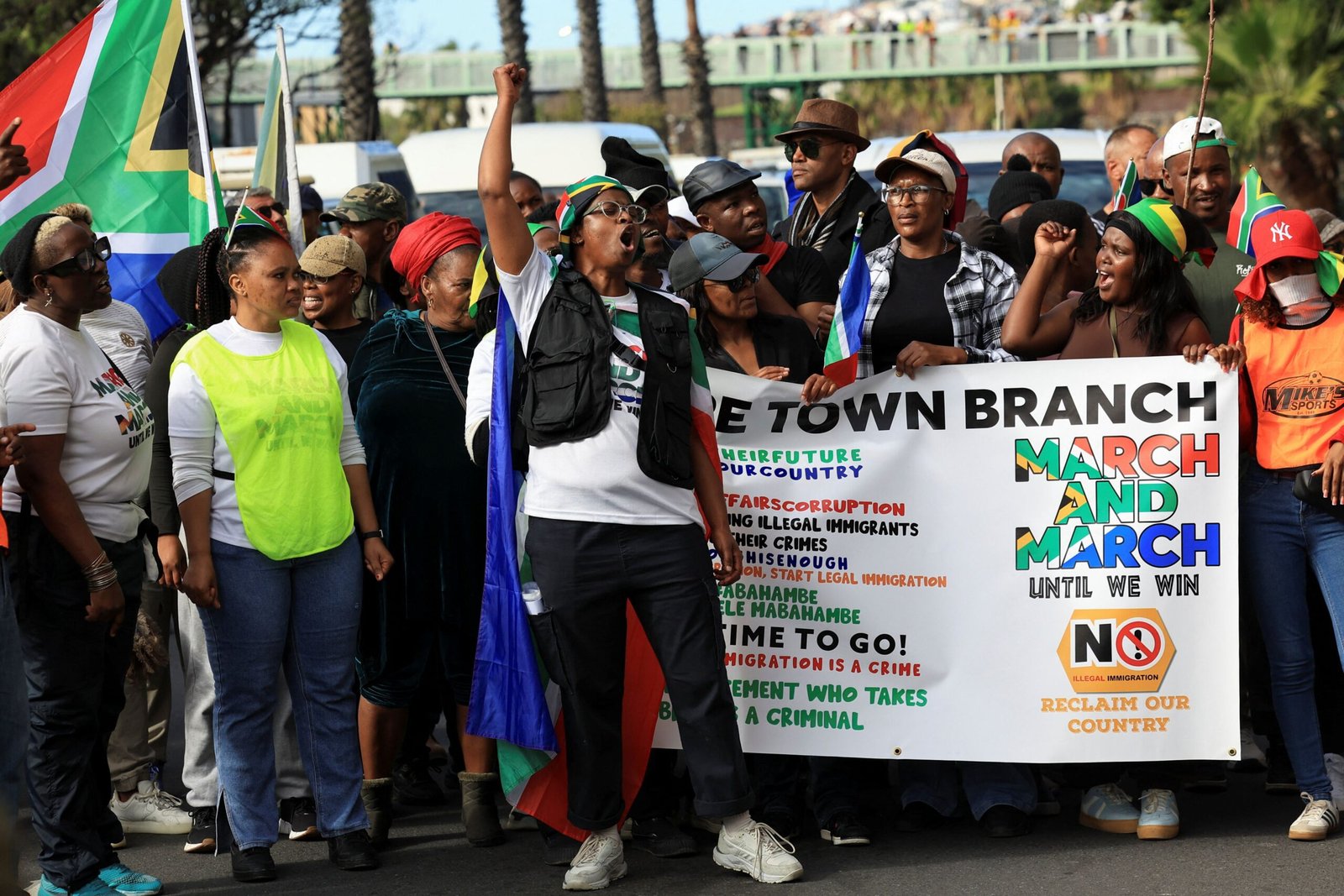
A 29-year-old Malawian father, Mishack Banda, was killed in that attack and his brother injured. Two Mozambicans were killed a few weeks earlier and dozens of other foreign nationals have been assaulted over the past few months. Such violence has raised fears of further unrest with the approach of Tuesday’s deadline, set by the March and March (M&M) anti-migrant movement, for undocumented foreigners to leave South Africa, which at least two opposition parties in Parliament have since backed.
Anti-migrant sentiment is rising, with protest groups mobilizing support by blaming undocumented foreigners for high unemployment, strained public services, and crime, ahead of local elections on November 4. Scores of people have been killed in earlier waves of xenophobic violence in South Africa.
Stop threatening journalists
CPJ and seven other press freedom groups have called on M&M to end unlawful action, stop threatening journalists, and reject conduct that could expose journalists to intimidation or violence. The coalition also called on authorities to protect foreign nationals and journalists, ensure reporters can work safely and without interference, and hold those responsible for press freedom violations to account.
Although the government has rejected the June 30 deadline and put the police on high alert, thousands of fearful migrants, documented and undocumented, have left South Africa as at least 28 groups prepare for mass action on Tuesday.
For many journalists, it is likely to be a dangerous assignment.
News 24’s student journalist and intern Yusuf Kosadia-Hassen told CPJ that he was also targeted this month, as protesters armed with whips accused him of being a foreigner while he was covering demonstrations on June 22 in Boksburg, about 25 kilometers (15 miles) east of Johannesburg, South Africa’s largest city.
“They started asking if I was one of them, if I was South African, and asked for my ID. Then they came close and started speaking in my face and asked if I am Indian,” said Kosadia-Hassen, who was ordered to sing the South African national anthem. “They questioned my heritage.”
Kosadia-Hassan said that the protesters, some of whom appeared drunk and were behaving “like children,” then continued with their march.
‘Be on the lookout for these two journalists’
One of the most disturbing trends for journalists is that M&M has used social media to identify and target those reporting on its events.
“Patriots, please be on the lookout for these two journalists, they’ve been trying to sabotage our marches,” M&M Cape Town said on Facebook after its June 20 demonstration in the South African capital, along with photographs of two journalists.
“We cannot have journalists who are attending our marches only to cause trouble. We’ve been very patient with them and they keep provoking us only to report nonsense,” the post said.
One of the journalists, Getty Images photographer Wesley Fester, told CPJ that the protesters accused him of bias as he interviewed residents opposed to the demonstration and attempted to stop the pair from documenting it.
“What is concerning is that the protesters seem to think they have more rights than everybody else. They feel they can do anything without being held accountable,” he told CPJ.
The second journalist, Agence France-Presse’s Saamwiet Moos, expressed concern that the increasingly hostile rhetoric faced by the media could prevent them reporting the views of those opposed to the protests.
“This is the first kind of incident where they directly targeted us and attempted to sway our reporting or influence,” he told CPJ.
Journalists targeted for exposing xenophobic rhetoric
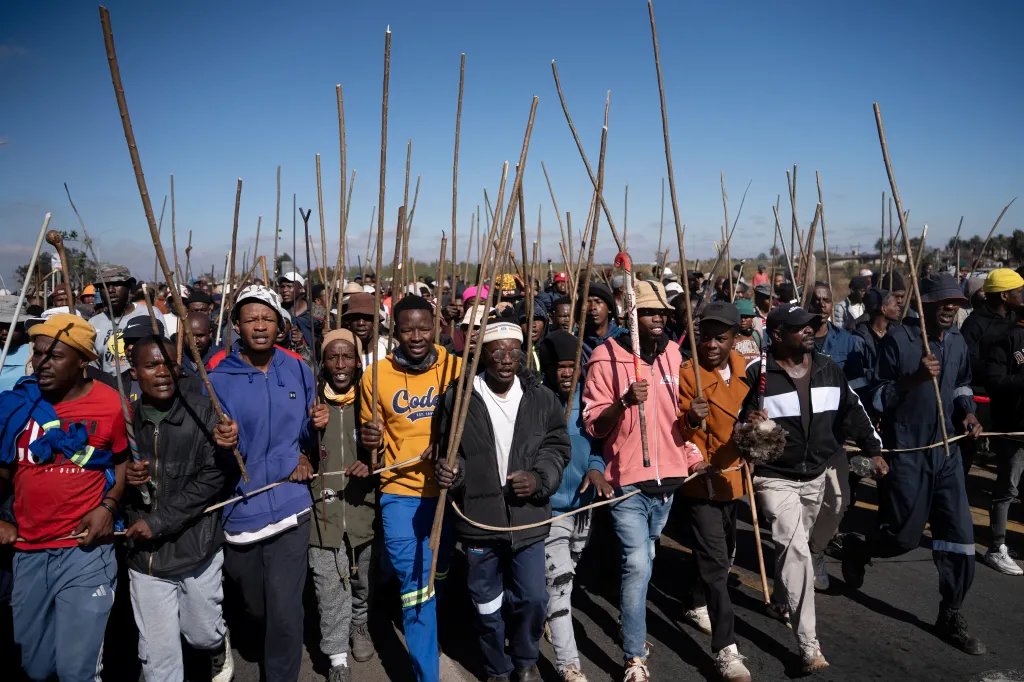
On June 25, the South African National Editors’ Forum (SANEF) said that M&M supporters had “aggressively confronted, harassed, and intimidated individual journalists, reporters, and media crews across four provinces: the Eastern Cape, KwaZulu-Natal, Western Cape, and Gauteng.”
It said that journalists were being targeted for “exposing xenophobic rhetoric, fact-checking anti-immigration public claims, and reporting on the violence that frequently accompanies these protests.”
“The movement’s leadership has aggressively pushed back against media houses that label their activities xenophobic, resulting in severe hostility on the ground to prevent reporters from filming or documenting chaos, particularly when protests degenerate into assaults against, and looting of, foreign nationals’ businesses,” it said.
Additional incidents documented by SANEF and others include:
- May 21 – German broadcaster DW’s correspondent Dianne Hawker-Kalubi told CPJ that she and her camera operator were pushed by bodyguards accompanying M&M founder Jacinta Ngobese-Zuma after they asked questions during a live broadcast. The bodyguards also covered the DW team’s camera before police intervened.
- June 22 – The uMkhonto weSizwe Party (MKP) accused Business Day political editor Hajra Omarjee of being a propagandist after she warned that South Africans could expect greater chaos than the July 2021 unrest as people close to the party leader, former President Jacob Zuma, “want it to be worse.”
- June — Nonprofit GroundUp’s journalists Daniel Steyn and Ashraf Hendricks were subjected to heavy online trolling over an article debunking M&M’s anti-migrant claims, the news agency’s editor Barbara October told CPJ.
- June – Photographs of the Sowetan newspaper’s editor-in-chief Sibongakonke Shoba and his family were circulated online after he published a column critical of the “vigilante movement.”
- June – South African Broadcasting Corporation journalist Sophie Mokoena was subjected to online harassment by M&M supporters, some of whom accused her of being out of touch and biased.
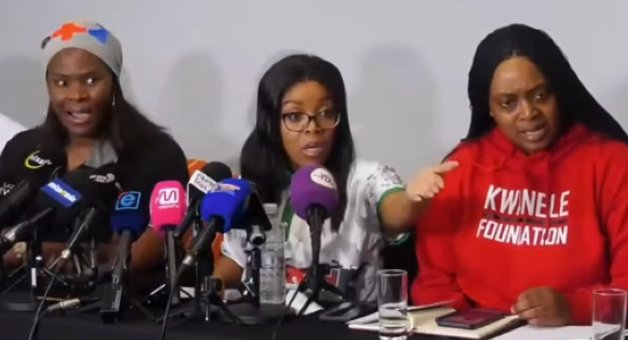
- June – You FM journalist Kgaogelo Magolego was heckled by Ngobese-Zuma and her supporters at a news conference when he alleged she said “foreigners must perish.” The radio station later apologized for his “inaccurate” attribution.
- April and May – GroundUp reporters Joseph Bracken and Tsoanelo Sefoloko were repeatedly threatened by M&M supporters while covering demonstrations in the eastern port of Durban. M&M identified them as journalists that supporters should not speak to. M&M wrote to GroundUp, accusing Bracken of pushing an agenda based on personal beliefs and said that it would no longer work with the outlet, editor October told CPJ.
- June — GroundUp photographer David Harrison was threatened and nearly had his camera seized while attending a community meeting, which successfully quelled anti-migrant protests, in the southern city of George, October said.
As South Africa is one of the continent’s strongest democracies with constitutional protections for media freedom, Foreign Correspondents’ Association of Southern Africa chairperson Antony Sguazzin said he did not expect the unrest to continue through to the November elections.
“South Africa runs clean elections so we don’t anticipate this [violence] to roll over,” Sguazzin told CPJ.
CPJ’s calls to request comment from MKP’s spokesperson Sifiso Mahlangu and head of communications Sipho Tyira and email to M&M and text message to Ngobeze-Zuma did not receive any replies.
Read the full article here
Fact Checker
Verify the accuracy of this article using AI-powered analysis and real-time sources.