Close Menu
FSNN | Free Speech News NetworkFSNN | Free Speech News Network
  • Home
  • News
    • Politics
    • Legal & Courts
    • Tech & Big Tech
    • Campus & Education
    • Media & Culture
    • Global Free Speech
  • Opinions
    • Debates
  • Video/Live
  • Community
  • Freedom Index
  • About
    • Mission
    • Contact
    • Support
Trending

Justice Barrett v. Justice Jackson On Textualism

58 minutes ago

Standard Chartered Sees Signs of Bitcoin Bottom

3 hours ago

Bitcoin could crash to $48,000, if this historical pattern is triggered

4 hours ago
Facebook X (Twitter) Instagram
Facebook X (Twitter) Discord Telegram
FSNN | Free Speech News NetworkFSNN | Free Speech News Network
Market Data Newsletter
Sunday, June 14
  • Home
  • News
    • Politics
    • Legal & Courts
    • Tech & Big Tech
    • Campus & Education
    • Media & Culture
    • Global Free Speech
  • Opinions
    • Debates
  • Video/Live
  • Community
  • Freedom Index
  • About
    • Mission
    • Contact
    • Support
FSNN | Free Speech News NetworkFSNN | Free Speech News Network
Home»News»Media & Culture»Memories of a Different Planet: Roentgenizdat
Media & Culture

Memories of a Different Planet: Roentgenizdat

News RoomBy News Room4 weeks agoNo Comments3 Mins Read975 Views
Share Facebook Twitter Pinterest Copy Link LinkedIn Tumblr Email VKontakte Telegram
Memories of a Different Planet: Roentgenizdat
Share
Facebook Twitter Pinterest Email Copy Link

Listen to the article

0:00
0:00

Key Takeaways

Playback Speed

Select a Voice

From Wikipedia, photo by Dmitry Rozhkov of display “Rock on bones” in Gallery “Vinzavod”, Moscow (2008)
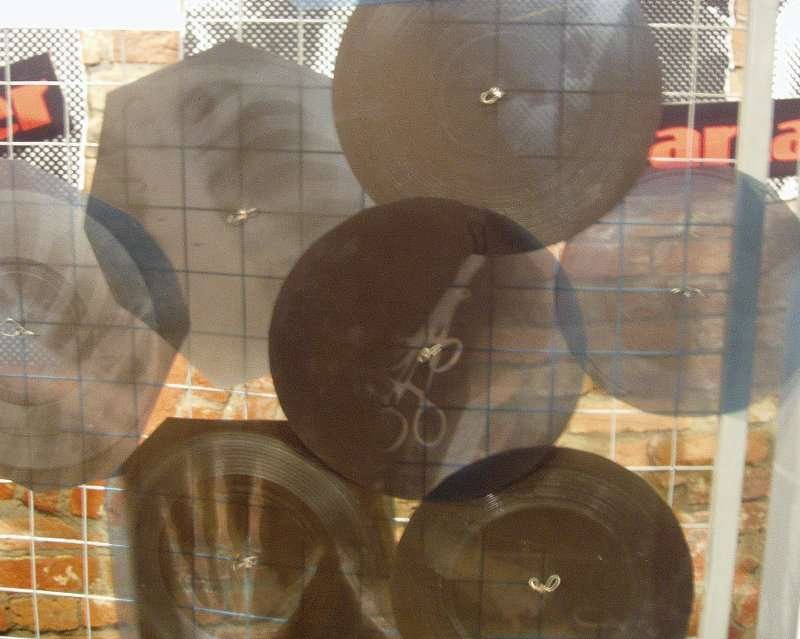
My father Vladimir was remarking yesterday about an item from his youth in the USSR: People wanted to hear Western music (such as jazz and rock), but the Soviet authorities wouldn’t allow it to be distributed. One could sometimes hear it on foreign shortwave broadcasts, but how to record it? And if one could get a smuggled foreign LP, how to duplicate it? Consumer tape recorders were generally unavailable. People had record players, and some people managed to cobble together recording machines for LPs. But the standard recording medium—vinyl—wasn’t available to ordinary consumers.

So people would record instead on used X-rays, such as the ones you can see above. The story made its way into the West some time ago; there’s a recent book on the subject, Bone Music: Soviet X-Ray Audio, and an accompanying web site. Here’s an excerpt from the site:

The bootleggers’ first technical problem, that of obtaining a machine to record with was relatively straightforward. Literature existed explaining audio recording techniques (say in case a righteous citizen wanted to copy the speeches of Comrade Stalin) and various recording machines had been brought back from Germany as trophies after the second world war. These could be adapted or copied, but a further problem existed. The State completely controlled the means of manufacturing records. You couldn’t just go and buy the vinyl or shellac or lacquer needed in a store somewhere.

But at some point, some enterprising music lover hit on a genius idea. An alternative source of raw materials was available – used X-ray plates obtained from local hospitals. And that is where this story really begins. For many older people in Russia remember seeing and hearing strange vinyl type discs when they were young.

The discs had partial images of skeletons on them and were called ‘Bones’ or ‘Ribs’ and they contained wonderful music, music that was forbidden. The practice of copying and recording music onto X-rays really got going in St Petersburg, a port where it was … easier to obtain illicit records from abroad. But it spread, first to Moscow and then to most major conurbations throughout the states of the Soviet Union.

The term “Roentgenizdat” is of course cognate to “samizdat.” “Samizdat” was a combination of “self-” (“sam”) and the first two syllables of “publishing house” (“izdatel’stvo”). The “sam” was replaced by “Рентген,” often anglicized as “Roentgen,” which is the root for all things X-ray in Russian (after the discoverer of X-rays, Wilhelm Conrad Röntgen).

Read the full article here

Fact Checker

Verify the accuracy of this article using AI-powered analysis and real-time sources.

Get Your Fact Check Report

Enter your email to receive detailed fact-checking analysis

5 free reports remaining

Continue with Full Access

You've used your 5 free reports. Sign up for unlimited access!

Already have an account? Sign in here

#CivicEngagement #Journalism #MediaAndPolitics #NarrativeControl #PressFreedom
Share. Facebook Twitter Pinterest LinkedIn Tumblr Email Telegram Copy Link
News Room
  • Website
  • Facebook
  • X (Twitter)
  • Instagram
  • LinkedIn

The FSNN News Room is the voice of our in-house journalists, editors, and researchers. We deliver timely, unbiased reporting at the crossroads of finance, cryptocurrency, and global politics, providing clear, fact-driven analysis free from agendas.

Related Articles

Media & Culture

Justice Barrett v. Justice Jackson On Textualism

58 minutes ago
Cryptocurrency & Free Speech Finance

Reve 2.0 Review: The Best AI Image Generator for Layout Control

4 hours ago
Media & Culture

American Diabetes Association Ejects Researchers from Conference for Sharing Editorial from Its Own Journal

5 hours ago
Media & Culture

The Courts Should Rein in Trump’s Proposed Section 301 Tariffs as Well

6 hours ago
Cryptocurrency & Free Speech Finance

Pokémon Card Sales Are Surging on Crypto Platforms—Just Don’t Call It Gambling

11 hours ago
Media & Culture

Today in Supreme Court History: June 14, 1810

11 hours ago
Add A Comment

Comments are closed.

Editors Picks

Standard Chartered Sees Signs of Bitcoin Bottom

3 hours ago

Bitcoin could crash to $48,000, if this historical pattern is triggered

4 hours ago

Reve 2.0 Review: The Best AI Image Generator for Layout Control

4 hours ago

American Diabetes Association Ejects Researchers from Conference for Sharing Editorial from Its Own Journal

5 hours ago
Latest Posts

Summer of crypto (regs): State of Crypto

5 hours ago

The Courts Should Rein in Trump’s Proposed Section 301 Tariffs as Well

6 hours ago

Aerodrome is turning liquidity into a prediction market with its biggest upgrade yet

8 hours ago

Subscribe to News

Get the latest news and updates directly to your inbox.

At FSNN – Free Speech News Network, we deliver unfiltered reporting and in-depth analysis on the stories that matter most. From breaking headlines to global perspectives, our mission is to keep you informed, empowered, and connected.

FSNN.net is owned and operated by GlobalBoost Media
, an independent media organization dedicated to advancing transparency, free expression, and factual journalism across the digital landscape.

Facebook X (Twitter) Discord Telegram
Latest News

Justice Barrett v. Justice Jackson On Textualism

58 minutes ago

Standard Chartered Sees Signs of Bitcoin Bottom

3 hours ago

Bitcoin could crash to $48,000, if this historical pattern is triggered

4 hours ago

Subscribe to Updates

Get the latest news and updates directly to your inbox.

© 2026 GlobalBoost Media. All Rights Reserved.
  • Privacy Policy
  • Terms of Service
  • Our Authors
  • Contact

Type above and press Enter to search. Press Esc to cancel.

🍪

Cookies

We and our selected partners wish to use cookies to collect information about you for functional purposes and statistical marketing. You may not give us your consent for certain purposes by selecting an option and you can withdraw your consent at any time via the cookie icon.

Cookie Preferences

Manage Cookies

Cookies are small text that can be used by websites to make the user experience more efficient. The law states that we may store cookies on your device if they are strictly necessary for the operation of this site. For all other types of cookies, we need your permission. This site uses various types of cookies. Some cookies are placed by third party services that appear on our pages.

Your permission applies to the following domains:

  • https://fsnn.net
Necessary
Necessary cookies help make a website usable by enabling basic functions like page navigation and access to secure areas of the website. The website cannot function properly without these cookies.
Statistic
Statistic cookies help website owners to understand how visitors interact with websites by collecting and reporting information anonymously.
Preferences
Preference cookies enable a website to remember information that changes the way the website behaves or looks, like your preferred language or the region that you are in.
Marketing
Marketing cookies are used to track visitors across websites. The intention is to display ads that are relevant and engaging for the individual user and thereby more valuable for publishers and third party advertisers.