

 Freedom Index
Listen to the article
A possible return of the European debt crisis of 2011/12 dominated much of the macro talk last week.
This time, though, it is thought to be far more serious. While the first go-round 15 years ago was about the cratering of government bond markets at the so-called “periphery” of the EU, i.e. Greece, this year’s troubles are at the core — France.
The gauge to watch is the spread between France’s 10-year OATs and Germany’s 10-year Bunds. It blew out last week to levels not seen since that first EU debt crisis.
“At one point on Friday, the spread hit +160 basis points so we were on the edge of a mini panic,” said Deutsche’s Jim Reid. “The big question,” he continued, “is whether this is the start of a new euro sovereign crisis or whether markets have already overshot.”
Reid and team expect the ECB to have to relent on rate hikes, with perhaps one more 25-basis-point move, rather than the three additional hikes markets expected just days ago.
The Bund-OAT spread has narrowed by about five basis points on Monday to 140 basis points, suggesting at least some easing in pressure.
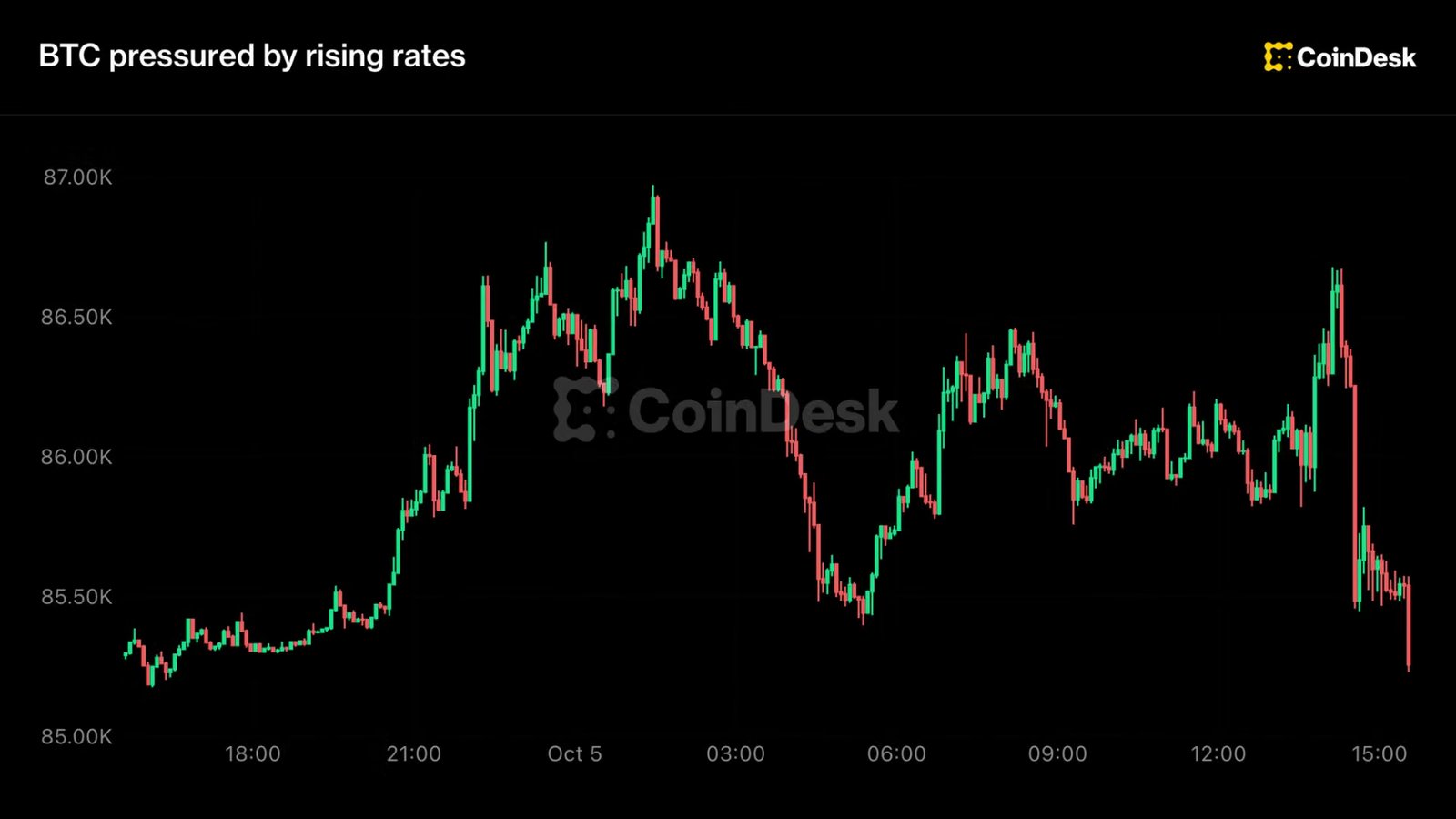
What it means for crypto: Central banks tighten until something breaks. EU debt troubles — particularly at the core — are likely to lead to easier-than-otherwise-anticipated monetary policy, not just from the ECB, but from the Fed as well. Other things being equal, easier monetary policy is good for risk assets, crypto among them.
Read the full article here
Fact Checker
Verify the accuracy of this article using AI-powered analysis and real-time sources.