

 Freedom Index
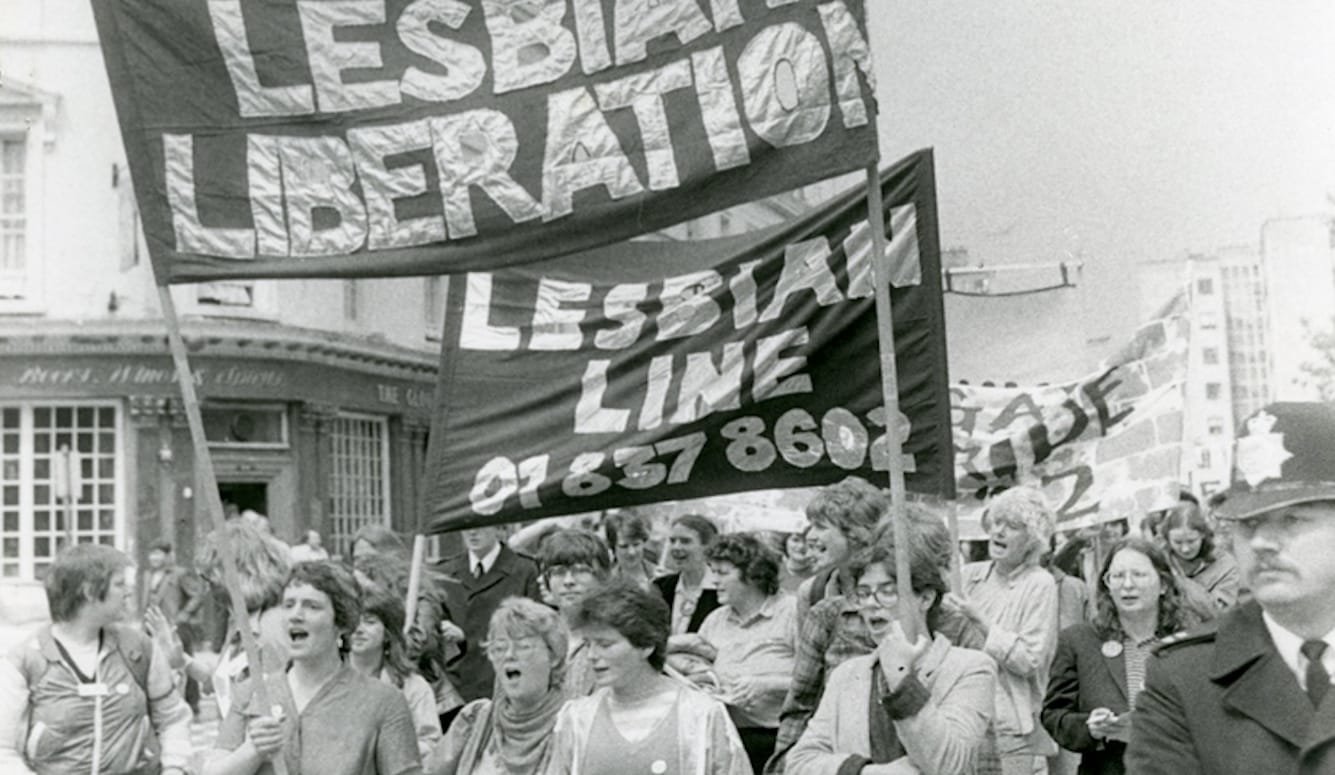
Listen to the article
A bizarre kerfuffle at a lesbian watering hole in Massachusetts took over the internet last week. As most readers will know by now, the Last Ditch bar had formerly enforced a full-time mandatory-mask policy. All hell broke loose when the owner announced recently that, in an effort to stay afloat financially, she would be admitting non-masked customers on Saturday nights. Regulars claimed that the new policy would create a deadly “mass disabling event.” One particularly militant critic, a black artist self-identified as “Soe Noire,” claimed the move was fascistic, and reminded her of eugenics.
A Western Mass. lesbian bar required KN-95 masks. When it changed the rules, all hell broke loose. – The Boston Globe
Last Ditch Bar in Greenfield wanted to build community. They got a firestorm instead.
For most people, the sight of ultra-progressive (and ultra-“queer”) women yelling and crying over the question of whether to enforce six- or seven-day-a-week masking requirements seemed the height of post-COVID progressive self-parody. But in my case, it gave me a sense of déjà vu. This odd (and often performative) obsession with disability and disease isn’t a new facet of lesbian politics. It’s been with us since the Cold War.
I discovered the feminist movement in 1979 at the tender age of seventeen. Coming from a working-class community in the northeast of England, with no real education to speak of, I had difficulty navigating the sectarian identity-politics struggles that were building at the time. I’d become a feminist partly to fight for the rights of fellow lesbians, and to tackle male violence such as rape and domestic assault. I did eventually find my people. But for a while, it was impossible to avoid the insanity then playing out within the wider movement.
This era saw the birth of the Sisters Against Disablement (SAD), a London-based collective of disabled women that published something called The SAD Code. Published in the London Women’s Liberation Newsletter (which itself imploded in 1985 due to infighting over identity politics), this was an 18-point checklist for event organisers to ensure physical spaces were accessible to all women.
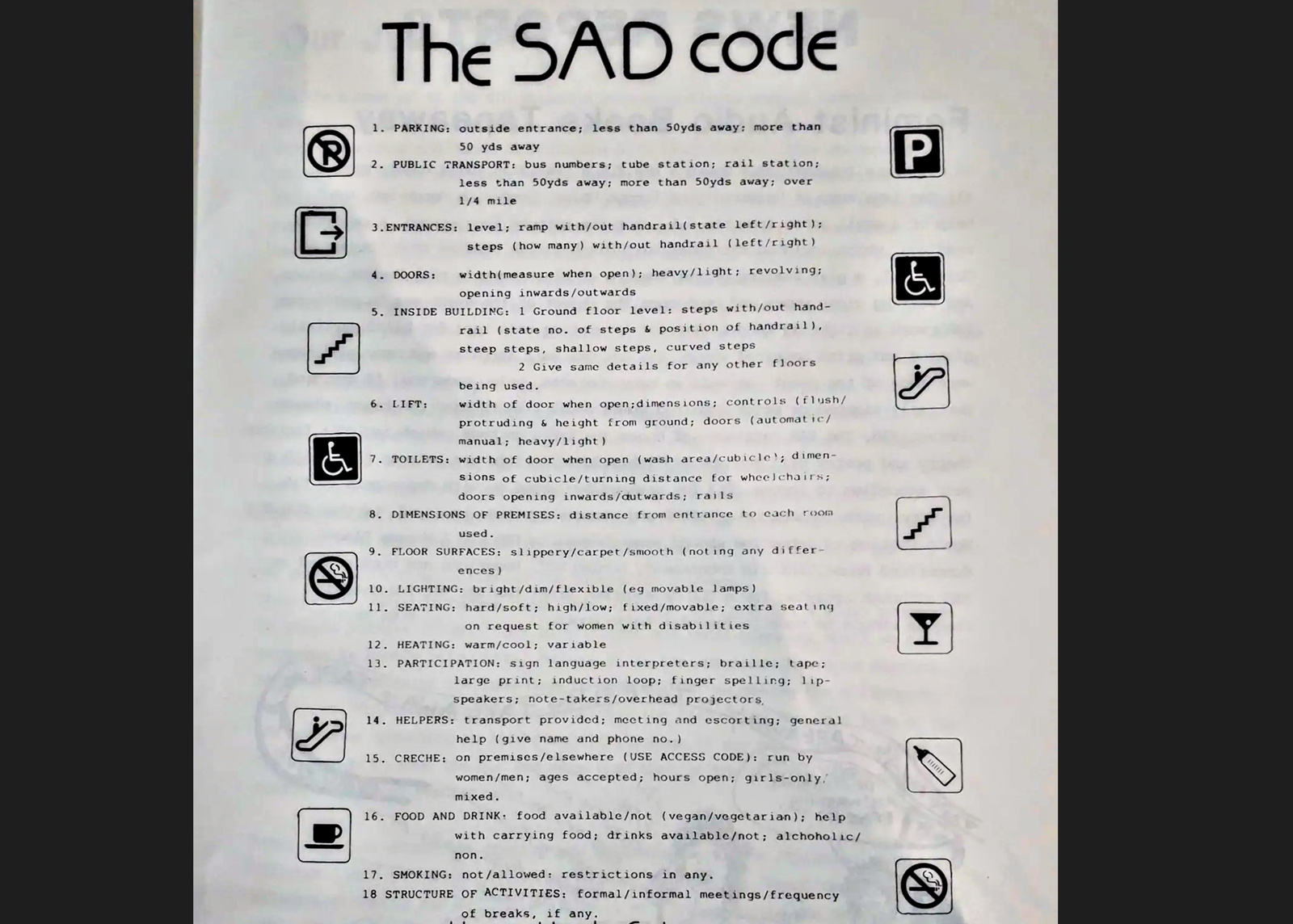
Every conference or meeting, including those held in individual women’s homes, required use of the code. How many steps was it from the bus station? Was it uphill? Did it require going over any broken paving stones? What were the widths of the doors?
Upon arrival at the venue: “What was the distance from the entrance to each door used?” Was the lighting “bright/dim/flexible (e.g. movable lamps)”? Would there be “sign language interpreters; braille; tape; large print; induction loop; finger spelling; lip-speakers; note-takers/overhead projectors”?
The original idea was to shift responsibility for access needs onto organisers, and take the burden away from individuals. A nice idea, but it got completely bonkers.
Read the full article here
Fact Checker
Verify the accuracy of this article using AI-powered analysis and real-time sources.