

 Freedom Index
Listen to the article
Officials are often overly aggressive in pursuing leaks of classified information, but President Donald Trump remains in a league of his own.
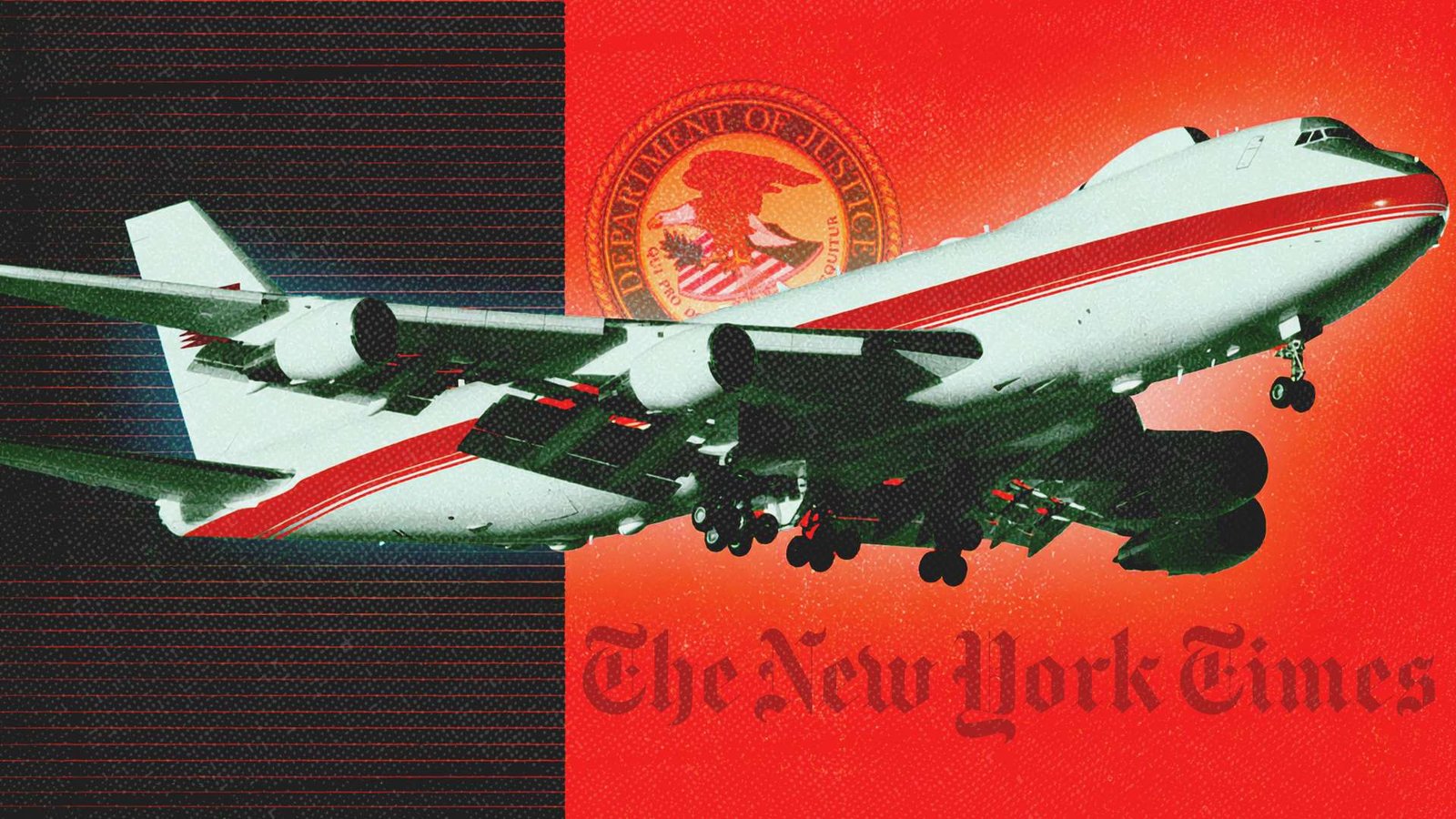
“The Trump administration issued subpoenas on Friday to several journalists for The New York Times,” Michael M. Grynbaum wrote Saturday for the paper, “after the news outlet reported this week on security concerns involving President Trump’s new Qatari-donated Air Force One.”
The subpoenas—which “in some cases” were “delivered by federal agents who showed up at reporters’ homes”—”seek to force the reporters to testify before a federal grand jury in Manhattan on Wednesday,” Grynbaum added. The summonses were issued by Jay Clayton, who currently serves as U.S. attorney for the Southern District of New York and has been nominated as the next director of national intelligence.
“The appearance of federal law enforcement agents on the doorstep of news reporters should shock the conscience of any American who believes in the Constitution and the press freedom it protects,” New York Times deputy general counsel David McCraw said in a statement. “This brazen act should be seen as nothing more than an attempt to prevent the public from knowing what is happening in their country by intimidating journalists from doing their jobs.”
Last year, the government of Qatar gave Trump a luxury Boeing 747-8 to replace Air Force One, with Trump retaining the jet after the end of his term. Experts noted at the time that the plane posed significant security risks and would have to undergo extensive retrofitting before it could officially go into service. Some estimated that process could take two years to complete, but Trump insisted it be ready much sooner.
It appears there were still some concerns: The Times reported last week that when Trump left a NATO summit in Turkey, he took the original Air Force One “as a security precaution related to the resumption of hostilities with Iran.” The authors noted the switch was “made at the advice of the Secret Service and not because of a specific threat.”
The paper reported the following day that the new plane “lacks the same defensive countermeasures that were security features of the old model, including its advanced antimissile capabilities.” Each article cited confidential inside sources, such as “officials who have been briefed on how the jet was retrofitted.”
Trump later claimed on Truth Social that he had taken the original plane “for old time’s sake” and had sent the new one to an Air Force base in the U.K. “to honor our brave men and women of the Military” and “give them a chance to tour the Aircraft.”
But the story apparently vexed the administration enough that a federal prosecutor demanded its authors appear before a Manhattan grand jury.
“Reporters are not the targets, those leaking classified information are,” Department of Justice (DOJ) spokeswoman Emily Covington told the Times.
Before the Times‘ original story ran, an FBI official asked “that the article be held, calling it an issue of national security,” but “declined to explain the security issue,” Grymbaum wrote. The paper did not hold the story. “The official also asked The Times to disclose its sources for the article; the newspaper refused to do so.”
It’s not clear what alleged national security concerns were of such grave concern. While the Times reporting did suggest Trump’s new plane was insufficiently protected from missile attacks, that revelation came after Trump had returned home on the safer plane.
Last year, then–U.S. Attorney General Pam Bondi issued new guidelines expanding the type of information that could trigger the DOJ to demand information from journalists, loosening the standard from strictly classified to simply “sensitive” or “protected.” Still, it remains DOJ policy that “the use of certain law enforcement tools, including subpoenas, court orders…and search warrants to seek information from, or records of, non-consenting members of the news media,” are “extraordinary measures, not standard investigatory practices.”
But Trump has been particularly aggressive at going after journalists whose reporting has embarrassed his administration. This could hurt journalists’ ability to do their jobs, even if they aren’t the direct targets of the probe.
In January, as part of an investigation into alleged leaks about U.S. operations in Venezuela, the FBI raided Washington Post reporter Hannah Natanson’s home. Agents seized both her personal and work computers, containing untold thousands of contacts with confidential sources.
In an affidavit filed in federal court, the Post called the seizure “an unconstitutional prior restraint,” adding: “The government has commandeered Natanson’s reporting records and tools, thereby preventing her from contacting her more than 1,100 sources and receiving their tips, and generally impairing her ability to publish the stories she otherwise would have published but for the raid.”
While then, as now, officials stressed that Natanson was not “the focus of the probe,” the mere fact that her entire digital life suddenly became available to federal investigators will certainly make any future leakers think twice about working with her.
The nature of the Times subpoenas is also concerning. Grynbaum notes that they “contain few specifics, asking only that the journalists testify ‘in regard to an alleged violation of federal criminal law.'” But that still poses significant First Amendment issues.
Earlier this year, the Department of Justice issued subpoenas ordering journalists at the Post and The Wall Street Journal to provide grand jury testimony about their national security reporting. The government withdrew the orders after the outlets pushed back.
“The subpoenas stood out because they not only demanded the disclosure of information—as subpoenas targeting news organizations and journalists have done in the recent past—but also would have required journalists to actively testify before a federal grand jury investigating national security leaks, under the threat of findings of contempt of court that could result in journalists’ being locked up,” wrote NBC’s Ryan J. Reilly.
During Trump’s first term, his administration seized four Times journalists’ phone records, seemingly in an attempt to find out who leaked classified information about then–FBI Director James Comey’s handling of investigations during the 2016 election.
While the government has a right to investigate leaks, it is something else entirely to haul reporters into court and demand testimony about their sources or methods.
“When the public’s right to know is crushed, as the Trump administration is trying to do with its subpoenas against The New York Times, all of us suffer irreparable harm, as does the freedom upon which this nation is built,” said Stephen J. Adler, chairman of the Reporters Committee for Freedom of the Press, in a statement.
“The subpoenas are an extraordinary escalation in President Trump’s efforts to threaten and intimidate independent news organizations, and have a chilling effect on the work of journalists across the country,” added Committee to Protect Journalists CEO Jodie Ginsberg.
Read the full article here
Fact Checker
Verify the accuracy of this article using AI-powered analysis and real-time sources.