

 Freedom Index
Listen to the article
On 15 October 2020, Jeffrey Toobin started masturbating during a Zoom call with colleagues. Toobin had reached the rarefied heights of the cultural aristocracy: a graduate of Harvard Law School, a former federal prosecutor, CNN’s chief legal analyst, the author of a series of New York Times bestsellers, and a staff writer at the New Yorker for nearly three decades. Four days later, Vice broke the story and Toobin issued a public apology. “I believed I was not visible on Zoom,” he explained. “I thought no one on the Zoom call could see me. I thought I had muted the Zoom video.” Three weeks later, the New Yorker ended Toobin’s 27-year career at the magazine.
Nobody—not even Toobin’s harshest critics—disputed his claim that this was an accident. Still, the judgment was harsh and swift. At the Los Angeles Times, Robin Abcarian called his behaviour “dangerous,” and added that “some men have learned nothing from the #MeToo movement.” In Salon, Erin Keane dismissed the sympathy offered by male defenders as “himpathy,” which feminist writer Kate Manne coined to describe “inappropriate and disproportionate sympathy powerful men often enjoy.” In an article for Defector, Albert Burneko used the term “creepy sex-weirdo” seven times, and declared that most readers “would never consider doing [what Toobin did] because they are not animals.” Even if Toobin had successfully disabled his mic and camera, Burneko went on, he would still be a sex creep who deserved to be fired.
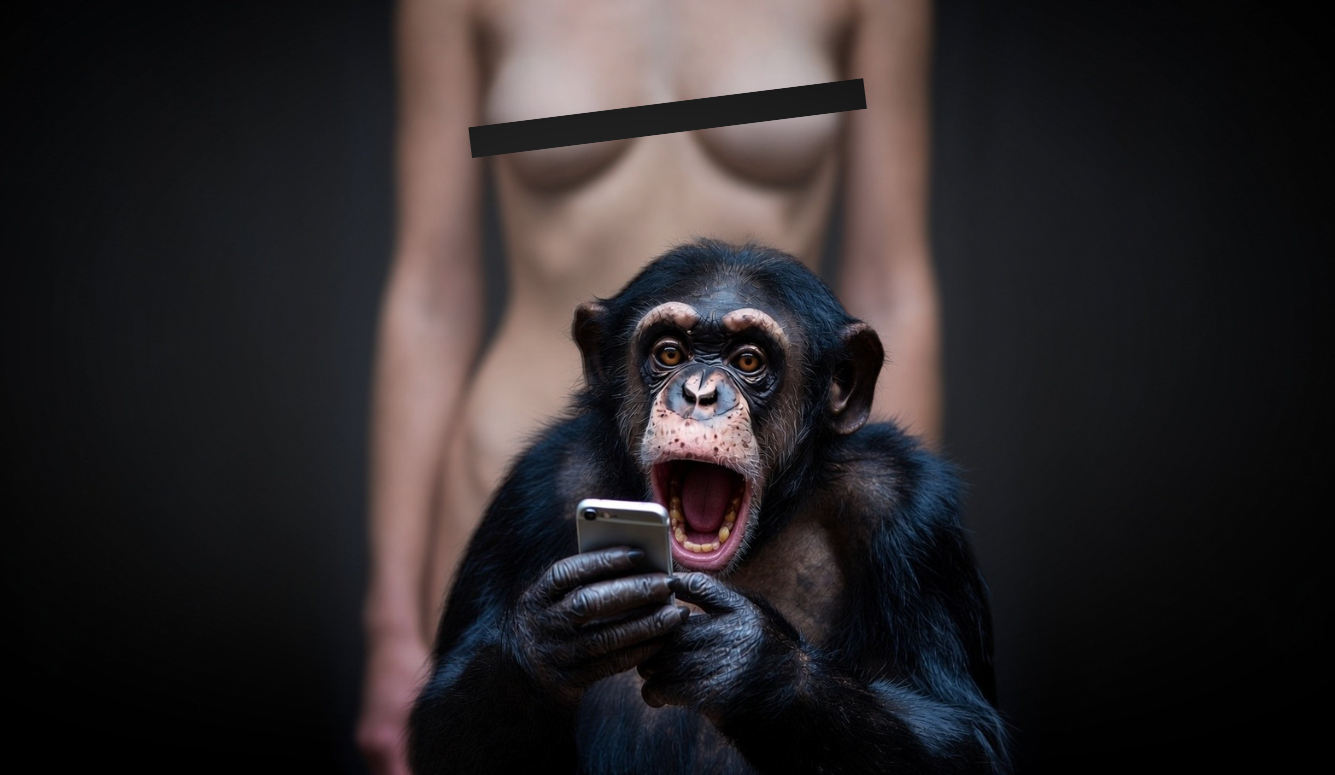
Toobin’s colleagues shouldn’t have had to watch him masturbate. But if Toobin had turned off his webcam and nobody had seen him, heard him, or known what he was up to, then what exactly was the sackable offence? A lot of people seemed to be angry that he had masturbated at all. There is something strange about treating one of the most ordinary and common human behaviours as something that only “animals” and “sex creeps” do. Calling something weird or repulsive is a way of saying I would never do that. But Burneko’s disgust may point to something deeper. We are animals, after all. We’re suit-wearing apes who spend most of our lives pretending we’re not. Perhaps our discomfort with masturbation comes from how difficult it makes that pretence to maintain. Strip away the books, the Harvard degree, the New Yorker byline, and the title of chief legal analyst on CNN, and you are left with an ape who thought his camera was turned off, alone in front of a screen, doing something primates have been doing for tens of millions of years.
Masturbation is not unique to humans. It has been documented in more than a hundred primate species, and in many other animals besides. We don’t need an elaborate evolutionary story to explain why animals masturbate. Natural selection favoured organisms that reproduced, and one effective way of getting animals to have sex was to make sex feel good. The system is ancient: even fruit flies, whose lineage diverged from ours more than half a billion years ago, find ejaculation rewarding. Once an ape with hands came along, it wasn’t going to take long to figure out how to hijack that system and cut out the middleman. Masturbation doesn’t produce any offspring, but it does produce pleasure and—in humans, at least—some shame.
Accurate data on human masturbation are surprisingly hard to get, but an old and endlessly repeated statistic is that 37 percent of all internet traffic is pornography. That figure—which originated in a June 2010 press release from a company that sold internet-filtering software—was almost certainly an exaggeration. More careful estimates are much lower. In 2004, research by research firm Hitwise indicated that adult sites accounted for 18.8 percent of all website visits. By 2010, when Americans were spending more time online, Hitwise’s estimate had dropped to six percent. This suggests that when bandwidth was scarce and phones weren’t everywhere, we prioritised our limited time online by watching pornography. Give humans a private screen and anonymity, and one of the first things millions of us will do is beat off. Porn didn’t have to become less popular for its share of the whole to shrink. I mean, how many times a day can you jerk off? Still, the raw numbers are staggering. In May 2026 alone, there were 875.4 million US visits to just four porn sites. As of 2024, internet users worldwide were spending more than three billion hours a month on adult sites—about eighty percent as much time as they spent reading the news.
If these data are any indication of how humans spend their time, the planet is filled to the brim with “creepy sex-weirdos.” But traffic numbers count clicks, not people, so who exactly is making all these visits and what are they doing on these sites? In a nationally representative survey in 2015, 91.8 percent of American men and 78.2 percent of women said they had masturbated at least once in their lives, while 64 percent of men and 40.8 percent of women had done so in the previous month. A 2026 study found even higher rates: 76.7 percent of men and 59.4 percent of women had done it in the previous month. The numbers move around depending on how the question is asked and how masturbation is defined, but the basic pattern is that almost all men masturbate at some point in their lives, most do it regularly, and a large majority of women do it too.
Read the full article here
Fact Checker
Verify the accuracy of this article using AI-powered analysis and real-time sources.