Close Menu
FSNN | Free Speech News NetworkFSNN | Free Speech News Network
  • Home
  • News
    • Politics
    • Legal & Courts
    • Tech & Big Tech
    • Campus & Education
    • Media & Culture
    • Global Free Speech
  • Opinions
    • Debates
  • Video/Live
  • Community
  • Freedom Index
  • About
    • Mission
    • Contact
    • Support
Trending

Archives: July 2026

3 minutes ago

SEC wins $5.5 million default judgment over alleged fake crypto platform NanoBit

19 minutes ago

Michigan Judge Blocks Kalshi from Allowing Residents to Place Sports Bets

20 minutes ago
Facebook X (Twitter) Instagram
Facebook X (Twitter) Discord Telegram
FSNN | Free Speech News NetworkFSNN | Free Speech News Network
Market Data Newsletter
Tuesday, June 30
  • Home
  • News
    • Politics
    • Legal & Courts
    • Tech & Big Tech
    • Campus & Education
    • Media & Culture
    • Global Free Speech
  • Opinions
    • Debates
  • Video/Live
  • Community
  • Freedom Index
  • About
    • Mission
    • Contact
    • Support
FSNN | Free Speech News NetworkFSNN | Free Speech News Network
Home»Opinions»Debates»JD Vance Communion Book Review: In Bad Faith
Debates

JD Vance Communion Book Review: In Bad Faith

News RoomBy News Room1 hour agoNo Comments5 Mins Read1,762 Views
Share Facebook Twitter Pinterest Copy Link LinkedIn Tumblr Email VKontakte Telegram
JD Vance Communion Book Review: In Bad Faith
Share
Facebook Twitter Pinterest Email Copy Link

Listen to the article

0:00
0:00

Key Takeaways

Playback Speed

Select a Voice

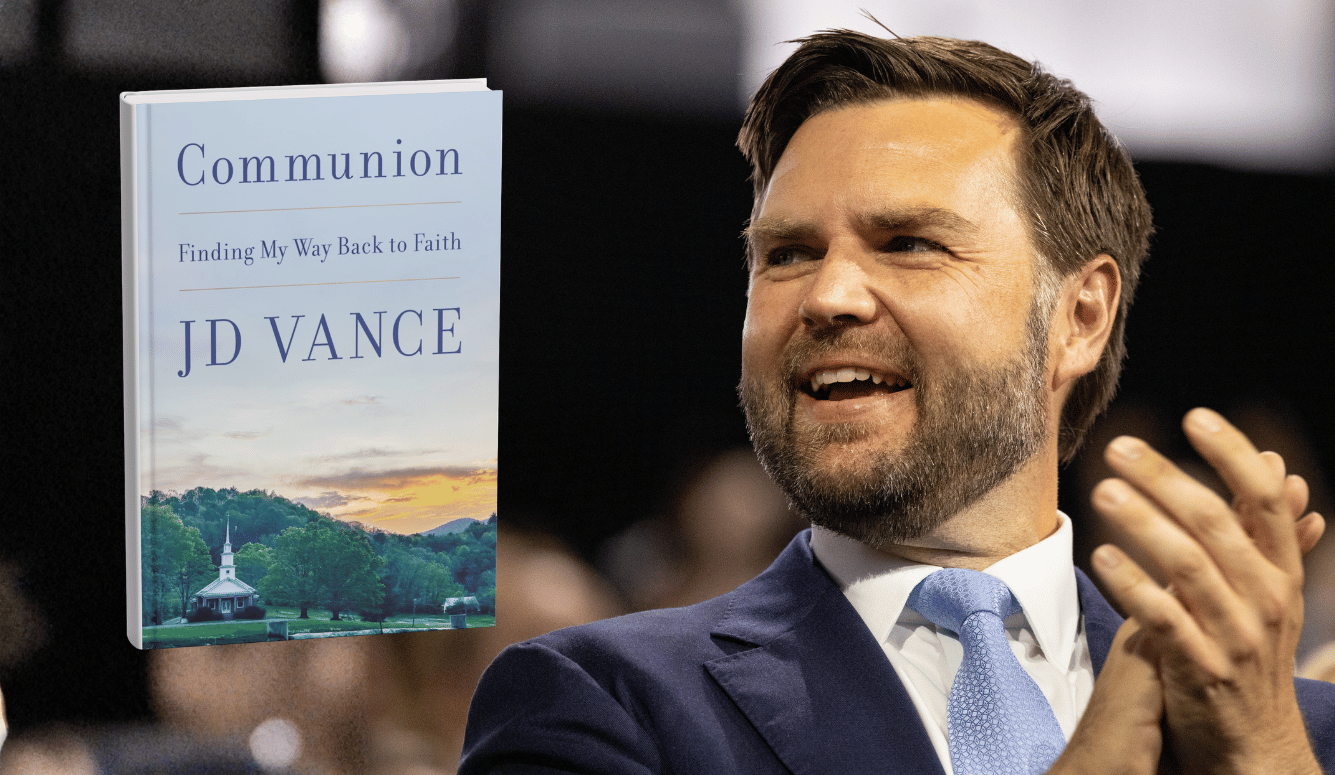
A review of Communion: Finding My Way Back to Faith by JD Vance; 288 pages; HarperCollins: New York (June 2026)

The novelist Evelyn Waugh was once asked how he reconciled his lousy personal behaviour—which included drunkenness, antisemitism, and cruelty to friends and foes alike—with his Catholic faith. No one could imagine, Waugh replied, how vile he would have been were he not a Catholic. That retort came to mind as I read US vice president JD Vance’s new book, Communion, about his conversion to Catholicism. Since joining the Church of Rome in 2019, Vance has not exactly been a paragon of virtue. Once an outspoken critic of Donald Trump, whom he called “America’s Hitler,” he changed his tune as soon as he needed Trump’s endorsement. (“I need to just suck it up and support him,” he confessed.)

When the press debunked one of Vance’s more scurrilous claims—that Haitian migrants were eating their neighbours’ house pets—Vance insisted that it had been a noble lie: “If I have to create stories so that the American media actually pays attention to the suffering of the American people, then that’s what I’m going to do.” Now that he’s vice president, Vance has taken it upon himself to serve as Trump’s rhetorical rottweiler, snarling at any perceived threat. In the past few months, he has called Obama speechwriter Jon Favreau a “dipshit,” mocked Alexandria Ocasio-Cortez for freezing on camera, and warned Pope Leo “to be careful when he talks about matters of theology.” If this is the pious, God-fearing JD Vance, I can only imagine what he was like before he became a Catholic.

According to Vance, he was a pretty decent fellow. When his grandmother could no longer afford medical insurance, he paid for it. When a friend got dumped, he took him out for a drink, then “gave him a hug, listened to him in his driveway for about half an hour, and told him to just keep putting one foot in front of the other.” When his mother fell off the wagon and began popping pills again, he “didn’t mutter insults under my breath and hang up the phone. I offered to help.”

Spiritually, though, he was lost. As a boy, he’d tried out several different flavours of Christianity—Baptist, Pentecostal, nondenominational worship—but allowed religion to slip away from him as an adult. “Faith seemed nothing more than sobbing grown men who had deluded themselves into thinking that thoughts and prayers could cure broken human nature,” Vance writes. By the time he entered Yale Law School in 2010, he was an atheist, with a fondness for the novels of Ayn Rand. But Objectivism—Rand’s philosophy of reason and economic self-interest—left him emotionally adrift:

I had no idea why I wanted to go to law school or what I wanted to do with my life. In my atheism, I fancied myself enlightened and rational. Yet all of my talents and energies were focused on obtaining, at best, a good option to guarantee financial security and, at worst, the prize in a competition I was unable to comprehend.

Thus began Vance’s journey back to God. He didn’t have a great epiphany or suffer the kind of dark night of the soul described by journalist Sohrab Ahmari in his 2019 memoir, From Fire, By Water. Ahmari, who was born in January 1985, just six months after Vance, embraced many belief systems when he was young. At various times, he was a nihilist, a Nietzschean, a Trotskyite, a postmodernist, and a Reaganite. But they all left him struggling to make sense of the world and his place in it. Then one day, after a night of heavy drinking, Ahmari wandered into a Capuchin monastery in Manhattan and discovered, as he sat listening to the Mass, that tears were streaming down his cheeks: “These were tears neither of sadness nor even of happiness. They were tears of peace.”

Vance’s conversion was nowhere near as dramatic. Indeed, he makes finding faith sound like finding a new car or an expensive home appliance. “I knew I wanted to raise my kids in some church,” he explains, “but I didn’t know which one.” So he started reading: Thomas Aquinas, G.K. Chesterton, C.S. Lewis. He attended services now and then to see what it was like. And he “nerded out” with a helpful priest. “I didn’t meet Jesus on my way to Damascus,” he writes in the introduction. He adds later: “I am most comfortable engaging with the intellectual elements of the faith.”

You wouldn’t guess it from reading Communion. For all his supposed erudition, Vance fails to make a cogent argument for either Catholicism in particular or Christianity in general. “Religious beliefs are less like certainties such as the boiling point of water—which can be verified through testing—and more like claims about complex systems,” Vance writes, before using an odd example to illustrate his point:


Read the full article here

Fact Checker

Verify the accuracy of this article using AI-powered analysis and real-time sources.

Get Your Fact Check Report

Enter your email to receive detailed fact-checking analysis

5 free reports remaining

Continue with Full Access

You've used your 5 free reports. Sign up for unlimited access!

Already have an account? Sign in here

Share. Facebook Twitter Pinterest LinkedIn Tumblr Email Telegram Copy Link
News Room
  • Website
  • Facebook
  • X (Twitter)
  • Instagram
  • LinkedIn

The FSNN News Room is the voice of our in-house journalists, editors, and researchers. We deliver timely, unbiased reporting at the crossroads of finance, cryptocurrency, and global politics, providing clear, fact-driven analysis free from agendas.

Related Articles

Media & Culture

Archives: July 2026

3 minutes ago
Cryptocurrency & Free Speech Finance

’47 Ronin’ Director Gets 30 Months for Spending Netflix’s $11M on Dogecoin

22 minutes ago
Media & Culture

Brickbat: TMI

1 hour ago
Media & Culture

Dire Strait

2 hours ago
Media & Culture

I Survived Europe’s Heat Wave Without AC—No Thanks to Regulation

3 hours ago
Media & Culture

Congratulations to Orin Kerr, Whose Amicus Brief Was Twice Cited by the Court Today in Chatrie v. U.S.

4 hours ago
Add A Comment
Leave A Reply Cancel Reply

Editors Picks

SEC wins $5.5 million default judgment over alleged fake crypto platform NanoBit

19 minutes ago

Michigan Judge Blocks Kalshi from Allowing Residents to Place Sports Bets

20 minutes ago

’47 Ronin’ Director Gets 30 Months for Spending Netflix’s $11M on Dogecoin

22 minutes ago

Brickbat: TMI

1 hour ago
Latest Posts

JD Vance Communion Book Review: In Bad Faith

1 hour ago

BlackRock’s IBIT sheds $300 million as bitcoin demand dwindles

1 hour ago

Bitcoin Miner Ionic Digital Files for Nasdaq Direct Listing

1 hour ago

Subscribe to News

Get the latest news and updates directly to your inbox.

At FSNN – Free Speech News Network, we deliver unfiltered reporting and in-depth analysis on the stories that matter most. From breaking headlines to global perspectives, our mission is to keep you informed, empowered, and connected.

FSNN.net is owned and operated by GlobalBoost Media
, an independent media organization dedicated to advancing transparency, free expression, and factual journalism across the digital landscape.

Facebook X (Twitter) Discord Telegram
Latest News

Archives: July 2026

3 minutes ago

SEC wins $5.5 million default judgment over alleged fake crypto platform NanoBit

19 minutes ago

Michigan Judge Blocks Kalshi from Allowing Residents to Place Sports Bets

20 minutes ago

Subscribe to Updates

Get the latest news and updates directly to your inbox.

© 2026 GlobalBoost Media. All Rights Reserved.
  • Privacy Policy
  • Terms of Service
  • Our Authors
  • Contact

Type above and press Enter to search. Press Esc to cancel.

🍪

Cookies

We and our selected partners wish to use cookies to collect information about you for functional purposes and statistical marketing. You may not give us your consent for certain purposes by selecting an option and you can withdraw your consent at any time via the cookie icon.

Cookie Preferences

Manage Cookies

Cookies are small text that can be used by websites to make the user experience more efficient. The law states that we may store cookies on your device if they are strictly necessary for the operation of this site. For all other types of cookies, we need your permission. This site uses various types of cookies. Some cookies are placed by third party services that appear on our pages.

Your permission applies to the following domains:

  • https://fsnn.net
Necessary
Necessary cookies help make a website usable by enabling basic functions like page navigation and access to secure areas of the website. The website cannot function properly without these cookies.
Statistic
Statistic cookies help website owners to understand how visitors interact with websites by collecting and reporting information anonymously.
Preferences
Preference cookies enable a website to remember information that changes the way the website behaves or looks, like your preferred language or the region that you are in.
Marketing
Marketing cookies are used to track visitors across websites. The intention is to display ads that are relevant and engaging for the individual user and thereby more valuable for publishers and third party advertisers.