

 Freedom Index
Listen to the article
Earlier this month, the Federal Court of Australia dismissed claims brought by the concert pianist Jayson Gillham against the Melbourne Symphony Orchestra over its response to a recital he gave in August 2024. What caused the trouble was not his piano-playing but an oratorical prelude condemning Israel for (in his telling) the war crime of deliberately killing journalists in Gaza. In the cacophony that ensued, the MSO cancelled his next performance, telling subscribers that his remarks had been “an intrusion of personal political views”. Then some of its own musicians revolted, and the orchestra offered to reinstate the performance on the condition that there be no physical or verbal statement from the stage. Our virtuous virtuoso declined. The managing director left her role after the musicians passed a vote of “no confidence” in senior management, and the board announced an independent review.
In court, Gillham contended, in effect, that he had been discriminated against for expressing political views. Those attuned to it detected a familiar-sounding bassline in his lawyers’ arguments—the purported influence of Jewish board members and wealthy donors whom the MSO was allegedly trying to appease.
Rejecting Gillham’s claims, the court accepted that the MSO had acted on perceived business consequences, among them the reputational risk arising from the use of its stage for an unapproved political statement. The judgment effectively supports the proposition that an organisation may regulate how its platform is used in order to protect its business interests, provided its actions are directed at those interests rather than at suppressing the views expressed.
The case has attracted international attention, throwing light on the murky manoeuvring that arts and cultural institutions increasingly have to undertake to accommodate the competing interests of their stakeholders: donors, staff, artists, management and the public.
We are in the throes of the largest intergenerational wealth transfer in history, as baby boomers die and pass their wealth to their spouses and ultimately to their children. In the United States alone, some US$124 trillion is expected to change hands by 2048, of which roughly US$18 trillion is expected to flow to philanthropy.
Charities are an integral part of civil society, both reflecting the societies they serve and helping to shape them. They are also engines of the economy, driving innovation, research, community engagement and policy reform.
The wealth that will flow to philanthropy, at a time of extraordinary social, political, technological and economic upheaval, is not merely a financial shift but a cultural one—a redrawing of the map of wealth and influence.
For some donors, charity is a gateway to soft power—a way to wield influence and shape policy and values while escaping oversight and accountability.
It is not surprising, then, that charities and not-for-profits find themselves on the front lines of the culture wars. Conflict arises not only over what these organisations do with their money but over where that money comes from. The identity and influence of donors have long been contested for human rights NGOs and educational institutions; increasingly it is contested for galleries, museums, literary festivals and theatre companies too.
It would be naïve to think that philanthropic donations are only ever made for altruistic reasons. For some donors, charity is a gateway to soft power—a way to wield influence and shape policy and values while escaping oversight and accountability. Large gifts attract publicity, yield social currency and help to entrench a benign legacy in the public mind. Hence the accusations of “reputation laundering”.
On one view, philanthropy perpetuates the very system of structural inequity that concentrated the wealth in the first place: the money remains tainted, and it taints the recipient. The counterargument is that the wealth already exists, so it may as well be put to public good. But at what cost? Is it a Faustian bargain?
When the president of the Massachusetts Institute of Technology apologised for accepting donations from Jeffrey Epstein—whom the institute’s own records had already classified as a “disqualified donor”—he wrote: “With hindsight, we recognize with shame and distress that we allowed MIT to contribute to the elevation of his reputation, which in turn served to distract from his horrifying acts.”
In deciding whether to accept a large donation, a charity must weigh whether acceptance is consistent with its purposes, how much control it is willing to cede, and the reputational risk of being associated with a donor—or the concentration risk of becoming dependent on one. It must consider everyone else in the ecosystem: employees and volunteers, other donors, and the people who benefit from its services or funding. Some organisations now have ethics committees and gift-acceptance policies, and publish them to give transparency to their processes.
The bigger the donation, the more likely it is that the donor’s relationship with the charity is, in essence, transactional, and that the terms of that relationship are negotiated like any other transaction. I give you $1 million: what are you prepared to give me for it? Invitations to elite conferences and dinners? A seat on the board? Naming rights? Consultation over policy direction?
None of this is new, and it is usually dealt with in gift agreements. What is newer is the “morals clause”, an increasingly common if contentious provision that allows a charity to terminate the relationship—including by “de-naming”—if a donor begins to bring it into disrepute.
The risk of being tarnished by a donor is nowhere more acute than where the donor holds naming rights, a centuries-old practice that exists precisely to perpetuate a positive legacy. After one of New Zealand’s most generous arts patrons was convicted of indecent assault and of attempting to pervert the course of justice, the charity he founded—the eponymous James Wallace Arts Trust—transferred its collection, worth several tens of millions of dollars, to a new trust bearing no trace of his name.
In exchange for US$200 million, the largest single gift the Smithsonian has ever received (the institution is itself named for its founding benefactor, the scientist James Smithson, who died almost two hundred years ago), Amazon’s founder Jeff Bezos has naming rights on a new building at the National Air and Space Museum, and in several other places across the institution, for at least fifty years. The agreement contains no morals clause. Given the controversies over Amazon’s labour practices, that is a risk—but clearly one the Smithsonian decided was worth taking.
Harder to manage are the interventions and campaigns by artists and activist groups that pressure charities to divest or dissociate from their donors.
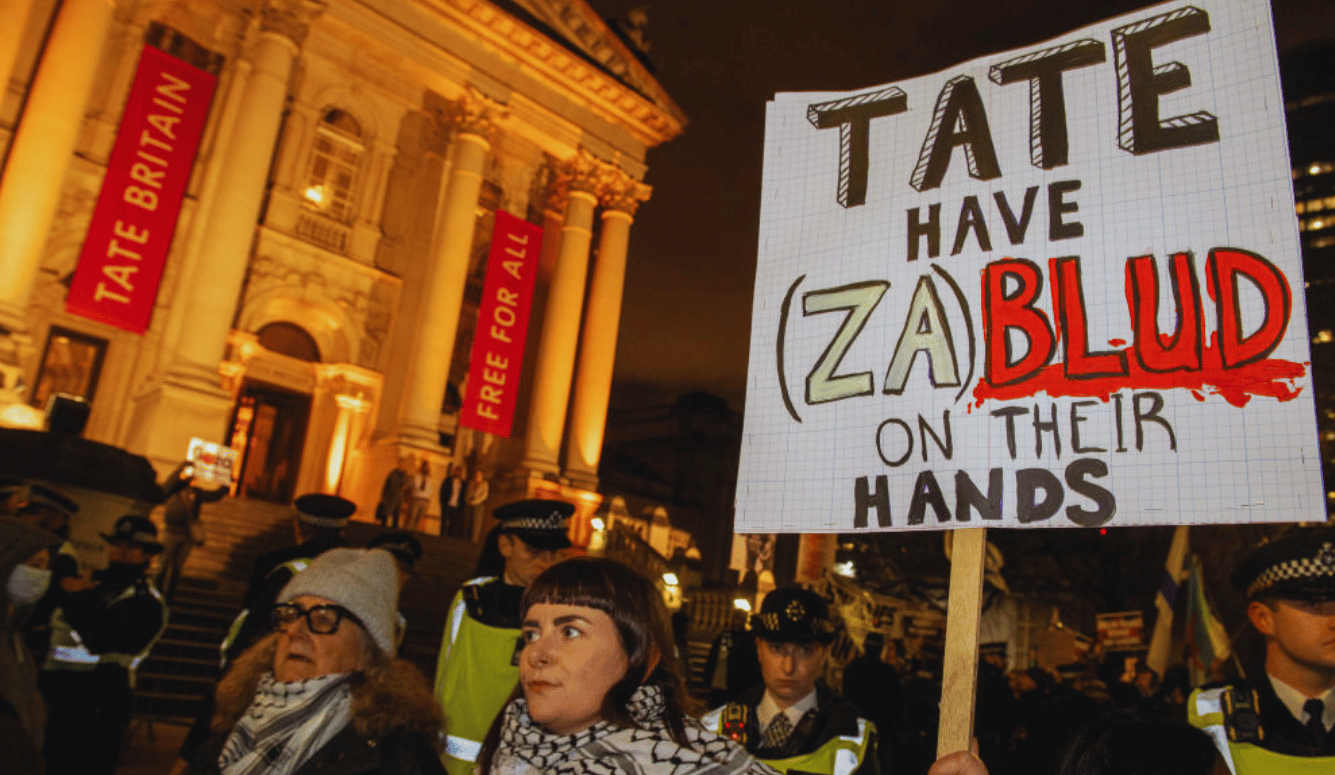
BP was once among the leading arts sponsors in the United Kingdom. After years of protests accusing it of “greenwashing”, Tate, the Royal Shakespeare Company, Scottish Ballet, the National Portrait Gallery and the Royal Opera House all ended their funding partnerships with it. The British Museum let its twenty-seven-year sponsorship lapse in 2023—and then, months later, accepted a £50 million donation from BP towards its ten-year redevelopment. The Science Museum retains a BP-funded education academy. Last year, internal BP memos were made public showing how the company had used cultural sponsorship to “secure public support and advocacy from partners to mitigate risks and advance business interests”.
In 2019, the Whitney’s vice-chairman and a significant donor, Warren B. Kanders, resigned after protests by staff and artists over his ownership of Safariland, a manufacturer of tear gas that had been used against migrants at the US–Mexico border. He later announced that he would sell the divisions responsible—a result the activists claimed as a victory, though subsequent reporting suggested he had rearranged his holdings rather than left the trade.
There is perhaps no greater scandal in arts funding than the Sacklers, both for the scale of their philanthropy and for the scale of their disgrace. The family owned Purdue Pharma, which developed OxyContin, the painkiller now synonymous with the opioid crisis. Patrick Radden Keefe’s acclaimed Empire of Pain documents how the family’s philanthropic strategy laundered its reputation and won it a kind of sacrosanct status, especially in the art world.
That began to change when the American photographer Nan Goldin, herself once addicted to OxyContin, launched a campaign against the family. The Smithsonian, the Metropolitan Museum of Art, the Guggenheim, the Victoria and Albert Museum, London’s National Portrait Gallery, Tate and the Louvre had all taken Sackler money and displayed the family name. One by one, they stopped. The Purdue Pharma settlement approved by a US bankruptcy court late last year gave beneficiary institutions the right to strip the Sackler name from galleries, buildings and scholarships without liability, provided the announcements were non-disparaging.
Harvard bucked the trend. In 2024 it announced that it would not rename the Arthur M. Sackler Museum or the Arthur M. Sackler Building, ending a long campaign by students. Arthur Sackler died nine years before OxyContin came to market, and after his death his wing of the family sold out its stake. “Arthur Sackler’s legacy is complex, ambiguous, and debatable,” the Harvard committee’s report stated. “The committee was not prepared to accept the general principle that an innovator is necessarily culpable when their innovation, developed in a particular time and context, is later misused by others in ways that may not have been foreseen originally.” It recommended that the university display explanations of Sackler’s life and legacy in the buildings themselves, so that “people will be allowed to form their own judgments about Arthur Sackler and the naming”.
Such nuance is rare. These interventions may begin with good intentions, but they tend to become blunt instruments with unclear and expansive parameters. That is especially so where activists subscribe to “intersectionality”—the analytical framework holding that all forms of injustice and oppression are interlinked—which inevitably admits the Palestinian cause to its menu of grievances, though not, apparently, abducted Ukrainian children, Afghan women, Iranian dissidents, or many another unworthy causes.
Mission creep of exactly this kind overtook the campaign against Baillie Gifford, the investment firm that sponsored a string of literary festivals and still sponsors the Baillie Gifford Prize for Non-Fiction—which, ironically, Empire of Pain won in 2021. The activists, a collective calling itself Fossil Free Books, set out to use the firm’s relationship with the festivals as leverage to force it out of fossil fuels. They then added a demand that Baillie Gifford divest “from companies that profit from Israeli apartheid, occupation and genocide”, on the ground that “solidarity with Palestine and climate justice are inextricably linked”. In May 2024, more than 700 writers and publishing industry professionals signed an open letter calling on Baillie Gifford to divest from fossil fuels and cease its links to Israel.
Instead, Baillie Gifford divested itself of the literary festivals. Within weeks it had withdrawn from every book festival it sponsored in Britain.
Hay Festival of Literature and Arts in Wales moved first, after a number of writers scheduled to appear at its 2024 event pulled out. Two days into the festival, Hay announced that it was suspending the sponsorship. “Our first priority is to our audience and our artists,” its chief executive said. “Above all else, we must preserve the freedom of our stages and spaces for open debate and discussion, where audiences can hear a range of perspectives”—without explaining how the sponsorship had precluded any of that.
A Stupid Cartoon and the University Ideology
Frantz Fanon, Stokely Carmichael, and the roots of the uproar over Zionism.

The Edinburgh International Book Festival followed within the week, its director citing “intolerable” pressure on her team. She said she did not believe that “undermining the long-term future of charitable organisations” was “the right way to bring about change”.
As in almost every other area of public life, the Gaza war has sharpened existing tensions in arts and cultural institutions. Donors who hold the wrong views, or support the wrong causes, are now targets.
In July last year, protests outside the National Gallery of Victoria in Melbourne sent the gallery into lockdown. Protesters graffitied the walls with the slogan “NGV funded by Zionists” and held banners reading “NGV, you can’t hide, you’re supporting genocide”. The Zionists in question were the Gandels, a Jewish family who support Israel both vocally and financially, and who have given several million dollars to Australian institutions including the NGV and the MSO. The activists demanded, in vain, that the Pauline Gandel Gallery of Japanese Art be renamed and the sponsorship ended.
There is another side to the charitable coin: the backlash of donors, anticipated or actual, to such protests and campaigns, as the MSO case highlighted. Sometimes it is not the charity that dissociates from its benefactor but the benefactor from the charity.
As in the MSO shambles, a flurry of apologies, cancellations, board resignations, public argument and management reviews followed after three keffiyeh-clad actors took a curtain call at the end of a Sydney Theatre Company performance in November 2023. The company was estimated to have lost $1.5 million in refunded tickets and withdrawn donations, and its chairman resigned two months later. A patrons’ petition complained that “our safe space, a theatre that is meant to bring communities together, was instead used as a platform for a political stunt that sought only to divide and alienate”, while the company said it had “emphasised to our performers that they are free to express their opinions and views on their own platforms”.
New Zealand’s leading book awards are the Ockhams, named for Ockham Residential, a property development company. At this year’s ceremony, a fiction finalist who was to have read an extract from his novel instead used part of his time to castigate the government for its complicity in—you guessed it—the war in Gaza, calling New Zealand “an accessory to murder” and gesturing at the arts minister in the front row. Ockham’s co-founder then ditched his prepared speech, declaring: “As lead sponsor of these awards, I just think it’s not good enough for writers to be tribal about things. It’s just not helpful.”
The author later responded in writing, invoking Arundhati Roy’s view that art and politics must be indivisible:
The entire premise of my novel is based on Art’s eternal struggle to free itself from the constraints of corporate and political influence. If the majority of art funding is derived from the business sector then, as Chomsky and my protagonist aver, the proper course for any self-respecting artist is to bite the hand that feeds it.
That is all very well, provided the noble artist is prepared to accept that the instant gratification of a tasty morsel of moral posturing may be followed by starvation.
Which brings us back to Nan Goldin. Earlier this year, the Art Gallery of Ontario, one of North America’s largest art institutions, was engulfed in a brouhaha over its modern and contemporary collections committee’s decision, taken by eleven votes to nine, not to acquire her video work Stendhal Syndrome. The Globe and Mail broke the story and obtained an internal memo revealing that the discussion had turned on her political views. A senior curator and three volunteer committee members resigned.
At issue was the opening of Goldin’s retrospective at Berlin’s Neue Nationalgalerie in November 2024, an event that resembled a political rally, with keffiyeh-draped activists chanting for Palestine and waving banners and flags. In a speech of almost fourteen minutes, Goldin declared that she had “decided to use this exhibition as a platform to amplify my position of moral outrage at the genocide in Gaza and Lebanon”, rejected the institution’s suggestion that her art and her activism were separate, likened what she saw in Gaza to the Russian pogroms her grandparents had escaped, and lambasted the German government for its stance on the war and for ignoring Islamophobia. Government ministers and other cultural leaders excoriated her speech.
Once the story broke, the name of Judy Schulich—a trustee and major donor, whose family is among the best known and most prolific of Canada’s philanthropists—circulated on social media as the driver of the decision, with that familiar bassline again audible, and an open letter called for her resignation. Her term has since expired after a decade on the board, and she has not sought reappointment. The AGO commissioned a governance review and announced that it would dissolve the committee, replacing it with two new ones. Committees of this kind, common in North American museums and galleries, were established to encourage donor engagement and accountability to the public, their members often pooling their own funds to buy works recommended by staff.
Campaigns with no clear principles or parameters risk becoming purity tests.
Goldin was reported as accusing the AGO of censorship and saying that the saga “cracks open the door so we can see how the board uses its wealth and power to protect their own interests and try to control curatorial decisions”.
But perhaps the door is best left shut. Like making sausages and laws, dealings with donors and curatorial decisions might be best left unseen. It should not surprise anyone that the artistic merit of a work is not and cannot be the only consideration for curatorial decision-makers. The likely reactions of donors and audiences are significant factors, given that the funds have to come from somewhere to pay for acquisitions and keep the lights on. Artists may not want to taint themselves with such vulgar commercial imperatives, but the institutions that support them must. Last year, Sadler’s Wells published an open letter, backed by ten other major British arts institutions, calling for an end to the “activist negativity” surrounding corporate sponsorship and arguing that such money is essential to the sector’s financial viability.
In an ideal world, arts and cultural institutions would not have to rely on corporate and wealthy donors, taking on reputational risk and giving them the opportunity to entrench and leverage their influence. It is legitimate to ask what the costs of accepting this largesse are, how much influence wealthy donors should have, and when that influence becomes censorship.
Of course, the tango between patron and artist is centuries old. The Catholic Church enforced strict codes through its patronage of the arts, most famously in the loincloths later painted over the genitalia in Michelangelo’s Last Judgment in the Sistine Chapel. And when Diego Rivera refused to remove Lenin’s face from Man at the Crossroads, the mural the Rockefellers had commissioned for Rockefeller Center, they had it smashed to pieces.
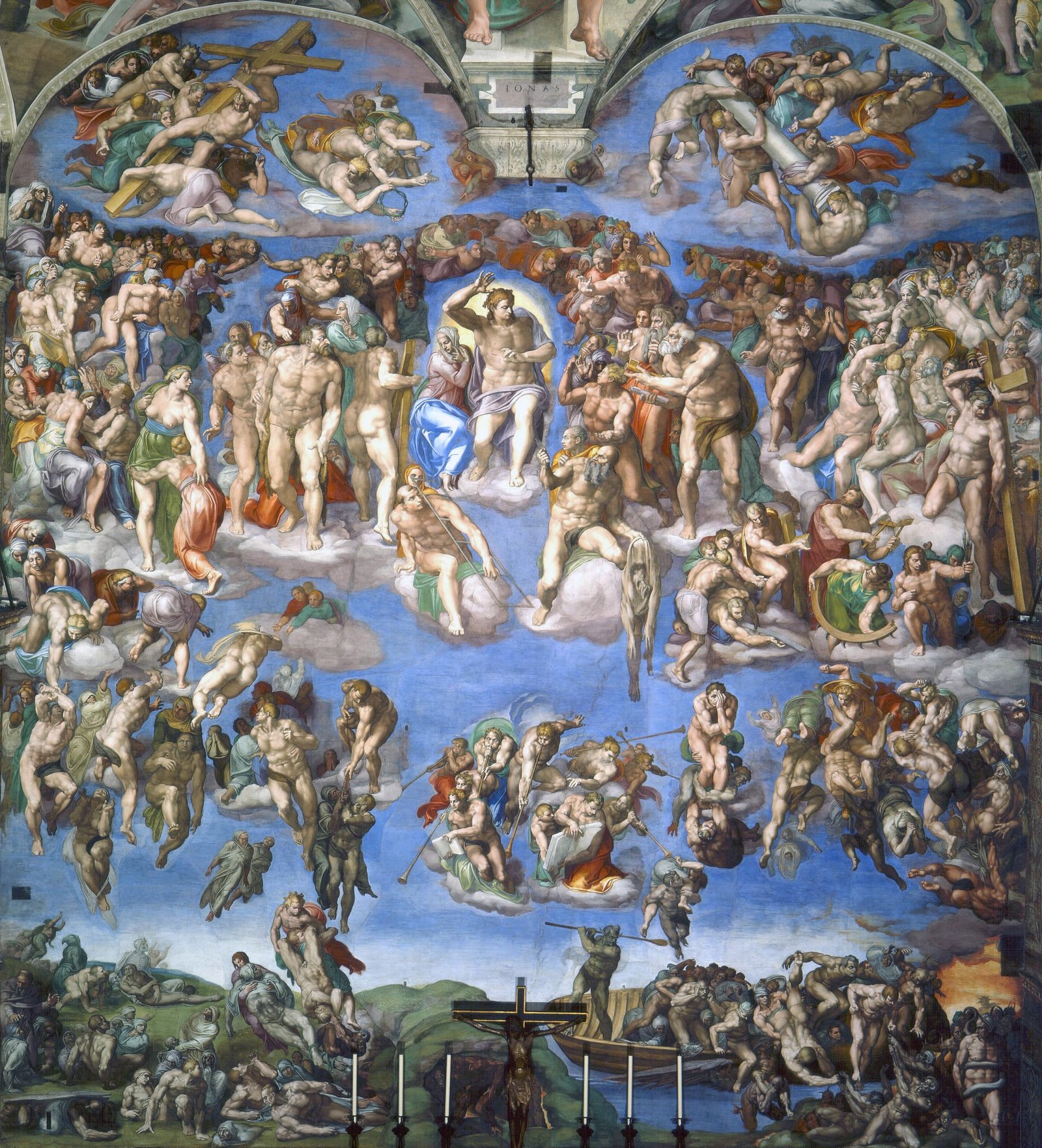
But in those cases the artists expressed themselves through the medium of their art, and that is where the tension lay. It is rather more confounding that someone adept at tinkling the ivories or taking photographs should assume an unfettered right—and duty—to foist their political opinions and geopolitical insights on the institutions that endow them with a platform, and on audiences who neither asked nor paid to hear them. It is less confounding that when artists insist their art is indivisible from their politics, institutions and donors find it difficult to separate the two and act accordingly. They may decline to provide a platform, to buy a work, or to continue their donations. But it is stretching the canvas beyond recognition to call that lack of obeisance “censorship”.
In the real world of underfunded arts, competition for donations, diversity of views, fast-changing societies, ethical dilemmas and human failings, there are no easy answers. It is like conducting an orchestra in which the percussionists insist on marching to the beat of their own drum, the brass section all blow their own trumpets, none of the strings will play second fiddle, and all of them demand that everyone else dance to their tune. Arts and cultural institutions can help themselves by articulating their purposes, principles and policies clearly and enforcing them through robust governance and strong, strategic leadership. But there are rarely, if ever, moral bright lines.
That should be apparent to artists, who grapple with moral ambiguity and human complexity in their creative output and, it must be acknowledged, often in their personal lives. As arbiters of morality pontificating from the bully pulpit, the artist class leaves something to be desired, and its campaigns against institutions and their benefactors carry a whiff of hypocrisy. Among the companies from which the authors agitating against Baillie Gifford wanted it to divest was Amazon—through which most of them sell their books.
Campaigns with no clear principles or parameters risk becoming purity tests. It is one thing to campaign against donors who have committed crimes or acted unlawfully; it is another to do so because they make products, invest in companies or support causes that do not align with artists’ vision of the world. Artists may portray themselves as transgressive truth-tellers, but history attests that they can just as readily become moral dogmatists and enforcers of dominant narratives. PEN America’s recent report, “A Silent Moratorium”, on the growing isolation and exclusion of Jewish and Israeli writers, and the evidence given to Australia’s Royal Commission on Antisemitism and Social Cohesion by Jewish artists such as the musician Ben Adler, who have been cancelled, doxxed, threatened and silenced, speak to this. The moral architecture of intersectionality does not seem to extend solidarity to those artists—but then, nor did it to Salman Rushdie.
Arts and cultural institutions are guardians of identity, collective memory, storytelling and knowledge. They are a bulwark against the algorithmic war on history and truth. The stories an institution chooses to tell, and not to tell, can reveal as much about the institution and the environment in which it operates as about the stories themselves. The urge to purge them of the more distasteful aspects of history, to apply today’s mores to the past, or to impose ideological conformity, is unlikely to foster the critical thinking and human flourishing that arts and culture seek to advance. And, to end on a downbeat note, subjecting benefactors to ever-increasing moral and ideological scrutiny is unlikely to lead to more or better art.
Quillette invites thoughtful responses to its essays.
Selected responses are published once per week as part of a curated Letters to the Editor feature. If selected, letters appear under the contributor’s real name and may be edited for clarity and length.
To submit a letter for consideration, please email [email protected].
Read the full article here
Fact Checker
Verify the accuracy of this article using AI-powered analysis and real-time sources.