

 Freedom Index
Listen to the article
Last week, the Trump administration stepped in with a $20 billion financial rescue for Argentina that could reach $40 billion, including a currency swap and a rare direct purchase of pesos to shore up the exchange rate. The intervention briefly steadied the markets, lifting Argentine bonds.
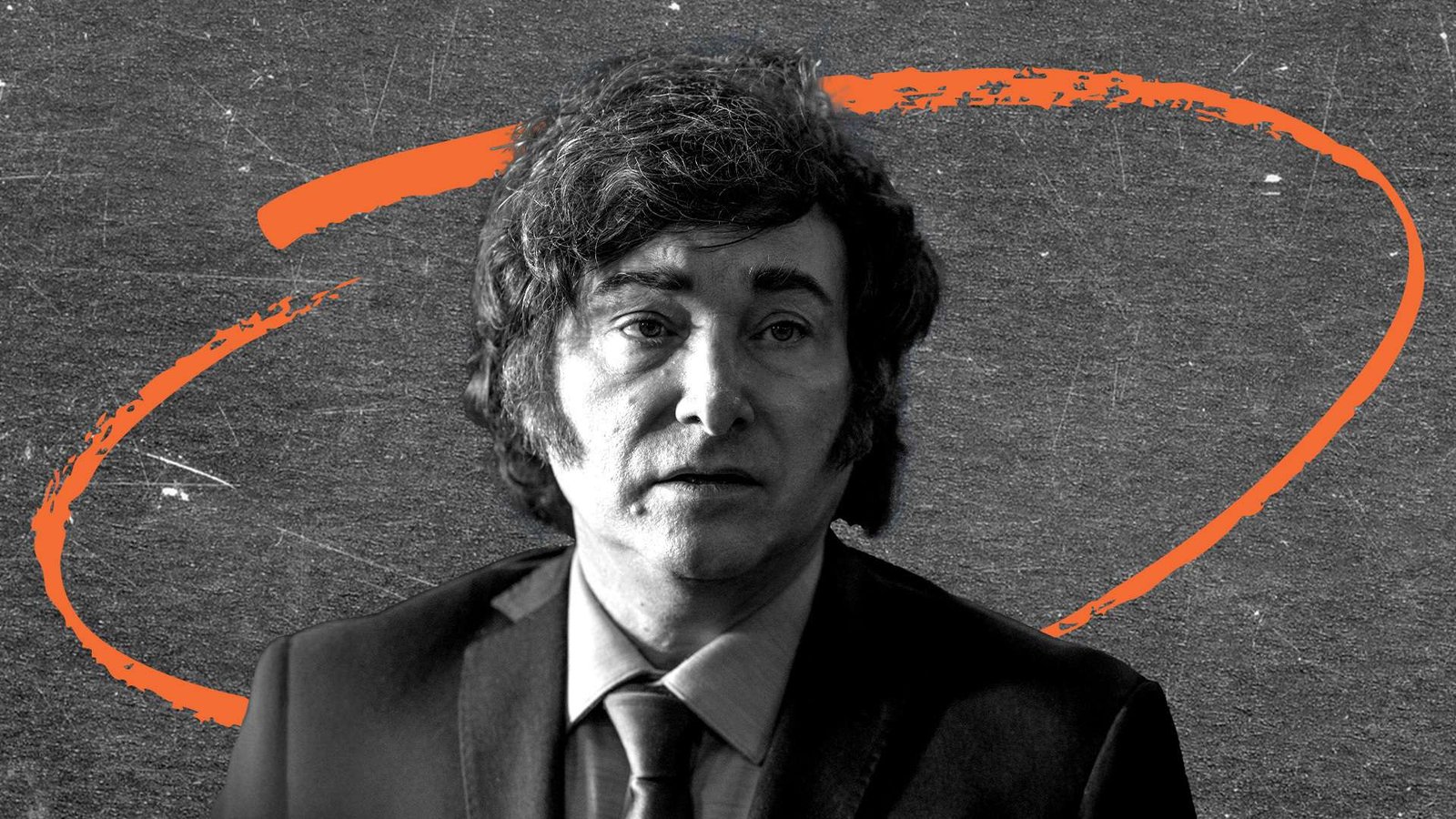
But for Javier Milei, Argentina’s libertarian president who preaches the gospel of free markets, the need for a U.S. bailout has been a public relations disaster, and his political movement is in crisis. For libertarians, the stakes are high. If Milei succeeds, it will show that radical free market reform is possible in the most adverse political conditions. If he fails, critics will say libertarian policies are impossible to advance in the context of real-world politics. Nearly two years into his presidency, Milei’s political movement is struggling.
Milei has been forced to trade ideological purity for political expedience. His party controls only a small fraction of the National Congress, forcing him into uneasy alliances with centrists and leftists who can stall or reshape his reform agenda at will. At the local level, he faces entrenched political machines built on decades of clientelism, which demand concessions in exchange for loyalty and votes.
He staffed his administration with members of the same “political caste” that during the election he had vowed to purge. His chief of cabinet, Guillermo Francos, served under a Peronist administration; former Vice President Daniel Scioli is now the secretary of tourism, environment, and sports; and Patricia Bullrich, a veteran from the old guard, heads security. The revolution against the political class, it seems, is being staffed by it.
The fervor that swept Milei into power has cooled as his administration has collided with congressional lawmakers hostile to his agenda. He has spent much of his presidency arguing that free-market policies could make Argentina the world’s most prosperous nation within a generation. Yet accomplishing his reforms now depends on expanding his slim legislative base.
The midterm elections for the national legislature on October 26 will largely determine the fate of his reform agenda. Voters will elect half the Chamber of Deputies, the Argentine equivalent to the U.S. House of Representatives, and a third of the Senate. Currently, Milei‘s Freedom Advances party controls only 37 of 257 seats in the Chamber of Deputies and 6 of 72 in the Senate. His capacity to advance reforms depends on cutting deals with factions whose incentives run directly counter to his goals. Politics, not economics, dictates the pace of change. For Milei, success would mean reaching a minimal threshold of roughly 86 seats in the Chamber of Deputies—enough to wield veto power.
If Milei prevails, it will be yet another remarkable moment in a wildly improbable presidency. Since Argentina’s return to democracy in 1983, the country has been governed primarily by Peronism—a big government, populist movement named after its founder, Juan Domingo Perón, who served as president for nearly a decade starting in the late 1940s. Over the years, Peronism has become both deeply embedded in Argentine culture and highly amorphous and adaptable, capable of uniting even old-line union bosses with 21st-century activists for transgender rights. At its symbolic center stands former President Cristina Fernández de Kirchner, who governed for eight years after her husband, former President Néstor Kirchner, passed away in 2010. Today, the label “Kirchnerism” refers to a progressive flavor of Peronism. Milei’s predecessor, former President Alberto Fernández—who governed with Cristina Fernández de Kirchner as her vice president—presided over its most chaotic phase.
Milei didn’t take a traditional path into politics. He started out by speaking to student groups about free markets and individual liberty, winning over young audiences with his irreverent humor. He entered Argentina’s world of political infotainment—TV panels that blend news, gossip, and theatrics. On the popular show Intratables, Milei presented himself as a libertarian firebrand in black suits and leather jackets, his unruly hair earning him the nickname peluca (literally “wig”). He shouted down opponents, sometimes calling them “leftists sons of bitches,” and audiences couldn’t look away.
In 2021, he won a seat in the Chamber of Deputies. From there, he led a small bloc of libertarian lawmakers during the final, disastrous years of Fernández’s presidency.
Disillusionment with Argentina’s political class deepened after the country imposed one of the world’s strictest COVID-19 lockdowns. (During a national ban on public gatherings, Fernández hosted a party at the presidential residence.) Milei channeled the public’s frustration into a broad movement. His campaign events, which could easily be mistaken for rock concerts, gave voice to voters’ anger and turned him into a presidential contender.
Este no es un concierto de rock, es el cierre de campaña de Javier Milei, precandidato presidencial de Argentina.
Escuchanos: @SonoraFM_sv 104.5 | https://t.co/ScE7wmjLFt ????https://t.co/raafOFBNCb pic.twitter.com/hAWvCUJHvH
— La Tribu FM (@SomosLaTribuFM) August 8, 2023
By the time Milei was sworn in, Argentina’s economy was collapsing under the weight of years of Peronist overspending. Prices were rising at a dizzying pace, the peso had lost credibility, and government reserves were running dry.
In the nearly two years since Milei took office, the Argentine economy has improved substantially. Inflation fell from 211 percent in 2023 to a projected 27 percent by the end of 2025. Poverty has also decreased dramatically, from 43 percent of households and 53 percent of individuals living below the poverty line in early 2024 to 24 percent and 32 percent, respectively, by mid-2025.
While he has succeeded at stabilizing macroeconomic indicators, inevitably, the process has caused significant turmoil, and Milei has failed at convincing the voting public to wait out the painful adjustment. In an interview on the Argentine news network A24, journalist Eduardo Feinmann recently confronted Milei: “Since you took office, 26 companies have been closing every day. Eighty percent of people can’t make it to the end of the month. Do you take that into account?”
Milei insists that “the worst has passed” and is asking voters to stick it out. But this has made him highly vulnerable to his political enemies.
Milei once vowed “to hammer the final nail into Kirchnerism’s coffin, with Cristina [Fernández de Kirchner] inside.” Kirchner is serving a six-year sentence in house arrest, and she’s barred for life from holding public office after being convicted on corruption charges. But her movement is experiencing a resurgence. In the province of Buenos Aires, home to 40 percent of the electorate and the beating heart of Peronist politics, Milei’s coalition suffered a crushing defeat in local elections last month, far worse than his advisers had anticipated. Axel Kicillof, Buenos Aires’ governor and Argentina’s former minister of the economy, engineered Milei’s electoral defeat in the province and is positioning himself as the new face of the movement.
Framing the election results as a broad rejection of Milei’s agenda, Kicillof declared: “The ballot boxes shouted that you can’t defund health care, education, universities, science, or culture in Argentina.”
He might be right. Recent polling suggests that Milei is broadly losing support. He may be a committed libertarian, but most of his supporters aren’t. Milei won the presidency because Argentina was desperate for change.
When fears of a Peronist comeback spread, the pesos plummeted, as investors sought refuge in U.S. dollars. The currency exchange rate nearly hit the ceiling set by Argentina’s deal with the International Monetary Fund earlier this year, prompting the Argentinian Central Bank to intervene, selling its reserves to contain inflation. But draining reserves carried its own risk: A further drop could have left the country unable to pay its debt, rekindling the specter of default. A close ally of President Donald Trump, Milei has since relied on U.S. backing to calm Argentina’s jittery markets.
The Trump administration conditioned its support for Argentina on Milei’s victory in the October elections, saying, “If he wins, we are staying with him, and if he doesn’t win, we’re gone.”
Some of Milei’s libertarian allies say that the need for a U.S. financial rescue could have been avoided had he fulfilled his campaign promise to dollarize the economy. As economist Nicolás Cachanosky notes, Argentina’s monetary instability is rooted in political volatility: The country swings between populist and nonpopulist regimes, each producing vastly different exchange-rate expectations. So even small shifts in the perceived odds of political change can trigger currency crises. Cachanosky says the only way to escape this trap is through dollarization.
Milei’s movement has also been damaged by a string of political and corruption scandals. In February, he promoted a cryptocurrency called $Libra that collapsed after its founders cashed out at the peak. In August, leaked recordings implicated Diego Spagnuolo, former head of the National Disability Agency, in kickbacks allegedly linked to Milei’s sister and closest adviser, Karina Milei, whom Milei refers to as el jefe (the male boss). And Milei’s ally, José Luis Espert, was forced to resign after revelations of financial ties to an accused drug trafficker.
According to a leading pollster, corruption ranks among voters’ top concerns—a first under Milei’s presidency. To voters, the scandals suggest that Milei’s “revolution” is starting to look like politics as usual.
If Milei can’t transform his outsider rage into coalition-building skills, stick to his libertarian ideals, prove he’s not yet another corrupt politician, and persuade skeptical centrists that their economic pain has a purpose, his movement may be what ends up in a coffin.
Read the full article here
Fact Checker
Verify the accuracy of this article using AI-powered analysis and real-time sources.