Close Menu
FSNN | Free Speech News NetworkFSNN | Free Speech News Network
  • Home
  • News
    • Politics
    • Legal & Courts
    • Tech & Big Tech
    • Campus & Education
    • Media & Culture
    • Global Free Speech
  • Opinions
    • Debates
  • Video/Live
  • Community
  • Freedom Index
  • About
    • Mission
    • Contact
    • Support
Trending

When SCOTUS Did Lasting Damage to the Bill of Rights

24 minutes ago

CPJ calls on Kuwait to release US-Kuwaiti journalist Ahmed Shihab-Eldin

34 minutes ago

Bitcoin nears breakout above $75,000 with short squeeze risk building

49 minutes ago
Facebook X (Twitter) Instagram
Facebook X (Twitter) Discord Telegram
FSNN | Free Speech News NetworkFSNN | Free Speech News Network
Market Data Newsletter
Tuesday, April 14
  • Home
  • News
    • Politics
    • Legal & Courts
    • Tech & Big Tech
    • Campus & Education
    • Media & Culture
    • Global Free Speech
  • Opinions
    • Debates
  • Video/Live
  • Community
  • Freedom Index
  • About
    • Mission
    • Contact
    • Support
FSNN | Free Speech News NetworkFSNN | Free Speech News Network
Home»Opinions»Debates»Iran and the US Battle for Control of the Strait of Hormuz
Debates

Iran and the US Battle for Control of the Strait of Hormuz

News RoomBy News Room5 hours agoNo Comments5 Mins Read1,059 Views
Share Facebook Twitter Pinterest Copy Link LinkedIn Tumblr Email VKontakte Telegram
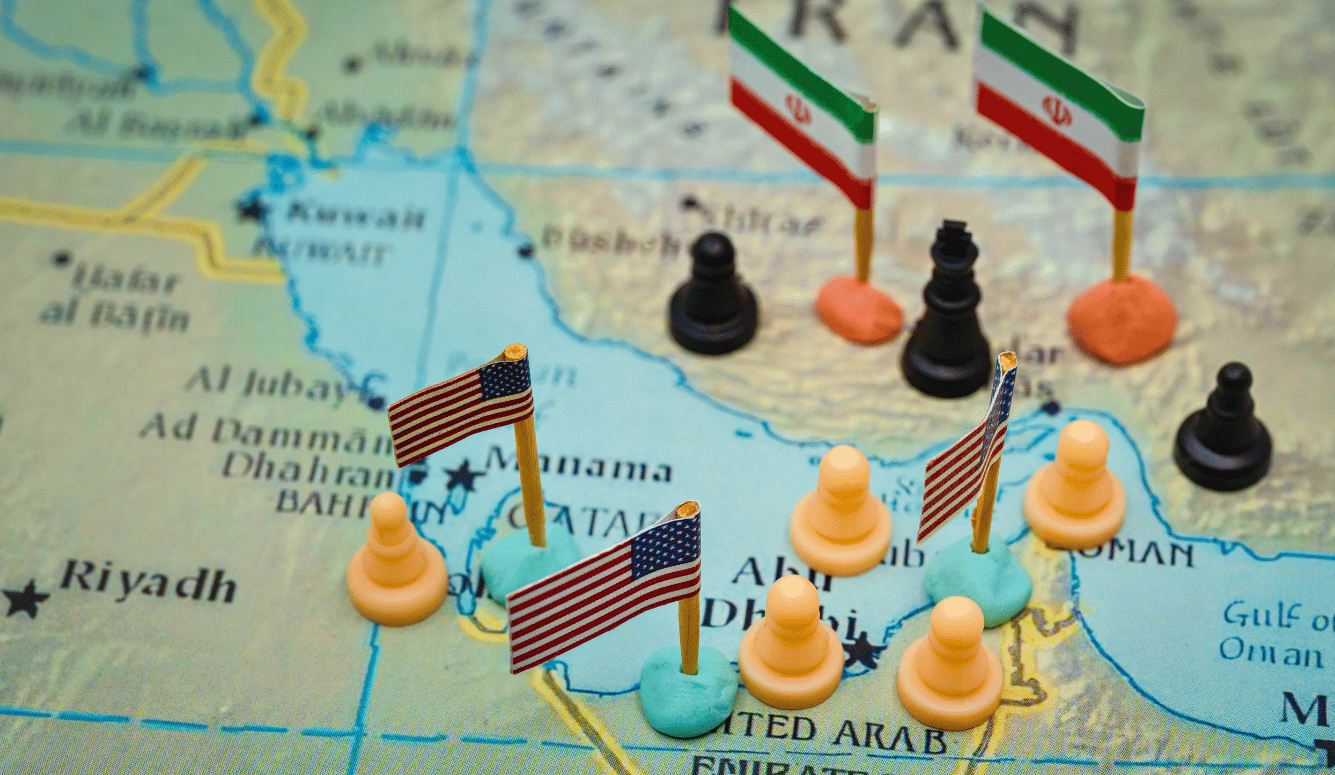
Iran and the US Battle for Control of the Strait of Hormuz
Share
Facebook Twitter Pinterest Email Copy Link

Listen to the article

0:00
0:00

Key Takeaways

Playback Speed

Select a Voice

This week’s Economist defined the current two-week ceasefire in the American/Israeli–Iranian war that began on 28 February as a “whimper”—and if the hostilities have indeed permanently ended in a compromise that leaves Tehran’s Islamist regime in power, the Iranian nuclear program alive, and the Strait of Hormuz under the ayatollahs’ control then that is an apt description.

On 1 April, Donald Trump threatened to create a cataclysmic “bang,” “blasting Iran into oblivion and back to the Stone Ages!!!” and on the morning of 7 April, he fulminated on Truth Social that “a whole civilization will die tonight.” Then, just before midnight in Washington DC that same day, to the surprise of many, the American president agreed to halt the American and Israeli bombing campaign in exchange for a vague Iranian promise to reopen the strait, which Iran had blockaded with missiles, drones, and mines. The strait is crucial to the world energy market, as some twenty per cent of the planet’s oil and gas imports pass through it and its closure over the past few weeks has caused a major global surge in oil and gas prices.

Meanwhile, the shooting war between Israel and the Lebanese Islamist militia, Hezbollah—Iran’s main Middle Eastern proxy—continues unabated. Hezbollah rockets and drones have been relentlessly striking Israel’s northern border settlements and IDF positions, while Israeli jets have been bombing targets in Hezbollah strongholds in southern Lebanon, Beirut, and Lebanon’s eastern Beqaa Valley, killing hundreds. The Iranians and the Pakistani peace mediators claim that the ceasefire encompasses the Lebanon–Israel conflict. But Trump and Israel insist that deal does not cover the clashes between Hezbollah and the Jewish state.

While Israeli Prime Minister Benjamin Netanyahu reluctantly agreed to halt Israel’s air war against Iran, mere hours before unleashing a planned assault on that country’s power grid plants and oil-and-gas production installations, most Israeli observers saw Trump’s agreement to cease fire as marking an American–Israeli defeat. 

The Israeli–American air campaign, which included some 21,000 strikes on Iran’s military and paramilitary formations and installations, as well as its military-industrial production facilities, especially of ballistic missiles, its steel-manufacturing and petrochemical industries, and residual nuclear program sites in Natanz, Isfahan, and Fordow, which had already been devastated by the Israeli–American attacks during June’s Twelve Day War, has severely weakened Iran. But none of the strategic Israeli and American war aims have actually been achieved. They have neither toppled the Islamist regime—the war’s main, though unofficial, objective—nor ended either Iran’s nuclear project or its ballistic missile program—though the bombings have certainly severely curtailed the latter. Nor have the two allies managed to end Tehran’s backing and activation of its region-wide proxy forces. 

Benny Morris – Quillette

Benny Morris is an Israeli historian. His books include 1948: A History of the First Arab–Israeli War (Yale UP, 2008) and most recently Sidney Reilly: Master Spy (Yale UP, 2022). Morris has a Substack, Benny Morris’s Corner.

Iranian and American negotiators started talks to end the conflict in Islamabad on Saturday. (The US delegation was led by Vice-President JD Vance.) But the Iranian position, as broadcast by various regime spokesmen, included the demand that America pay compensation for “damage” caused by the war—a demand in which they seem to be steadfast and uncompromising. The Iranians continue to assert their “right” to enrich uranium, which they claim is for a civilian nuclear energy program, and to control the Strait of Hormuz. Indeed, the Iranians have hinted that if no agreement is reached, they will also activate their Islamist Houthi militia proxy in Yemen to renew the blockade of the Bab al Mandab Strait, another major international maritime artery, connecting the Indian Ocean and the Gulf of Aden to the Red Sea, and thence to the Suez Canal. (The Houthis prevented ninety percent of international container ships from passing through that strait between November 2023 and February 2024 and continued to launch regular attacks on shipping in the region until early 2025, attacking over a hundred vessels. The current threat to renew that blockade no doubt emanated from Tehran—as did the barely reported launch a few days ago of a number of ballistic missiles aimed at Tel Aviv and Eilat.)

The conflict with Iran marks the first time Israel and the US have ever embarked on a war together, an act that firmed up the five-decades-old special relationship between the two democracies. But the war has left Israel in the position of a client state, mortally dependent on American munitions—extravagantly expended in the current war—armaments, and political backing. While Trump takes advice from Netanyahu, he is clearly the one calling the shots and—whatever Bibi’s actual wishes might be—the Israeli Prime Minister has almost automatically assented to all the President’s proposals. In Israel, people fear that this war has contributed to the erosion of public support for Israel in the US and Europe—a loss of support that paradoxically began on 7 October 2023, when the Palestinian Islamist group Hamas attacked southern Israel and Israel retaliated by using its ground forces to gradually occupy much of Hamas’s home base in the Gaza Strip and by killing some 70,000 Gazans, mainly in air strikes, most of them civilians. Many Israelis fear that the American public, and their political representatives, both Democrat and Republican, will now blame Israel for dragging Trump into a war that they feel America should not have embarked upon and that the US has apparently lost.


Read the full article here

Fact Checker

Verify the accuracy of this article using AI-powered analysis and real-time sources.

Get Your Fact Check Report

Enter your email to receive detailed fact-checking analysis

5 free reports remaining

Continue with Full Access

You've used your 5 free reports. Sign up for unlimited access!

Already have an account? Sign in here

Share. Facebook Twitter Pinterest LinkedIn Tumblr Email Telegram Copy Link
News Room
  • Website
  • Facebook
  • X (Twitter)
  • Instagram
  • LinkedIn

The FSNN News Room is the voice of our in-house journalists, editors, and researchers. We deliver timely, unbiased reporting at the crossroads of finance, cryptocurrency, and global politics, providing clear, fact-driven analysis free from agendas.

Related Articles

Media & Culture

When SCOTUS Did Lasting Damage to the Bill of Rights

24 minutes ago
Media & Culture

Will Migration From Blue States to Red States Give the GOP a Boost in the Electoral College? Not Necessarily.

1 hour ago
Cryptocurrency & Free Speech Finance

DOJ Opens $40M Compensation Process for OneCoin Crypto Fraud Victims

2 hours ago
Media & Culture

A Narrow Resolution on Geofence Warrants?: A Thought on Chatrie

2 hours ago
Media & Culture

Brickbat: Taking Pictures

3 hours ago
Cryptocurrency & Free Speech Finance

Strategy’s Bitcoin Stockpile Nears BlackRock’s ETF Holdings After $1 Billion BTC Buy

6 hours ago
Add A Comment
Leave A Reply Cancel Reply

Editors Picks

CPJ calls on Kuwait to release US-Kuwaiti journalist Ahmed Shihab-Eldin

34 minutes ago

Bitcoin nears breakout above $75,000 with short squeeze risk building

49 minutes ago

Web3 Projects Lost $464.5M in Q1 2026 as Hacks Shift Beyond Code: Hacken

53 minutes ago

Will Migration From Blue States to Red States Give the GOP a Boost in the Electoral College? Not Necessarily.

1 hour ago
Latest Posts

STRC trading surge drives record volume and signals largest bitcoin purchase since launch

2 hours ago

Lib Dems Urge FCA Probe into Farage Over Stack BTC Bitcoin Promotion

2 hours ago

DOJ Opens $40M Compensation Process for OneCoin Crypto Fraud Victims

2 hours ago

Subscribe to News

Get the latest news and updates directly to your inbox.

At FSNN – Free Speech News Network, we deliver unfiltered reporting and in-depth analysis on the stories that matter most. From breaking headlines to global perspectives, our mission is to keep you informed, empowered, and connected.

FSNN.net is owned and operated by GlobalBoost Media
, an independent media organization dedicated to advancing transparency, free expression, and factual journalism across the digital landscape.

Facebook X (Twitter) Discord Telegram
Latest News

When SCOTUS Did Lasting Damage to the Bill of Rights

24 minutes ago

CPJ calls on Kuwait to release US-Kuwaiti journalist Ahmed Shihab-Eldin

34 minutes ago

Bitcoin nears breakout above $75,000 with short squeeze risk building

49 minutes ago

Subscribe to Updates

Get the latest news and updates directly to your inbox.

© 2026 GlobalBoost Media. All Rights Reserved.
  • Privacy Policy
  • Terms of Service
  • Our Authors
  • Contact

Type above and press Enter to search. Press Esc to cancel.

🍪

Cookies

We and our selected partners wish to use cookies to collect information about you for functional purposes and statistical marketing. You may not give us your consent for certain purposes by selecting an option and you can withdraw your consent at any time via the cookie icon.

Cookie Preferences

Manage Cookies

Cookies are small text that can be used by websites to make the user experience more efficient. The law states that we may store cookies on your device if they are strictly necessary for the operation of this site. For all other types of cookies, we need your permission. This site uses various types of cookies. Some cookies are placed by third party services that appear on our pages.

Your permission applies to the following domains:

  • https://fsnn.net
Necessary
Necessary cookies help make a website usable by enabling basic functions like page navigation and access to secure areas of the website. The website cannot function properly without these cookies.
Statistic
Statistic cookies help website owners to understand how visitors interact with websites by collecting and reporting information anonymously.
Preferences
Preference cookies enable a website to remember information that changes the way the website behaves or looks, like your preferred language or the region that you are in.
Marketing
Marketing cookies are used to track visitors across websites. The intention is to display ads that are relevant and engaging for the individual user and thereby more valuable for publishers and third party advertisers.