

 Freedom Index
Listen to the article
In a special America 250 issue, Reason takes a look back at our country’s founding people and ideas. Read more here.

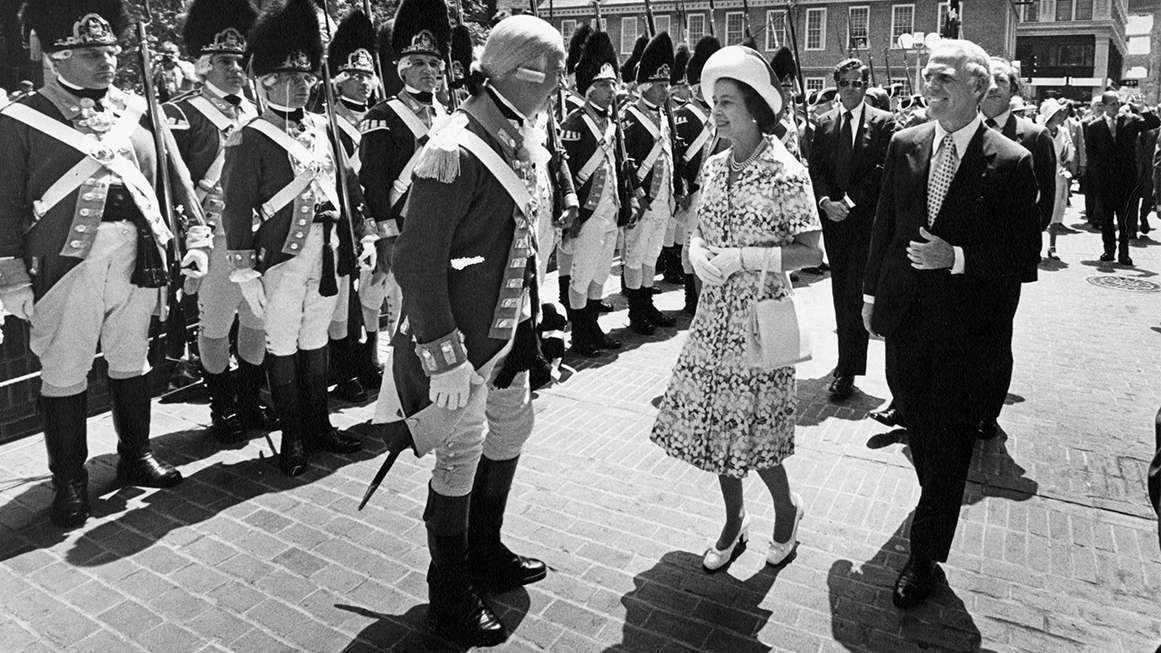
In July 1976, Queen Elizabeth II stood at the Old State House, the building where the Declaration of Independence was first read to the people of Boston. Two hundred years after the colonists told her great-great-great-great-grandfather to bugger off, the British monarch was greeted with a 21-gun salute, a luncheon at City Hall, and cheering crowds. She had a good line for the occasion: If Paul Revere and Samuel Adams could have known a British monarch would someday stand beneath that balcony, “they would have been extremely surprised.” But, she added, perhaps they would also have been pleased to know the two countries had come together again “as free peoples and friends.”
The Bicentennial has a rosy glow in the national memory: red, white, and blue bunting, tall ships, commemorative quarters, little boys in tricorn hats, and lots of patriotic pageantry. But 1976 was not a moment of serene national self-confidence. America was a Bicentennial basket case.
Saigon had fallen the year before. The image of helicopters lifting the last Americans and some desperate allies from the rooftops of Vietnam was still a fresh wound. The war had shattered the country’s faith in its leaders and in its own capacity to do good abroad. At home, Watergate had finished off whatever innocence Vietnam had left intact. President Richard Nixon had resigned in disgrace in 1974. Gerald Ford, an accidental president never elected to the presidency or vice presidency, gamely and lamely served as a figurehead for a year of celebration.
America was in the depths of stagflation. In 1975, unemployment reached 9 percent. Inflation had hit double digits the year before. Gas lines were a real concern. The federal government responded with buttons reading “WIN”—Whip Inflation Now—which was the kind of solution you get when everyone with power has run out of ideas.
Five decades later, we are once again in a moment of foreign policy disaster, institutional decay, political derangement, and economic shenanigans. Public trust in government is low. Congress is weak, the presidency is bloated, the administrative state is vast, and there’s no chance of escaping on a helicopter. The public is exhausted and bewildered about what exactly it means to be American.
But all is not darkness. The Viking lander arrived on Mars that Bicentennial summer, and it sent back the first color pictures. “The images arrived one scanline at a time. So I recall the first image building up over tens of minutes,” one poster on Reddit explained. “I remember its redness and rockiness, familiar now, but totally new then.” The successful Artemis lunar mission this spring offered the same hopeful sense that there is still a frontier with a bigger future for everyone, and that Americans will find the way to it.
Perhaps more important: Here on Earth, the Altair 8800 appeared on the cover of Popular Electronics about a year before the Bicentennial. Microsoft’s first product, Altair BASIC, had just been written. Almost no one in the cheering mobs waiting to tour the exhibits at the American Freedom Train understood that personal computing was about to change everything. This year, the teenagers ignoring the Sestercentennial fireworks to scroll AI reels on their phones already have an inkling about the new tech that is about to change their lives. But they are still as unprepared as their parents and grandparents were 50 years ago, and that’ll be OK.
***
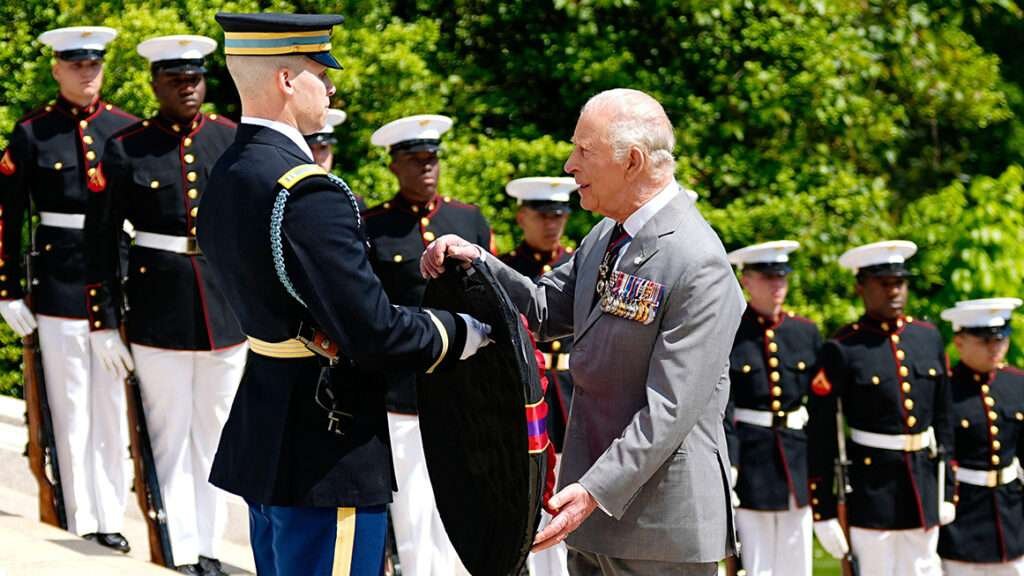
In April, King Charles III came to Washington, D.C., to mark America’s 250th birthday. He addressed Congress, dined at the White House, visited Arlington National Cemetery, and toured Virginia.
After discussing the issue with his guest, President Donald Trump announced that he would be “removing the Tariffs and Restrictions on Whiskey.” Washington Post editorial writer Dominic Pino captured the absurdity of the moment: “Imagining explaining to the Founding Fathers that the president imposed tariffs without an act of Congress and then removed them at the request of the King of England.”
This special America 250 issue of Reason looks back at the Founding. It finds genius and bravery, but also huge amounts of weirdness, despair, and contingency. One imagines the Founders would indeed be “extremely surprised” at America in 2026. Whether they would also be pleased is, at this point, up to us.
Read more from Reason‘s special America 250 issue:
1776 All-Stars, a series about Reason staffers’ favorite American Founders:
This article originally appeared in print under the headline “The 50th Anniversary of the Bicentennial.”
Read the full article here
Fact Checker
Verify the accuracy of this article using AI-powered analysis and real-time sources.