

 Freedom Index

Listen to the article
Zoe Sankey speaks with Andrew Bushnell — policy researcher, criminal justice expert, and fellow at the Institute of Public Affairs — about crime, justice, and some of the most urgent and uncomfortable questions in Australian public life.
They start with the alleged murder of Kumunjayi, a five-year-old Aboriginal girl killed in the Northern Territory despite six child protection notifications in the two months before her death. What follows is a frank conversation about Indigenous offending rates, a justice system that too often fails its victims, and whether Australia has the political courage to apply its laws equally to everyone.
Along the way: the Voice to Parliament, the Bao Phuc Cao voyeurism case, Melbourne’s graffiti-covered streets, and the gang warfare driving a billion-dollar black market in cigarettes.
Transcript
Editor’s Note: This transcript has been generated and edited with the assistance of AI.
Zoe Sankey: I wanted to start by talking about your most recent piece published in Quillette, which concerns the tragic murder of a five-year-old Aboriginal girl who has been referred to as Kumanjayi Little Baby. She was allegedly killed by a violent repeat offender. Police had filed six protection notifications in the two months before her death. In your opinion, could her murder have been prevented?
No Place for Children
The murder of five-year-old Kumanjayi Little Baby by repeat offender Jefferson Lewis has exposed the failures of Australia’s criminal justice system and Indigenous child protection policy. What will it take to make change?
Andrew Bushnell: I think that’s a really challenging counterfactual, but you would have to say that there was at the very least an opportunity to intervene when you have that many child protection notices. There is a process to substantiate those, and we don’t have all of the information about how that process was undertaken. My understanding is that the relevant minister in the Northern Territory has ordered an inquiry into the matter. But you would have to say that when there is a long record of what looks like, at the very least, child neglect — and then, obviously, something even more serious manifesting, namely child abuse and the alleged killing of Kumanjayi — there was at least the opportunity to intervene more forcefully. You can understand why there is going to be an inquiry into why those child protection notices did not result in an intervention to prevent her exposure to dangerous circumstances, which have ultimately had the most tragic outcome.
ZS: In your experience, how common are these types of crimes in this area of the Northern Territory? It might also be helpful to give our listeners — many of whom live in the United States or internationally — a clearer understanding of the broader context of the case.
AB: Yes. I would say that the intent of the piece was to provide some synoptic context for the crime. Like all Australians, I read the story as it developed and was aghast at what had happened. The intent of the piece was to provide some context drawn from available data, rather than — well, the approach I took was that I was as upset and angry as anyone, but my emotions were beside the point. No one needed to hear about my emotions. What I felt I could provide in the piece was an overview for everyone reading the story and wondering how this could have taken place.
When you look at the available data — and I had done some prior work on this when I was at the Institute of Public Affairs, where I wrote a paper about the criminal justice system and its interaction with Indigenous Australians — you step back and think: what are the circumstances here? It raises some serious issues, first around the setting of the crime. These are called town camps, which were established decades ago to provide housing for Indigenous people in and around the major population centres of the Northern Territory, including Alice Springs, where this crime took place.
In the piece, I detail some of the data around how many people live there and what is known about the interaction of people there with, say, alcohol abuse, as well as some information about child protection data in the Northern Territory — how many Indigenous children are subject to child protection notices and how they are placed.
The two most important data points I raise in the piece, which I think people need to understand when they see a crime like this, are: first, as you flagged, the alleged offender in this case has a long history of violent crime. When you look at the publicly available data from the Australian Bureau of Statistics, there appears to be a real problem with violent repeat offenders cycling in and out of prison in the Northern Territory, particularly among Indigenous prisoners. A large majority are imprisoned for violent offences and have been incarcerated before — around 80 per cent have been charged with a violent crime, and a similar number have been in prison previously. When you then look at the expected time to serve, about two-thirds have an expected sentence of less than two years. So you are seeing a pattern of violent crimes, relatively short sentences, and a cycle of reoffending — and it results in victims like Kumanjayi.
ZS: To provide some additional context for our listeners: Australia is a very large country — France fits inside it roughly six times. The Northern Territory is where a significant proportion of Australia’s Indigenous people live, or at least it is well known for having a higher Indigenous population than other states and territories. About 31 per cent of the Northern Territory’s population is Indigenous, yet a few years ago, approximately 89 per cent of police prosecutions in the Northern Territory were against Indigenous offenders. That is a very high rate of Indigenous offending. It is a huge question, Andrew, but why do you think there is such a rate of offending amongst the Indigenous community?
AB: I think it is important to be clear that the vast majority of Aboriginal people live in Australia’s major cities. The Northern Territory has a population of only about 250,000 people, roughly a third of whom are Indigenous. But it is the place where Indigenous people are most likely to live in very remote areas, or in places like these town camps on the outskirts of cities. So it represents a specific subset of the broader Australian Indigenous population.
As for why there is such a high rate of offending — there are a number of factors, and I think it is important to call them factors rather than causes. Ultimately, the cause of crime is a person making the decision to commit it. But there are factors that are known to be associated with criminal offending, and they tend to be more present in Indigenous communities in the Northern Territory: lower educational attainment, lower levels of employment, living in rural and remote areas, alcohol and drug abuse. You can find the data for this from the Australian Institute of Health and Welfare. All of these factors that we know are associated with crime are very present in this community. It is not a direct one-to-one causal relationship, but it is relevant context.
The deeper question — the one some people steer the debate towards — is why these factors are present in these communities. There is an established view that they persist because of the lingering or ongoing effects of colonisation —
ZS: Intergenerational trauma, systemic racism.
AB: Yes. And then there is another perspective: that we have, in a sense, failed to integrate Indigenous people into modern ways of living, through a kind of romantic view of staying on country — encouraging a form of cultural separatism rather than saying: retain what you can of your culture and what is good, but integrate with the broader standards of our society.
The most obvious example — and what makes this case interesting from that broader point of view — is that it is a terrible crime. One of the points I wanted to make in the piece is that the criminal law, of all our social institutions, should be broadly unifying. If you think about what is good for human beings, the good is highly multifarious — there are many ways to live a good life, and we understand that. But harms, or even evils, are not so multifarious. They are, in fact, obvious to most people. You do not want to be killed or abused. The criminal law exists to protect us against these really obvious downsides of human life, and the standards encoded in it are really just common sense. There is no debate here about cultural diversity when it comes to murdering little children.
ZS: Is it common sense, though? Is there not a cultural relativist lens through which one might view this — for instance, in some cultures, and perhaps in our own culture a few hundred years ago, it was considered appropriate to put someone to death for adultery, or for another crime that today we would see as unjust? Or to have relations with someone who is underage?
AB: I think that when you peel back the institutionally constructed layer, the basic human nature underneath does not really change. That is why you can insist, within a unified polity like Australia, that standards are uniform across that entire polity, regardless of cultural distinctions, when it comes to things we consider fundamental. Yes, laws and institutions manifest differently across societies and throughout history — but when you are part of a single polity, we are all invested in each other’s lives to, perhaps, a greater degree than we would like. When governing institutions tax us, redistribute resources, and regulate our interactions to the extent that they do, there is really no excuse, when it comes to something as basic as the criminal law, for treating some people within that polity differently from others — regardless of history or other factors.
That point may be stronger or weaker for other institutions, but when it comes to the criminal law — which deals with very serious harms that affect not only victims but go to society’s conception of itself — relativism really plays no important role. I think it can be dismissed out of hand.
There is also another important point here. We have, as a society, somehow come to believe that human dignity involves being treated differently from others — treated according to some arbitrary set of predetermined characteristics. But classically speaking, human dignity comes from being treated the same as others: being held to the same standards and receiving your just deserts when you do right and wrong. There is a deeper problem in how we have lost confidence in our ability to make judgements on behalf of everyone as a whole.
That really plays out here, because the other key statistic I mentioned in the piece was the falling rate of Indigenous children in out-of-home care, and the decline in the number being placed with Indigenous kin or carers. I anticipated the debate that subsequently arose, and what is called the child placement principle is now being modified — or will be, if a bill currently before the Northern Territory Parliament passes.
When it comes to standards around child safety, yes, it is important that wherever possible people remain with their family — I certainly do not support breaking up families. I also think it is important that, ultimately, solutions to these problems come from within these communities themselves, because that creates buy-in. But at the same time, those of us on the outside, who can see this data and see crimes like this one, cannot shy away from imposing the standards we would hold ourselves to.
The criminal law in particular is rooted in our historical common sense as a polity. It may not be God’s will, but it is our historical common sense. And the reason we hold people within our polity to the same standards is precisely to secure their dignity under the law.
ZS: So are you suggesting, in a way, that Australia has a sort of two-tier system when it comes to dealing with offenders?
AB: Well, I think what you have seen is — how would I put it? We know, for example, that sentencing principles do include various factors, some of which relate to cultural background. So there is scope, in sentencing, for what is called individualisation. That might result, at the aggregate level, in an apparent differential treatment between groups, and that is probably a bad thing. But I would not go so far as to say we have a two-tier system of criminal law.
What I would say is that there is a developing move across the country to separate Indigenous affairs from the broader politics of society — to place it in the hands of elected Indigenous bodies — and to essentially drive a wedge between broader Australian society and Indigenous Australia. I think that is ultimately a mistake, because we are all in this together, we all have to live together, and we are invested in each other’s outcomes. That kind of separatism strikes really at the heart of a unitary idea of Australia.
You can then ask: why would anyone want to strike at the heart of that idea? And perhaps — and I am speculating here — it serves a range of ends that have nothing to do with the wellbeing of Indigenous people, much less the wellbeing of the rest of us.
ZS: Say more about that — elaborate.
AB: Well, without wanting to go too far off the deep end — one of the uses of Indigenous policy has been to undermine the sense of Australia’s national possession, our possession of our own country; to argue that Australia is itself illegitimate unless certain radical changes are made to it. Those radical changes broadly go under the umbrella of what the government in Canberra now only refers to as “modern Australia” — as though historical Australia is illegitimate, or has already been superseded.
I would not say this is true of all Indigenous people, or even of all Indigenous representatives, or that this is why they engage with these issues. I do not think it is that level of bad faith across the board. But I do think there is a measure of bad faith in some of the people who will use Indigenous issues and Indigenous cultural markers — take, for example, the controversy around Welcomes to Country — where there is essentially a leveraging of people’s genuine sympathy and real investment in improving Indigenous wellbeing, and their outcomes, for a broader political purpose that goes under the name of decolonisation or identity politics.
I think it is really unfortunate — and I made this point in the piece — for these kinds of concrete Indigenous wellbeing issues, such as the level of crime that manifests in terrible crimes like this one, to be commingled with a broader cultural agenda that is far less popular. That strikes me as bad politics, and it makes you wonder why people would do it.
Perhaps the best example of that was the Voice to Parliament, where there was an elision of the difference between what you might call the epistemic argument for it — that Indigenous people know their own circumstances better than others and should therefore participate in policymaking on that basis — and the normative argument, which is that the country itself is illegitimate unless it provides special representation to Indigenous people. And it makes you wonder why, given that this is such obviously bad politics — and the defeat of the Voice referendum proves my point — why it is being pursued repeatedly, even when it risks undermining the popular support needed for the kind of concrete policy change that genuinely deserves serious attention.
ZS: Yes, it is such a divisive topic, even though, deep down, I think most Australians genuinely want better things for Aboriginal Australians — whether you are a One Nation voter or a Greens voter. The average Australian does not want people to suffer; no one wants Aboriginal girls in the Northern Territory to be murdered. But the topic has become so divisive. For at least a decade — if not longer — we have been told that if you do not agree with a specific narrative of Australian history, what I would call the black armband view, then you are a bad person, you do not want good things for Aboriginal people, or you are a racist. And as a result, it seems like nothing substantive is actually happening to improve the lives of Indigenous people, particularly those living in remote areas. I am sure people are working on it, but it does not seem to get that much better.
AB: Yes. Polling shows that most people do think it is important. Now, if you ask people what the most important issue is, the bread-and-butter issues always win out. But when you ask people whether improving outcomes for Indigenous people matters to them, most say yes. The more radical politics around it, however, is not popular.
As for being obliged to accept one specific narrative or else be branded the worst person in the world — yes, I think that is entirely false. When you look at it — not just the polling, but the principle of the thing — you have to wonder why people would want to attack you simply for examining these issues, as though we are not supposed to pay attention to them. What is the alternative? To ignore it? That seems far worse. The alternative is not to care and not to participate in public debate about what we ought to do. That kind of neglect itself seems worse — and it would also leave you open to attack for not caring.
I think we have to take seriously the idea that, yes, most Australians do care and would like to see an improvement in these circumstances. And when they say that they care, and when they engage with the facts, that is itself a demonstration of caring. That is certainly how I think about it when I enter this space. When I have written about this topic, I have tried to do so in good faith — and I come from the perspective of someone who is not merely an external observer, but an interested one, in the sense that I have a stake in these outcomes because it is my country too. I do not really see why any Australian should feel cowed in the face of what is really an attempt by a handful of organisations and bureaucrats to protect their patch from scrutiny and avoid accountability.
ZS: That is an interesting point about protecting one’s patch, because I was just thinking about the gatekeeping that exists around Aboriginal history and knowledge. We published pieces and conducted interviews — we had a conversation with a man who goes by the name Mungo Manic, an American who is genuinely fascinated by the subject of ancient Australians, as he calls them. It was a fascinating conversation, and I learned so much about these remarkable people — their entirely distinct way of life, what they ate, how they lived, how they interacted with one another.
The Original Aboriginals
Australia is one of the only places where humans maintained a hunter-gatherer lifestyle into the modern era. This makes it an invaluable window into humanity’s deep past—a window that is closing.

I have the same enthusiasm when it comes to learning about the Aztecs or any other indigenous group around the world. For some reason, it is perfectly acceptable to learn about the Aztecs and be excited about that, but to have that same interest in how ancient Australians lived — that was not seen as acceptable. We received a great many complaints and comments, and even people threatening legal action over what they claimed was an exposure of sacred rituals and knowledge — in particular, men’s knowledge and men’s business relating to hunting, circumcision practices, and coming-of-age rituals. We ultimately had to take down the video portion of the interview, which was such a shame, because through genuinely learning about these people I developed even more respect and curiosity. Instead, it seems, knowledge is gatekept and sanitised to fit whatever the approved narrative happens to be.
AB: Yes, it is certainly a long-running part of what are called the history wars in Australia, which go back to this question about legitimate national possession. I am certainly no expert on ancient Australian history, but I would say it is contested because any suggestion that the history of possession of the continent is more complicated than the simple narrative — that people were here, the British arrived and took the land from them — strikes at different people’s ideas of who owns this place. Of course, the reality is that we own it together, and it is held in trust for us by the Australian Crown, technically; in practice, by the Australian government.
You can ask, for example, how the dingo arrived in Australia 4,000 years ago. Does that not suggest there was greater interaction between the people on this continent and those on nearby islands than we perhaps appreciate? I do not actually know the answer to that, other than that dingoes are understood to have come from somewhere in Indonesia. But the fact that I have to hesitate before even raising the question says something important about how contested this deeper national history is — and then how it came to be that there is this remarkable first-world liberal democracy on these lands.
In good faith, people might say you have to take the good with the bad — that yes, modern Australia has achieved many great things, and not all of its history is to be celebrated. That would be one nuanced view. But it seems we are in a position where if you do not condemn the entire thing, you are expected to close your eyes to any complexity in the story. I think the hostility comes from a sense that everyone is looking for weapons to use in this debate about national possession.
ZS: Yes — a power play. It is a huge topic. I used to think it was probably Australia’s greatest existential question of national identity. We are not going to solve it today, unfortunately. But I did want to move on to some other topics, because you are an expert in Australian criminality and criminology, and there are other significant cases that have been in the news recently. One that we have written about is the Bao Phuc Cao case — a man who secretly filmed over a hundred women in public toilets, I believe in Victoria, and walked away with no conviction recorded. Could you tell our listeners a little about that case and your thoughts on it?
Getting Away With It
The case of Bao Phuc Cao—released without a conviction after secretly filming over 100 women in public toilets—reveals that Melbourne’s judiciary is drastically out of step with the public understanding of the purpose of criminal justice.

AB: Yes. A couple of months ago I wrote a piece for Quillette about this case, which attracted considerable attention here in Melbourne. Bao Phuc Cao is an international student who was caught in a shopping centre taking photographs under the stall in a women’s bathroom. His phone was found to contain images of potentially hundreds of different women. And this was not his first guilty finding on such matters — he had previously been found guilty of similar offences, and on that occasion no conviction was recorded either. He was allowed to remain in the country and placed on a community corrections order, with various conditions he was required to abide by. According to public reporting, the court was satisfied that he was abiding by those conditions, and so he was essentially free to continue living as he had done.
What upset people about this case had a couple of elements. There was the repeat offending, and there was the question of his visa status — the fact that there was no automatic mechanism to deport him.
The piece I wrote for Quillette focused on defending the criminal law and criminal sentencing as a vindication of society itself. What distinguishes the criminal law from, say, civil law, is that it deals with wrongs that have a public element — where society itself and its standards have been wronged. If my property floods and that flooding damages yours, you have a tort against me, but it does not really involve anyone else; it is simply about me compensating you for the damage I have caused. The criminal law, by contrast, involves a violation of standards that are in place to keep us all safe.
What I wrote about in that piece was a failure in our sentencing practices to take seriously the vindication of society as a victim. In this case, it was very concrete: there were all of these women who did not know they were victims. We do not know who they are; he had offended against them. It was really the place of the state — of the Crown — to vindicate their rights as well, and this was simply not properly taken into consideration when balancing the different sentencing principles involved.
One principle, proportionality, holds that the punishment should fit the crime — that the extent to which someone is punished should be balanced against the extent to which they have harmed people. In that calculation, you do have to consider society’s standards. And clearly, this man was a repeat offender. This is the other part: you should probably give greater weight to repeat offending when someone has indicated that their behaviour is not going to be corrected by the means already tried. That is why we speak of corrections — the idea being that this intervention by the state will put people back on the right path in some sense. A repeat offender has indicated that previous interventions were insufficient. That is an important factor in sentencing.
Here in Victoria, there is a debate about whether the judiciary is really taking seriously the public’s concern about standards and about repeat offending. The other piece of context worth mentioning is an earlier article I wrote for Quillette showing how the level of incarceration in Victoria has really declined — possibly to a record low.
I had previously been involved in arguing for reducing incarceration across Australia, at a time about ten years ago when there was a real concern that the incarceration rate would get out of hand and become unsustainably expensive — possibly reaching an American level where more and more people cycle through the prison system and are affected by it. We were motivated by a genuine desire to avoid that outcome. But in Victoria, throughout the COVID period, there was a really rapid decline in incarceration across different categories — not just for non-violent or drug offenders, but across the board. That is important context for Victoria: a concern that sentencing had perhaps tilted too far towards a corrective and rehabilitative approach, without properly weighing what is actually the most important feature of prison — what is called incapacitation. Prison takes people out of circulation. That is its unique feature. It takes criminals off the street. So it is about properly weighing those two things.
ZS: So it sounds like you have really changed your mind when it comes to incarceration rates. If I understand correctly, about ten years ago you were arguing that we should reduce incarceration rates, and now you are suggesting that perhaps we are not incarcerating enough.
AB: No, I do not think I have changed my mind, although I would say I have probably become a little harsher on property and drug offences. Previously we had discussed those in connection with non-violent offending — fraud and white-collar crimes. If I were to pull apart my earlier work, I would only say that I would draw those out and make that distinction a bit clearer. But overall, the principles of the argument remain the same: that punishment should fit the crime; that it is worthwhile for society to consider how expensive prison is, both in its upfront and operational costs, and in its costs to the rehabilitative potential of people. It is understood that unless you are locking someone up for life, you are making two decisions simultaneously — a decision to imprison, and a decision to release that person back into the community in a changed state. So we all have an interest in what that change actually is.
The basic principles we were arguing for back then, when I was working on criminal justice reform, are still true and still sound. It is just that in Victoria there was a somewhat indiscriminate approach taken to reducing incarceration, at the same time as we were essentially being gaslit about gang crime. There was a move against the punitive aspect of the criminal justice system — whereas when I worked on criminal justice reform, that was never the argument we were making. In fact, I used to talk a great deal about alternative punishments, precisely to foreground the idea that we still want to deliver some punitive effect in order to vindicate, as I say, society’s interests. It is a little unfortunate that some of the good ideas we were discussing then perhaps got mixed up with a different agenda.
I can share that when I used to work in that space, I remember meeting people working on criminal justice issues from the left. I remember being told, when it came to criminal justice reform, that we did not need the Herald Sun — the Herald Sun being the main tabloid newspaper here in Melbourne. I said to them that they were absolutely crazy. If you alienate ordinary and conservatively inclined people, you are going to get worse policy outcomes, and the backlash is going to be immense, quite apart from any harm you might do in the process. But these people had been to New York City and similar places, and had developed a real affinity for what they call decarceration in the United States. So our more reformist sensibility, at least in Victoria, got perhaps washed out a little. But that is not to say that the principles of reform are false, because a properly ordered criminal justice system remains an extremely important part of the state.
ZS: Are there any countries, cities, or jurisdictions that you look to as models — places you think are doing it really well, and from which Australia could learn?
AB: That is a good question. In the United States, there were conservative states like Texas and Georgia that we wrote about at the time. I actually visited some of the people who were part of the conservative criminal justice reform movement there, where they did implement this kind of punishment reform — alternative punishments — to try to reduce the growth of incarceration.
ZS: What can those alternatives look like, for example?
AB: The main alternatives to prison are various forms of community corrections — working in the community, ankle bracelets, home detention, restitution, fines. The idea was that by increasing the use of things like home detention or GPS tracking, in conjunction with restitution and a bolstered community corrections work component, you could — for non-violent offenders who can be trusted to remain safely in the community — still deliver some punitive effect, but in a way that does not carry all of the costs associated with prison.
The interesting thing about the politics of that, though — and there are two points worth making here — is that the situation in the United States was somewhat different. The rate of incarceration and the associated costs were really very high, and that created serious problems, so they were coming from a different starting point. The other point about the politics of it — and I was told this fairly bluntly when I worked on this — is that no one really cares about the costs of prison. People think it is simply worth the money.
What I learned from working on that was — I had started at the Institute of Public Affairs doing work on criminal justice reform, and we had taken the view that we would begin with the dollars-and-cents argument. But, as I said, I was bluntly told that perhaps no one cares about the money. So the more important framing is actually community safety: what is the mix of punishments that actually reduces offending? I have always thought that if you want to be tough on crime, you should take the steps actually required to reduce crime. If that involves prison, then prison is important. But if it involves other punishments as well, then those are important too. And that is where the space for genuine reform really was.
ZS: And I believe in your Melbourne crime wave piece — which I highly recommend everyone read, and which I also made into a video that has been very popular on YouTube — you discuss the broken windows policy, and how in Victoria, it seems that less serious, non-violent crimes such as theft and car theft, because they were not being prosecuted as vigorously as before, have led to more serious criminal behaviour. Is that a correct summary?
The Melbourne Crimewave
Criminal-justice reformers like to say that it is better to be ‘smart on crime’ than ‘tough on crime.’ But sometimes being tough is the smart choice.
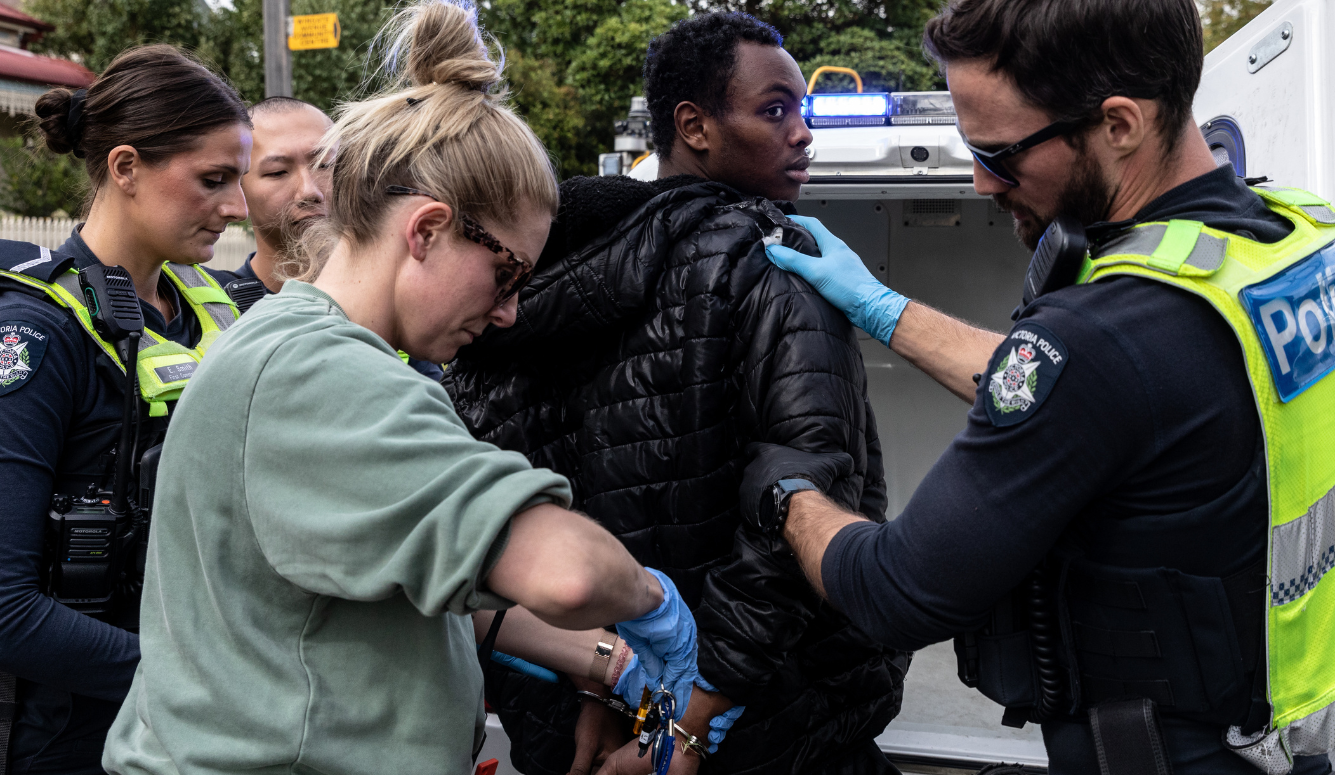
AB: Yes. The idea behind broken windows is that by raising the cost of minor offences early in someone’s offending history, and by targeting police resources to hotspot areas, you will raise standards across the board. If someone thinks they are not going to get away with spray-painting a wall, they might think twice about committing more serious crimes. Criminal offending tends to be promiscuous — we are all familiar from films with the idea of the master criminal, a Robert De Niro-type master thief. But in reality, people who are willing to commit one sort of crime are usually willing to commit other kinds as well. So if you crack down on smaller, easier-to-police offences, it has an effect across the board.
In Melbourne, the point is that there has been a serious dereliction of duty by the government in policing public order offences. You are coming to Melbourne soon — what you will see is that the entire place has been scrawled upon. There is graffiti everywhere. The unifying theme across the pieces I have written for Quillette is the idea of public order and these symptoms of disorder that are manifesting in our society. That is where a great deal of my research interest lies these days — in what order consists of and why we are seeing different elements of disorder manifest. Crime is just the most obvious example of disordered behaviour. It makes you wonder about the larger policy intentions of a government that does not seem to mind visible signs of disorder, such as graffiti or repeat offending.
ZS: Yes, it is so interesting — the psychology behind this behaviour. I have always noticed, working in co-working spaces, that there is always a sign saying something like “do not leave your dirty cups in the sink,” and most of the time people respect that rule. But over the course of the day, if just one person leaves one dirty cup, it seems to start a trend — someone breaks the rule, and before you know it, even I, who am generally quite a rule-follower, start thinking: I am in a rush, I could just leave it, other people have already done so. It is fascinating. And every time I go to Melbourne, I am reminded of a friend who lives there and told me once that you do not need to use your Myki card when you tap on to the tram — no one taps on. Once she told me that, I found myself thinking, well, I suppose I do not want to be the one person actually paying when no one else is. I have never really seen any inspectors, so it is interesting.
AB: Yes, that is a real problem — particularly on the bus in Melbourne, where virtually no one pays. I think that is right: we fashion ourselves as rationalists these days and tend to think that we have reasons for our behaviours, and that our institutions are grounded in some unimpeachable set of reasons, or if not reasons then at least in a democratic process that produces reasons by consensus. And in doing so, we overlook just how much of our society operates on habit.
In the law, there is something called the habit of law in the literature — the habit of following the law. People do not have explicit reasons for abiding by the law. It is just that in a properly ordered society, our institutions — and by that I do not mean only complex rulemaking bodies, but the institutions we use to coordinate our behaviour — can be trusted over the long term to conduce to our good. We place a kind of faith in them: if I follow this rule, it will work out all right, or at least passably well. It is a habit we do not even think about day to day. If I keep to the left on the footpath, I am not consciously thinking about it — I do it by habit. If someone is on the wrong side of the footpath and it occurs to me, I will be slightly annoyed. But if I inquire into my annoyance, what I find is simply that I am habituated to do one thing and this other person does not share my habit.
I think a lot of people are probably uncomfortable with how much of society operates in that way, because it raises a whole set of questions about who has what habits —
ZS: Culture.
AB: Culture, yes. And in Australia, I would say, we do not tend to like having those kinds of debates. That itself is a kind of habit that has served us quite well. Australians are very moderate and reasonable people, and overall that has been to our benefit. But in present circumstances — where you have a government here in Victoria that is, I would say, hostile to those habits, and where you have Commonwealth-level policy involving mass immigration, cultural change, and a kind of disrespect for our culture, and then, to bring it all the way back, the weaponisation of serious Indigenous issues for culture-change purposes — when you bring all of that together, our habit of not really inquiring into these things is perhaps less useful than it used to be.
ZS: Yes. We are a funny people. Culturally, I would say we really do not like to rock the boat. We are polite to a fault. I think we are different from other cultures in that regard. Americans, for instance —
AB: Americans tend to be animated by strong beliefs. That is one of the unifying characteristics of America — despite their different heritages, Americans almost universally hold quite strong convictions. They almost do not believe you when you tell them you do not care about something. I remember explaining to Americans: when I say I do not care, I really mean it. And when I do say I care, it is always qualified by, well, maybe I am wrong. It is definitely a specifically Australian mindset — a streak of scepticism, and a willingness to accept that a great deal of our institutions really are contingent and habitual.
That is why I think, to bring it full circle, a case like the one we were discussing at the start — and this discussion around what common sense actually resides in our criminal law, and what basic human nature lies at the heart of all this — illustrates that Australia is probably being pushed, more than it ever has been before, to inquire into why its institutions have historically worked. And if we accept, as I do, that our country has broadly been a good and successful one, why do we feel now that there is a rising tide of disorder? I always caveat this by saying it is very much the perspective of a conservatively minded man in Melbourne, where it is probably most acute.
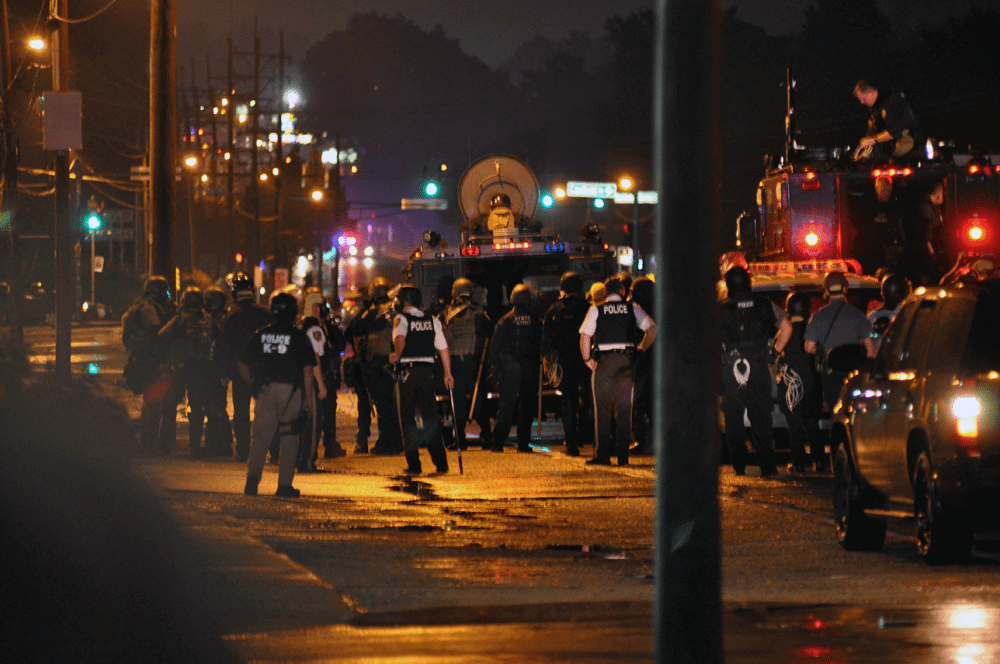
Ferguson Effect Detractors Are Wrong — Here’s the Data
The violence surge continued into fall. Homicides in Baltimore reached their highest per capita rate in the city’s history.
ZS: A young dad — you have a child as well, which would certainly affect how you see these things.
AB: Yes. It has been rather thrust upon us, I think, to inquire a little more deeply than we normally would into why our country has worked, and what that means for how we think it ought to work going forward.
ZS: Yes, and I think you are not alone in thinking about that. I have changed a great deal over the last few years. I went from being a member of the Greens Party — joining the day I was old enough, at eighteen — and holding a lot of lofty and, I would say, naive opinions about our country and how it works. My views changed over time, yes, partly because I got older and that naturally brought more maturity and a more conservative outlook. But also simply because the world did change, and Australia has changed. You cannot deny that — it is just a fact. Everything changes, I suppose.
AB: Yes. Part of what is important here is that some of the changes we have seen are the direct result of policy. And you are not being a victim, you are not surrendering your individuality, if you ask questions about policy — if you engage in politics and say, well, this was changed in one direction and it did not result in anything good, so let us consider changing it another way. Take immigration policy — it is just a policy. You might have different levels of immigration at different times in your national history based on what the country needs. You can increase it or decrease it. You are allowed to talk about that. And you are not being a victim if you say, I am worried about how this affects my housing situation. You are allowed to engage in politics and ask where these changes came from. And it is not just immigration — that is simply a very salient example. If you ask yourself why you feel less safe on the street than you used to, that is not weakness, and it is not an abdication of personal responsibility. It is asking, as a citizen, what policy changes might do better.
Part of answering that question — and this is really why I am a conservative — is looking to what has worked historically and asking: what were the assumptions behind more successful policies and institutions in the past, and what does that tell us? You cannot simply lift the past out of history and impose it directly on the present — the world is too complex for that — but you can think about it seriously.
So the point I am trying to make is: yes, Australia has changed, and we have to respond to that. But part of responding is asking questions about policy. I really think there has been a kind of abdication of policy thinking, certainly on one side of politics in this country — a sense that thinking seriously about policy was somehow a betrayal of principles. Well, do we not want to reduce the size of government? Yes. But even that is a choice, and we ought to inquire into why we want it. Some people’s problems in society do have to be addressed through policy. So thinking seriously about government — how it works, and what we might want from it if not what we are currently getting — is really important, in criminal justice policy and everything else.
ZS: I have one last question. We have been speaking for over an hour now, so I do not want to take up too much more of your time. It is also a topic you have not yet written about for Quillette — though who knows, perhaps you will. I have been seeing a lot in the news about firebombings of nightclubs across Melbourne, and I am wondering whether that is connected to what are being called the tobacco wars. Could you say a little about that?
AB: Yes. There has been a series of arson attacks that appear to be gang-related violence, and what they are fighting over is control of the black market in tobacco — at least, that is how it has been reported. I do not have any personal experience with it, but the way it has been reported is that what is at stake is an enormous amount of money in the black market for tobacco — billions of dollars. And to go to that question about policy: this situation has been created by government policy — specifically, the policy of increasing the excise on tobacco products and deliberately making them more expensive for consumers. The idea is to reduce tobacco consumption, but tobacco use tends to be quite sticky. People do not give it up easily, and so they go looking for more affordable means of obtaining it. It is a good example of unintended consequences.
ZS: Yes. And I will just mention for our audience — because people outside Australia are always shocked when I tell them this — a carton of cigarettes, it has been a while since I have bought one, but I think they are around forty dollars, if not more. Is that right?
AB: I actually do not know — I know how much milk costs, because I buy that, but I do not buy cigarettes. I believe they are extremely expensive by world standards, yes.
ZS: They are extremely expensive, and as a result people have been purchasing black market cigarettes. I believe they often come from China — they have branding on the packaging rather than our plain packaging, and in my experience they taste absolutely dreadful. So I suppose there are gangs controlling the importation and sale of these cigarettes. Is that correct?
AB: Yes. It has essentially created a market analogous to the illicit drug market. But of course it is really lucrative because smoking is still a mainstream habit — something like 20 per cent of people still smoke regularly, which is millions of people. What is really interesting about this is that when we think about policy questions, we tend to have a rather technocratic mindset — if we just adjust the excise a little, fiddle with the sticker price, we can dial in the right trade-off. And basically, the government got that wrong, and in doing so created an opportunity for criminals.
It raises the question: if the government is genuinely hostile to smoking and serious about reducing it, why not simply ban it? That would be a much simpler policy, and then everyone would know exactly who the criminals were — anyone in possession of cigarettes. Of course, the government does not want to do that because it collects revenue from tobacco. So the regulation of the market, combined with this technocratic mindset of fiddling with it, produced this negative outcome. Alternatively, the government could reduce its reliance on tobacco taxation, and then it would not matter so much — you box out the criminals and simply step back and say, well, if you choose to smoke, that is up to you. There are different paths available, but essentially this policy has left the government tied in knots by trying to be, in a way, too nuanced.
ZS: Okay, I think we should call it there. Thank you so much for joining me, Andrew. If people want to check out your writing, they should obviously head to Quillette.com, where we have published — I am not sure, four or five of your pieces? Three, okay — with more to come, I hope. Where else can they find your work? Is there anything you would like to plug?
AB: Yes. I have just signed a contract to return to the IPA — the Institute of Public Affairs — where I will be working on Australians’ legal rights. Related to, but not strictly within, criminal justice — it covers issues around freedom of speech, misinformation, disinformation, and things like that. So yes, do follow along with the IPA. The IPA Substack is called Looking Forward, and there will be opportunities for me to write there as well. So yes, do check out the work we are going to be doing at the IPA on defending Australians’ legal rights.
ZS: Very good — exciting times. Okay, Andrew, we will catch you on the flip side. Thanks for joining me.
AB: Great. Thanks for having me.
Read the full article here
Fact Checker
Verify the accuracy of this article using AI-powered analysis and real-time sources.