Close Menu
FSNN | Free Speech News NetworkFSNN | Free Speech News Network
  • Home
  • News
    • Politics
    • Legal & Courts
    • Tech & Big Tech
    • Campus & Education
    • Media & Culture
    • Global Free Speech
  • Opinions
    • Debates
  • Video/Live
  • Community
  • Freedom Index
  • About
    • Mission
    • Contact
    • Support
Trending

Fed requests comment on two proposals for stablecoin issuers under GENIUS Act  

46 minutes ago

In Chicago, Putting a Hot Dog in a Bun Can Get You in Trouble

1 hour ago

How Murdering Suspected Drug Smugglers Became the New Normal

2 hours ago
Facebook X (Twitter) Instagram
Facebook X (Twitter) Discord Telegram
FSNN | Free Speech News NetworkFSNN | Free Speech News Network
Market Data Newsletter
Saturday, September 26
  • Home
  • News
    • Politics
    • Legal & Courts
    • Tech & Big Tech
    • Campus & Education
    • Media & Culture
    • Global Free Speech
  • Opinions
    • Debates
  • Video/Live
  • Community
  • Freedom Index
  • About
    • Mission
    • Contact
    • Support
FSNN | Free Speech News NetworkFSNN | Free Speech News Network
Home»News»Media & Culture»In Chicago, Putting a Hot Dog in a Bun Can Get You in Trouble
Media & Culture

In Chicago, Putting a Hot Dog in a Bun Can Get You in Trouble

News RoomBy News Room1 hour agoNo Comments5 Mins Read1 Views
Share Facebook Twitter Pinterest Copy Link LinkedIn Tumblr Email VKontakte Telegram
In Chicago, Putting a Hot Dog in a Bun Can Get You in Trouble
Share
Facebook Twitter Pinterest Email Copy Link

Listen to the article

0:00
0:00

Key Takeaways

Playback Speed

Select a Voice

Like many large progressive cities, Chicago receives its fair share of criticism for overbearing regulations and sclerotic government. It clocks in at number five on the list of large American cities where it is hardest to obtain a business permit. It has some of the highest commercial property tax and sales tax rates of any large city. And as with any overregulated locale, the burden of all this regulatory excess inevitably falls most heavily on the smallest businesses.

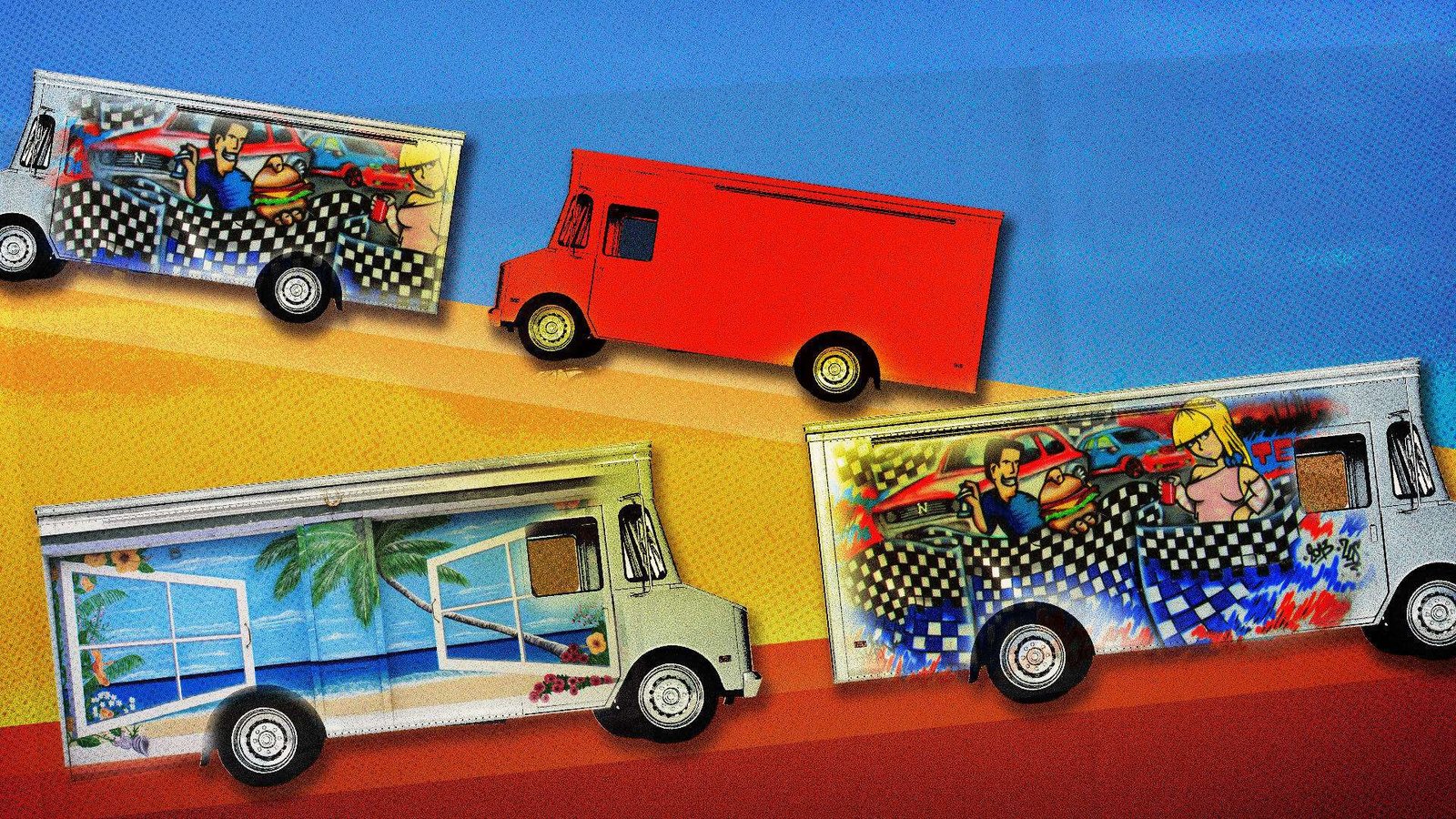
In Chicago, mobile food carts and food trucks face a particularly tough road. As one example, Chicago magazine recently highlighted the plight of the city’s food cart operators, who are legally barred from preparing food at their actual carts. Instead, they are forced to do any food prep at a shared kitchen—necessitating a shared kitchen license, costing $330 for two years—and are only allowed to sell prepackaged and sealed food.

This has led to absurd results, such as food cart operators technically being in violation of the law for doing something as simple as putting a hot dog inside a bun and handing it to a customer. The magazine profiles Geaby Figeuroa, an immigrant from Mexico who runs a food cart in the Windy City. Every time she shaves off ice and tops it with syrup at her cart, she’s breaking the law. (The city doesn’t clarify how, exactly, one could effectively make food like a snow cone ahead of time).

Chicago distinguishes between food carts and food trucks, with the latter being permitted to prepare food on site. The main distinction between these two mobile food vehicles is that food trucks can be motorized and use equipment like propane and gas to cook. But the city’s permitting system is much more fragmented, complex, and difficult to understand. It has numerous types of mobile food vendor permits, each of which governs a different type of business.

For instance, one can obtain a “mobile food dispenser” permit, which allows the operation of a motorized vehicle but does not permit on-site food prep; the food must be previously prepared and wrapped. Alternatively, one can apply for a “mobile food preparer” license, which allows both motorized locomotion for your food vending and permits you to make that food on site.

Finally, there is the similarly named—but vastly different—”mobile prepared food vendor” license that allows only nonmotorized handcarts and only preprepared and wrapped food. (To complete the lineup, there’s also a mobile frozen dessert vendor, which is essentially an ice cream truck; it can be motorized, but the frozen desserts must be packaged and wrapped elsewhere).

In contrast, cities like New York have a catch-all “mobile food vending license” that applies to both motorized and nonmotorized food vendors. (NYC then requires a separate permit for the actual cart or truck being used).

Even as someone who has been working in the field of law and public policy for over a decade and a half, I had to read and reread Chicago’s municipal code repeatedly to make heads or tails of the city’s varying licenses. And that’s before even getting to the point of starting the application process. Expecting small business owners to navigate this regulatory thicket is unfair and needless, especially with an estimated 80 percent of Chicago food cart operators being immigrants who may face potential language barriers.

Chicago’s hostility toward mobile food extends far beyond its preprepared mandate for food carts. The city still maintains its notorious 200-foot rule, passed in 2012, which bars food trucks from operating within 200 feet of a brick-and-mortar restaurant. A lawsuit seeking to overturn this patently protectionist rule was ultimately unsuccessful. In the years after the 2012 rule went into effect, the city experienced a near-50 percent decline in food trucks.

According to the Chamber of Commerce’s Food Truck Nation report in 2018, only 3 percent of Chicago’s central business district (named the “Loop”) is legally available for food trucks to operate in. Fines for violating this restriction are ten times higher than those for parking in front of a fire hydrant.

Chicago points to a dearth of funding as one of the primary culprits behind Chicago’s mobile food malaise. The magazine contrasts NYC’s “army of inspectors,” with the implication that Chicago—which faces an ongoing budget crisis—is merely unable to keep up in a way that would allow it to modernize its regulatory regime.

While the city may need to make smart and targeted investments in its regulatory process for mobile food, it also stands out that, according to Food Truck Nation, the average food truck in the city is subject to 15 inspections per year. (Although there has been significant debate over how often food trucks in Chicago have actually been inspected in the past, with the 15-per-year number potentially encompassing food festivals, where there can be more inspections.)

But regardless of the exact number of yearly inspections that Chicago mobile food vendors face, it appears to be more than in peer cities like New York, which use a yearly inspection regime. Ultimately, even if Chicago does need further investment to beef up its inspection numbers, the city’s bloated budget has no shortage of questionable spending that could be cut to accommodate this.

It’s easy to dunk on large cities with out-of-control regulations. But behind the endless array of permits, licenses, and 200-foot restrictions are real people and small business owners who are trying to navigate a regime that would confuse many trained lawyers.

Read the full article here

Fact Checker

Verify the accuracy of this article using AI-powered analysis and real-time sources.

Get Your Fact Check Report

Enter your email to receive detailed fact-checking analysis

5 free reports remaining

Continue with Full Access

You've used your 5 free reports. Sign up for unlimited access!

Already have an account? Sign in here

#MediaAndPolitics #MediaBias #NarrativeControl #PoliticalMedia #PoliticalNews
Share. Facebook Twitter Pinterest LinkedIn Tumblr Email Telegram Copy Link
News Room
  • Website
  • Facebook
  • X (Twitter)
  • Instagram
  • LinkedIn

The FSNN News Room is the voice of our in-house journalists, editors, and researchers. We deliver timely, unbiased reporting at the crossroads of finance, cryptocurrency, and global politics, providing clear, fact-driven analysis free from agendas.

Related Articles

Media & Culture

How Murdering Suspected Drug Smugglers Became the New Normal

2 hours ago
Media & Culture

May President Trump Exclude CNN from Air Force One? Very Likely Yes

7 hours ago
Media & Culture

Anthropic’s Claims Over Its “Supply Chain Risk” Exclusion by Department of War Rejected

10 hours ago
Media & Culture

Caveman Invents War

11 hours ago
Media & Culture

Democrats Are Quietly Clashing Over U.S. Involvement in Saudi Arabia’s War in Yemen

12 hours ago
Media & Culture

As Police Misuse Flock Cameras, 2 Senators From Opposite Parties Demand More Oversight

13 hours ago
Add A Comment
Leave A Reply Cancel Reply

Editors Picks

In Chicago, Putting a Hot Dog in a Bun Can Get You in Trouble

1 hour ago

How Murdering Suspected Drug Smugglers Became the New Normal

2 hours ago

Hester Peirce to leave SEC

3 hours ago

CFTC sues Cash FX in crypto-linked case

6 hours ago
Latest Posts

Ripple news: XRP Ledger upgrade delayed 10 days after validators reset activation clock

7 hours ago

May President Trump Exclude CNN from Air Force One? Very Likely Yes

7 hours ago

Solana’s 150-millisecond settlement upgrade reaches second public test network

8 hours ago

Subscribe to News

Get the latest news and updates directly to your inbox.

At FSNN – Free Speech News Network, we deliver unfiltered reporting and in-depth analysis on the stories that matter most. From breaking headlines to global perspectives, our mission is to keep you informed, empowered, and connected.

FSNN.net is owned and operated by GlobalBoost Media
, an independent media organization dedicated to advancing transparency, free expression, and factual journalism across the digital landscape.

Facebook X (Twitter) Discord Telegram
Latest News

Fed requests comment on two proposals for stablecoin issuers under GENIUS Act  

46 minutes ago

In Chicago, Putting a Hot Dog in a Bun Can Get You in Trouble

1 hour ago

How Murdering Suspected Drug Smugglers Became the New Normal

2 hours ago

Subscribe to Updates

Get the latest news and updates directly to your inbox.

© 2026 GlobalBoost Media. All Rights Reserved.
  • Privacy Policy
  • Terms of Service
  • Our Authors
  • Contact

Type above and press Enter to search. Press Esc to cancel.

🍪

Cookies

We and our selected partners wish to use cookies to collect information about you for functional purposes and statistical marketing. You may not give us your consent for certain purposes by selecting an option and you can withdraw your consent at any time via the cookie icon.

Cookie Preferences

Manage Cookies

Cookies are small text that can be used by websites to make the user experience more efficient. The law states that we may store cookies on your device if they are strictly necessary for the operation of this site. For all other types of cookies, we need your permission. This site uses various types of cookies. Some cookies are placed by third party services that appear on our pages.

Your permission applies to the following domains:

  • https://fsnn.net
Necessary
Necessary cookies help make a website usable by enabling basic functions like page navigation and access to secure areas of the website. The website cannot function properly without these cookies.
Statistic
Statistic cookies help website owners to understand how visitors interact with websites by collecting and reporting information anonymously.
Preferences
Preference cookies enable a website to remember information that changes the way the website behaves or looks, like your preferred language or the region that you are in.
Marketing
Marketing cookies are used to track visitors across websites. The intention is to display ads that are relevant and engaging for the individual user and thereby more valuable for publishers and third party advertisers.