Close Menu
FSNN | Free Speech News NetworkFSNN | Free Speech News Network
  • Home
  • News
    • Politics
    • Legal & Courts
    • Tech & Big Tech
    • Campus & Education
    • Media & Culture
    • Global Free Speech
  • Opinions
    • Debates
  • Video/Live
  • Community
  • Freedom Index
  • About
    • Mission
    • Contact
    • Support
Trending

LGBT Q&A: What Data Are Companies in the UK Collecting When Verifying My Age?

12 minutes ago

Dire Strait

16 minutes ago

Bitcoin’s tie to USD/JPY is the strongest it’s been since 2022. Here’s why that matters.

27 minutes ago
Facebook X (Twitter) Instagram
Facebook X (Twitter) Discord Telegram
FSNN | Free Speech News NetworkFSNN | Free Speech News Network
Market Data Newsletter
Tuesday, June 30
  • Home
  • News
    • Politics
    • Legal & Courts
    • Tech & Big Tech
    • Campus & Education
    • Media & Culture
    • Global Free Speech
  • Opinions
    • Debates
  • Video/Live
  • Community
  • Freedom Index
  • About
    • Mission
    • Contact
    • Support
FSNN | Free Speech News NetworkFSNN | Free Speech News Network
Home»News»Media & Culture»I Survived Europe’s Heat Wave Without AC—No Thanks to Regulation
Media & Culture

I Survived Europe’s Heat Wave Without AC—No Thanks to Regulation

News RoomBy News Room1 hour agoNo Comments5 Mins Read271 Views
Share Facebook Twitter Pinterest Copy Link LinkedIn Tumblr Email VKontakte Telegram
I Survived Europe’s Heat Wave Without AC—No Thanks to Regulation
Share
Facebook Twitter Pinterest Email Copy Link

Listen to the article

0:00
0:00

Key Takeaways

Playback Speed

Select a Voice

It was my luck that I arrived in Britain to pick up my master’s degree just before a heat wave hit. The temperatures last week were reaching 35 degrees Celsius (95 degrees Fahrenheit) during the day.

That wouldn’t normally be a problem. I was used to even higher temperatures growing up in New Jersey, working in D.C., and studying abroad in Jordan. But now I was without air conditioning. Every night was sweaty and sleepless, and every day was sluggish.

And I wasn’t suffering alone. Around 90 percent of homes in the United Kingdom don’t have AC. Europe’s mainland is not much better: Around 80 percent of homes in the European Union lack air conditioning too. While the heat waves are unpleasant for the young and healthy, they are literally unliveable for the old and sick. Britain recorded 3,000 heat-related deaths during a 2022 heat wave, and the U.N. World Health Organization estimates that 200,000 people have died from heat-related illness across the European Union over the past four years.

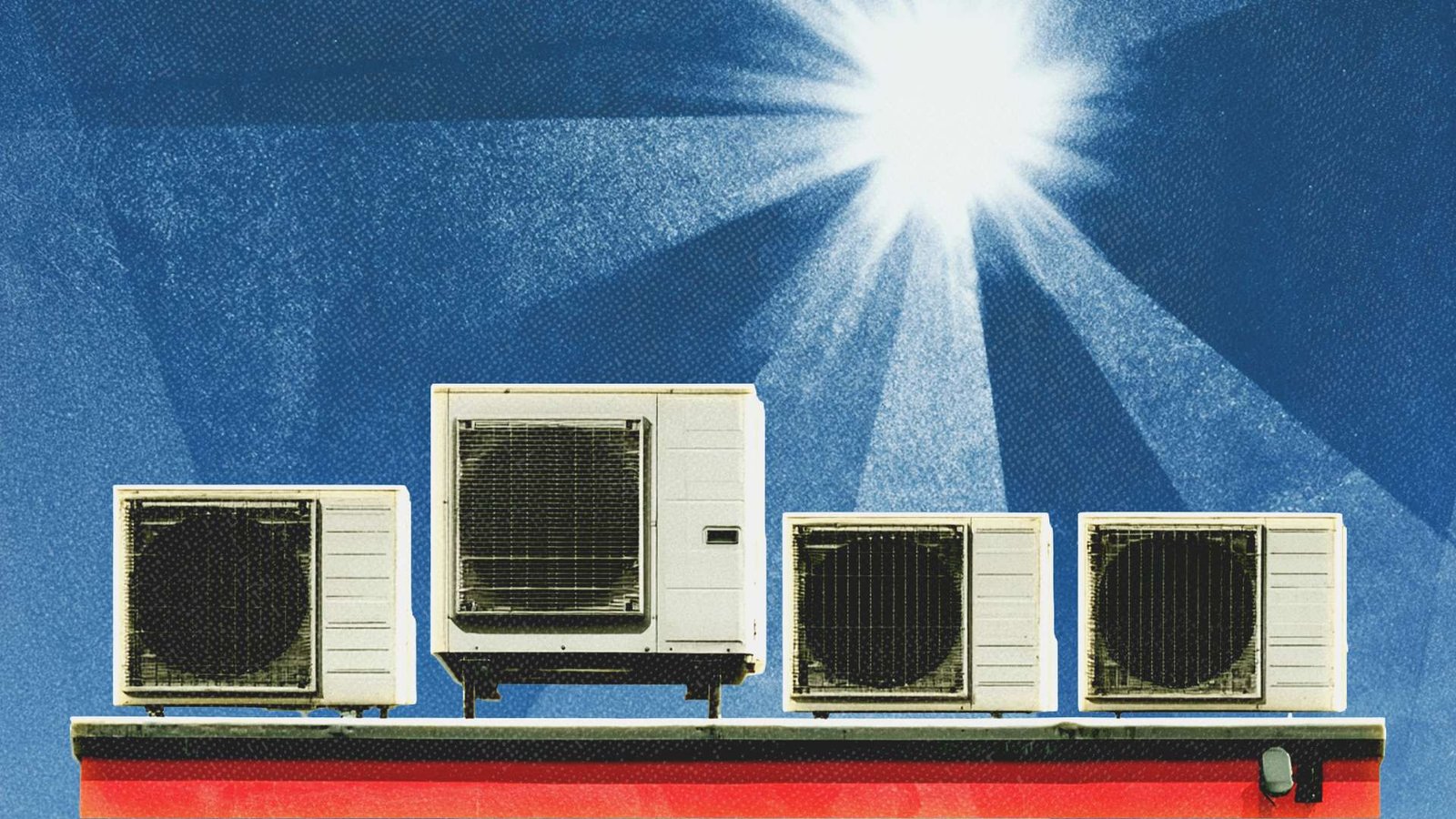
The continent was historically a lot colder, which helps explain why air conditioning was not so popular. American summer temperatures used to be a bizarre fluke in Europe; now they’re the new normal. But adapting wouldn’t be that expensive. (After all, air conditioning is more common in places poorer than Europe.) Americans ourselves used to suffer much higher rates of heat death before the 1960s, when air conditioning became widely available. A combination of environmental regulations, NIMBYism, and cultural snobbishness have slowed down Europeans who want to buy an AC unit.

The European Union, which has strict energy consumption rules, encourages citizens to eschew air conditioning in favor of fans. When the Russian invasion of Ukraine caused an energy crisis, Spain and Italy imposed legal limits on how low building owners could put their cooling settings. Some other European countries subject houses with air conditioning to burdensome energy inspection requirements. The Swiss canton of Geneva actually requires homeowners to prove medical need before installing air conditioning.

It’s not just tree huggers working to keep houses hot. NIMBY (“not in my back yard”) attitudes have also made it harder for homeowners to install climate-control equipment. The main barriers to air conditioning in many European countries are historical preservation laws, noise regulations, and other aesthetic rules, according to the Consumer Choice Center. Local planning councils in Britain are infamous for rejecting AC installations on these three grounds. Condensers sticking out windows, they argue, could ruin the character of a neighborhood.

Portofino, the richest town in Italy, suffered a police crackdown on illegal air conditioning in 2024, after its mayor caught an AC unit hanging over an alleyway. (“Portofino is located in a regional park and there are rules that need to be respected,” the mayor told The Guardian.) The Italian press described a “vendetta” between Portofino residents, who tried to settle personal scores by reporting each others’ air conditioning to the authorities, even secretly photographing each others’ homes during social gatherings.

That incident points to the final barrier to air conditioning in Europe: sheer snobbishness. “If we jump straight into an air conditioning country, it’s a shame,” the founder of Shade the UK, a nonprofit that helps heatproof buildings, told Bloomberg. The TV show Good Morning Britain ran a debate on whether it is “selfish” to use air conditioning. French media has run downright false stories warning viewers that air conditioning will make them sick. The German magazine WELT has described an “AC-phobia” that comes from a guilt complex around climate change.

Air conditioning is only carbon-intensive if the electricity for it comes from fossil fuels. Ironically, the German environmentalists tut-tutting about air conditioning are the same ones who drove nuclear power out of Germany, ensuring a coal-burning future. In neighboring France, which adopted nuclear power on a large scale, the power grid is much less carbon-intensive. But that country still has a stigma against air conditioning.

Defending French attitudes, Paris resident Thomas Chatterton Williams wrote in The Atlantic that discomfort is all relative, “public beauty” helps keep “the physical sensation of warmth” from becoming painful, and “there is something satisfying, maybe even a little noble, about withstanding the heat without the help of climate control.” He added that Europeans see Americans “as profligate and pampered” for their use of air conditioning.

The most elite Europeans, of course, allow such luxuries for themselves. The German environmental ministry, which was warning against AC use, has a climate-controlled headquarters. On Friday, the European Commission headquarters had an emergency shutdown of its own air conditioning on the lower floors—but somehow managed to keep it running on the upper floors ,where senior officials work. One staffer told Politico that the situation was “feudalism.”

The AC debate sums up a certain sort of European attitude: While believing themselves to be progressive, their self-flagellation ends up keeping the common man down while letting elites get away with murder.

Read the full article here

Fact Checker

Verify the accuracy of this article using AI-powered analysis and real-time sources.

Get Your Fact Check Report

Enter your email to receive detailed fact-checking analysis

5 free reports remaining

Continue with Full Access

You've used your 5 free reports. Sign up for unlimited access!

Already have an account? Sign in here

#InformationWar #Journalism #PoliticalDebate #PoliticalMedia #PublicOpinion
Share. Facebook Twitter Pinterest LinkedIn Tumblr Email Telegram Copy Link
News Room
  • Website
  • Facebook
  • X (Twitter)
  • Instagram
  • LinkedIn

The FSNN News Room is the voice of our in-house journalists, editors, and researchers. We deliver timely, unbiased reporting at the crossroads of finance, cryptocurrency, and global politics, providing clear, fact-driven analysis free from agendas.

Related Articles

Media & Culture

Dire Strait

16 minutes ago
Media & Culture

Congratulations to Orin Kerr, Whose Amicus Brief Was Twice Cited by the Court Today in Chatrie v. U.S.

2 hours ago
Media & Culture

Supreme Court Ends Agency “Independence,” Save for the Federal Reserve

3 hours ago
Media & Culture

NFP Restores All The Content From Climate.gov That Trump Attempted To Disappear

4 hours ago
Media & Culture

Recap of Today’s Opinions and Predictions For The Final Four Cases

4 hours ago
Media & Culture

Court Will Hear Parental Rights Case Related to Minors Seeking “Gender-Affirming Treatment”

5 hours ago
Add A Comment
Leave A Reply Cancel Reply

Editors Picks

Dire Strait

16 minutes ago

Bitcoin’s tie to USD/JPY is the strongest it’s been since 2022. Here’s why that matters.

27 minutes ago

Sovereign Funds Buying Bitcoin Dip, MidChains CEO Says

28 minutes ago

I Survived Europe’s Heat Wave Without AC—No Thanks to Regulation

1 hour ago
Latest Posts

Why crypto founders are ditching Europe for Dubai ahead of a major deadline

1 hour ago

What’s Changing With Australia’s Crypto Travel Rule

1 hour ago

Congratulations to Orin Kerr, Whose Amicus Brief Was Twice Cited by the Court Today in Chatrie v. U.S.

2 hours ago

Subscribe to News

Get the latest news and updates directly to your inbox.

At FSNN – Free Speech News Network, we deliver unfiltered reporting and in-depth analysis on the stories that matter most. From breaking headlines to global perspectives, our mission is to keep you informed, empowered, and connected.

FSNN.net is owned and operated by GlobalBoost Media
, an independent media organization dedicated to advancing transparency, free expression, and factual journalism across the digital landscape.

Facebook X (Twitter) Discord Telegram
Latest News

LGBT Q&A: What Data Are Companies in the UK Collecting When Verifying My Age?

12 minutes ago

Dire Strait

16 minutes ago

Bitcoin’s tie to USD/JPY is the strongest it’s been since 2022. Here’s why that matters.

27 minutes ago

Subscribe to Updates

Get the latest news and updates directly to your inbox.

© 2026 GlobalBoost Media. All Rights Reserved.
  • Privacy Policy
  • Terms of Service
  • Our Authors
  • Contact

Type above and press Enter to search. Press Esc to cancel.

🍪

Cookies

We and our selected partners wish to use cookies to collect information about you for functional purposes and statistical marketing. You may not give us your consent for certain purposes by selecting an option and you can withdraw your consent at any time via the cookie icon.

Cookie Preferences

Manage Cookies

Cookies are small text that can be used by websites to make the user experience more efficient. The law states that we may store cookies on your device if they are strictly necessary for the operation of this site. For all other types of cookies, we need your permission. This site uses various types of cookies. Some cookies are placed by third party services that appear on our pages.

Your permission applies to the following domains:

  • https://fsnn.net
Necessary
Necessary cookies help make a website usable by enabling basic functions like page navigation and access to secure areas of the website. The website cannot function properly without these cookies.
Statistic
Statistic cookies help website owners to understand how visitors interact with websites by collecting and reporting information anonymously.
Preferences
Preference cookies enable a website to remember information that changes the way the website behaves or looks, like your preferred language or the region that you are in.
Marketing
Marketing cookies are used to track visitors across websites. The intention is to display ads that are relevant and engaging for the individual user and thereby more valuable for publishers and third party advertisers.