Close Menu
FSNN | Free Speech News NetworkFSNN | Free Speech News Network
  • Home
  • News
    • Politics
    • Legal & Courts
    • Tech & Big Tech
    • Campus & Education
    • Media & Culture
    • Global Free Speech
  • Opinions
    • Debates
  • Video/Live
  • Community
  • Freedom Index
  • About
    • Mission
    • Contact
    • Support
Trending

Crypto.com Boss Rolls out Agentic AIs with ai.com Launch

55 minutes ago

French Police Arrest Six After Magistrate Kidnapped in Crypto Ransom Case

58 minutes ago

Crypto, Banks Give Input to Fed ‘Skinny Master Account’ Idea

2 hours ago
Facebook X (Twitter) Instagram
Facebook X (Twitter) Discord Telegram
FSNN | Free Speech News NetworkFSNN | Free Speech News Network
Market Data Newsletter
Monday, February 9
  • Home
  • News
    • Politics
    • Legal & Courts
    • Tech & Big Tech
    • Campus & Education
    • Media & Culture
    • Global Free Speech
  • Opinions
    • Debates
  • Video/Live
  • Community
  • Freedom Index
  • About
    • Mission
    • Contact
    • Support
FSNN | Free Speech News NetworkFSNN | Free Speech News Network
Home»Opinions»Debates»How the West Betrayed Its Kurdish Allies—Again
Debates

How the West Betrayed Its Kurdish Allies—Again

News RoomBy News Room5 days agoNo Comments5 Mins Read1,638 Views
Share Facebook Twitter Pinterest Copy Link LinkedIn Tumblr Email VKontakte Telegram
How the West Betrayed Its Kurdish Allies—Again
Share
Facebook Twitter Pinterest Email Copy Link

Listen to the article

0:00
0:00

Key Takeaways

Playback Speed

Select a Voice

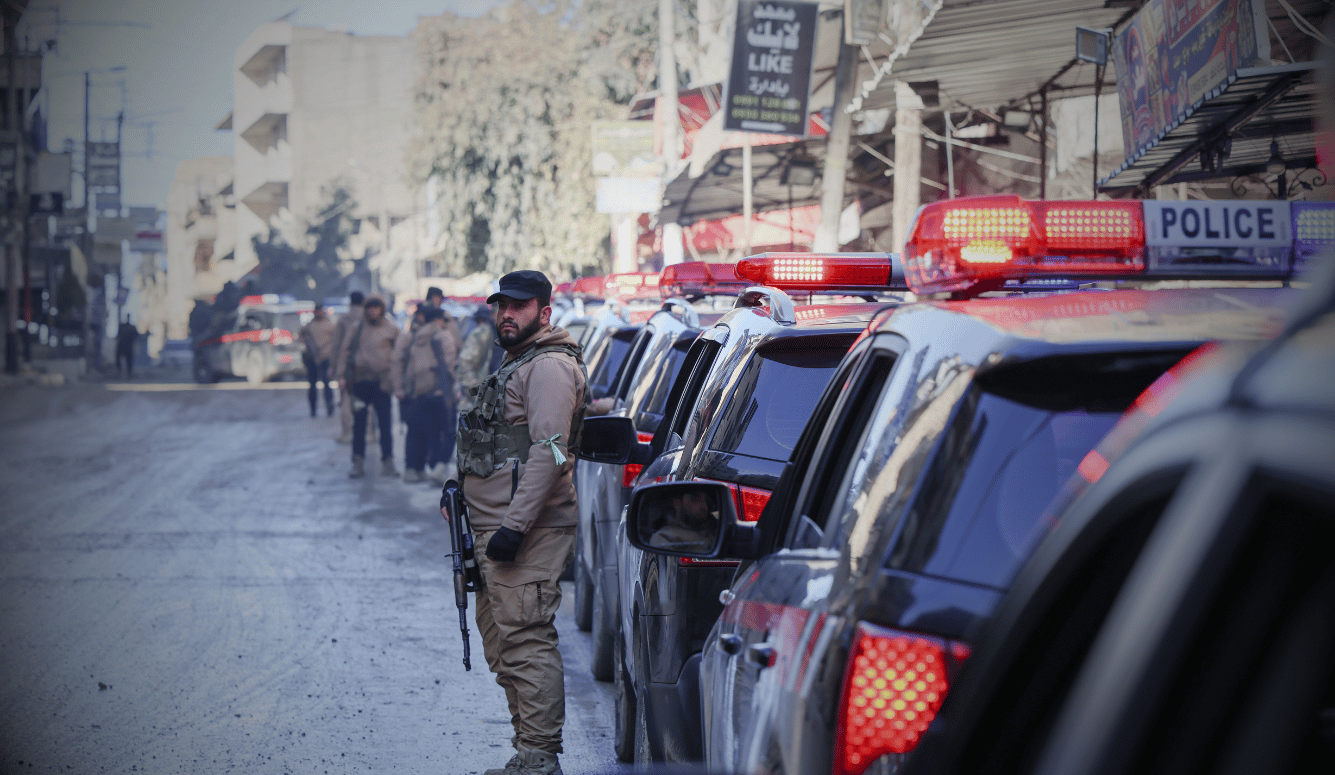
Last month, the United States tacitly assented to the assault of the Syrian army, backed by Turkey, on the Syrian Kurdish autonomous zone known as the Democratic Autonomous Administration of North and East Syria (DAANES). The assault, which resulted in the retreat of the Syrian Democratic Forces (SDF)—the Syrian Kurds’ militia—and the substantial contraction of the Kurdish-controlled zone, passed largely under the radar of the Western media, which are preoccupied with the crisis in Iran, the Russian attacks on Ukraine, and the unfolding second stage of Trump’s peace plan for Gaza. Western European governments ignored the event, underlining the by now traditional disinterest in the fate of the Kurds.

Syria’s Kurds have been US allies since October 2014, when Kurdish fighters began helping American special forces and aerial units combat ISIS, after the terrorist group conquered large swaths of Iraq and Syria. Over the following decade, American troops stationed in northern Syria continued to support the Syrian Democratic Forces in combating ISIS, while the SDF set up and policed large detention centres for captured ISIS fighters and their dependents. Complementing the anti-ISIS US–SDF partnership in Syria, there was a parallel anti-ISIS US–Kurdish military alliance in Iraq, where the autonomous Kurdistan Regional Government has ruled the north of the country since 1992.

The Kurds, who number 30–45 million, are an Iranic Sunni Muslim people living mainly in southeastern Turkey, northwestern Iran, northern Iraq, and northeast Syria, with significant diaspora communities in Germany and points west. Kurds speak Kurdish, a northwestern Iranian language, as well as the languages of the countries they live in, mainly Turkish, Persian, and Arabic. Since the second half of the nineteenth century, Kurdish tribal leaders and intellectuals have promoted the idea of Kurdish independence and the establishment of a sovereign Kurdish state, and in 1920 the victorious World War One Allies and the defeated Ottoman Empire signed the Treaty of Sèvres, which provided for the emergence of such a state, encompassing much of the territory the Kurds inhabited, which was to be first autonomous and then—subject to League of Nations approval—independent. 

The Kurds, who number 30–45 million, are an Iranic Sunni Muslim people living mainly in southeastern Turkey, northwestern Iran, northern Iraq, and northeast Syria, with significant diaspora communities in Germany and points west. Kurds speak Kurdish, a northwestern Iranian language, as well as the languages of the countries they live in, mainly Turkish, Persian, and Arabic. Since the second half of the nineteenth century, Kurdish tribal leaders and intellectuals have promoted the idea of Kurdish independence and the establishment of a sovereign Kurdish state, and in 1920 the victorious World War One Allies and the defeated Ottoman Empire signed the Treaty of Sèvres, which provided for the emergence of such a state, encompassing much of the territory the Kurds inhabited, which was to be first autonomous and then—subject to League of Nations approval—independent. 

But with the resurgence of Turkish power under Mustafa Kemal (“Ataturk”) in the early 1920s, the Western democracies withdrew their support for Kurdish statehood and, ever since, the Kurdish minorities in the Middle East have been systematically oppressed, especially in Turkey and Iraq. The assault on the Kurds in northern Syria is just the latest chapter in this history.

The SDF has now been confined to two small enclaves around the Kurdish-majority towns of Qamishli and Hasakeh at the northeastern tip of Syria and around Kobane, a hundred or so kilometres to the west. Both these areas border on hostile Turkey to the north. In their sweep eastward and northward, the newborn Syrian national army mustered by the country’s Islamist president Ahmed al-Sharaa, together with its Islamist militia and Arab tribal allies, captured the largely Arab towns of Raqqa and Deir ez-Zor—sites of the Turkish massacre of Armenians during the genocide of 1915–16—as well as the Conoco gas and Omar oil fields, economic mainstays of the Kurdish autonomous zone.

They also took over the al-Hol and Roj detention camps, which house some 24–26,000 ISIS dependents, sixty percent of whom were children, together with a number of prisons at Shadadi and al-Aqtan, which held around 9,000 captured ISIS combatants. Hundreds of prisoners reportedly escaped or were let out by al-Sharaa’s forces, most of whom likely regarded the ISIS fighters as their Islamist brothers. American troops are currently busing at least some of the ISIS PoWs to detention centres in Iraqi Kurdistan. But the fates of the remaining detainees and of their tens of thousands of dependents—wives and children of ISIS fighters, who hail from dozens of Asian, African, and European states and whom nobody wants—remain unclear. It is likely that al-Sharaa’s government will free them, and perhaps even incorporate some of them into the Syrian army.

The assault on the Syrian Kurds was supported—if not actually orchestrated—by Turkey, which supplied the assailants with intelligence, logistics, and weaponry, including drones. Turkey is led by Islamist president Recep Tayyip Erdogan, who supported al-Sharaa and his troops in Idlib in northwestern Syria during the country’s civil war of 2011–24 and orchestrated last December’s offensive, which ended in the conquest of Damascus and the fall of the tyrannical Assad regime that had ruled Syria since the early 1970s. 


Read the full article here

Fact Checker

Verify the accuracy of this article using AI-powered analysis and real-time sources.

Get Your Fact Check Report

Enter your email to receive detailed fact-checking analysis

5 free reports remaining

Continue with Full Access

You've used your 5 free reports. Sign up for unlimited access!

Already have an account? Sign in here

Share. Facebook Twitter Pinterest LinkedIn Tumblr Email Telegram Copy Link
News Room
  • Website
  • Facebook
  • X (Twitter)
  • Instagram
  • LinkedIn

The FSNN News Room is the voice of our in-house journalists, editors, and researchers. We deliver timely, unbiased reporting at the crossroads of finance, cryptocurrency, and global politics, providing clear, fact-driven analysis free from agendas.

Related Articles

Cryptocurrency & Free Speech Finance

French Police Arrest Six After Magistrate Kidnapped in Crypto Ransom Case

58 minutes ago
Cryptocurrency & Free Speech Finance

Why Quantum Computing Isn’t a Serious Risk for Bitcoin Yet: CoinShares

5 hours ago
Debates

British Columbia’s Radical Political Landscape

6 hours ago
Media & Culture

Seven Pages Of Nixon Grand Jury Testimony Reveal The Real Threat Of the Deep State

7 hours ago
Media & Culture

Immigration Massively Reduces Budget Deficits

8 hours ago
Media & Culture

Donald Trump Makes the Case for Decentralized Control of Elections Great Again

9 hours ago
Add A Comment
Leave A Reply Cancel Reply

Editors Picks

French Police Arrest Six After Magistrate Kidnapped in Crypto Ransom Case

58 minutes ago

Crypto, Banks Give Input to Fed ‘Skinny Master Account’ Idea

2 hours ago

Jimmy Lai sentenced to 20 years in prison in Hong Kong’s biggest media trial

4 hours ago

Japan’s record 56,000 Nikkei surge sends bitcoin to $72,000, gold past $5,000

5 hours ago
Latest Posts

Only 10K Bitcoin is Quantum-Vulnerable and Worth Attacking

5 hours ago

Why Quantum Computing Isn’t a Serious Risk for Bitcoin Yet: CoinShares

5 hours ago

British Columbia’s Radical Political Landscape

6 hours ago

Subscribe to News

Get the latest news and updates directly to your inbox.

At FSNN – Free Speech News Network, we deliver unfiltered reporting and in-depth analysis on the stories that matter most. From breaking headlines to global perspectives, our mission is to keep you informed, empowered, and connected.

FSNN.net is owned and operated by GlobalBoost Media
, an independent media organization dedicated to advancing transparency, free expression, and factual journalism across the digital landscape.

Facebook X (Twitter) Discord Telegram
Latest News

Crypto.com Boss Rolls out Agentic AIs with ai.com Launch

55 minutes ago

French Police Arrest Six After Magistrate Kidnapped in Crypto Ransom Case

58 minutes ago

Crypto, Banks Give Input to Fed ‘Skinny Master Account’ Idea

2 hours ago

Subscribe to Updates

Get the latest news and updates directly to your inbox.

© 2026 GlobalBoost Media. All Rights Reserved.
  • Privacy Policy
  • Terms of Service
  • Our Authors
  • Contact

Type above and press Enter to search. Press Esc to cancel.

🍪

Cookies

We and our selected partners wish to use cookies to collect information about you for functional purposes and statistical marketing. You may not give us your consent for certain purposes by selecting an option and you can withdraw your consent at any time via the cookie icon.

Cookie Preferences

Manage Cookies

Cookies are small text that can be used by websites to make the user experience more efficient. The law states that we may store cookies on your device if they are strictly necessary for the operation of this site. For all other types of cookies, we need your permission. This site uses various types of cookies. Some cookies are placed by third party services that appear on our pages.

Your permission applies to the following domains:

  • https://fsnn.net
Necessary
Necessary cookies help make a website usable by enabling basic functions like page navigation and access to secure areas of the website. The website cannot function properly without these cookies.
Statistic
Statistic cookies help website owners to understand how visitors interact with websites by collecting and reporting information anonymously.
Preferences
Preference cookies enable a website to remember information that changes the way the website behaves or looks, like your preferred language or the region that you are in.
Marketing
Marketing cookies are used to track visitors across websites. The intention is to display ads that are relevant and engaging for the individual user and thereby more valuable for publishers and third party advertisers.