

 Freedom Index
Listen to the article
The implosion of the magnificent tales of Jason Arday, a professor who recently resigned from the University of Cambridge, is currently playing out across social media and headlines. Anyone reading this has no doubt heard at least some of the messy details by now. But because of some of the United Kingdom’s most notorious censorship problems, this story took a long time to see sunlight.
Arday is a British academic and, until last week, taught sociology at the University of Cambridge, the youngest Black person ever appointed as professor at the prestigious institution. That was hardly the most interesting thing about Arday, though, according to accounts he gave of his own life story. Arday was diagnosed with autism at three, nonverbal until 11, unable to read until 18, but then overcame these obstacles to obtain his PhD, not to mention his herculean long-distance running achievements and the millions he raised in charity. All of these inspiring tales — like Arday running 30 marathons in 35 days, the last nine while injured — and more are set to appear in Arday’s forthcoming memoir with Simon & Schuster.
Pete Hegseth wants the Pentagon press corps on a leash
The Pentagon cannot turn press credentials into a weapon against reporters who ask questions and protect sources.
Read More
But, as we now know, there’s a bit of a problem: He made a bunch of it up. In the midst of snowballing reports questioning his life story, Arday resigned from Cambridge last week. “This decision should not be interpreted as a loss of faith in scholarship or in the values that first brought me to Cambridge. Nor should it be mistaken for an acceptance of the narratives that have surrounded me,” Arday wrote. “It is simply the decision of someone who has reached the limits of what any person should reasonably be expected to endure.”
There have also been accusations that Arday engaged in plagiarism in his PhD thesis and other publications, but they did not spring into widespread view until this summer. And Arday’s apparent efforts to quash those plagiarism investigations are where the UK’s long-simmering free speech problems come into play.
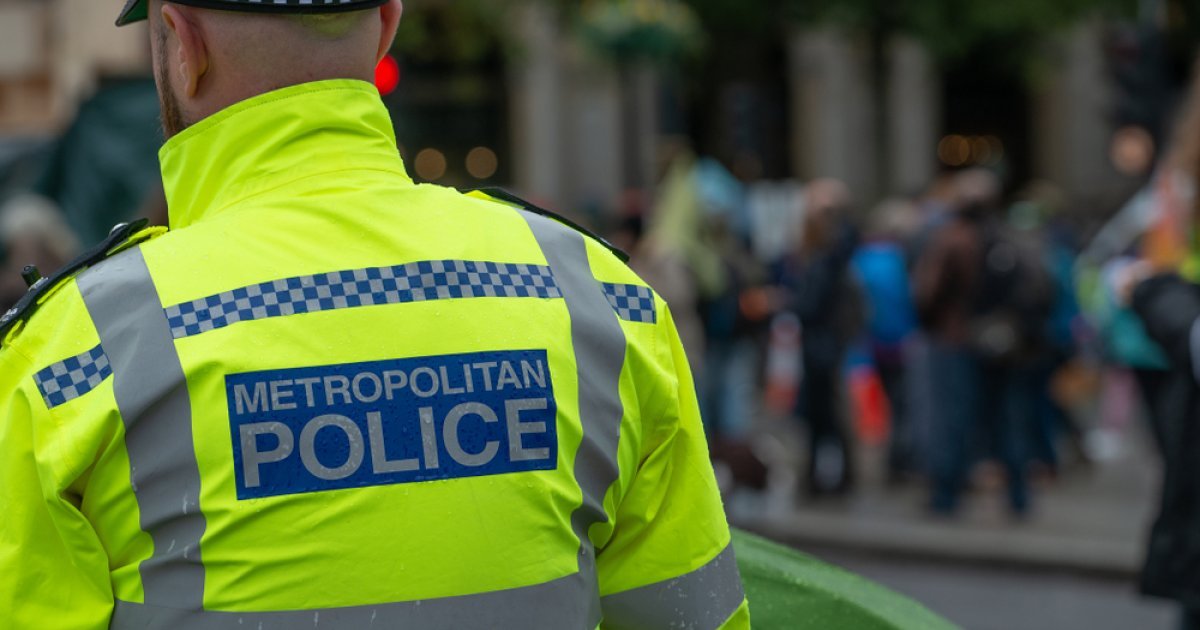
Last week, Times Higher Education’s Jack Grove shared a shocking account: Earlier this year, London’s Metropolitan Police contacted him and explained that Grove, without his knowledge, had been the target of a now-closed complaint over his contact with Arday. Grove hadn’t been in touch with Arday for months. He last emailed Arday in September 2025, offering him an opportunity to respond to plagiarism allegations Grove was investigating. But even though months had passed since the last email, Grove shared that when police contacted him in February, an officer warned Grove to “not contact him again, because it was affecting his mental health.”
In all, Grove had sent only a few emails to Arday in the course of his investigation. But that was enough for police to insert themselves into a matter of journalism, then temporarily investigate a journalist, and even when acknowledging the matter was closed, issue a warning not to contact Arday for the sake of his mental health.
It’s a story that has played out ad nauseam in recent years in the UK: Police are knowingly inserting themselves into non-criminal activity, further blurring the already fuzzy line between protected expression and crime. Commissioner Sir Mark Rowley has since admitted officers “dropped the ball” and erred in contacting Grove, but how many times can police make a mistake before it starts to look like standard practice?
That wasn’t even the only censorship threat that hindered Grove’s investigation, or the one that stopped him from publishing his investigation in the first place. This week, a letter Arday’s legal team sent to Times Higher Education last September finally leaked. The British firm Carter-Ruck, which specializes in libel law, detailed Grove’s interactions with Arday, challenged Grove’s questions, and criticized his “aggressive approach.” They wrote further:
As an academic, our client is not averse to criticism, nor does he wish to stifle the legitimate voicing of opinions of those who may disagree with his work. However, the fact that our client’s published work spanning the last decade is being called into question, and that his 2015 PhD thesis is now the subject of a complaint made by your journalist to our client’s doctoral awarding university (Liverpool John Moores University), and current employer (University of Cambridge), appears to suggest that there is an axe to grind against our client, personally. Our client feels that these repeated enquiries are a campaign of harassment against him, many of which have no bearing on his academic career and seem to be raised solely with the aim of sullying his reputation.
So the outlet chose to drop the story rather than risk a protracted and costly legal battle with Arday and Carter-Ruck. As Grove explains, “Arday’s solicitors had been in touch with THE and it was clear that the story could tie the publication up in months of expensive litigation. Even if we were right — and I stand by my reporting — it would have been ruinously expensive.”
Countries are hiding censorship in ‘cybercrime’ bills. A UN treaty could make things worse.
Countries are disguising censorship as “cybercrime,” and a new UN treaty could help authoritarian governments export that repression worldwide.
Read More
What Grove is referring to here is the UK’s notorious libel law, which has been so friendly to plaintiffs over the years that targets of investigation or criticism used England as a home base for “libel tourism” against their critics. Despite some efforts to reform it, “London is still the libel capital of the world, thanks to our punitive costs system and a SLAPP culture that hasn’t been properly checked.”
The absurdity of Arday’s misdeeds should not lull us into ignoring the seriousness of a legal environment that makes reporting on it so challenging.
In the grand scheme of things, an academic fabulist’s tall tales may seem to some like small potatoes, but these same tactics could be used against whistleblowers, reporters, and critics seeking to uncover the truth about government malfeasance, illegal conduct by the wealthy and the well-off, and the worst forms of abuse and harm. If a journalist has to fear a ruinous legal battle, and perhaps even police warnings, just to report on plagiarism allegations, what else can he not safely investigate?
Read the full article here
Fact Checker
Verify the accuracy of this article using AI-powered analysis and real-time sources.