Close Menu
FSNN | Free Speech News NetworkFSNN | Free Speech News Network
  • Home
  • News
    • Politics
    • Legal & Courts
    • Tech & Big Tech
    • Campus & Education
    • Media & Culture
    • Global Free Speech
  • Opinions
    • Debates
  • Video/Live
  • Community
  • Freedom Index
  • About
    • Mission
    • Contact
    • Support
Trending

A New Bipartisan Bill Seeks to Protect Free-Range Parenting and Redefine Neglect

51 seconds ago

Crypto security firm Ledger pauses IPO plans amid volatile crypto markets.

36 minutes ago

Societe Generale Expands Tokenized Collateral and Stablecoin Push on Canton

37 minutes ago
Facebook X (Twitter) Instagram
Facebook X (Twitter) Discord Telegram
FSNN | Free Speech News NetworkFSNN | Free Speech News Network
Market Data Newsletter
Thursday, May 14
  • Home
  • News
    • Politics
    • Legal & Courts
    • Tech & Big Tech
    • Campus & Education
    • Media & Culture
    • Global Free Speech
  • Opinions
    • Debates
  • Video/Live
  • Community
  • Freedom Index
  • About
    • Mission
    • Contact
    • Support
FSNN | Free Speech News NetworkFSNN | Free Speech News Network
Home»News»Media & Culture»Hantavirus Fear Comes to the Remotest Islands in the World
Media & Culture

Hantavirus Fear Comes to the Remotest Islands in the World

News RoomBy News Room1 hour agoNo Comments4 Mins Read866 Views
Share Facebook Twitter Pinterest Copy Link LinkedIn Tumblr Email VKontakte Telegram
Hantavirus Fear Comes to the Remotest Islands in the World
Share
Facebook Twitter Pinterest Email Copy Link

Listen to the article

0:00
0:00

Key Takeaways

Playback Speed

Select a Voice

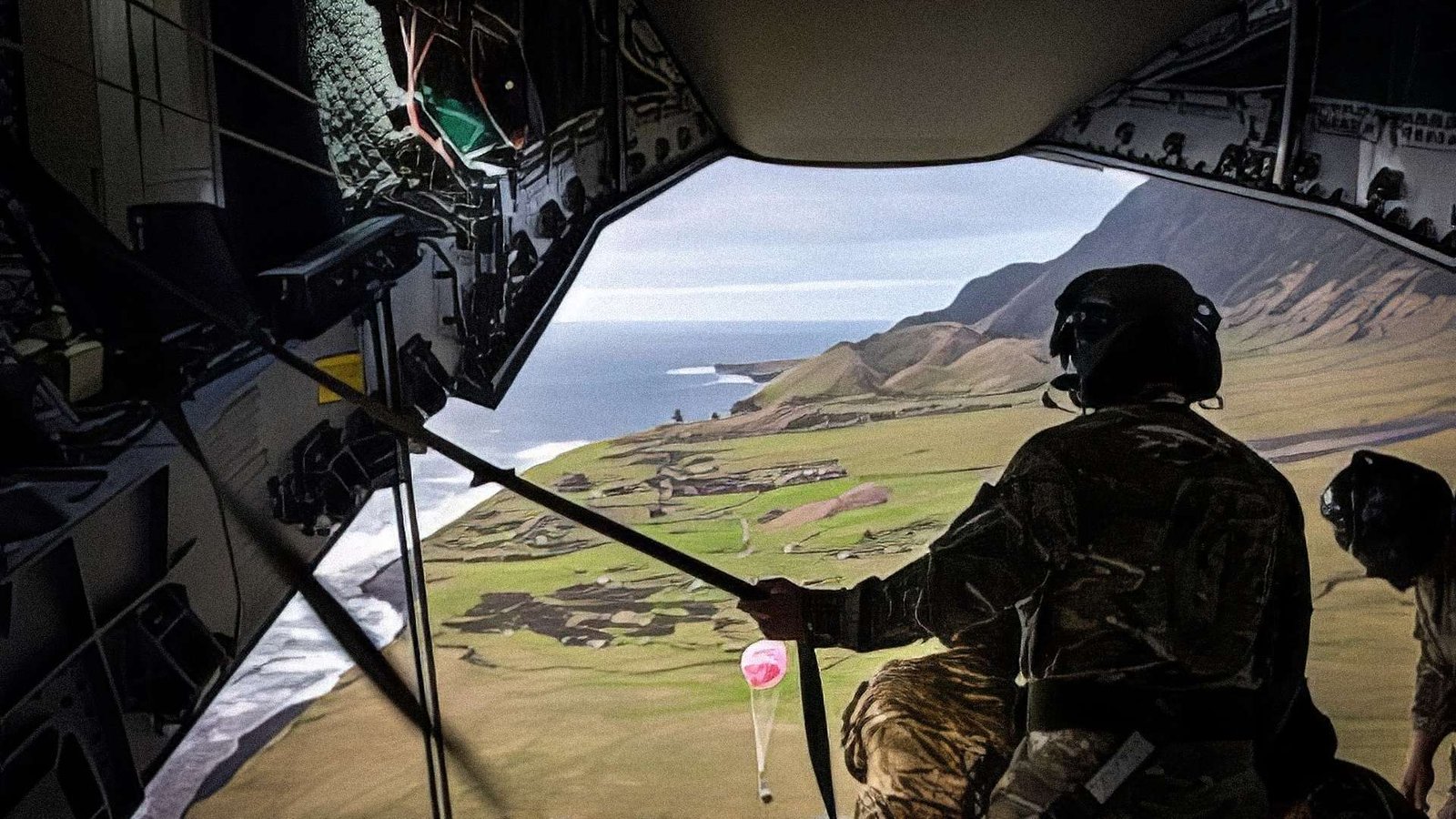
The island of Tristan da Cunha (population 224) has no airport. Its seaport, which can only handle small boats, is a week’s journey from any other human settlement. So how do doctors get to an urgent medical case? It turns out, by parachuting in.

The British Army launched its first-ever airdrop of a medical team on Saturday in response to a hantavirus case on Tristan da Cunha. The plane loaded up with medical supplies, a doctor, a nurse, and a platoon of paratroopers from the 16 Air Assault Brigade at Royal Air Force Brize Norton, the military base outside Oxford. It refueled at Ascension Island before flying 2,000 miles south and dropping them on Tristan da Cunha, one of the few remaining British overseas territories.

The Tristanian victim had taken a trip on the MV Hondius, the infamous cruise ship at the center of an outbreak of hantavirus, a deadly and obscure disease that rarely spreads between humans. And weirdly enough, Tristan da Cunha is not the only remote British outpost affected by the hantavirus outbreak.

Pitcairn Island (population 35) is only accessible by a 32-hour boat cruise from Mangareva, itself a tiny island in French Polynesia. Somehow, an American woman exposed to hantavirus managed to get there. She had also been a passenger on the MV Hondius. Before authorities tracked her down, she flew to San Francisco, transited through Tahiti and Mangareva, and made the boat ride to Pitcairn.

Fortunately, the woman does not show any symptoms of hantavirus, according to French authorities, who said she will be forbidden from leaving Pitcairn until it is confirmed that she poses no danger. Keeping her in place shouldn’t be hard, since the boat between Mangareva and Pitcairn only makes the trip once a week.

There is a real irony in two remote islands—populated by people who like being left alone by the outside world—becoming some of the first places affected by a global pandemic. But both island societies also owe their existence to global trade.

Pitcairn Island was settled by mutineers on the HMS Bounty and their Polynesian wives. In 1789, the Bounty left Tahiti with a cargo of breadfruit, which the British Empire was hoping to cultivate in its Caribbean colonies. The crew members, who spent five idyllic months in Tahiti, decided they had enough of their harsh, paranoid captain. They left him behind on a small boat and took the Bounty to an uninhabited island.

After its rediscovery by British sailors several decades later, Pitcairn became a destination for Christian missionaries—and later tourists—looking for one of the furthest frontiers on Earth. That is likely why the woman from the Hondius bolted for Pitcairn after her Atlantic cruise. There was also a darker side to the island’s isolation. In 2004, a special tribunal found one-third of the male population guilty of sexual abuse.

Tristan da Cunha’s history is not quite as lawless. The island was first settled in 1810 by the eccentric American sailor Jonathan Lambert, who declared himself ruler of a new nation, the Islands of Refreshment. He made a living selling supplies and seal oil to passing ships before drowning two years later. In 1816, the British Empire annexed Tristan da Cunha, then inhabited by Lambert’s Italian-American follower Tomasso Corri, to prevent the island from being used as a U.S. or French military base.

Ships continued to stop at the island in search of fresh food, and the population grew from sailors who couldn’t or wouldn’t leave. Tristan da Cunha was a society without modern technology, written laws, or crime, according to the 2016 book Britain’s Treasure Islands by Stewart McPherson. Their currency was the potato, which they grew and traded with visiting sailors.

In 1961, a volcano forced the entire Tristanian population to flee onto small boats. They were fortunately picked up by a passing cruise ship and evacuated to England. It was a dramatic and unpleasant introduction to the modern world. Pestered by journalists, street vendors, Jehovah’s Witnesses, and criminals, the Tristanian refugees decided to go home after less than a year.

“I didn’t like the noise,” Tristanian returnee Harold Green later told McPherson. “It’s so quiet on Tristan that sometimes you can hear the grass growing.”

But the world also had a way of bringing uninvited trouble to Tristan da Cunha. In 1882, an American crew purposely wrecked their ship on the island in what McPherson calls a likely insurance scam. Rats from the ship destroyed Tristan da Cunha’s previously rat-free ecosystem. Accidental shipwrecks in 2006 and 2011 sparked fears of bringing similar infestations, McPherson writes.

Ironic, then, that one of the Tristanians themselves brought the hantavirus to Tristan da Cunha from a vacation abroad. Even the residents of the Island of Refreshment need refreshment elsewhere, sometimes.

Read the full article here

Fact Checker

Verify the accuracy of this article using AI-powered analysis and real-time sources.

Get Your Fact Check Report

Enter your email to receive detailed fact-checking analysis

5 free reports remaining

Continue with Full Access

You've used your 5 free reports. Sign up for unlimited access!

Already have an account? Sign in here

#IndependentMedia #MediaEthics #NarrativeControl #PoliticalNews #PublicDiscourse
Share. Facebook Twitter Pinterest LinkedIn Tumblr Email Telegram Copy Link
News Room
  • Website
  • Facebook
  • X (Twitter)
  • Instagram
  • LinkedIn

The FSNN News Room is the voice of our in-house journalists, editors, and researchers. We deliver timely, unbiased reporting at the crossroads of finance, cryptocurrency, and global politics, providing clear, fact-driven analysis free from agendas.

Related Articles

Media & Culture

A New Bipartisan Bill Seeks to Protect Free-Range Parenting and Redefine Neglect

51 seconds ago
Cryptocurrency & Free Speech Finance

Senators File Clarity Act Amendments on DeFi, Trump Family, and Jeffrey Epstein

38 minutes ago
Cryptocurrency & Free Speech Finance

Bitcoin Rally Cut Short as Profit-Taking Rises, US Demand Falls: CryptoQuant

2 hours ago
Media & Culture

South Africa Used AI To Write Its Now Withdrawn AI Policy. The Citations Were Fake.

2 hours ago
Media & Culture

Starting Statement with “LOL” Doesn’t Keep The Assertion in It From Being Potentially Libelous

2 hours ago
Cryptocurrency & Free Speech Finance

Bitcoin Owner Claims Claude AI Cracked Lost Wallet Password, Netting $400K in BTC

3 hours ago
Add A Comment
Leave A Reply Cancel Reply

Editors Picks

Crypto security firm Ledger pauses IPO plans amid volatile crypto markets.

36 minutes ago

Societe Generale Expands Tokenized Collateral and Stablecoin Push on Canton

37 minutes ago

Senators File Clarity Act Amendments on DeFi, Trump Family, and Jeffrey Epstein

38 minutes ago

Hantavirus Fear Comes to the Remotest Islands in the World

1 hour ago
Latest Posts

Animoca-backed NUVA brings Figure’s $19 billion of tokenized assets to Ethereum

2 hours ago

Bitcoin and several major altcoins are at a crucial juncture

2 hours ago

Bitcoin Rally Cut Short as Profit-Taking Rises, US Demand Falls: CryptoQuant

2 hours ago

Subscribe to News

Get the latest news and updates directly to your inbox.

At FSNN – Free Speech News Network, we deliver unfiltered reporting and in-depth analysis on the stories that matter most. From breaking headlines to global perspectives, our mission is to keep you informed, empowered, and connected.

FSNN.net is owned and operated by GlobalBoost Media
, an independent media organization dedicated to advancing transparency, free expression, and factual journalism across the digital landscape.

Facebook X (Twitter) Discord Telegram
Latest News

A New Bipartisan Bill Seeks to Protect Free-Range Parenting and Redefine Neglect

51 seconds ago

Crypto security firm Ledger pauses IPO plans amid volatile crypto markets.

36 minutes ago

Societe Generale Expands Tokenized Collateral and Stablecoin Push on Canton

37 minutes ago

Subscribe to Updates

Get the latest news and updates directly to your inbox.

© 2026 GlobalBoost Media. All Rights Reserved.
  • Privacy Policy
  • Terms of Service
  • Our Authors
  • Contact

Type above and press Enter to search. Press Esc to cancel.

🍪

Cookies

We and our selected partners wish to use cookies to collect information about you for functional purposes and statistical marketing. You may not give us your consent for certain purposes by selecting an option and you can withdraw your consent at any time via the cookie icon.

Cookie Preferences

Manage Cookies

Cookies are small text that can be used by websites to make the user experience more efficient. The law states that we may store cookies on your device if they are strictly necessary for the operation of this site. For all other types of cookies, we need your permission. This site uses various types of cookies. Some cookies are placed by third party services that appear on our pages.

Your permission applies to the following domains:

  • https://fsnn.net
Necessary
Necessary cookies help make a website usable by enabling basic functions like page navigation and access to secure areas of the website. The website cannot function properly without these cookies.
Statistic
Statistic cookies help website owners to understand how visitors interact with websites by collecting and reporting information anonymously.
Preferences
Preference cookies enable a website to remember information that changes the way the website behaves or looks, like your preferred language or the region that you are in.
Marketing
Marketing cookies are used to track visitors across websites. The intention is to display ads that are relevant and engaging for the individual user and thereby more valuable for publishers and third party advertisers.