

 Freedom Index
Listen to the article
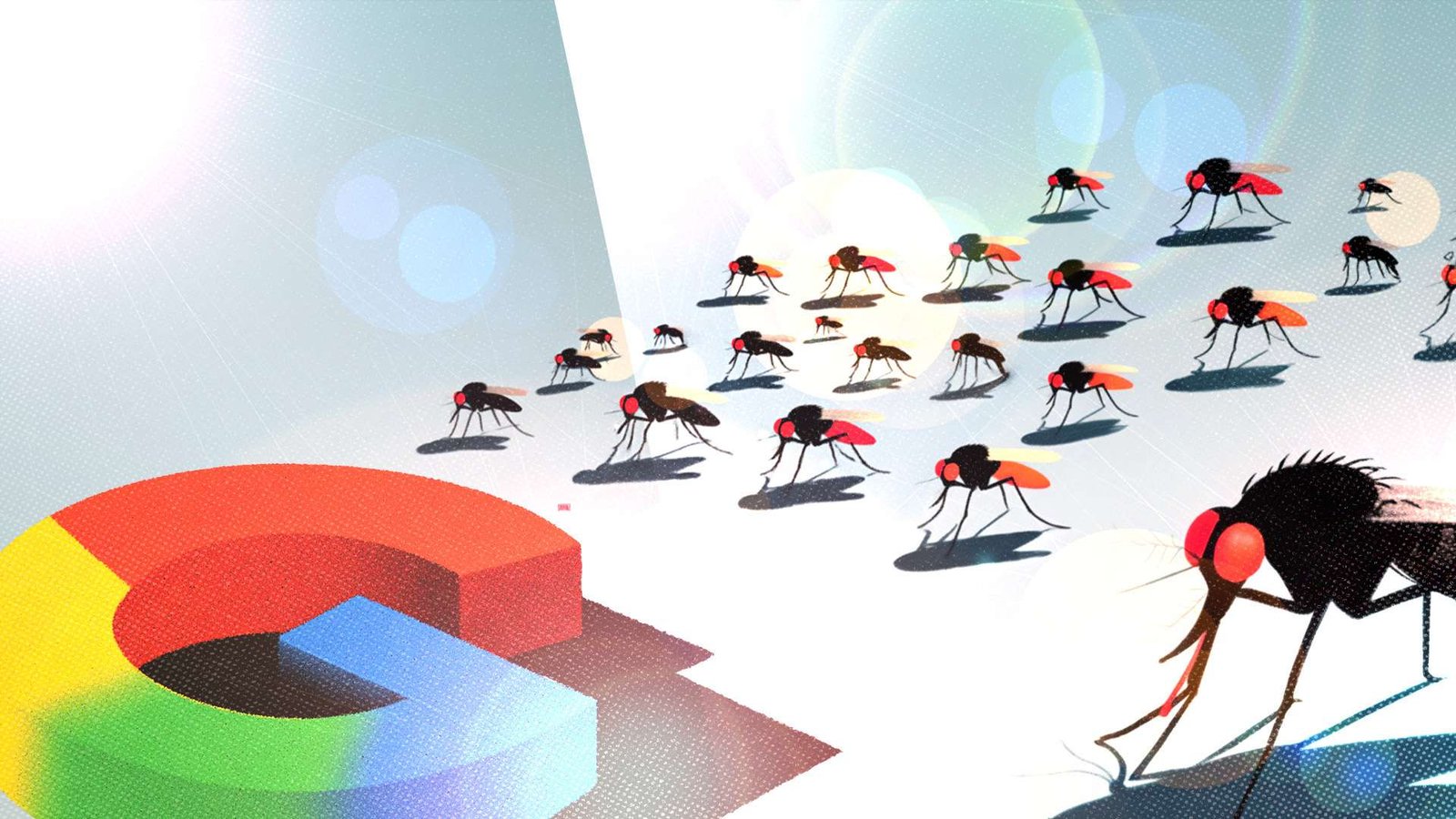
The Debug Project at Google (parent company Alphabet) aims to drastically reduce the populations of mosquitoes in California and Florida. Hooray! Debug is seeking an experimental use permit from the Environmental Protection Agency (EPA) to release 64 million lab-grown male mosquitoes (they don’t bite) that are infected with the Wolbachia bacteria over two years. The infected males breed with wild (biting and disease-carrying) females who later lay eggs that do not hatch. The result: a mosquito population crash resulting in far less risk of people acquiring mosquito-borne illnesses.
Spreading lab-grown, Wolbachia-infected male mosquitoes as a way to drastically reduce the populations of disease-carrying mosquitoes has been done successfully for many years all over the world. The result has been steep reductions in mosquito-borne illnesses in place like Northern Australia, Singapore, and Brazil.
The technique has also been successfully deployed in various places in the United States. In fact, Google’s Debug worked with the Kentucky-based company MosquitoMate on project in which they released Wolbachia-infected male Aedes aegypti mosquitoes for three years in partnership with the Fresno County Mosquito Control District in California. This invasive (and now pervasive in the U.S.) species of mosquito is the vector for numerous maladies including dengue, chikungunya, Zika, and yellow fever. The result was that at peak mosquito season, the number of biting female Aedes aegypti in treated Fresno neighborhoods dropped by more than 95 percent.
MosquitoMate (Slogan: “Buy mosquitoes…bye mosquitoes”) also offers Wolbachia-infected males of the Asian Tiger mosquito, Aedes albopictus. This fearsome invasive species hunts and bites aggressively throughout the day and continues its spread across the United States (including in our yard). Tiger mosquitoes are vectors for West Nile virus, as well as dengue, chikungunya, and Zika viruses. California recently reported several locally acquired cases of dengue fever. Males from both species of MosquitoMate’s mosquitoes are already registered and approved for commercial use in all U.S. states and territories by the EPA.
Debug has developed AI and robotic technologies that make breeding and sex sorting mosquitoes much cheaper and easier. Debug’s plan is simply to apply the Wolbachia-infection technology to the even more pervasive southern house mosquito (Culex quinquefasciatus), which can transmit diseases including West Nile virus, St. Louis encephalitis, and lymphatic filariasis.
The EPA has already registered Google’s Wolbachia-infected male southern house mosquitoes for use in Hawaii as a tool to protect endangered bird species from mosquitoes carrying avian malaria. The California and Florida releases are tests of their wider efficacy in suppressing disease-carrying mosquito species.
Naturally, Luddites oppose this innovation. For example, anonymous comments on Debug’s application at the EPA: “We are not experimental rats. Greedy corporations should stay out of our communities,” and “Risks of these mosquitoes have not been sufficiently studied, and the bacteria-infected mosquitoes could have harmful impacts to the health of people, animals, and the environment.” In its comments, Hawaii Unites, long-time opponent to Google’s efforts to prevent the spread of avian malaria by mosquitoes, asserts, “These mosquitoes are an experiment that could harm the health of Hawai’i’s people, wildlife, and ecosystems.”
In contradiction to these assertions stands the 2022 comprehensive federal environmental impact statement that analyzed the possible health and ecological risks of the mosquito release program in Hawaii. That report concluded that releasing millions of Wolbachia-infected male mosquitoes was safe and would not “significantly affect the quality of the human environment.” In its decision to register Debug’s mosquitoes, the EPA found that they “will not cause unreasonable adverse effects to human health or the environment.”
Numerous additional studies and evaluations have found that the release of these lab-grown mosquitoes does not harm human or animal health and has minimal ecological effects. After all, Wolbachia naturally infects roughly 50 percent of all insect and arthropod species.
As salutary as the disease prevention benefits from deploying these mosquitoes doubtlessly is, bite prevention itself is not to be dismissed. All of us have been made miserable by swarms of mosquitoes while trying to enjoy picnics, barbecues, and porch conversations. For example, Floridians averaged more than four mosquito bites per week in a 2025 study in which volunteers tracked their mosquito bites using a smartphone Bite Diary app.
So Google, don’t stop in Florida and California: Please feel free to drop by our yard in Virginia at any time.
Read the full article here
Fact Checker
Verify the accuracy of this article using AI-powered analysis and real-time sources.