Close Menu
FSNN | Free Speech News NetworkFSNN | Free Speech News Network
  • Home
  • News
    • Politics
    • Legal & Courts
    • Tech & Big Tech
    • Campus & Education
    • Media & Culture
    • Global Free Speech
  • Opinions
    • Debates
  • Video/Live
  • Community
  • Freedom Index
  • About
    • Mission
    • Contact
    • Support
Trending

Our Lawsuit Against the Trump Administration’s Social Media Surveillance Moves Forward. Here’s What the Court Said.

23 minutes ago

Why Some Americans Living Abroad Would Rather Renounce Their Citizenship Than File Taxes

27 minutes ago

Family Separation Causes Real and Lasting Harm for Children and Parents

29 minutes ago
Facebook X (Twitter) Instagram
Facebook X (Twitter) Discord Telegram
FSNN | Free Speech News NetworkFSNN | Free Speech News Network
Market Data Newsletter
Thursday, October 15
  • Home
  • News
    • Politics
    • Legal & Courts
    • Tech & Big Tech
    • Campus & Education
    • Media & Culture
    • Global Free Speech
  • Opinions
    • Debates
  • Video/Live
  • Community
  • Freedom Index
  • About
    • Mission
    • Contact
    • Support
FSNN | Free Speech News NetworkFSNN | Free Speech News Network
Home»News»Global Free Speech»Gaza City in October 2023 (Geopix/Alamy) If you ask a Palestinian from Gaza where home is, they may well give you a name before they give you an address.  A street. A neighbourhood. A family house. A place where a mother raised her children, where photographs were taken and kept. A place where birthdays were celebrated, where normal and ordinary life unfolded.  Palestinians have carried these places with them for generations, even long after being forced to leave. Sometimes a home is reduced to a key that could be kept for years in hope that one day it might open the door again. A photograph that was hanging on a wall that no longer exists, or an old family album that becomes one of the few physical traces left of a life that was once lived there.  Now, the Israeli government has started to speak about a “migration plan” for Palestinians in Gaza. Leaving, in their words, is being presented as a voluntary choice. But what does “voluntary” mean when the home you have been asked to leave no longer exists?  On September 16, Israel Katz, Israel’s defence minister, announced that in order to “finish the job” in Gaza, the country will begin to implement what he described as a “migration plan”. Earlier this month, Katz said Israel was prepared to facilitate the departure of Palestinians from Gaza by land and sea. Describing the plan as “voluntary”, Katz claimed – without any clear basis for this – that most Palestinians wanted to leave. There are many articles online as proof for this, here are some links for reference:  L’Orient-Le Jour Times of Israel Itamar Ben-Gvir, Israel’s minister of public security and a very strong supporter of Netanyahu’s current government, has also proposed a plan to encourage what he describes as the “voluntary emigration” of Palestinians from Gaza. Ben Gvir’s proposal, which includes financial incentives and arrangements with countries that would receive the “emigrants”, sets a target of 1.86 million people leaving Gaza over seven years. Youmna El Sayed reporting from Gaza City, 7th October (Youmna Al-Sayed) The language used by Israel’s elected representatives is striking. Migration. Relocation. Evacuation. Voluntary.  These are the words of bureaucracy. They can make the mass movement of millions of people sound organised, almost ordinary. They remove from the equation the noise of a family dragging their bags and belongings through rubble. They exclude from the narrative the child asking where they will sleep that night. They do not show the person returning to their neighbourhood only to find that the house they lived in no longer exists.  Gaza’s population has already experienced repeated displacements. Much of the territory has been destroyed. Three years after the start of Israel’s war, people continue to live in overcrowded or makeshift conditions. In September, just days ago, a damaged building in Gaza collapsed, killing 21 people and trapping others who had been sheltering there because they had no other alternatives. The very next day, another building collapsed, creating another human tragedy.  For these families, leaving is not an abstract political proposal. There is a huge difference between “choosing” to leave one’s home and not having a safe home to return to in the first place.  People migrate every day, and for many reasons. Forced displacement, however, is a different category of movement altogether, carrying with it something else. Forced displacement carries with it loss, fear, and uncertainty. I know this feeling, because it is how I have been living since I was forced to leave Gaza with my family. Even when the physical place has been destroyed, it does not stop being home. They remove from the equation the noise of a family dragging their bags and belongings through rubble. This is why the language matters. When forced displacement is called “migration”, it creates the understanding of movement between two places of relative choice. When it is called “relocation”, it presents the illusion of people simply being moved from one address to another. When people are told that their departure is “voluntary”, the conditions surrounding that decision are erased from the sentence.  The question is not whether a person physically walks away. The question is what choices remain when staying means living amid ruins, without adequate shelter, safety, or while carrying the fear that another attack could once again put your life and the life of your loved ones in danger? What does it mean to stay when you have no clue whether the life you are trying to hold on to can ever be rebuilt?  or the possibility of rebuilding. And then, there is also the political dimension to the language.  Katz’s latest comments followed months of political discussion in Israel concerning the wish to rid Gaza of its Palestinian population. This notwithstanding, after proposals by Israeli ministers triggered concern, Israeli Foreign Minister Gideon Sa’ar declared on September 9 that the government has no plan to deport Palestinians from Gaza. The United States has also said that at present, there is no US-backed plan to force Palestinians out of Gaza.   These competing statements matter. They show that the political future of Gaza and the question of Palestinian displacement remain contested. But for Palestinians living through the consequences, language from politicians is not separate from reality. Palestinians, after all, have heard the language of displacement before. In Khanyounis, November 2023 (Youmna Al-Sayed) In 1948, hundreds of thousands of Palestinians were forcibly displaced from their homes during the war that accompanied the creation of the State of Israel. For Palestinians, the Nakba remains not simply a historical event but a living memory passed from one generation to the next.  That history explains, in part, why words like “migration” and “relocation” carry such weight. Because people remember what happened when leaving became permanent.  But what happens when this language itself begins to shape what the world sees? Censorship is not only about preventing people from speaking. It can also be about the words used to describe what has happened, and the aspects of reality that these words exclude.  A policy can be called a plan. Displacement can be called migration. Being forced out from one’s home can be called voluntary departure. While the words sound neutral, the human experience that is engaged with them is not. And this is what is lost, what is erased, when displacement is discussed in the bureaucratic language of plans and policies. “Home” becomes a random building. “The neighbourhood” becomes an area. “The family” becomes a number. Leaving, being forced to leave, becomes “migration”. And a decision made under conditions that no person should be made to endure becomes “voluntary”.  Even so. People remember their homes long after the buildings have been destroyed. They remember the smell of the kitchen, the view from a window, the neighbour who lived next door, the room where their children slept. These memories cannot be evacuated. Censorship is not only about preventing people from speaking. It can also be about the words used to describe what has happened And that’s why the language being used matters so much. If leaving is described as a “choice”, it becomes easier to forget everything that came before it. And so, before accepting the word “voluntary”, a simpler question must be asked:  What choices were left?  If one’s home has been destroyed, if safety is an illusion and if return is uncertain, is leaving really a choice, or simply the last thing left in order to survive?   READ MORE
Global Free Speech

Gaza City in October 2023 (Geopix/Alamy) If you ask a Palestinian from Gaza where home is, they may well give you a name before they give you an address.  A street. A neighbourhood. A family house. A place where a mother raised her children, where photographs were taken and kept. A place where birthdays were celebrated, where normal and ordinary life unfolded.  Palestinians have carried these places with them for generations, even long after being forced to leave. Sometimes a home is reduced to a key that could be kept for years in hope that one day it might open the door again. A photograph that was hanging on a wall that no longer exists, or an old family album that becomes one of the few physical traces left of a life that was once lived there.  Now, the Israeli government has started to speak about a “migration plan” for Palestinians in Gaza. Leaving, in their words, is being presented as a voluntary choice. But what does “voluntary” mean when the home you have been asked to leave no longer exists?  On September 16, Israel Katz, Israel’s defence minister, announced that in order to “finish the job” in Gaza, the country will begin to implement what he described as a “migration plan”. Earlier this month, Katz said Israel was prepared to facilitate the departure of Palestinians from Gaza by land and sea. Describing the plan as “voluntary”, Katz claimed – without any clear basis for this – that most Palestinians wanted to leave. There are many articles online as proof for this, here are some links for reference:  L’Orient-Le Jour Times of Israel Itamar Ben-Gvir, Israel’s minister of public security and a very strong supporter of Netanyahu’s current government, has also proposed a plan to encourage what he describes as the “voluntary emigration” of Palestinians from Gaza. Ben Gvir’s proposal, which includes financial incentives and arrangements with countries that would receive the “emigrants”, sets a target of 1.86 million people leaving Gaza over seven years. Youmna El Sayed reporting from Gaza City, 7th October (Youmna Al-Sayed) The language used by Israel’s elected representatives is striking. Migration. Relocation. Evacuation. Voluntary.  These are the words of bureaucracy. They can make the mass movement of millions of people sound organised, almost ordinary. They remove from the equation the noise of a family dragging their bags and belongings through rubble. They exclude from the narrative the child asking where they will sleep that night. They do not show the person returning to their neighbourhood only to find that the house they lived in no longer exists.  Gaza’s population has already experienced repeated displacements. Much of the territory has been destroyed. Three years after the start of Israel’s war, people continue to live in overcrowded or makeshift conditions. In September, just days ago, a damaged building in Gaza collapsed, killing 21 people and trapping others who had been sheltering there because they had no other alternatives. The very next day, another building collapsed, creating another human tragedy.  For these families, leaving is not an abstract political proposal. There is a huge difference between “choosing” to leave one’s home and not having a safe home to return to in the first place.  People migrate every day, and for many reasons. Forced displacement, however, is a different category of movement altogether, carrying with it something else. Forced displacement carries with it loss, fear, and uncertainty. I know this feeling, because it is how I have been living since I was forced to leave Gaza with my family. Even when the physical place has been destroyed, it does not stop being home. They remove from the equation the noise of a family dragging their bags and belongings through rubble. This is why the language matters. When forced displacement is called “migration”, it creates the understanding of movement between two places of relative choice. When it is called “relocation”, it presents the illusion of people simply being moved from one address to another. When people are told that their departure is “voluntary”, the conditions surrounding that decision are erased from the sentence.  The question is not whether a person physically walks away. The question is what choices remain when staying means living amid ruins, without adequate shelter, safety, or while carrying the fear that another attack could once again put your life and the life of your loved ones in danger? What does it mean to stay when you have no clue whether the life you are trying to hold on to can ever be rebuilt?  or the possibility of rebuilding. And then, there is also the political dimension to the language.  Katz’s latest comments followed months of political discussion in Israel concerning the wish to rid Gaza of its Palestinian population. This notwithstanding, after proposals by Israeli ministers triggered concern, Israeli Foreign Minister Gideon Sa’ar declared on September 9 that the government has no plan to deport Palestinians from Gaza. The United States has also said that at present, there is no US-backed plan to force Palestinians out of Gaza.   These competing statements matter. They show that the political future of Gaza and the question of Palestinian displacement remain contested. But for Palestinians living through the consequences, language from politicians is not separate from reality. Palestinians, after all, have heard the language of displacement before. In Khanyounis, November 2023 (Youmna Al-Sayed) In 1948, hundreds of thousands of Palestinians were forcibly displaced from their homes during the war that accompanied the creation of the State of Israel. For Palestinians, the Nakba remains not simply a historical event but a living memory passed from one generation to the next.  That history explains, in part, why words like “migration” and “relocation” carry such weight. Because people remember what happened when leaving became permanent.  But what happens when this language itself begins to shape what the world sees? Censorship is not only about preventing people from speaking. It can also be about the words used to describe what has happened, and the aspects of reality that these words exclude.  A policy can be called a plan. Displacement can be called migration. Being forced out from one’s home can be called voluntary departure. While the words sound neutral, the human experience that is engaged with them is not. And this is what is lost, what is erased, when displacement is discussed in the bureaucratic language of plans and policies. “Home” becomes a random building. “The neighbourhood” becomes an area. “The family” becomes a number. Leaving, being forced to leave, becomes “migration”. And a decision made under conditions that no person should be made to endure becomes “voluntary”.  Even so. People remember their homes long after the buildings have been destroyed. They remember the smell of the kitchen, the view from a window, the neighbour who lived next door, the room where their children slept. These memories cannot be evacuated. Censorship is not only about preventing people from speaking. It can also be about the words used to describe what has happened And that’s why the language being used matters so much. If leaving is described as a “choice”, it becomes easier to forget everything that came before it. And so, before accepting the word “voluntary”, a simpler question must be asked:  What choices were left?  If one’s home has been destroyed, if safety is an illusion and if return is uncertain, is leaving really a choice, or simply the last thing left in order to survive?   READ MORE

News RoomBy News Room10 hours agoNo Comments3 Mins Read2 Views
Share Facebook Twitter Pinterest Copy Link LinkedIn Tumblr Email VKontakte Telegram
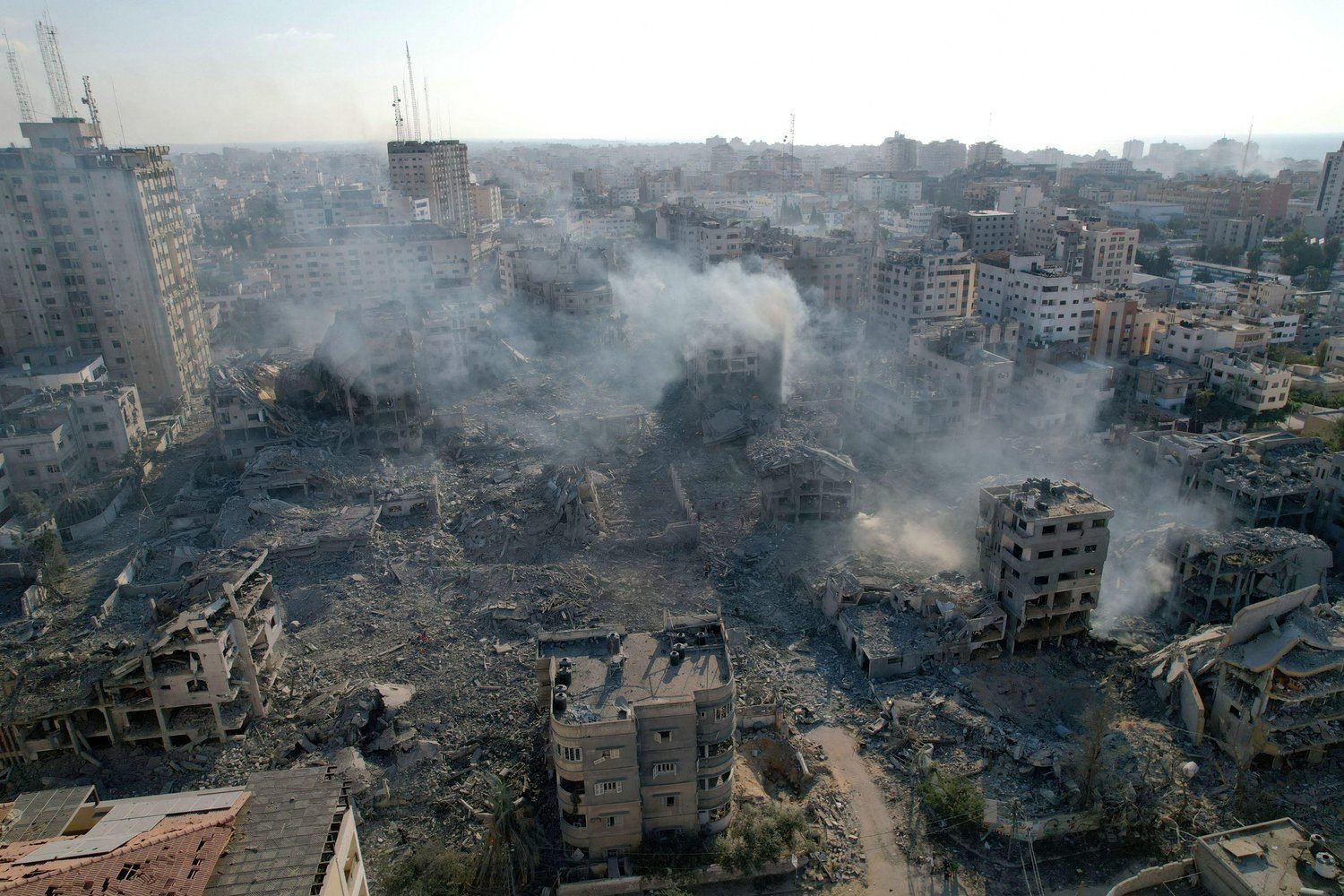
Gaza City in October 2023 (Geopix/Alamy)


				If you ask a Palestinian from Gaza where home is, they may well give you a name before they give you an address. 
A street. A neighbourhood. A family house. A place where a mother raised her children, where photographs were taken and kept. A place where birthdays were celebrated, where normal and ordinary life unfolded. 
Palestinians have carried these places with them for generations, even long after being forced to leave. Sometimes a home is reduced to a key that could be kept for years in hope that one day it might open the door again. A photograph that was hanging on a wall that no longer exists, or an old family album that becomes one of the few physical traces left of a life that was once lived there. 
Now, the Israeli government has started to speak about a “migration plan” for Palestinians in Gaza. Leaving, in their words, is being presented as a voluntary choice. But what does “voluntary” mean when the home you have been asked to leave no longer exists? 
On September 16, Israel Katz, Israel’s defence minister, announced that in order to “finish the job” in Gaza, the country will begin to implement what he described as a “migration plan”. Earlier this month, Katz said Israel was prepared to facilitate the departure of Palestinians from Gaza by land and sea. Describing the plan as “voluntary”, Katz claimed – without any clear basis for this – that most Palestinians wanted to leave. There are many articles online as proof for this, here are some links for reference: 
L’Orient-Le Jour
Times of Israel
Itamar Ben-Gvir, Israel’s minister of public security and a very strong supporter of Netanyahu’s current government, has also proposed a plan to encourage what he describes as the “voluntary emigration” of Palestinians from Gaza. Ben Gvir’s proposal, which includes financial incentives and arrangements with countries that would receive the “emigrants”, sets a target of 1.86 million people leaving Gaza over seven years.


			Youmna El Sayed reporting from Gaza City, 7th October (Youmna Al-Sayed)


				The language used by Israel’s elected representatives is striking. Migration. Relocation. Evacuation. Voluntary. 
These are the words of bureaucracy. They can make the mass movement of millions of people sound organised, almost ordinary. They remove from the equation the noise of a family dragging their bags and belongings through rubble. They exclude from the narrative the child asking where they will sleep that night. They do not show the person returning to their neighbourhood only to find that the house they lived in no longer exists. 
Gaza’s population has already experienced repeated displacements. Much of the territory has been destroyed. Three years after the start of Israel’s war, people continue to live in overcrowded or makeshift conditions. In September, just days ago, a damaged building in Gaza collapsed, killing 21 people and trapping others who had been sheltering there because they had no other alternatives. The very next day, another building collapsed, creating another human tragedy. 
For these families, leaving is not an abstract political proposal. There is a huge difference between “choosing” to leave one’s home and not having a safe home to return to in the first place. 
People migrate every day, and for many reasons. Forced displacement, however, is a different category of movement altogether, carrying with it something else.
Forced displacement carries with it loss, fear, and uncertainty. I know this feeling, because it is how I have been living since I was forced to leave Gaza with my family. Even when the physical place has been destroyed, it does not stop being home.

They remove from the equation the noise of a family dragging their bags and belongings through rubble.

This is why the language matters.
When forced displacement is called “migration”, it creates the understanding of movement between two places of relative choice. When it is called “relocation”, it presents the illusion of people simply being moved from one address to another. When people are told that their departure is “voluntary”, the conditions surrounding that decision are erased from the sentence. 
The question is not whether a person physically walks away. The question is what choices remain when staying means living amid ruins, without adequate shelter, safety, or while carrying the fear that another attack could once again put your life and the life of your loved ones in danger? What does it mean to stay when you have no clue whether the life you are trying to hold on to can ever be rebuilt?  or the possibility of rebuilding.
And then, there is also the political dimension to the language. 
Katz’s latest comments followed months of political discussion in Israel concerning the wish to rid Gaza of its Palestinian population. This notwithstanding, after proposals by Israeli ministers triggered concern, Israeli Foreign Minister Gideon Sa’ar declared on September 9 that the government has no plan to deport Palestinians from Gaza. The United States has also said that at present, there is no US-backed plan to force Palestinians out of Gaza.  
These competing statements matter. They show that the political future of Gaza and the question of Palestinian displacement remain contested. But for Palestinians living through the consequences, language from politicians is not separate from reality. Palestinians, after all, have heard the language of displacement before.


			In Khanyounis, November 2023 (Youmna Al-Sayed)


				In 1948, hundreds of thousands of Palestinians were forcibly displaced from their homes during the war that accompanied the creation of the State of Israel. For Palestinians, the Nakba remains not simply a historical event but a living memory passed from one generation to the next. 
That history explains, in part, why words like “migration” and “relocation” carry such weight. Because people remember what happened when leaving became permanent. 
But what happens when this language itself begins to shape what the world sees? Censorship is not only about preventing people from speaking. It can also be about the words used to describe what has happened, and the aspects of reality that these words exclude. 
A policy can be called a plan. Displacement can be called migration. Being forced out from one’s home can be called voluntary departure. While the words sound neutral, the human experience that is engaged with them is not. And this is what is lost, what is erased, when displacement is discussed in the bureaucratic language of plans and policies. “Home” becomes a random building. “The neighbourhood” becomes an area. “The family” becomes a number. Leaving, being forced to leave, becomes “migration”. And a decision made under conditions that no person should be made to endure becomes “voluntary”. 
Even so. People remember their homes long after the buildings have been destroyed. They remember the smell of the kitchen, the view from a window, the neighbour who lived next door, the room where their children slept. These memories cannot be evacuated.

Censorship is not only about preventing people from speaking. It can also be about the words used to describe what has happened

And that’s why the language being used matters so much. If leaving is described as a “choice”, it becomes easier to forget everything that came before it. And so, before accepting the word “voluntary”, a simpler question must be asked: 
What choices were left? 
If one’s home has been destroyed, if safety is an illusion and if return is uncertain, is leaving really a choice, or simply the last thing left in order to survive?  


				READ MORE
Share
Facebook Twitter Pinterest Email Copy Link

Listen to the article

0:00
0:00

Key Takeaways

Playback Speed

Select a Voice

The language used by Israel’s elected representatives is striking. Migration. Relocation. Evacuation. Voluntary. 

These are the words of bureaucracy. They can make the mass movement of millions of people sound organised, almost ordinary. They remove from the equation the noise of a family dragging their bags and belongings through rubble. They exclude from the narrative the child asking where they will sleep that night. They do not show the person returning to their neighbourhood only to find that the house they lived in no longer exists. 

Gaza’s population has already experienced repeated displacements. Much of the territory has been destroyed. Three years after the start of Israel’s war, people continue to live in overcrowded or makeshift conditions. In September, just days ago, a damaged building in Gaza collapsed, killing 21 people and trapping others who had been sheltering there because they had no other alternatives. The very next day, another building collapsed, creating another human tragedy. 

For these families, leaving is not an abstract political proposal. There is a huge difference between “choosing” to leave one’s home and not having a safe home to return to in the first place. 

People migrate every day, and for many reasons. Forced displacement, however, is a different category of movement altogether, carrying with it something else.

Forced displacement carries with it loss, fear, and uncertainty. I know this feeling, because it is how I have been living since I was forced to leave Gaza with my family. Even when the physical place has been destroyed, it does not stop being home.

They remove from the equation the noise of a family dragging their bags and belongings through rubble.

This is why the language matters.

When forced displacement is called “migration”, it creates the understanding of movement between two places of relative choice. When it is called “relocation”, it presents the illusion of people simply being moved from one address to another. When people are told that their departure is “voluntary”, the conditions surrounding that decision are erased from the sentence. 

The question is not whether a person physically walks away. The question is what choices remain when staying means living amid ruins, without adequate shelter, safety, or while carrying the fear that another attack could once again put your life and the life of your loved ones in danger? What does it mean to stay when you have no clue whether the life you are trying to hold on to can ever be rebuilt?  or the possibility of rebuilding.

And then, there is also the political dimension to the language. 

Katz’s latest comments followed months of political discussion in Israel concerning the wish to rid Gaza of its Palestinian population. This notwithstanding, after proposals by Israeli ministers triggered concern, Israeli Foreign Minister Gideon Sa’ar declared on September 9 that the government has no plan to deport Palestinians from Gaza. The United States has also said that at present, there is no US-backed plan to force Palestinians out of Gaza.  

These competing statements matter. They show that the political future of Gaza and the question of Palestinian displacement remain contested. But for Palestinians living through the consequences, language from politicians is not separate from reality. Palestinians, after all, have heard the language of displacement before.

Read the full article here

Fact Checker

Verify the accuracy of this article using AI-powered analysis and real-time sources.

Get Your Fact Check Report

Enter your email to receive detailed fact-checking analysis

5 free reports remaining

Continue with Full Access

You've used your 5 free reports. Sign up for unlimited access!

Already have an account? Sign in here

Share. Facebook Twitter Pinterest LinkedIn Tumblr Email Telegram Copy Link
News Room
  • Website
  • Facebook
  • X (Twitter)
  • Instagram
  • LinkedIn

The FSNN News Room is the voice of our in-house journalists, editors, and researchers. We deliver timely, unbiased reporting at the crossroads of finance, cryptocurrency, and global politics, providing clear, fact-driven analysis free from agendas.

Related Articles

Global Free Speech

Report: Israeli ad-tech firm enables spyware targeting of at least 45 Al Jazeera devices

5 hours ago
Global Free Speech

CPJ, partners condemn Turkish authorities for seizing control of pro-opposition Halk TV

9 hours ago
Global Free Speech

CPJ, CIVICUS urge Indonesian president to stop undermining press freedom ahead of 2-year mark in office

20 hours ago
Global Free Speech

CPJ condemns Argentina’s deportation of Brazilian journalist Rogério Tomaz Jr.

1 day ago
Global Free Speech

Russia detains Japanese journalist on suspicion of espionage

1 day ago
Global Free Speech

Turkish authorities seize control of popular pro-opposition Halk TV after police raid headquarters, stop live broadcasts

1 day ago
Add A Comment
Leave A Reply Cancel Reply

Editors Picks

Why Some Americans Living Abroad Would Rather Renounce Their Citizenship Than File Taxes

27 minutes ago

Family Separation Causes Real and Lasting Harm for Children and Parents

29 minutes ago

Binance.US seeks $1B valuation in potential $100M funding round: Report

54 minutes ago

Russia Will Soon Ban Peer-to-Peer Bitcoin Trading, Central Bank Confirms

57 minutes ago
Latest Posts

To Avoid Criticizing Trump’s Tariffs and War, Vivek Ramaswamy Takes on Data Centers

1 hour ago

Nasdaq-listed Tron sets up $200M ATM share offering to fuel TRX acquisitions

2 hours ago

Boom or Bust, Bitcoin Wins the AI Trade, Bitwise CIO Says

2 hours ago

Subscribe to News

Get the latest news and updates directly to your inbox.

At FSNN – Free Speech News Network, we deliver unfiltered reporting and in-depth analysis on the stories that matter most. From breaking headlines to global perspectives, our mission is to keep you informed, empowered, and connected.

FSNN.net is owned and operated by GlobalBoost Media
, an independent media organization dedicated to advancing transparency, free expression, and factual journalism across the digital landscape.

Facebook X (Twitter) Discord Telegram
Latest News

Our Lawsuit Against the Trump Administration’s Social Media Surveillance Moves Forward. Here’s What the Court Said.

23 minutes ago

Why Some Americans Living Abroad Would Rather Renounce Their Citizenship Than File Taxes

27 minutes ago

Family Separation Causes Real and Lasting Harm for Children and Parents

29 minutes ago

Subscribe to Updates

Get the latest news and updates directly to your inbox.

© 2026 GlobalBoost Media. All Rights Reserved.
  • Privacy Policy
  • Terms of Service
  • Our Authors
  • Contact

Type above and press Enter to search. Press Esc to cancel.

🍪

Cookies

We and our selected partners wish to use cookies to collect information about you for functional purposes and statistical marketing. You may not give us your consent for certain purposes by selecting an option and you can withdraw your consent at any time via the cookie icon.

Cookie Preferences

Manage Cookies

Cookies are small text that can be used by websites to make the user experience more efficient. The law states that we may store cookies on your device if they are strictly necessary for the operation of this site. For all other types of cookies, we need your permission. This site uses various types of cookies. Some cookies are placed by third party services that appear on our pages.

Your permission applies to the following domains:

  • https://fsnn.net
Necessary
Necessary cookies help make a website usable by enabling basic functions like page navigation and access to secure areas of the website. The website cannot function properly without these cookies.
Statistic
Statistic cookies help website owners to understand how visitors interact with websites by collecting and reporting information anonymously.
Preferences
Preference cookies enable a website to remember information that changes the way the website behaves or looks, like your preferred language or the region that you are in.
Marketing
Marketing cookies are used to track visitors across websites. The intention is to display ads that are relevant and engaging for the individual user and thereby more valuable for publishers and third party advertisers.