

 Freedom Index
Listen to the article
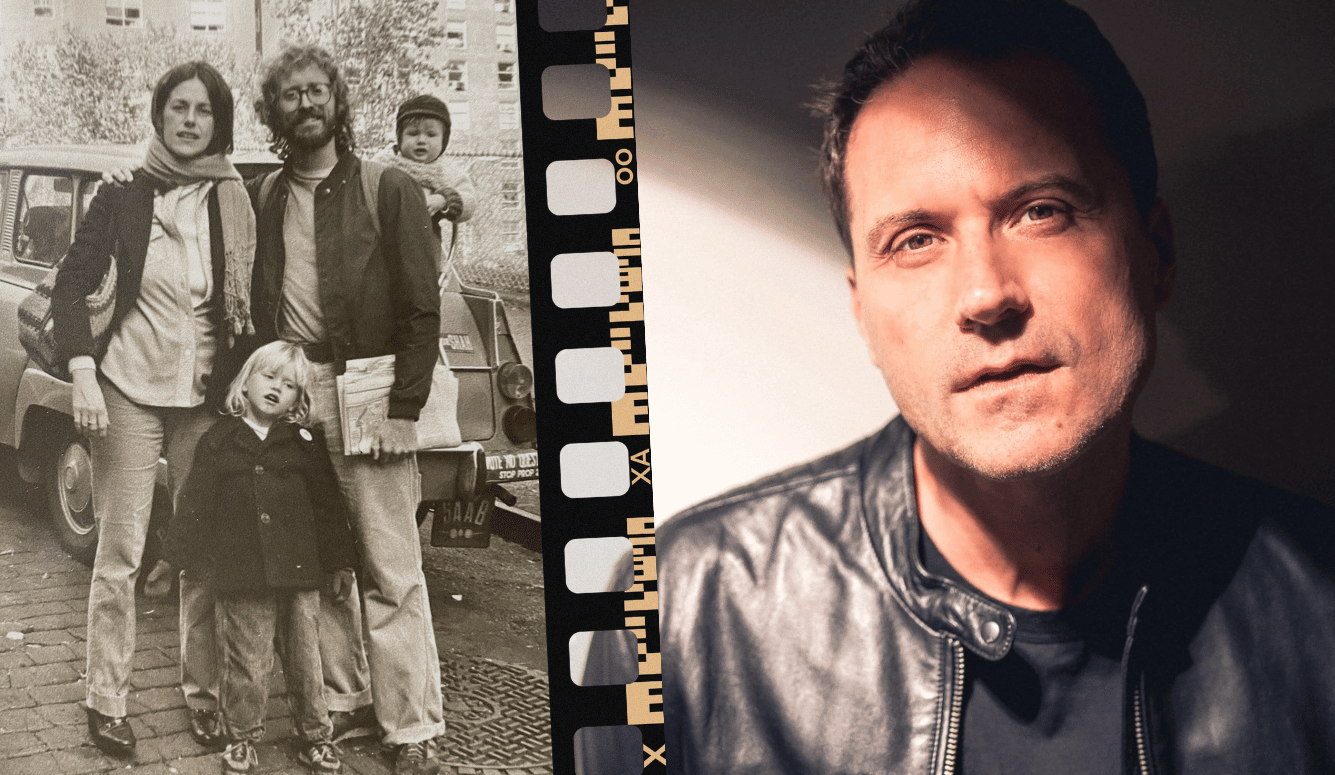
A review of Dangerous, Dirty, Violent & Young: A Fugitive Family in the Revolutionary Underground by Zayd Ayers Dohrn; 352 pages; Chatto & Windus (June 2026)
In his memoir detailing his experiences growing up with revolutionary parents on the run from the federal government in the 1970s, Zayd Ayers Dohrn captures a bizarro life organised around the need to stay one step ahead of the FBI:
I was used to this routine. It wasn’t the first time we’d had to pack up all our things in the middle of the night and take off on another long cross-country drive. We ditched cars and apartments constantly, kept everything we owned in a few plastic milk crates by the door, and I carried my prized possessions in a backpack: a stack of comics, some crayons and paper, a couple of Star Wars action figures.
Zayd, who was born in 1977, calls aspects of this childhood “fun,” but many readers may recoil (as I did) when they arrive at the following example:
When I was just three years old, I learned to recognize plainclothes police officers and undercover agents in a crowd, to make our calls from payphones and speak in code, to walk a trajectory—the complicated mix of turns and switchbacks we used in a city to lose a tail–watching from a rooftop or a fire escape to make sure our aboveground friends weren’t being trailed as they walked their own trajectories up the stairs onto the elevated tracks, wait two minutes, then double back again, through the park, across the basketball courts, around a corner. You won’t see us, but we’ll find you. [italics in original]
Zayd’s parents were Bernardine Dohrn and William Ayers, the co-founders of the Weather Underground terror organisation, and they never seem to have stopped to wonder about the warped and worrisome existence the fugitive life was imposing on their child (Zayd believes his parents thought of him and his brother as “collateral damage”). And if all this dislocation and insecurity were not enough, the couple relentlessly sought to indoctrinate their sons. Zayd notes that their stops across the country weren’t those taken by ordinary people:
I noticed we never visited the tourist sites suggested by the Road Atlas. We never once stopped at Disneyland, or saw the Hoover Dam, or toured the Alamo. On the rare occasions we quit moving long enough to look around, it wasn’t to celebrate icons of American innocence, ingenuity, or independence, but to visit monuments to injustice—the sites of lynching and massacres and violent uprisings—so my brother and I could internalize radical lessons in solidarity and resistance.
The purpose of these stops (at Harper’s Ferry and Southhampton, Virginia, “the site of Nat Turner’s slave rebellion”) was to hammer home the lesson that there was a “different America—a country with a hidden, savage past and a violent present.”
By 1982, Zayd’s mother was in prison, so he was being raised by his father. Seeking the reassurance of paternal affection so reliable “that nothing could ever change it, no matter what,” Zayd was left damaged and disappointed. Bill Ayers, the lightweight half of the couple, was too political for unconditional love and told his son that he would stop loving him if Zayd ever became a racist. He recollects how horrific this qualification was for a young child:
For me, as a five-year-old, watching the strobe lights of our reflection disappear and reappear in the subway windows, his answer sounded terrifyingly vague and equivocal. My father’s unconditional love suddenly had a condition to it, and that alone scared me to death.
And since his parents had already told Zayd that racism is inherent in all white people, he feared his father would eventually stop loving him: “While I was pretty sure I was not a racist, it seemed at least possible that I might one day feel something by accident, think something terrible, even unconsciously, and so fall out of his love.”
In the late 1960s, Bill Ayers was angry (“Kill all the rich people.” “Kill your parents.”), opinionated, and dogmatic. But his wife, Bernardine, was the tougher of the two. As a self-described “revolutionary communist,” she was more than willing to sacrifice her children’s welfare for her beliefs. And it is this relationship that Zayd grapples with in this book, which is less a memoir than an attempt to solve what he calls the “mystery” of his mother—a woman who “emanated a fierce determination and sense of purpose that could be daunting, intimidating, even scary at times.”
In this chapter, I wrestle with my past, and the future of American radicalism
What the revolution means – for all of us – today
I talk about my mom going to jail pic.twitter.com/oS76eOKG6I
— Zayd Ayers Dohrn (@ZaydDohrn) July 28, 2022
Sometimes, his description of this lifelong fanatic makes her sound more like a fascist than a communist: “[She had an] icy calm and decisiveness that preempted any discussion or disagreement. The teachers at my school, the doctors in the hospital, the members of our family, even nature itself seemed to bend to her will.” Noting that “defying or debating her was impractical if not insane,” Zayd struggles throughout the book to come to terms with her bloodthirstiness (the CIA called her “the most rabid female radical in the country”).
In 1969, for instance, after actress Sharon Tate and four of her friends were murdered by members of the Manson family, Bernardine said this during a speech at a Weathermen meeting: “First, they killed those pigs, then they ate dinner in the same room with them, then they even shoved a fork into a victim’s stomach? Wild!” She would later try to reassure her son that this notorious statement “was meant to be a dark joke—an extreme metaphor for the way the American media celebrated war and fetishized sex and violence.” But Zayd was not convinced: “It’s clear to me now, after talking to her and other people who were there and looking more closely at the context that it was less a joke than a provocation—that Bernardine invoked the Manson cult’s end-times barbarism not as a cautionary tale but as a battle cry.”
Read the full article here
Fact Checker
Verify the accuracy of this article using AI-powered analysis and real-time sources.